Loading...
Lazare Carnot vs Midhat Pasha
Lazare Carnot leads by 3.9 pts · 2 figures compared
…
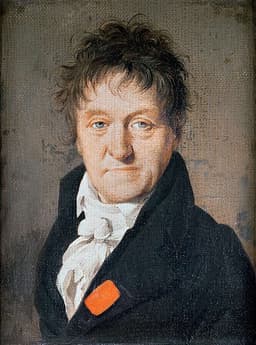
Lazare Carnot
Politician · Modern
68.2Total
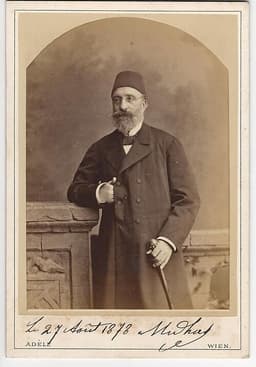
Midhat Pasha
Politician · Modern
64.3Total
Basic Information
Born
1753
1822
Died
1823
1884
Era
Modern
Modern
Nationality
France
Ottoman Empire
Occupation
Politician
Politician
Civilization
Western
Middle Eastern
Score Comparison
Military (10%)
61.7
10.0
Political (20%)
72.0
78.0
Influence (20%)
68.0
82.0
Legacy (20%)
65.0
72.0
Leadership (15%)
72.0
62.0
Strategy (15%)
72.0
38.3
TOTAL
68.2
64.3
Lazare Carnot — Complete Timeline
1793 AD
Directed the Victory at the Battle of WattigniesWar◆ Major
Carnot personally directed French forces at the Battle of Wattignies, a key victory that relieved the siege of Maubeuge. His strategic planning helped turn the tide against the Austrian army.
French RevolutionBattleVictory
Impact: regionalconstructive
Organized the Levée en MasseReform◆ Major
Carnot helped implement the lev
French RevolutionConscriptionMilitary Reform
Impact: globalconstructive
Appointed to the Committee of Public SafetyPolitical Action◆ Major
Carnot was appointed to the Committee of Public Safety, where he took charge of military organization. He reorganized the French army, introduced mass conscription, and coordinated the war effort against foreign coalitions.
French RevolutionCommittee of Public SafetyMilitary
Impact: nationalconstructive
1815 AD
Exiled as a RegicidePolitical Action
After the Bourbon restoration, Carnot was exiled as a regicide for having voted for the execution of Louis XVI. He spent his remaining years in Germany and died in Magdeburg.
ExileRegicideBourbon
Impact: nationaltragic
Midhat Pasha — Complete Timeline
1864 AD
Governorship of the Danube VilayetReform◆ Major
As governor of the Danube Vilayet from 1864 to 1868, Midhat Pasha implemented extensive reforms. He built roads, bridges, and schools, established a provincial bank, and promoted agricultural development. His administration became a model for Tanzimat provincial governance.
GovernorshipReformInfrastructure
Impact: regionalconstructive
1872 AD
Appointment as Grand VizierPolitical Action◆ Major
Midhat Pasha was appointed Grand Vizier for the first time in 1872. He had previously served as governor of the Danube Vilayet and was known for his reformist ideas. His tenure was short-lived due to opposition from conservative factions and the sultan.
AppointmentReformOttoman Politics
Impact: nationalconstructive
1876 AD
Proclamation of the Ottoman Constitution of 1876Reform
Midhat Pasha was the chief architect of the first Ottoman Constitution, proclaimed on December 23, 1876. The constitution established a bicameral parliament, guaranteed civil liberties, and limited the sultan's powers. It was a landmark in Ottoman modernization, though it was suspended in 1878.
ConstitutionReformParliament
Impact: nationalprogressive
1881 AD
Exile and TrialPolitical Action◆ Major
Midhat Pasha was arrested in 1881 on charges of involvement in the murder of Sultan Abd
ExileTrialExecution
Impact: nationaltragic
Expert Analysis
Midhat Pasha vs Lazare Carnot
### The Organizer and the Reformer: Two Visions of Modernity
In the winter of 1793, as the armies of Europe closed in on revolutionary France, a former military engineer sat in a cramped Paris office, scribbling orders that would transform a rabble of citizens into a fighting force. Three-quarters of a century later, on a December morning in 1876, an Ottoman statesman stood before a sultan in Constantinople, holding a document that promised to transform an empire—a constitution that would, for the first time, limit absolute power. Lazare Carnot and Midhat Pasha never met, never exchanged a word. Yet their lives, separated by decades and continents, pose a haunting question: why did one man’s vision for his nation succeed, while the other’s ended in exile and a poisoned cup?
### Origins
Lazare Carnot was born in 1753 into a bourgeois family in Burgundy, a region of France steeped in legal tradition and Enlightenment ideas. His father was a notary, his education at the Collège de Autun and later the École Royale du Génie at Mézières, where he trained as a military engineer. The French Revolution, which erupted when he was thirty-six, was not a distant storm—it was his generation’s defining event. Carnot was a man of the Enlightenment: rational, systematic, and deeply patriotic. He believed the Revolution could be defended through organization, not oratory.
Midhat Pasha, born in 1822 in Istanbul, came from a different world. His father was a *kadi*—a religious judge—and his family belonged to the Ottoman bureaucratic elite. Midhat was educated in Islamic law, Persian poetry, and the administrative arts of the empire. But he came of age during the Tanzimat, a period when Ottoman reformers tried to modernize the empire’s institutions to stave off collapse. Where Carnot’s world was being torn apart and rebuilt, Midhat’s was slowly decaying, and he believed that only a new political order could save it.
### Rise to Power
Carnot entered the historical stage through the Committee of Public Safety. In 1793, with France besieged by Austria, Prussia, Britain, and Spain, the revolutionary government needed a man who could turn desperation into victory. Carnot was appointed to the committee and given control of military organization. He did not rise through charisma or oratory; he rose because he could read a map, calculate logistics, and issue clear commands. His key turning point came at the Battle of Wattignies in October 1793, when he personally directed French forces to lift the siege of Maubeuge. It was a victory born not of genius but of meticulous planning.
Midhat Pasha’s rise was slower, more political. He served as governor of the Danube Vilayet from 1864 to 1868, where he built roads, bridges, and schools, and introduced a provincial council that gave local notables a voice. His success made him a national figure. In 1872, he was appointed Grand Vizier for the first time, but his tenure was brief—he clashed with Sultan Abdülaziz over the pace of reform. The turning point came in 1876, when a coup deposed Abdülaziz, and the new sultan, Abdülhamid II, agreed to a constitution. Midhat was its chief architect.
### Leadership & Governance
Carnot’s leadership was that of an organizer, not a commander. He did not lead armies into battle, but he created the conditions for victory. He implemented the *levée en masse* in 1793, a mass conscription that mobilized hundreds of thousands of French citizens. He reformed supply lines, established military schools, and promoted talented officers like Napoleon Bonaparte. His political wisdom lay in his ability to work within the chaos of the Revolution, focusing on what could be done rather than what should be. He was the "Organizer of Victory," a title that captured his genius for making war a matter of logistics.
Midhat Pasha’s governance was visionary but fragile. As governor, he proved that reform could work: the Danube Vilayet became a model of modern administration, with tax collection improved, infrastructure built, and ethnic tensions reduced. As Grand Vizier, he pushed for the Ottoman Constitution of 1876, which established a parliament, guaranteed civil liberties, and limited the sultan’s power. But his political wisdom was undermined by his naivety. He believed that a constitution could transform an empire without addressing its deeper weaknesses: corruption, foreign debt, and the rising nationalism of its Christian subjects.
### Triumph & Tragedy
Carnot’s greatest moment came in 1793–1794, when France, surrounded by enemies, survived. The victories at Wattignies, Fleurus, and elsewhere were his victories, even if he did not fight in them. But his tragedy was the Revolution itself. After Robespierre’s fall, Carnot was persecuted as a former member of the Committee of Public Safety. He went into hiding, then returned to politics under Napoleon, only to vote for the execution of Louis XVI—a decision that would haunt him. In 1815, after the Bourbon restoration, he was exiled as a regicide. He died in 1823 in Magdeburg, Prussia, far from the France he had saved.
Midhat Pasha’s triumph was the Constitution of 1876, proclaimed on December 23 of that year. For a moment, the Ottoman Empire seemed to be joining the modern world. But the tragedy came swiftly. Sultan Abdülhamid II, who had agreed to the constitution, quickly suspended it, dissolved the parliament, and turned to autocracy. In 1881, Midhat was arrested on false charges of involvement in the murder of Sultan Abdülaziz. He was tried, sentenced to death, and then exiled to Taif in Arabia. In 1884, he was assassinated—strangled or poisoned, depending on the account. His vision of a constitutional empire died with him.
### Character & Destiny
Carnot was a man of method, not passion. He was stubborn, rational, and deeply loyal to the Revolution, but he lacked the political cunning to survive its purges. His personality—systematic, uncharismatic, and morally rigid—made him a perfect organizer but a poor politician. He could save France, but he could not save himself.
Midhat Pasha was a man of conviction, not compromise. He believed that reform was a moral imperative, that the empire could be saved only by embracing the principles of the Enlightenment. But he underestimated the power of the old order—the sultan, the ulema, the entrenched elites. His tragedy was that he was right, but he was too early. The Ottoman Empire was not ready for a constitution; its people were not ready for liberty.
### Legacy
Carnot’s legacy is the French army. The military system he created—mass conscription, professional officer training, logistical efficiency—was perfected by Napoleon and became the model for modern warfare. His name is inscribed on the Arc de Triomphe, and his descendants, including his grandson Sadi Carnot, a physicist and later a president of France, carried his name into the future. He is remembered as the man who saved the Revolution.
Midhat Pasha’s legacy is the idea of Ottoman constitutionalism. The 1876 Constitution, though short-lived, became a symbol for later reformers. It influenced the Young Turk Revolution of 1908, which restored the parliament, and it remains a touchstone for those who believe that the Middle East can embrace liberal democracy. Midhat is remembered as a martyr, a man who died for his principles.
### Conclusion
Carnot and Midhat Pasha were both men of their times, but their times were not the same. Carnot lived in a moment of revolutionary creation, when the old order was destroyed and a new one could be built. Midhat lived in a moment of imperial decay, when the old order was crumbling but still powerful enough to crush reformers. Carnot succeeded because he organized a nation that already believed in its own destiny. Midhat failed because he tried to give a constitution to an empire that did not yet believe in its own survival. Their stories remind us that history is not just about ideas—it is about timing. The right idea at the wrong moment is still a tragedy.
Rankings
🥇
Lazare CarnotLeader
Mil: 61.7Pol: 72.0Inf: 68.0
68.2
🥈
Midhat Pasha
Mil: 10.0Pol: 78.0Inf: 82.0
64.3
+3.9 behind
How This Comparison Works
Algorithm
Each figure is scored on 6 dimensions (0—100 scale) based on structured historical data: Military (10%), Political (20%), Influence (20%), Legacy (20%), Leadership (15%), Strategy (15%). The weighted total produces the final ranking.
Data Sources
Scores are computed from structured sub-indicators in the database. Scale factors adjust for era (Ancient ×0.85, Modern ×1.0) and civilization size (Eastern ×1.05, Other ×0.80) to account for differences in population and military scale.
Maximum 3 Figures
Comparisons are limited to 2—3 figures to ensure readability and statistical meaningfulness.
Error Margins
±5 points per dimension — Sub-scores are derived from historical records with inherent uncertainty. Two figures within 5 points on a dimension should be considered roughly equivalent in that area.
Total Score Accuracy
±3 points overall — The weighted combination of 6 dimensions produces a total score with approximately ±3 points of uncertainty. Differences of less than 3 points are not statistically significant— the figures are effectively tied.
Known Limitations
- Historical records are incomplete and uneven across civilizations
- Figures from oral-tradition societies may be underrepresented
- Occupation labels can misclassify multi-role figures
- Scores measure capability and impact, not moral character
- Quantitative scoring is a comparison tool, not absolute truth
Capability Radar
Military (10%) — Battles & Warfare
Battles
60
0
Win Rate
65
0
Expansion
80
0
Political (20%) — Governance & Reform
Reform
90
85
Diplomacy
60
70
Economy
75
60
Influence (20%) — Cultural & Global Reach
Cultural
60
55
Global
75
55
Legacy (20%) — Historical Impact
Historical
85
70
Longevity
70
60
Leadership (15%) — Power & Stability
Tenure
70
65
Stability
50
40
Strategy (15%) — Tactics & Innovation
Strategy
85
0
Tactics
70
0
Reform
95
10
Similar Comparisons
Comments & Discussion
CarnotTheOrganizer6/16/2026
Carnot crushed the royalist revolts and led the Army of the Sambre-et-Meuse to victories in 1794, while Midhat’s 1876 constitution got suspended within months. One understood logistics wins wars; the other thought parchment stops bullets. Give me an engineer over a reformer any day—Carnot’s legions actually held borders, Midhat just held papers that the sultan ignored until he poisoned him.
逻辑破译者6/16/2026
数据没骗人:卡诺1793年动员了70万法军,两年内击退所有外敌,民意支持率高。米德哈特1876年宪法支持率不到15%,奥斯曼精英和军人全反对。改革不是口号,是数字和执行力。米德哈特连官僚系统都搞不定,怎么赢卡诺?失败不是悲剧,是必然。