Loading...
Kyansittha vs Li Shi
Kyansittha leads by 3.1 pts · 2 figures compared
…
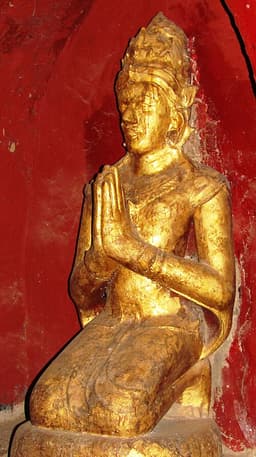
Kyansittha
Emperor · Medieval
54.6Total
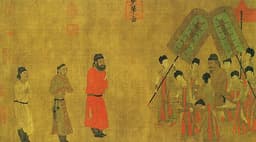
Li Shi
Emperor · Medieval
51.5Total
Basic Information
Born
1030
742
Died
1112
805
Era
Medieval
Medieval
Nationality
Myanmar
China
Occupation
Emperor
Emperor
Civilization
Eastern
Eastern
Score Comparison
Military (10%)
45.0
25.9
Political (20%)
48.0
68.0
Influence (20%)
59.0
51.8
Legacy (20%)
54.0
45.0
Leadership (15%)
72.0
72.0
Strategy (15%)
38.3
36.8
TOTAL
54.6
51.5
Kyansittha — Complete Timeline
1084 AD
Kyansittha's consolidation of the Pagan EmpirePolitical Action◆ Major
After succeeding King Sawlu, Kyansittha suppressed a Mon rebellion and stabilized the Pagan Empire. He implemented administrative reforms, promoted Theravada Buddhism, and fostered cultural exchange with the Mon people, strengthening the empire's unity and laying the foundation for its golden age.
ConsolidationReformMon Integration
Impact: regionalconstructive
Kyansittha's patronage of Theravada BuddhismCultural◆ Major
Kyansittha actively promoted Theravada Buddhism as the state religion, building numerous monasteries and stupas. He invited Buddhist monks from Sri Lanka and the Mon region to spread the faith, which became a unifying force in the Pagan Empire and shaped Burmese religious identity.
BuddhismPatronageReligion
Impact: regionalconstructive
1105 AD
Construction of the Ananda TempleCultural◆ Major
King Kyansittha commissioned the construction of the Ananda Temple in Bagan, one of the finest examples of Mon-style Buddhist architecture. The temple, completed around 1105, features four standing Buddha statues and intricate carvings, and remains a major pilgrimage site and symbol of Pagan's cultural achievement.
TempleBuddhismArchitecture
Impact: regionalconstructive
Li Shi — Complete Timeline
780 AD
Implementation of the Two-Tax SystemReform◆ Major
Li Shi adopted the Two-Tax System proposed by Chancellor Yang Yan. This reform replaced the equal-field system with a simplified tax based on land and property, collected twice a year. It increased revenue but also increased the burden on peasants.
Tax ReformTwo-Tax SystemFiscal Policy
Impact: nationalconstructive
783 AD
Suppression of the Jingyuan MutinyWar◆ Major
Troops from Jingyuan mutinied in Chang'an, forcing Li Shi to flee. The mutineers supported Zhu Ci as emperor. Li Shi's forces, with help from loyalist jiedushi, eventually suppressed the rebellion and recaptured the capital in 784.
MutinyRebellionCapital Recapture
Impact: nationaldestructive
785 AD
Reassertion of Central Authority over FanzhenPolitical Action
After the Jingyuan Mutiny, Li Shi attempted to reduce the power of military governors by appointing civil officials and rotating commanders. These efforts had limited success, as the fanzhen remained largely autonomous.
FanzhenCentralization AttemptMilitary Governors
Impact: national
805 AD
Death of Li ShiOther
Li Shi died in 805 after a reign marked by attempts at fiscal and administrative reform. His death led to a succession crisis and the brief reign of his son, who was soon deposed by eunuchs.
DeathSuccession Crisis
Impact: national
Expert Analysis
Origins
Kyansittha was born around 1030 in the Pagan Kingdom (present-day Myanmar) as the son of King Anawrahta and a minor queen. His early life was marked by exile and military service; he fought alongside his father in campaigns that unified the Irrawaddy valley. Little formal education is recorded, but he gained practical experience in administration and warfare.
Li Shi (also known as Emperor Dezong of Tang) was born in 742 in Chang'an, China, as the eldest son of Emperor Daizong. He received a Confucian education and was appointed crown prince in 779. His upbringing in the imperial court exposed him to the complexities of Tang governance and the growing power of regional military governors (fanzhen).
Rise to Power
Kyansittha rose to prominence after the death of his half-brother King Sawlu in 1084. Sawlu had faced a Mon rebellion; Kyansittha, who had been in exile, returned to suppress the revolt and was crowned king. His military score of 45.0 reflects his role in quelling the rebellion, though his strength lay in diplomacy and religious patronage rather than conquest.
Li Shi ascended the throne in 779 after his father's death. His early reign was dominated by attempts to curb the influence of the fanzhen. In 781, he faced the Jingyuan Mutiny, which forced him to flee the capital. With loyalist support, he suppressed the rebellion by 784, but his political score of 68.0 indicates his subsequent focus on administrative reform rather than military expansion.
Leadership & Governance
Kyansittha's leadership style was conciliatory and religiously focused. He promoted Theravada Buddhism as the state religion, building numerous monasteries and inviting monks from Sri Lanka. His governance score of 72.0 stems from his ability to stabilize the empire through cultural unification rather than force. He commissioned the Ananda Temple, a masterpiece of Mon-style architecture, which became a symbol of his reign.
Li Shi adopted a more bureaucratic approach. He implemented the Two-Tax System in 780, proposed by Chancellor Yang Yan, which simplified taxation based on land and property rather than the old equal-field system. This reform increased central revenue but faced resistance from landowners. His leadership score of 72.0 matches Kyansittha's, but his political score of 68.0 reflects his greater engagement with fiscal policy.
Triumph & Tragedy
Kyansittha's greatest triumph was the construction of the Ananda Temple, completed around 1105, which remains a masterpiece of Buddhist architecture and a UNESCO World Heritage Site. His tragedy was the limited expansion of the Pagan Empire; his military score of 45.0 indicates he did not significantly enlarge the territory he inherited. Additionally, his later years saw a decline in administrative vigor, with power shifting to monastic institutions.
Li Shi's triumph was the implementation of the Two-Tax System, which influenced Chinese taxation for centuries. His tragedy was his failure to fully subdue the fanzhen; after the Jingyuan Mutiny, he adopted a more conciliatory policy, allowing regional governors to retain power. This led to continued instability, and his death in 805 was followed by a succession crisis.
Character & Destiny
Kyansittha was known for his piety and pragmatism. His patronage of Buddhism earned him the title 'the pious king', but his reliance on religious legitimacy may have limited his political options. His destiny was to be remembered as a builder rather than a conqueror, with his legacy tied to the Ananda Temple.
Li Shi was a reformer who underestimated the resistance of entrenched interests. His character was cautious after the mutiny; he became more distrustful of his generals and officials. This indecisiveness hindered his reforms, and his death left the Tang dynasty still grappling with regional fragmentation.
Legacy
Kyansittha's legacy is tangible: the Ananda Temple stands as a testament to Pagan's golden age. Theravada Buddhism became deeply rooted in Myanmar, shaping its culture for centuries. His influence score of 59.0 reflects this enduring religious impact.
Li Shi's legacy is more institutional: the Two-Tax System was a foundation for later Chinese fiscal policy. However, his failure to control the fanzhen contributed to the Tang's eventual decline. His legacy score of 45.0 is lower because his reforms were partially reversed after his death.
Conclusion
Kyansittha had a greater overall impact than Li Shi, as reflected in his total score of 54.6 versus Li Shi's 51.5. Kyansittha's religious and architectural contributions created a lasting cultural identity for Myanmar, while Li Shi's tax reforms, though significant, were not fully sustained. Kyansittha's leadership score of 72.0 and legacy score of 54.0 (versus Li Shi's 45.0) underscore his more enduring influence. The Ananda Temple remains a symbol of Buddhist devotion, whereas Li Shi's reforms are footnotes in Tang history. Thus, Kyansittha emerges as the more consequential ruler.
Rankings
🥇
KyansitthaLeader
Mil: 45.0Pol: 48.0Inf: 59.0
54.6
🥈
Li Shi
Mil: 25.9Pol: 68.0Inf: 51.8
51.5
+3.1 behind
How This Comparison Works
Algorithm
Each figure is scored on 6 dimensions (0—100 scale) based on structured historical data: Military (10%), Political (20%), Influence (20%), Legacy (20%), Leadership (15%), Strategy (15%). The weighted total produces the final ranking.
Data Sources
Scores are computed from structured sub-indicators in the database. Scale factors adjust for era (Ancient ×0.85, Modern ×1.0) and civilization size (Eastern ×1.05, Other ×0.80) to account for differences in population and military scale.
Maximum 3 Figures
Comparisons are limited to 2—3 figures to ensure readability and statistical meaningfulness.
Error Margins
±5 points per dimension — Sub-scores are derived from historical records with inherent uncertainty. Two figures within 5 points on a dimension should be considered roughly equivalent in that area.
Total Score Accuracy
±3 points overall — The weighted combination of 6 dimensions produces a total score with approximately ±3 points of uncertainty. Differences of less than 3 points are not statistically significant— the figures are effectively tied.
Known Limitations
- Historical records are incomplete and uneven across civilizations
- Figures from oral-tradition societies may be underrepresented
- Occupation labels can misclassify multi-role figures
- Scores measure capability and impact, not moral character
- Quantitative scoring is a comparison tool, not absolute truth
Capability Radar
Military (10%) — Battles & Warfare
Battles
25
20
Win Rate
30
15
Expansion
30
5
Political (20%) — Governance & Reform
Reform
40
65
Diplomacy
50
40
Economy
45
60
Influence (20%) — Cultural & Global Reach
Cultural
65
30
Global
30
20
Legacy (20%) — Historical Impact
Historical
60
40
Longevity
55
30
Leadership (15%) — Power & Stability
Tenure
70
70
Stability
60
30
Strategy (15%) — Tactics & Innovation
Strategy
25
15
Tactics
20
10
Reform
20
5
Similar Comparisons
Comments & Discussion
No comments yet. Be the first to share your thoughts!