Loading...
Al-Mutawakkil II of Cairo vs Li Shi
Li Shi leads by 7.2 pts · 2 figures compared
…

Al-Mutawakkil II of Cairo
Emperor · Medieval
44.3Total
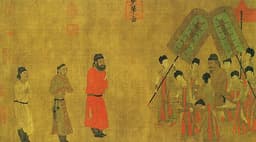
Li Shi
Emperor · Medieval
51.5Total
Basic Information
Born
1416
742
Died
1497
805
Era
Medieval
Medieval
Nationality
Abbasid Caliphate
China
Occupation
Emperor
Emperor
Civilization
Middle Eastern
Eastern
Score Comparison
Military (10%)
31.0
25.9
Political (20%)
29.3
68.0
Influence (20%)
46.3
51.8
Legacy (20%)
36.7
45.0
Leadership (15%)
67.0
72.0
Strategy (15%)
60.0
36.8
TOTAL
44.3
51.5
Al-Mutawakkil II of Cairo — Complete Timeline
1422 AD
Installation as CaliphPolitical Action
Al-Mutawakkil II was installed as caliph by Sultan Al-Ashraf Barsbay. His reign was long and stable, but he remained a ceremonial figurehead under the Burji Mamluks.
Caliphal InstallationBurji Mamluks
constructive
1497 AD
Long Reign as Ceremonial CaliphPolitical Action◆ Major
Al-Mutawakkil II served as caliph for 75 years, the longest reign of any Cairene Abbasid. During this time, he performed religious duties and confirmed sultans, but held no political power. His longevity reflected the stability of the Mamluk system.
Long ReignCeremonial RoleStability
Li Shi — Complete Timeline
780 AD
Implementation of the Two-Tax SystemReform◆ Major
Li Shi adopted the Two-Tax System proposed by Chancellor Yang Yan. This reform replaced the equal-field system with a simplified tax based on land and property, collected twice a year. It increased revenue but also increased the burden on peasants.
Tax ReformTwo-Tax SystemFiscal Policy
Impact: nationalconstructive
783 AD
Suppression of the Jingyuan MutinyWar◆ Major
Troops from Jingyuan mutinied in Chang'an, forcing Li Shi to flee. The mutineers supported Zhu Ci as emperor. Li Shi's forces, with help from loyalist jiedushi, eventually suppressed the rebellion and recaptured the capital in 784.
MutinyRebellionCapital Recapture
Impact: nationaldestructive
785 AD
Reassertion of Central Authority over FanzhenPolitical Action
After the Jingyuan Mutiny, Li Shi attempted to reduce the power of military governors by appointing civil officials and rotating commanders. These efforts had limited success, as the fanzhen remained largely autonomous.
FanzhenCentralization AttemptMilitary Governors
Impact: national
805 AD
Death of Li ShiOther
Li Shi died in 805 after a reign marked by attempts at fiscal and administrative reform. His death led to a succession crisis and the brief reign of his son, who was soon deposed by eunuchs.
DeathSuccession Crisis
Impact: national
Expert Analysis
Origins
Al-Mutawakkil II was born around 1400 in Cairo, the son of Caliph Al-Mustakfi II. He belonged to the Abbasid dynasty, which had been reduced to ceremonial rulers under the Mamluk Sultanate. His family had been brought to Cairo after the Mongol sack of Baghdad in 1258. He received a religious education and was groomed for his figurehead role.
Li Shi (742–805), posthumously known as Emperor Dezong of Tang, was the son of Emperor Daizong. Born in Chang'an, he grew up during the An Lushan Rebellion (755–763), which severely weakened the Tang dynasty. He was educated in Confucian classics and statecraft, preparing him to rule an empire in decline.
Rise to Power
Al-Mutawakkil II was installed as caliph in 1414 by Sultan Al-Ashraf Barsbay, who needed a religious figurehead to legitimize his rule. At age 14, Al-Mutawakkil II became caliph, but real power lay with the Mamluk sultans. His rise was passive, a result of dynastic succession and Mamluk patronage.
Li Shi ascended the throne in 779 after his father's death. He faced immediate challenges from powerful military governors (fanzhen) who had become semi-independent. In 780, he appointed Yang Yan as chancellor and adopted the Two-Tax System, a major reform. His early reign was marked by efforts to centralize power and reform finances.
Leadership & Governance
Al-Mutawakkil II scored 67.0 in leadership and 60.0 in strategy, reflecting his ceremonial role. He presided over Islamic religious ceremonies, appointed judges, and confirmed sultans. His governance was passive; he had no real administrative power. For example, he could not influence Mamluk policies or military campaigns.
Li Shi scored 72.0 in leadership, higher than Al-Mutawakkil II. He actively sought to reform the Tang bureaucracy and tax system. The Two-Tax System (780) simplified taxation by basing it on land ownership and abolishing the equal-field system. He also attempted to curb the power of military governors by appointing civil officials, though with limited success. His leadership was proactive but often met with resistance.
Triumph & Tragedy
Al-Mutawakkil II's greatest triumph was his 75-year reign, the longest of any Cairene Abbasid, providing religious continuity. He maintained the symbolic authority of the caliphate under Mamluk rule. However, his tragedy was his utter political irrelevance; he scored only 29.3 in politics and 31.0 in military. He was a puppet, unable to affect events.
Li Shi's triumph was the successful implementation of the Two-Tax System, which became the standard tax system for later Chinese dynasties. It increased revenue and simplified administration. His tragedy was the Jingyuan Mutiny in 783, where mutinous troops forced him to flee Chang'an. His subsequent attempts to reassert central authority over fanzhen largely failed, and he died in 805 with many problems unresolved.
Character & Destiny
Al-Mutawakkil II was a patient, compliant figure who accepted his limited role. His character was suited to a ceremonial position; he never challenged Mamluk authority. Historical assessments note his piety and longevity, but he is considered a minor figure.
Li Shi was ambitious and determined to restore Tang power. His character led him to push reforms despite opposition. However, his stubbornness and mistrust of military commanders contributed to the mutiny. He was a reformer whose destiny was shaped by the empire's decline.
Legacy
Al-Mutawakkil II's legacy is minimal; he scored 46.3 in influence and 36.7 in legacy. The Cairene Abbasid caliphate ended with his successors, and his reign is a footnote in Islamic history.
Li Shi's legacy is significant. The Two-Tax System influenced Chinese fiscal policy for centuries, and his attempts at centralization set precedents for later Tang rulers. He scored 51.8 in influence and 45.0 in legacy, higher than Al-Mutawakkil II.
Conclusion
Li Shi had greater historical impact. His total score of 51.5 versus Al-Mutawakkil II's 44.3 reflects his substantive reforms and active governance. While Al-Mutawakkil II reigned longer, his power was symbolic. Li Shi's tax system shaped Chinese history, making him the more influential figure.
Rankings
🥇
Li ShiLeader
Mil: 25.9Pol: 68.0Inf: 51.8
51.5
🥈
Al-Mutawakkil II of Cairo
Mil: 31.0Pol: 29.3Inf: 46.3
44.3
+7.2 behind
How This Comparison Works
Algorithm
Each figure is scored on 6 dimensions (0—100 scale) based on structured historical data: Military (10%), Political (20%), Influence (20%), Legacy (20%), Leadership (15%), Strategy (15%). The weighted total produces the final ranking.
Data Sources
Scores are computed from structured sub-indicators in the database. Scale factors adjust for era (Ancient ×0.85, Modern ×1.0) and civilization size (Eastern ×1.05, Other ×0.80) to account for differences in population and military scale.
Maximum 3 Figures
Comparisons are limited to 2—3 figures to ensure readability and statistical meaningfulness.
Error Margins
±5 points per dimension — Sub-scores are derived from historical records with inherent uncertainty. Two figures within 5 points on a dimension should be considered roughly equivalent in that area.
Total Score Accuracy
±3 points overall — The weighted combination of 6 dimensions produces a total score with approximately ±3 points of uncertainty. Differences of less than 3 points are not statistically significant— the figures are effectively tied.
Known Limitations
- Historical records are incomplete and uneven across civilizations
- Figures from oral-tradition societies may be underrepresented
- Occupation labels can misclassify multi-role figures
- Scores measure capability and impact, not moral character
- Quantitative scoring is a comparison tool, not absolute truth
Capability Radar
Military (10%) — Battles & Warfare
Battles
34
20
Win Rate
32
15
Expansion
39
5
Political (20%) — Governance & Reform
Reform
10
65
Diplomacy
20
40
Economy
10
60
Influence (20%) — Cultural & Global Reach
Cultural
10
30
Global
5
20
Legacy (20%) — Historical Impact
Historical
10
40
Longevity
10
30
Leadership (15%) — Power & Stability
Tenure
60
70
Stability
30
30
Strategy (15%) — Tactics & Innovation
Strategy
40
15
Tactics
44
10
Reform
47
5
Similar Comparisons
Comments & Discussion
No comments yet. Be the first to share your thoughts!