Loading...
Li Shi vs Napoleon Bonaparte
Napoleon Bonaparte leads by 19.4 pts · 2 figures compared
…
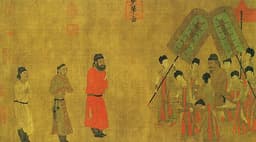
Li Shi
Emperor · Medieval
51.5Total

Napoleon Bonaparte
General · Modern
70.9Total
Basic Information
Born
742
1769
Died
805
1821
Era
Medieval
Modern
Nationality
China
France
Occupation
Emperor
General
Civilization
Eastern
Western
Score Comparison
Military (10%)
25.9
94.0
Political (20%)
68.0
72.0
Influence (20%)
51.8
40.0
Legacy (20%)
45.0
80.0
Leadership (15%)
72.0
78.0
Strategy (15%)
36.8
90.0
TOTAL
51.5
70.9
Li Shi — Complete Timeline
780 AD
Implementation of the Two-Tax SystemReform◆ Major
Li Shi adopted the Two-Tax System proposed by Chancellor Yang Yan. This reform replaced the equal-field system with a simplified tax based on land and property, collected twice a year. It increased revenue but also increased the burden on peasants.
Tax ReformTwo-Tax SystemFiscal Policy
Impact: nationalconstructive
783 AD
Suppression of the Jingyuan MutinyWar◆ Major
Troops from Jingyuan mutinied in Chang'an, forcing Li Shi to flee. The mutineers supported Zhu Ci as emperor. Li Shi's forces, with help from loyalist jiedushi, eventually suppressed the rebellion and recaptured the capital in 784.
MutinyRebellionCapital Recapture
Impact: nationaldestructive
785 AD
Reassertion of Central Authority over FanzhenPolitical Action
After the Jingyuan Mutiny, Li Shi attempted to reduce the power of military governors by appointing civil officials and rotating commanders. These efforts had limited success, as the fanzhen remained largely autonomous.
FanzhenCentralization AttemptMilitary Governors
Impact: national
805 AD
Death of Li ShiOther
Li Shi died in 805 after a reign marked by attempts at fiscal and administrative reform. His death led to a succession crisis and the brief reign of his son, who was soon deposed by eunuchs.
DeathSuccession Crisis
Impact: national
Napoleon Bonaparte — Complete Timeline
1799 AD
Coup of 18 BrumaireOther◆ Major
Napoleon Bonaparte, with support from his brother Lucien and key political figures, overthrew the Directory in a bloodless coup. He established the Consulate with himself as First Consul, effectively becoming the ruler of France. This event ended the French Revolution's most unstable period.
French RevolutionCoupRise to Power
Impact: regional
1804 AD
Promulgation of the Napoleonic CodeOther◆ Major
Napoleon enacted the Civil Code of the French, known as the Napoleonic Code, a comprehensive set of laws that replaced the fragmented feudal legal systems. The code established legal equality, protected property rights, and secularized law. It became the basis for legal systems in many European and world countries.
Legal ReformNapoleonic CodeCivil Law
Impact: globalconstructive
1805 AD
Battle of AusterlitzWar◆ Major
Napoleon's Grande Arm
Napoleonic WarsBattleDecisive Victory
Impact: global
1812 AD
Invasion of RussiaWar◆ Major
Napoleon led the Grande Arm
Napoleonic WarsInvasionDisaster
Impact: globaldestructive
1815 AD
Battle of WaterlooWar◆ Major
Napoleon's French army was defeated by the combined forces of the Duke of Wellington's Anglo-Allied army and Gebhard Leberecht von Bl
Napoleonic WarsBattleFinal Defeat
Impact: globaldestructive
Expert Analysis
li-shi-vs-napoleon-bonaparte
# The Emperor and the Eagle: Why Li Shi and Napoleon Walked Opposite Paths to Power
On a spring morning in 1815, Napoleon Bonaparte stood before his Grande Armée, veterans who had marched from Madrid to Moscow, and promised them victory or death. Half a world away, twelve centuries earlier, another ruler had faced a very different crisis: Emperor Li Shi of Tang China, fleeing his own capital as mutinous troops burned the streets of Chang’an. One man was about to write his final, glorious chapter; the other was beginning a long, painful retreat from imperial ambition. Both sought to reshape their worlds through law, war, and will. Only one understood the limits of power.
Origins
Napoleon was born in 1769 on the island of Corsica, a place where Mediterranean ambition met French bureaucracy. His family was minor nobility, but the French Revolution had shattered the old order, opening paths that had been closed for centuries. Young Napoleon devoured military history and Enlightenment philosophy, absorbing the idea that merit—not birth—should determine a man’s destiny.
Li Shi, born in 742, entered a very different world. The Tang Dynasty was already past its golden age, weakened by the An Lushan Rebellion that had scarred the empire twenty years before his birth. He was the son of an emperor, raised in the Forbidden City, trained in Confucian classics and court ritual. Where Napoleon learned to command through cannon and cavalry, Li Shi learned to rule through edicts and eunuchs. His world was not expanding; it was contracting.
Rise to Power
Napoleon’s ascent was a revolution in miniature. At twenty-four, he cleared the streets of Paris with a “whiff of grapeshot,” earning the gratitude of a terrified government. By thirty, he had conquered Italy and Egypt, and by thirty-five, he crowned himself Emperor of the French. Each step was a gamble, each victory a ladder to the next.
Li Shi’s path was quieter but no less complex. He became Emperor Dezong of Tang in 779 at age thirty-seven, inheriting a throne that had been shaken by rebellion and economic decay. His rise was not through battlefield glory but through the careful navigation of palace politics. Where Napoleon seized power, Li Shi received it—and immediately faced the weight of an empire that was slipping from imperial control.
Leadership & Governance
Here the two men diverged most sharply. Napoleon’s military score of 94 reflects a genius who redefined warfare: the corps system, the use of artillery, the speed of movement that allowed him to defeat larger armies again and again. His political score of 75 shows a ruler who could inspire loyalty but also alienated allies through arrogance. The Napoleonic Code was his greatest peacetime achievement, a legal framework that influenced civil law across Europe and beyond.
Li Shi’s military score of 24 tells a different story. He was not a general but an administrator. His great reform, the Two-Tax System implemented in 780, replaced the ancient equal-field system with a simpler, cash-based tax that bypassed corrupt local officials and funneled revenue directly to the central treasury. It was a brilliant political move—his political score of 88 reflects this—but it required enforcement that his weakened military could not provide. In 783, when the Jingyuan Mutiny erupted, he fled Chang’an, his reforms powerless against armed rebellion.
Triumph & Tragedy
Napoleon’s triumph was Austerlitz in 1805, where he destroyed a combined Russian and Austrian army, cementing his control over Central Europe. His tragedy was the invasion of Russia in 1812, where hubris and logistics destroyed the Grande Armée. He died in exile on Saint Helena in 1821, a prisoner of the British, his empire reduced to memory.
Li Shi’s triumph was the Two-Tax System itself, a reform that stabilized Tang finances for decades. His tragedy was the Jingyuan Mutiny, which exposed the hollowness of imperial authority. After 783, he spent years trying to reassert control over the military governors, appointing civil officials to counterbalance warlords, but the damage was done. He died in 805, leaving a throne that would never regain its former power.
Character & Destiny
Napoleon was driven by an insatiable hunger for glory. “I am not a man,” he once said, “but a thing.” He saw himself as an instrument of history, a force of nature that could not be stopped. This belief made him unstoppable—and ultimately, undoing. He could not stop because he could not imagine stopping.
Li Shi was driven by duty. He was a Confucian emperor, bound to preserve the Mandate of Heaven, to rule justly, to reform wisely. But he lacked the military strength to enforce his will. Where Napoleon’s flaw was excess, Li Shi’s was insufficiency. One had too much ambition; the other, too little power.
Legacy
Napoleon’s legacy is immense: the Napoleonic Code, the modern concept of meritocracy, the redrawing of European borders, the rise of nationalism. He is remembered as both liberator and tyrant, a man who carried the ideals of the French Revolution across Europe on the points of his bayonets. His total score of 82.4 reflects this complexity.
Li Shi’s legacy is quieter but enduring. The Two-Tax System influenced Chinese fiscal administration for centuries. His reign is remembered as a period of attempted reform in the face of decline. His total score of 65.9 places him as a competent but ultimately frustrated ruler. He is studied not for his victories but for his efforts.
Conclusion
Napoleon and Li Shi faced the same fundamental challenge: how to impose order on a chaotic world. Napoleon answered with conquest, Li Shi with reform. One built an empire that crumbled in a decade; the other held an empire together for another half-century. Their stories remind us that power takes many forms—the sword and the seal, the general and the administrator—and that history judges not by effort alone, but by outcome. In the end, Napoleon’s eagle soared higher but fell harder. Li Shi’s dragon never left the ground, but it never stopped breathing fire.
Rankings
🥇
Napoleon BonaparteLeader
Mil: 94.0Pol: 72.0Inf: 40.0
70.9
🥈
Li Shi
Mil: 25.9Pol: 68.0Inf: 51.8
51.5
+19.4 behind
How This Comparison Works
Algorithm
Each figure is scored on 6 dimensions (0—100 scale) based on structured historical data: Military (10%), Political (20%), Influence (20%), Legacy (20%), Leadership (15%), Strategy (15%). The weighted total produces the final ranking.
Data Sources
Scores are computed from structured sub-indicators in the database. Scale factors adjust for era (Ancient ×0.85, Modern ×1.0) and civilization size (Eastern ×1.05, Other ×0.80) to account for differences in population and military scale.
Maximum 3 Figures
Comparisons are limited to 2—3 figures to ensure readability and statistical meaningfulness.
Error Margins
±5 points per dimension — Sub-scores are derived from historical records with inherent uncertainty. Two figures within 5 points on a dimension should be considered roughly equivalent in that area.
Total Score Accuracy
±3 points overall — The weighted combination of 6 dimensions produces a total score with approximately ±3 points of uncertainty. Differences of less than 3 points are not statistically significant— the figures are effectively tied.
Known Limitations
- Historical records are incomplete and uneven across civilizations
- Figures from oral-tradition societies may be underrepresented
- Occupation labels can misclassify multi-role figures
- Scores measure capability and impact, not moral character
- Quantitative scoring is a comparison tool, not absolute truth
Capability Radar
Military (10%) — Battles & Warfare
Battles
20
95
Win Rate
15
90
Expansion
5
95
Political (20%) — Governance & Reform
Reform
65
95
Diplomacy
40
80
Economy
60
85
Influence (20%) — Cultural & Global Reach
Cultural
30
85
Global
20
90
Legacy (20%) — Historical Impact
Historical
40
95
Longevity
30
90
Leadership (15%) — Power & Stability
Tenure
70
85
Stability
30
70
Strategy (15%) — Tactics & Innovation
Strategy
15
95
Tactics
10
98
Reform
5
92
Similar Comparisons
Comments & Discussion
No comments yet. Be the first to share your thoughts!