Loading...
Li Shi vs Vytautas the Great
Vytautas the Great leads by 21.4 pts · 2 figures compared
…
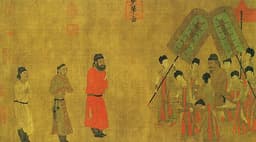
Li Shi
Emperor · Medieval
51.5Total
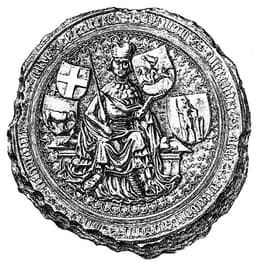
Vytautas the Great
Emperor · Medieval
72.9Total
Basic Information
Born
742
1350
Died
805
1430
Era
Medieval
Medieval
Nationality
China
Lithuania
Occupation
Emperor
Emperor
Civilization
Eastern
Western
Score Comparison
Military (10%)
25.9
72.0
Political (20%)
68.0
70.0
Influence (20%)
51.8
72.0
Legacy (20%)
45.0
72.0
Leadership (15%)
72.0
79.8
Strategy (15%)
36.8
72.0
TOTAL
51.5
72.9
Li Shi — Complete Timeline
780 AD
Implementation of the Two-Tax SystemReform◆ Major
Li Shi adopted the Two-Tax System proposed by Chancellor Yang Yan. This reform replaced the equal-field system with a simplified tax based on land and property, collected twice a year. It increased revenue but also increased the burden on peasants.
Tax ReformTwo-Tax SystemFiscal Policy
Impact: nationalconstructive
783 AD
Suppression of the Jingyuan MutinyWar◆ Major
Troops from Jingyuan mutinied in Chang'an, forcing Li Shi to flee. The mutineers supported Zhu Ci as emperor. Li Shi's forces, with help from loyalist jiedushi, eventually suppressed the rebellion and recaptured the capital in 784.
MutinyRebellionCapital Recapture
Impact: nationaldestructive
785 AD
Reassertion of Central Authority over FanzhenPolitical Action
After the Jingyuan Mutiny, Li Shi attempted to reduce the power of military governors by appointing civil officials and rotating commanders. These efforts had limited success, as the fanzhen remained largely autonomous.
FanzhenCentralization AttemptMilitary Governors
Impact: national
805 AD
Death of Li ShiOther
Li Shi died in 805 after a reign marked by attempts at fiscal and administrative reform. His death led to a succession crisis and the brief reign of his son, who was soon deposed by eunuchs.
DeathSuccession Crisis
Impact: national
Vytautas the Great — Complete Timeline
1398 AD
Treaty of SalynasPolitical Action◆ Major
Vytautas signed the Treaty of Salynas with the Teutonic Knights, ceding Samogitia to the Order. This was a temporary concession to gain support for his eastern campaigns, but it later led to conflict.
TreatySamogitia
Impact: regionaldestructive
1399 AD
Battle of the Vorskla RiverWar◆ Major
Vytautas led a crusade against the Golden Horde but was defeated at the Battle of the Vorskla River. The defeat halted Lithuanian expansion into the steppes and weakened Vytautas's position.
Golden HordeDefeat
Impact: regionaltragic
1410 AD
Battle of GrunwaldWar
Vytautas commanded the Polish-Lithuanian army at the Battle of Grunwald, defeating the Teutonic Knights. This was one of the largest battles of medieval Europe, breaking the Knights' power and securing Lithuanian independence.
Teutonic KnightsBattle
Impact: regionalconstructive
1429 AD
Coronation AttemptPolitical Action◆ Major
Vytautas attempted to be crowned King of Lithuania, supported by Holy Roman Emperor Sigismund. The coronation was blocked by Polish nobles who feared Lithuanian independence, and Vytautas died before it could occur.
CoronationLithuania
Impact: regionaltragic
Expert Analysis
Origins
Li Shi (742–805), posthumously known as Emperor Dezong of Tang, was born into the imperial Li family. His father, Emperor Daizong, faced the An Lushan Rebellion's aftermath, leaving a weakened central state. Li Shi received a classical Confucian education, emphasizing fiscal management and administrative order. His early exposure to court intrigues and military crises shaped his later reforms.
Vytautas the Great (c. 1350–1430) was born into the Gediminid dynasty, the son of Kęstutis, Duke of Trakai. Growing up amid the Lithuanian Crusade against the Teutonic Knights, he learned warfare and diplomacy. His cousin Jogaila (later Władysław II Jagiełło) became Grand Duke, leading to a bitter power struggle that defined Vytautas's early career.
Rise to Power
Li Shi ascended the throne in 779 after his father's death. His early reign focused on curbing the power of provincial military governors (fanzhen). In 781, he attempted to enforce central control, leading to rebellions. The 783 Jingyuan Mutiny forced him to flee the capital, a turning point that made him more cautious. He gradually restored order by 786, but the mutiny weakened his authority.
Vytautas rose through civil war. In 1382, Jogaila imprisoned him, but he escaped and allied with the Teutonic Knights. After years of conflict, the 1392 Ostrów Agreement made Vytautas Grand Duke of Lithuania under Jogaila's suzerainty. He then expanded eastward, reaching the Black Sea, and secured Lithuanian independence in practice.
Leadership & Governance
Li Shi governed as a reformer, adopting the Two-Tax System in 780. This replaced complex equal-field taxes with a simplified levy based on land and household wealth, paid in cash and grain. The reform stabilized revenue but increased the burden on peasants. He also tried to replace military governors with civil officials, but resistance limited success. His leadership scored 72.0, reflecting administrative focus, while military scored only 25.9 due to battlefield failures.
Vytautas led as a warrior-diplomat. He centralized Lithuania, curbing rival nobles, and expanded territory through campaigns. His 72.0 military score reflects victories like Grunwald (1410), where he commanded the Polish-Lithuanian army to defeat the Teutonic Knights. Politically, he scored 70.0, balancing relations with Poland, the Teutonic Order, and the Golden Horde. His 79.8 leadership score indicates strong command.
Triumph & Tragedy
Li Shi's triumph was the Two-Tax System, which lasted into the Song dynasty, simplifying Chinese taxation for centuries. His suppression of the Jingyuan Mutiny, though initially a failure, eventually restored order. His tragedy was his inability to control the fanzhen; by his death, central authority remained fragile. His death in 805 led to a succession crisis.
Vytautas's triumph was the Battle of Grunwald, a decisive victory that broke Teutonic power. He also expanded Lithuania to its greatest territorial extent. His tragedy was the 1399 Battle of the Vorskla River, where his crusade against the Golden Horde ended in defeat, halting southern expansion. His coronation as King of Lithuania was blocked by Polish nobles in 1430, and he died soon after, uncrowned.
Character & Destiny
Li Shi was cautious and fiscally minded, shaped by the mutiny's trauma. He preferred administrative solutions over military force, leading to mixed results. His character scored 68.0 in politics, but his strategic score of 36.8 shows limited vision. Historians note his dedication to reform but criticize his inability to enforce it.
Vytautas was ambitious and pragmatic, willing to ally with enemies to achieve goals. His strategic score of 72.0 matches his military success. He balanced Lithuanian independence with Polish alliance, but his coronation failure highlighted his dependence on external recognition. His 72.0 legacy score reflects his enduring reputation.
Legacy
Li Shi's Two-Tax System influenced Chinese fiscal policy for centuries, but his overall legacy score of 45.0 is moderate. He is remembered as a reformer who failed to restore full central control. His reign marked a continued decline of Tang authority.
Vytautas's legacy is far greater, scoring 72.0. He is hailed as the greatest Lithuanian ruler, with Grunwald symbolizing national pride. His expansion shaped Eastern Europe, and his policies set foundations for the Polish-Lithuanian union. He is commemorated in monuments and historical narratives.
Conclusion
Vytautas the Great had a greater impact than Li Shi. His military and political scores (72.0 and 70.0) surpass Li Shi's (25.9 and 68.0), and his total score of 72.9 dwarfs Li Shi's 51.5. While Li Shi's tax reform was significant, Vytautas's achievements in warfare, state-building, and lasting legacy are more profound. Vytautas's victory at Grunwald altered the balance of power in Europe, whereas Li Shi's reforms, though important, could not reverse Tang decline. Vytautas is the superior figure in historical impact.
Rankings
🥇
Vytautas the GreatLeader
Mil: 72.0Pol: 70.0Inf: 72.0
72.9
🥈
Li Shi
Mil: 25.9Pol: 68.0Inf: 51.8
51.5
+21.4 behind
How This Comparison Works
Algorithm
Each figure is scored on 6 dimensions (0—100 scale) based on structured historical data: Military (10%), Political (20%), Influence (20%), Legacy (20%), Leadership (15%), Strategy (15%). The weighted total produces the final ranking.
Data Sources
Scores are computed from structured sub-indicators in the database. Scale factors adjust for era (Ancient ×0.85, Modern ×1.0) and civilization size (Eastern ×1.05, Other ×0.80) to account for differences in population and military scale.
Maximum 3 Figures
Comparisons are limited to 2—3 figures to ensure readability and statistical meaningfulness.
Error Margins
±5 points per dimension — Sub-scores are derived from historical records with inherent uncertainty. Two figures within 5 points on a dimension should be considered roughly equivalent in that area.
Total Score Accuracy
±3 points overall — The weighted combination of 6 dimensions produces a total score with approximately ±3 points of uncertainty. Differences of less than 3 points are not statistically significant— the figures are effectively tied.
Known Limitations
- Historical records are incomplete and uneven across civilizations
- Figures from oral-tradition societies may be underrepresented
- Occupation labels can misclassify multi-role figures
- Scores measure capability and impact, not moral character
- Quantitative scoring is a comparison tool, not absolute truth
Capability Radar
Military (10%) — Battles & Warfare
Battles
20
85
Win Rate
15
80
Expansion
5
85
Political (20%) — Governance & Reform
Reform
65
75
Diplomacy
40
85
Economy
60
70
Influence (20%) — Cultural & Global Reach
Cultural
30
70
Global
20
65
Legacy (20%) — Historical Impact
Historical
40
80
Longevity
30
70
Leadership (15%) — Power & Stability
Tenure
70
80
Stability
30
70
Strategy (15%) — Tactics & Innovation
Strategy
15
90
Tactics
10
85
Reform
5
75
Similar Comparisons
Comments & Discussion
No comments yet. Be the first to share your thoughts!