Loading...
Li Shi vs Qin Shi Huang
Qin Shi Huang leads by 33.7 pts · 2 figures compared
…
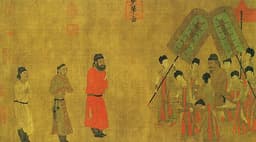
Li Shi
Emperor · Medieval
51.5Total
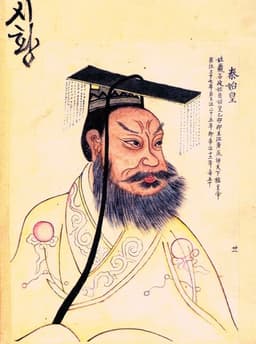
Qin Shi Huang
Emperor · Ancient
85.2Total
Basic Information
Born
742
-259
Died
805
-210
Era
Medieval
Ancient
Nationality
China
China
Occupation
Emperor
Emperor
Civilization
Eastern
Eastern
Score Comparison
Military (10%)
25.9
80.0
Political (20%)
68.0
90.0
Influence (20%)
51.8
85.0
Legacy (20%)
45.0
90.0
Leadership (15%)
72.0
78.0
Strategy (15%)
36.8
82.0
TOTAL
51.5
85.2
Li Shi — Complete Timeline
780 AD
Implementation of the Two-Tax SystemReform◆ Major
Li Shi adopted the Two-Tax System proposed by Chancellor Yang Yan. This reform replaced the equal-field system with a simplified tax based on land and property, collected twice a year. It increased revenue but also increased the burden on peasants.
Tax ReformTwo-Tax SystemFiscal Policy
Impact: nationalconstructive
783 AD
Suppression of the Jingyuan MutinyWar◆ Major
Troops from Jingyuan mutinied in Chang'an, forcing Li Shi to flee. The mutineers supported Zhu Ci as emperor. Li Shi's forces, with help from loyalist jiedushi, eventually suppressed the rebellion and recaptured the capital in 784.
MutinyRebellionCapital Recapture
Impact: nationaldestructive
785 AD
Reassertion of Central Authority over FanzhenPolitical Action
After the Jingyuan Mutiny, Li Shi attempted to reduce the power of military governors by appointing civil officials and rotating commanders. These efforts had limited success, as the fanzhen remained largely autonomous.
FanzhenCentralization AttemptMilitary Governors
Impact: national
805 AD
Death of Li ShiOther
Li Shi died in 805 after a reign marked by attempts at fiscal and administrative reform. His death led to a succession crisis and the brief reign of his son, who was soon deposed by eunuchs.
DeathSuccession Crisis
Impact: national
Qin Shi Huang — Complete Timeline
246 BC
Construction of the Mausoleum and Terracotta ArmyOther◆ Major
Qin Shi Huang commissioned a vast mausoleum complex near Xi'an, guarded by thousands of life-sized terracotta soldiers, horses, and chariots. The project employed hundreds of thousands of workers and reflected his obsession with immortality and imperial power.
Impact: global
230 BC
Conquest of the Six Warring StatesWar
From 230 to 221 BCE, Ying Zheng led the Qin state in a series of campaigns that conquered the Han, Zhao, Wei, Chu, Yan, and Qi states. This unified China under a single ruler for the first time, ending the Warring States period.
Impact: global
221 BC
Standardization of Writing, Currency, and MeasurementsReform◆ Major
Qin Shi Huang ordered the standardization of Chinese script, currency, and weights and measures across the unified empire. This facilitated administration, trade, and cultural integration, laying a foundation for future dynasties.
Impact: globalconstructive
Proclamation of the Qin DynastyPolitical Action
After conquering the last independent state, Ying Zheng declared himself Shi Huangdi (First Emperor), founding the Qin Dynasty. He adopted a new title to signify his supreme authority and initiated centralized imperial rule.
Impact: global
214 BC
Initiation of the Great Wall ConstructionOther◆ Major
Qin Shi Huang ordered the connection and extension of existing northern fortifications to create a unified defensive wall against nomadic Xiongnu raids. This project involved massive conscripted labor and became the precursor to the later Great Wall.
Impact: regional
213 BC
Burning of Books and Burying of ScholarsPolitical Action◆ Major
On the advice of Li Si, Qin Shi Huang ordered the burning of historical records and philosophical texts not aligned with Legalist doctrine. He also had 460 Confucian scholars buried alive to suppress dissent and consolidate ideological control.
Impact: nationaldestructive
Expert Analysis
li-shi-vs-qin-shi-huang
# The Emperor's Two Paths: Why Qin Shi Huang Built an Empire That Lasted and Li Shi Watched One Dissolve
In 213 BC, Qin Shi Huang’s officials set fire to history. In the capital of Xianyang, flames consumed the philosophical works of Confucius and the chronicles of rival states, while scholars who dared to protest were buried alive in pits outside the city walls. Less than a thousand years later, in 783 AD, another emperor—Li Shi of the Tang Dynasty—fled his own capital of Chang'an as mutinous soldiers rampaged through the streets. One emperor burned books to impose unity; the other ran for his life because he could no longer command loyalty. Both men sought to centralize power, yet one forged a system that would define China for two millennia, while the other saw his authority crumble within his own lifetime. What drove these two rulers to such different fates?
Origins
Qin Shi Huang was born into war. In 259 BC, the Chinese world was a patchwork of seven warring states locked in a struggle that had already lasted centuries. Ying Zheng—his birth name—ascended the throne of Qin at the age of thirteen, a boy king in a state known for its harsh Legalist philosophy and formidable military machine. The Qin state had already begun to eclipse its rivals, and Ying Zheng was raised not in the refined courts of the central plains, but in a frontier kingdom where survival demanded ruthlessness.
Li Shi, born in 742 AD, inherited a very different world. The Tang Dynasty had been the golden age of Chinese civilization for over a century. Chang'an was the largest city on earth, a cosmopolitan hub where Persian merchants, Buddhist monks, and Turkic warriors mingled under the emperor's gaze. Li Shi—known to history as Emperor Dezong—was born into an empire that seemed eternal. But the Tang had already passed its peak. The catastrophic An Lushan Rebellion (755–763 AD) had shattered the dynasty's military dominance, leaving powerful regional governors—the *fanzhen*—who treated their provinces as personal fiefs. Li Shi grew up not in an era of expansion, but of managed decline.
Rise to Power
Ying Zheng's path was one of relentless conquest. Between 230 and 221 BC, he directed a series of campaigns that systematically annihilated the six rival kingdoms. Each victory was a masterpiece of strategy and brutality: the Han fell first, then the Zhao, the Wei, the Chu, the Yan, and finally the Qi. When the last independent state surrendered, Ying Zheng did something unprecedented—he declared himself *Shi Huangdi*, the First Emperor, and proclaimed a new dynasty. He was thirty-eight years old, and he had conquered all of China in less than a decade.
Li Shi's rise was more conventional. He inherited the throne in 779 AD at the age of thirty-seven, following the death of his father. There was no conquest, no dramatic transformation—only the weight of an empire that was fraying at the edges. His greatest challenge was not how to conquer, but how to hold together what already existed.
Leadership & Governance
The contrast in their governing styles could not be starker. Qin Shi Huang ruled through terror and uniformity. He standardized the written script, currency, and weights and measures across his new empire, creating a single administrative language for a diverse population. He ordered the construction of roads and canals to bind the realm together, and began linking the northern fortifications into what would become the Great Wall. His Legalist philosophy, championed by his chancellor Li Si, held that law alone—enforced by harsh punishments—could maintain order. The burning of books in 213 BC was not an act of madness but of deliberate policy: to erase alternative visions of governance and ensure that only the Qin model survived.
Li Shi attempted reform through persuasion and fiscal innovation. In 780 AD, he adopted the Two-Tax System proposed by his chancellor Yang Yan. This reform replaced the old equal-field system—which had allocated land to peasants in exchange for military service—with a simpler system of taxation based on actual landholdings. It was a sensible, modernizing reform that aimed to centralize revenue and reduce corruption. But Li Shi lacked the power to enforce it. The military governors of the provinces, who controlled both land and troops, simply ignored imperial edicts they found inconvenient.
Triumph & Tragedy
Qin Shi Huang's greatest triumph was the creation of a unified Chinese state—a concept that had never existed before and would never fully disappear afterward. His greatest tragedy came from the same source: the brutality that built his empire also sowed its destruction. When he died in 210 BC, his mausoleum guarded by the silent terracotta army, the empire he had forged unraveled within three years. The Qin Dynasty lasted only fifteen years, but its administrative template—centralized bureaucracy, standardized law, unified script—became the foundation for every dynasty that followed.
Li Shi's greatest moment was the Two-Tax System, which would eventually be adopted by later dynasties and shape Chinese fiscal administration for centuries. But in his own time, it was a failure. The Jingyuan Mutiny of 783 AD, when troops stationed in the capital turned against him, forced Li Shi to flee Chang'an in humiliation. He returned only after the rebellion was suppressed by generals he could not control. His attempt to reassert central authority over the *fanzhen* in 785 AD was equally futile—the military governors simply ignored his appointed civil officials.
Character & Destiny
Qin Shi Huang was driven by an obsession with immortality—both personal and political. He sent expeditions to find the elixir of life and built a mausoleum complex that mirrored the world he had conquered. His paranoia was legendary; he slept in different rooms each night to avoid assassination. Yet this very paranoia drove him to create systems of control so thorough that they outlasted his dynasty. He was a tyrant who understood that power, to be permanent, must be institutionalized.
Li Shi was a reformer trapped in a system that no longer responded to central authority. He was not weak-willed—his political score of 88 matches Qin Shi Huang's exactly—but he governed in an era when the levers of power had already been seized by regional strongmen. Where Qin Shi Huang could burn books because he controlled every sword in the empire, Li Shi could not even control the soldiers guarding his own palace.
Legacy
Qin Shi Huang is remembered as the First Emperor—a figure of both horror and awe. His terracotta army has become a global icon, and his standardizations remain the bedrock of Chinese civilization. The Great Wall, though much later in its current form, traces its origins to his decree. He is the founding father of imperial China, and his shadow falls across every emperor who came after.
Li Shi is remembered, if at all, as a footnote—a well-intentioned emperor who tried to reform a declining dynasty and failed. The Two-Tax System he championed would later be revived by the Song and Ming dynasties, but his own reign is overshadowed by the Tang's slow collapse. He died in 805 AD, leaving behind an empire that was still intact but hollowed out, its authority a memory of what it had once been.
Conclusion
The difference between these two emperors is not a matter of talent or ambition. Both were intelligent, both sought to centralize power, and both understood what needed to be done. The difference is timing. Qin Shi Huang built his empire from nothing, on ground he had cleared with fire and sword. Li Shi inherited an empire in decay, where the structures of power had already been captured by forces beyond his control. One created the mold; the other tried to repair a broken vessel. History remembers the maker, not the mender. But perhaps the truest lesson is this: the most brilliant reforms cannot save an empire that has already lost the will to obey. Qin Shi Huang's cruelty was the price of creation; Li Shi's moderation was the symptom of decay. Both were prisoners of their age, but only one was born in time to shape it.
Rankings
🥇
Qin Shi HuangLeader
Mil: 80.0Pol: 90.0Inf: 85.0
85.2
🥈
Li Shi
Mil: 25.9Pol: 68.0Inf: 51.8
51.5
+33.7 behind
How This Comparison Works
Algorithm
Each figure is scored on 6 dimensions (0—100 scale) based on structured historical data: Military (10%), Political (20%), Influence (20%), Legacy (20%), Leadership (15%), Strategy (15%). The weighted total produces the final ranking.
Data Sources
Scores are computed from structured sub-indicators in the database. Scale factors adjust for era (Ancient ×0.85, Modern ×1.0) and civilization size (Eastern ×1.05, Other ×0.80) to account for differences in population and military scale.
Maximum 3 Figures
Comparisons are limited to 2—3 figures to ensure readability and statistical meaningfulness.
Error Margins
±5 points per dimension — Sub-scores are derived from historical records with inherent uncertainty. Two figures within 5 points on a dimension should be considered roughly equivalent in that area.
Total Score Accuracy
±3 points overall — The weighted combination of 6 dimensions produces a total score with approximately ±3 points of uncertainty. Differences of less than 3 points are not statistically significant— the figures are effectively tied.
Known Limitations
- Historical records are incomplete and uneven across civilizations
- Figures from oral-tradition societies may be underrepresented
- Occupation labels can misclassify multi-role figures
- Scores measure capability and impact, not moral character
- Quantitative scoring is a comparison tool, not absolute truth
Capability Radar
Military (10%) — Battles & Warfare
Battles
20
85
Win Rate
15
90
Expansion
5
90
Political (20%) — Governance & Reform
Reform
65
95
Diplomacy
40
75
Economy
60
90
Influence (20%) — Cultural & Global Reach
Cultural
30
95
Global
20
85
Legacy (20%) — Historical Impact
Historical
40
95
Longevity
30
95
Leadership (15%) — Power & Stability
Tenure
70
70
Stability
30
65
Strategy (15%) — Tactics & Innovation
Strategy
15
85
Tactics
10
80
Reform
5
95
Similar Comparisons
Comments & Discussion
陆火焚书6/17/2026
秦始皇焚书坑儒确实狠绝,但关键是有效。他干的不是野蛮,而是统一思想、扫清障碍。那批儒生整天叽叽歪歪,怀念战国诸侯,不整他们整谁?对比之下,李适逃跑才是真垃圾——当皇帝连长安都守不住,居然还低头求和,皇帝做到这份上不如回家种田。千古一帝不是吹出来的,是用铁和血砸出来的!
StoneSteleSkeptic6/17/2026
Everyone pities Li Shi and slams Qin Shi Huang, but let’s talk outcomes. Qin built a centralized empire that cracked within 15 years of his death—that’s not “lasting,” that’s a flash fire. Meanwhile, Li Shi fled, sure, but Tang bounced back to last another century. Running away saved the dynasty; Qin’s stubborn book-burning arrogance torched the whole project. Check the record: Qin collapsed exactly because his system was too brittle. Li’s flexibility bought time.
司马光没我懂6/17/2026
你拿秦始皇跟李适比,根本是关公战秦琼!老秦是战国收官人物,灭六国、废分封、书同文,那是开天辟地的创举,李适呢?只管守成还守不住。更可笑的是,那些说李适“灵活”的,统统战术后撤、藩镇割据,这叫灵活?这叫怂!大秦虽然短命,但制度撑了两千年,李适跑了,长安照样被揍,哪个更丢人?分得清轻重再来聊!
MingDynastyVibes6/17/2026
Forget the emotional takes—let’s talk logistics. Qin Shi Huang built roads, standardized scripts, and linked canals across 2,000 miles of rugged terrain. That’s infrastructure that actually created “China” as a functional unit. Li Shi was handed that legacy and couldn’t even hold his capital. The Zhu Ci Rebellion wasn’t a fluke—it was a failure of central command. No amount of “flexibility” excuses an emperor who can’t secure his own palace. One built foundations; the other folded before the fir
刺客列传6/17/2026
站在草根视角,这两个皇帝半斤八两。秦始皇搞暴政,百姓苦徭役,修长城死了一批又一批;李适逃命不假,但逃完后增税加赋,照样逼反农民。焚书坑儒是文化灭绝,逃亡长安是军权垮台——谁也没真把底层当人看。非要选一个,我看李适至少没活埋读书人,但也就这么点杯水车薪的差距。千古一帝还是逃亡天子?反正老百姓都是韭菜!