Loading...
Ferdinand II of Aragon vs Kyansittha
Ferdinand II of Aragon leads by 15.8 pts · 2 figures compared
…
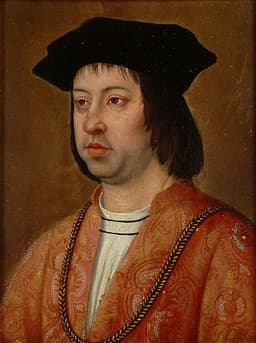
Ferdinand II of Aragon
Emperor · Medieval
70.4Total
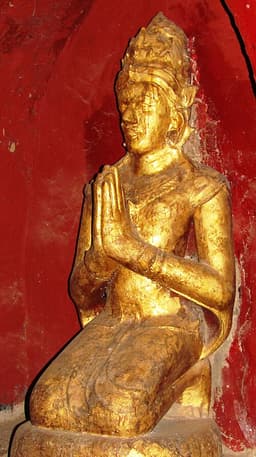
Kyansittha
Emperor · Medieval
54.6Total
Basic Information
Born
1452
1030
Died
1516
1112
Era
Medieval
Medieval
Nationality
Spain
Myanmar
Occupation
Emperor
Emperor
Civilization
Western
Eastern
Score Comparison
Military (10%)
76.0
45.0
Political (20%)
78.0
48.0
Influence (20%)
65.0
59.0
Legacy (20%)
65.0
54.0
Leadership (15%)
80.0
72.0
Strategy (15%)
66.3
38.3
TOTAL
70.4
54.6
Ferdinand II of Aragon — Complete Timeline
1469 AD
Marriage to Isabella I of CastilePolitical Action
Ferdinand II of Aragon married Isabella I of Castile in Valladolid, uniting the two largest Christian kingdoms in Spain. This marriage created the basis for the Kingdom of Spain, though both crowns remained legally separate until the death of Isabella in 1504.
Spanish unificationDynastic union
Impact: globalconstructive
1478 AD
Establishment of the Spanish InquisitionPolitical Action◆ Major
Ferdinand II and Isabella I obtained papal approval to establish the Spanish Inquisition, a tribunal to enforce Catholic orthodoxy. The Inquisition targeted converted Jews (conversos) and Muslims (moriscos) suspected of secretly practicing their former religions, leading to thousands of executions and imprisonments.
InquisitionReligious persecution
Impact: globaldestructive
1492 AD
Conquest of GranadaWar
Ferdinand II and Isabella I completed the Reconquista by capturing the city of Granada, the last Muslim stronghold in the Iberian Peninsula. The surrender of the Nasrid kingdom ended nearly 800 years of Muslim rule in Spain and marked a major victory for the Catholic Monarchs.
ReconquistaGranada
Impact: global
Alhambra DecreePolitical Action◆ Major
Ferdinand II and Isabella I issued the Alhambra Decree, ordering the expulsion of all Jews from the kingdoms of Spain who refused to convert to Catholicism. The decree led to the exile of an estimated 200,000 Jews, causing a significant demographic and economic impact on Spain.
Expulsion of JewsReligious persecution
Impact: globaldestructive
Kyansittha — Complete Timeline
1084 AD
Kyansittha's consolidation of the Pagan EmpirePolitical Action◆ Major
After succeeding King Sawlu, Kyansittha suppressed a Mon rebellion and stabilized the Pagan Empire. He implemented administrative reforms, promoted Theravada Buddhism, and fostered cultural exchange with the Mon people, strengthening the empire's unity and laying the foundation for its golden age.
ConsolidationReformMon Integration
Impact: regionalconstructive
Kyansittha's patronage of Theravada BuddhismCultural◆ Major
Kyansittha actively promoted Theravada Buddhism as the state religion, building numerous monasteries and stupas. He invited Buddhist monks from Sri Lanka and the Mon region to spread the faith, which became a unifying force in the Pagan Empire and shaped Burmese religious identity.
BuddhismPatronageReligion
Impact: regionalconstructive
1105 AD
Construction of the Ananda TempleCultural◆ Major
King Kyansittha commissioned the construction of the Ananda Temple in Bagan, one of the finest examples of Mon-style Buddhist architecture. The temple, completed around 1105, features four standing Buddha statues and intricate carvings, and remains a major pilgrimage site and symbol of Pagan's cultural achievement.
TempleBuddhismArchitecture
Impact: regionalconstructive
Expert Analysis
Origins
Ferdinand II of Aragon was born on March 10, 1452, in Sos del Rey Católico, Aragon. He was the son of John II of Aragon and Juana Enríquez. His early life was shaped by the dynastic struggles of the Crown of Aragon, including the Catalan Civil War. Ferdinand received training in military affairs and governance from a young age, preparing him to rule a fragmented kingdom.
Kyansittha was born around 1030 in Bagan, Myanmar (then Pagan). He was the son of King Anawrahta, the founder of the Pagan Empire, and a Mon princess. His early years were marked by exile and conflict; he fled Bagan after a dispute with his half-brother King Sawlu. Kyansittha spent years in the wilderness, learning survival skills and gaining support among the Mon and Burmese populations.
Rise to Power
Ferdinand II rose to prominence through his marriage to Isabella I of Castile in 1469. This union brought together the crowns of Aragon and Castile, creating the basis for a unified Spain. After Isabella's accession in 1474, Ferdinand became king consort of Castile, and they jointly ruled. The turning point came with the War of the Castilian Succession (1475-1479), where Ferdinand and Isabella defeated rival claimants, solidifying their control. By 1479, Ferdinand inherited the Aragonese throne, uniting the two kingdoms under personal union.
Kyansittha's path to power was more dramatic. After King Sawlu's disastrous reign, a Mon rebellion erupted in 1084. Sawlu was captured and killed. Kyansittha, who had been imprisoned by Sawlu, escaped and rallied support. He defeated the Mon rebels at the Battle of Pegu, reestablishing Pagan control. In 1084, Kyansittha ascended the throne, becoming the third king of the Pagan dynasty. His military score of 45.0 reflects his ability to quell rebellions, though his political score of 48.0 shows less strategic maneuvering compared to Ferdinand's 78.0.
Leadership & Governance
Ferdinand II was a pragmatic and centralized ruler. He established the Spanish Inquisition in 1478 to enforce religious uniformity, targeting Jews and Muslims. The Alhambra Decree of 1492 expelled all Jews who refused conversion, affecting an estimated 200,000 people. Ferdinand also restructured the Aragonese government, reducing noble power and strengthening royal authority. His leadership score of 80.0 reflects his effective control over diverse territories.
Kyansittha's governance focused on consolidation and cultural patronage. He suppressed the Mon rebellion and implemented administrative reforms that integrated Mon and Burmese elites. His key achievement was the construction of the Ananda Temple in 1105, a masterpiece of Mon-style architecture that became a center of Buddhist worship. Kyansittha promoted Theravada Buddhism, inviting monks from Sri Lanka to purify the faith. His leadership score of 72.0 is high relative to his other scores, indicating effective but less transformative rule compared to Ferdinand.
Triumph & Tragedy
Ferdinand's greatest triumph was completing the Reconquista with the conquest of Granada in 1492. This ended nearly 800 years of Muslim rule in Iberia and unified Spain under Christian control. However, his expulsion of Jews and Muslims caused economic and cultural damage; many skilled artisans and merchants left. Ferdinand also sponsored Columbus's voyages, leading to Spanish colonization of the Americas, but his policies laid the groundwork for the exploitative encomienda system.
Kyansittha's triumph was the construction of the Ananda Temple, which remains a symbol of Bagan's golden age. He also stabilized the Pagan Empire after a period of turmoil. However, his reign saw no major territorial expansion; the empire remained within its existing borders. His failure to secure a strong succession led to decline after his death in 1112. His influence score of 59.0 reflects his cultural impact but limited political reach.
Character & Destiny
Ferdinand II was calculating, determined, and ruthless. He prioritized unity and orthodoxy, often at the cost of minority rights. His decision to expel Jews and establish the Inquisition was driven by political and religious zeal. His character shaped the destiny of Spain, turning it into a centralized Catholic monarchy that would dominate Europe in the 16th century. However, his intolerance also sowed seeds of decline.
Kyansittha was resilient, diplomatic, and culturally inclined. His exile and return forged a pragmatic leadership style, seeking harmony between ethnic groups. His patronage of Buddhism created a lasting religious legacy, but his lack of military expansion limited his empire's growth. His total score of 54.6 contrasts with Ferdinand's 70.4, reflecting a more modest impact.
Legacy
Ferdinand II's legacy is immense: he is remembered as the Catholic Monarch who unified Spain and launched its global empire. His sponsorship of Columbus opened the Americas to European colonization. The Spanish Inquisition and Alhambra Decree had lasting negative effects, but his political and military achievements set the stage for Spain's golden age under Charles V and Philip II. His military score of 76.0 and political score of 78.0 underscore his effectiveness.
Kyansittha's legacy is primarily cultural. He is revered as a builder-king; the Ananda Temple is a UNESCO World Heritage site and a pilgrimage destination. His promotion of Theravada Buddhism shaped Myanmar's religious identity. However, his political and military scores (48.0 and 45.0) indicate that his empire did not expand or endure as powerfully as Spain. His influence is regional rather than global.
Conclusion
While Kyansittha's cultural contributions are notable, Ferdinand II of Aragon had a far greater impact on world history. His unification of Spain, completion of the Reconquista, and sponsorship of Columbus's voyages transformed global politics and religion. Ferdinand's scores—76.0 military, 78.0 political, 65.0 influence, 65.0 legacy, 80.0 leadership, 66.3 strategy, total 70.4—consistently outrank Kyansittha's 45.0, 48.0, 59.0, 54.0, 72.0, 38.3, total 54.6. The 15.8-point gap reflects Ferdinand's broader and more enduring influence. Kyansittha's achievements are admirable but parochial, whereas Ferdinand's actions shaped the modern world. Therefore, Ferdinand II of Aragon holds the greater historical significance.
Rankings
🥇
Ferdinand II of AragonLeader
Mil: 76.0Pol: 78.0Inf: 65.0
70.4
🥈
Kyansittha
Mil: 45.0Pol: 48.0Inf: 59.0
54.6
+15.8 behind
How This Comparison Works
Algorithm
Each figure is scored on 6 dimensions (0—100 scale) based on structured historical data: Military (10%), Political (20%), Influence (20%), Legacy (20%), Leadership (15%), Strategy (15%). The weighted total produces the final ranking.
Data Sources
Scores are computed from structured sub-indicators in the database. Scale factors adjust for era (Ancient ×0.85, Modern ×1.0) and civilization size (Eastern ×1.05, Other ×0.80) to account for differences in population and military scale.
Maximum 3 Figures
Comparisons are limited to 2—3 figures to ensure readability and statistical meaningfulness.
Error Margins
±5 points per dimension — Sub-scores are derived from historical records with inherent uncertainty. Two figures within 5 points on a dimension should be considered roughly equivalent in that area.
Total Score Accuracy
±3 points overall — The weighted combination of 6 dimensions produces a total score with approximately ±3 points of uncertainty. Differences of less than 3 points are not statistically significant— the figures are effectively tied.
Known Limitations
- Historical records are incomplete and uneven across civilizations
- Figures from oral-tradition societies may be underrepresented
- Occupation labels can misclassify multi-role figures
- Scores measure capability and impact, not moral character
- Quantitative scoring is a comparison tool, not absolute truth
Capability Radar
Military (10%) — Battles & Warfare
Battles
75
25
Win Rate
80
30
Expansion
85
30
Political (20%) — Governance & Reform
Reform
80
40
Diplomacy
90
50
Economy
75
45
Influence (20%) — Cultural & Global Reach
Cultural
75
65
Global
80
30
Legacy (20%) — Historical Impact
Historical
85
60
Longevity
80
55
Leadership (15%) — Power & Stability
Tenure
85
70
Stability
70
60
Strategy (15%) — Tactics & Innovation
Strategy
85
25
Tactics
70
20
Reform
60
20
Similar Comparisons
Comments & Discussion
No comments yet. Be the first to share your thoughts!