Loading...
Konishi Yukinaga vs Soeharto
Soeharto leads by 9.4 pts · 2 figures compared
…

Konishi Yukinaga
General · Modern
52.6Total
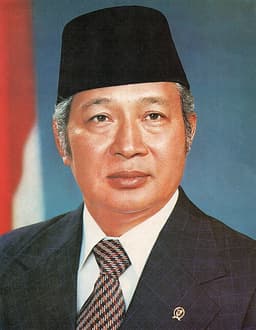
Soeharto
General · Modern
62.0Total
Basic Information
Born
1555
1921
Died
1600
—
Era
Modern
Modern
Nationality
Japan
Indonesia
Occupation
General
General
Civilization
Eastern
Eastern
Score Comparison
Military (10%)
47.5
55.0
Political (20%)
45.1
70.0
Influence (20%)
56.4
55.0
Legacy (20%)
43.3
58.0
Leadership (15%)
68.0
78.0
Strategy (15%)
60.0
60.0
TOTAL
52.6
62.0
Konishi Yukinaga — Complete Timeline
1583 AD
Conversion to ChristianityCultural
Konishi Yukinaga converted to Roman Catholicism under the influence of Jesuit missionaries. He became a Christian daimyo, supporting missionary work and building churches in his domain.
ChristianityDaimyoReligion
constructive
1592 AD
First Invasion of Korea (Imjin War)War◆ Major
Konishi Yukinaga led the Japanese vanguard in the invasion of Korea, capturing Busan and advancing to Seoul and Pyongyang. His forces faced resistance from Korean and Ming Chinese armies, leading to a stalemate.
Imjin WarJapanese InvasionKorea
Impact: regionaldestructive
1593 AD
Battle of ByeokjegwanWar◆ Major
Konishi Yukinaga's forces were defeated by a combined Korean and Ming Chinese army at Byeokjegwan near Seoul. This battle forced the Japanese to retreat from Pyongyang and negotiate a truce.
Imjin WarBattleDefeat
Impact: regionaltragic
1600 AD
Battle of SekigaharaWar
Konishi Yukinaga fought on the Western Army side under Ishida Mitsunari at Sekigahara. His forces were defeated by Tokugawa Ieyasu's Eastern Army, leading to his capture and execution.
SekigaharaBattleExecution
Impact: nationaltragic
Soeharto — Complete Timeline
1966 AD
Assumed Power via SupersemarPolitical Action
Soeharto received the Supersemar order from President Sukarno, granting him authority to restore order after the 30 September Movement. This marked the beginning of his rise to power.
Power TransitionSupersemarIndonesia
Impact: national
1967 AD
Inaugurated as Acting PresidentPolitical Action◆ Major
Soeharto was inaugurated as acting president, replacing Sukarno. He formally became president in 1968, beginning the New Order regime that lasted 32 years.
PresidencyNew OrderIndonesia
Impact: national
1975 AD
Invasion of East TimorWar◆ Major
Soeharto ordered the invasion of East Timor following its declaration of independence. The occupation resulted in widespread human rights abuses and an estimated 100,000-200,000 deaths.
InvasionEast TimorHuman Rights
Impact: regionaldestructive
1998 AD
Resignation Amidst Economic CrisisPolitical Action
Soeharto resigned as president after massive protests triggered by the Asian Financial Crisis. His resignation ended the New Order regime and led to democratic reforms.
ResignationCrisisReformasi
Impact: nationaltragic
Expert Analysis
Origins
Konishi Yukinaga was born around 1555 in Japan, the son of a wealthy merchant from Sakai. He rose through the ranks under Toyotomi Hideyoshi, becoming a daimyo. Notably, he converted to Roman Catholicism in the 1580s, influenced by Jesuit missionaries, and took the baptismal name 'Agostinho'. His upbringing in a commercial hub gave him diplomatic skills, but his faith set him apart in feudal Japan. Soeharto was born on 8 June 1921 in Kemusuk, a village in Java, Dutch East Indies. His father was a low-level civil servant, and he was raised by relatives after his parents' divorce. He attended a Dutch-run school but left at 17 to work. In 1940, he joined the Royal Netherlands East Indies Army, then switched to the Japanese-backed PETA during World War II. His humble origins shaped his pragmatism.
Rise to Power
Konishi Yukinaga gained prominence as a leading general in Hideyoshi's invasion of Korea (1592-1598). He commanded the vanguard, capturing Busan in May 1592 and advancing to Seoul and Pyongyang. His success earned him a domain in Higo Province. However, his defeat at the Battle of Byeokjegwan in 1593, where his forces were routed by a combined Chinese-Korean army, marked a turning point. He later sided with Ishida Mitsunari at the Battle of Sekigahara (1600) but was defeated by Tokugawa Ieyasu. Captured, he was executed in Kyoto on 6 November 1600. Soeharto rose through the Indonesian military. After independence, he suppressed regional rebellions and was appointed commander of the Diponegoro Division. During the 30 September Movement in 1965, he took control of the army and crushed the alleged communist coup. On 11 March 1966, he received the Supersemar order from President Sukarno, granting him authority to restore order. He maneuvered politically, sidelining Sukarno and becoming acting president in 1967, then president in 1968. His rise was marked by the massacre of hundreds of thousands of suspected communists.
Leadership & Governance
Konishi Yukinaga was a capable field commander but lacked political acumen. His leadership on the battlefield was proactive; he led from the front during the invasion of Korea. However, his conversion to Christianity alienated him from many samurai and likely influenced his decision to join the Western Army at Sekigahara. His governance of his domain was likely efficient but left little record. Soeharto's leadership was authoritarian and centralized. He established the 'New Order' regime, prioritizing stability and economic development. He implemented the 'Repelita' five-year plans, achieving rapid growth, but suppressed dissent through military force. His regime was marked by corruption, nepotism, and human rights abuses, including the occupation of East Timor (1975-1999). His political score of 70.0 reflects his ability to hold power for 32 years, while Konishi's 45.1 shows his failure in political maneuvering.
Triumph & Tragedy
Konishi Yukinaga's greatest success was his role in the initial phase of the Korean invasion, capturing major cities swiftly. His tragedy was his defeat at Sekigahara and execution. He failed to secure his position after the war and made a poor alliance choice. Soeharto's triumph was transforming Indonesia's economy from hyperinflation to sustained growth; GDP per capita rose from $50 in 1967 to over $1,000 in 1996. His tragedy was the Asian Financial Crisis of 1997-1998, which exposed crony capitalism and forced his resignation. His legacy is tarnished by authoritarianism and human rights violations. Soeharto's leadership score of 78.0 contrasts with Konishi's 68.0, but Konishi's influence (56.4) is similar to Soeharto's (55.0).
Character & Destiny
Konishi Yukinaga was a man of faith and ambition, but his Christian identity made him a target. His decision to join the Western Army at Sekigahara was likely driven by personal loyalty rather than strategic calculation. His destiny was sealed by the Tokugawa victory. Soeharto was pragmatic, cautious, and ruthless. He carefully built a network of loyalists and used the military to enforce his rule. His character—patient and calculating—allowed him to outmaneuver rivals. However, his inability to reform the economy or address corruption led to his downfall. Historians assess Soeharto as a development dictator who brought stability but at a high cost.
Legacy
Konishi Yukinaga is remembered as a Christian samurai and a competent general in the Imjin War. His legacy is minor, with a legacy score of 43.3. He is a footnote in Japan's unification era. Soeharto's legacy is more significant but contested. His New Order regime shaped modern Indonesia, but its authoritarian structures persisted. He left a legacy of economic growth and infrastructure, but also systemic corruption and unresolved human rights issues. His influence score of 55.0 is close to Konishi's 56.4, but his total score of 62.0 exceeds Konishi's 52.6.
Conclusion
Soeharto had a greater impact on history due to his 32-year rule over a nation of over 200 million people, shaping its political and economic trajectory. His total score of 62.0 against Konishi's 52.6 reflects his superior leadership and political skills. While Konishi Yukinaga's military campaigns were significant in the context of the Imjin War, they did not alter Japan's or Korea's long-term development. Soeharto's policies and their consequences continue to affect Indonesia today. The score gap of 9.4 points supports this assessment.
Rankings
🥇
SoehartoLeader
Mil: 55.0Pol: 70.0Inf: 55.0
62.0
🥈
Konishi Yukinaga
Mil: 47.5Pol: 45.1Inf: 56.4
52.6
+9.4 behind
How This Comparison Works
Algorithm
Each figure is scored on 6 dimensions (0—100 scale) based on structured historical data: Military (10%), Political (20%), Influence (20%), Legacy (20%), Leadership (15%), Strategy (15%). The weighted total produces the final ranking.
Data Sources
Scores are computed from structured sub-indicators in the database. Scale factors adjust for era (Ancient ×0.85, Modern ×1.0) and civilization size (Eastern ×1.05, Other ×0.80) to account for differences in population and military scale.
Maximum 3 Figures
Comparisons are limited to 2—3 figures to ensure readability and statistical meaningfulness.
Error Margins
±5 points per dimension — Sub-scores are derived from historical records with inherent uncertainty. Two figures within 5 points on a dimension should be considered roughly equivalent in that area.
Total Score Accuracy
±3 points overall — The weighted combination of 6 dimensions produces a total score with approximately ±3 points of uncertainty. Differences of less than 3 points are not statistically significant— the figures are effectively tied.
Known Limitations
- Historical records are incomplete and uneven across civilizations
- Figures from oral-tradition societies may be underrepresented
- Occupation labels can misclassify multi-role figures
- Scores measure capability and impact, not moral character
- Quantitative scoring is a comparison tool, not absolute truth
Capability Radar
Military (10%) — Battles & Warfare
Battles
55
35
Win Rate
40
40
Expansion
50
20
Political (20%) — Governance & Reform
Reform
20
55
Diplomacy
45
65
Economy
30
70
Influence (20%) — Cultural & Global Reach
Cultural
25
50
Global
25
55
Legacy (20%) — Historical Impact
Historical
30
60
Longevity
20
55
Leadership (15%) — Power & Stability
Tenure
40
85
Stability
35
75
Strategy (15%) — Tactics & Innovation
Strategy
45
45
Tactics
50
30
Reform
20
60
Similar Comparisons
Comments & Discussion
No comments yet. Be the first to share your thoughts!