Loading...
Alexander the Great vs Soeharto
Alexander the Great leads by 23.2 pts · 2 figures compared
…
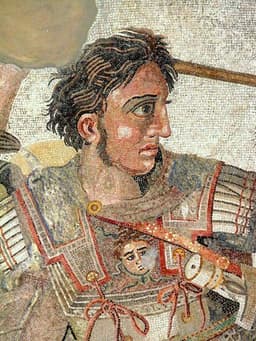
Alexander the Great
General · Ancient
85.2Total
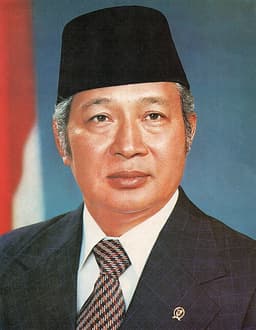
Soeharto
General · Modern
62.0Total
Basic Information
Born
-356
1921
Died
-323
—
Era
Ancient
Modern
Nationality
Macedon
Indonesia
Occupation
General
General
Civilization
Western
Eastern
Score Comparison
Military (10%)
95.0
55.0
Political (20%)
60.0
70.0
Influence (20%)
92.0
55.0
Legacy (20%)
90.0
58.0
Leadership (15%)
80.0
78.0
Strategy (15%)
92.0
60.0
TOTAL
85.2
62.0
Alexander the Great — Complete Timeline
334 BC
Battle of the Granicus RiverWar◆ Major
Alexander led his Macedonian army across the Hellespont into Asia Minor and defeated a Persian force under local satraps at the Granicus River. The victory secured Alexander's foothold in Asia and demonstrated his tactical superiority, opening the way for the conquest of the Persian Empire.
Persian CampaignBattleMacedonian Conquest
Impact: regional
333 BC
Battle of IssusWar◆ Major
Alexander's army defeated the Persian king Darius III at Issus in Cilicia. Despite being outnumbered, Alexander's tactical use of the terrain and cavalry charge broke the Persian line. Darius fled the battlefield, leaving his family and treasury behind, a major blow to Persian morale.
Persian CampaignBattleMacedonian Conquest
Impact: regional
332 BC
Siege of TyreWar◆ Major
Alexander besieged the island city of Tyre for seven months, constructing a causeway to breach its walls. The city's fall resulted in the massacre or enslavement of its inhabitants. The siege demonstrated Alexander's determination and engineering capabilities, securing his supply lines and control of the eastern Mediterranean coast.
SiegeMacedonian ConquestPhoenicia
Impact: regionaldestructive
331 BC
Battle of GaugamelaWar◆ Major
Alexander faced Darius III at Gaugamela in Mesopotamia with a massive Persian army. Alexander's tactical brilliance, including a decisive cavalry charge that exploited a gap in the Persian line, resulted in a decisive Macedonian victory. Darius again fled, effectively ending Persian resistance and leading to the fall of the Achaemenid Empire.
Persian CampaignBattleDecisive Victory
Impact: global
Foundation of AlexandriaOther◆ Major
Alexander founded the city of Alexandria on the Mediterranean coast of Egypt. He personally selected the site and oversaw the initial planning. Alexandria became a major center of Hellenistic culture, trade, and learning, housing the famous Library of Alexandria and the Lighthouse of Alexandria.
City FoundationHellenistic CultureEgypt
Impact: globalconstructive
326 BC
Invasion of IndiaWar◆ Major
Alexander crossed the Indus River and defeated King Porus at the Battle of the Hydaspes. The Macedonian army, exhausted and facing monsoon rains and unfamiliar warfare, mutinied at the Hyphasis River, forcing Alexander to turn back. This campaign marked the easternmost extent of his conquests.
Indian CampaignBattleMutiny
Impact: regional
Soeharto — Complete Timeline
1966 AD
Assumed Power via SupersemarPolitical Action
Soeharto received the Supersemar order from President Sukarno, granting him authority to restore order after the 30 September Movement. This marked the beginning of his rise to power.
Power TransitionSupersemarIndonesia
Impact: national
1967 AD
Inaugurated as Acting PresidentPolitical Action◆ Major
Soeharto was inaugurated as acting president, replacing Sukarno. He formally became president in 1968, beginning the New Order regime that lasted 32 years.
PresidencyNew OrderIndonesia
Impact: national
1975 AD
Invasion of East TimorWar◆ Major
Soeharto ordered the invasion of East Timor following its declaration of independence. The occupation resulted in widespread human rights abuses and an estimated 100,000-200,000 deaths.
InvasionEast TimorHuman Rights
Impact: regionaldestructive
1998 AD
Resignation Amidst Economic CrisisPolitical Action
Soeharto resigned as president after massive protests triggered by the Asian Financial Crisis. His resignation ended the New Order regime and led to democratic reforms.
ResignationCrisisReformasi
Impact: nationaltragic
Expert Analysis
Alexander the Great vs Soeharto
# The Conqueror and the Strongman: Alexander the Great and Soeharto
In 323 BCE, Alexander the Great lay dying in Babylon at thirty-two, having conquered the known world from Greece to India without losing a single battle. Two thousand three hundred years later, in May 1998, another general—Soeharto of Indonesia—sat in a Jakarta palace, watching his three-decade rule dissolve into protest and economic ruin. One died at the zenith of his glory; the other lived long enough to see his empire of power crumble. What separates a legend from a strongman? The answer lies not in their military records—Alexander’s 96.0 versus Soeharto’s 22.4—but in the nature of their ambition, the eras they inhabited, and the legacies they left behind.
Origins
Alexander was born into a world of swords and glory. His father, King Philip II of Macedon, had forged a formidable army and unified the fractious Greek city-states. Aristotle tutored the young prince, instilling in him the *Iliad* and a hunger for Homeric heroism. Alexander’s Macedon was a kingdom on the rise, surrounded by the vast Persian Empire—a world where a general could dream of conquest.
Soeharto emerged from a very different soil. Born in 1921 in a small Javanese village, he was the son of a minor irrigation official. The Dutch colonial East Indies offered little opportunity for a boy of humble origins. He joined the Dutch colonial army, then the Japanese-sponsored militia during World War II, and finally the Indonesian independence struggle. Java’s culture of hierarchy, deference, and *gotong royong*—mutual cooperation—shaped his worldview. Where Alexander inherited a kingdom, Soeharto inherited a chaotic postcolonial state.
Rise to Power
Alexander’s path was direct. When Philip was assassinated in 336 BCE, the twenty-year-old king immediately crushed rebellions in Thebes and Athens, then turned east. In 334 BCE, he crossed the Hellespont into Asia Minor with 40,000 men. The Persian king Darius III offered peace—half his empire, a daughter’s hand. Alexander’s general Parmenion said, “I would accept if I were Alexander.” Alexander replied, “So would I, if I were Parmenion.” He wanted everything.
Soeharto’s rise was more serpentine. In 1965, Indonesia was convulsed by a failed coup blamed on the Communist Party. General Soeharto, then commander of the army’s strategic reserve, moved decisively. He crushed the coup, then orchestrated a bloody purge of communists—some 500,000 dead. In March 1966, President Sukarno, weakened and isolated, signed the Supersemar order, granting Soeharto authority to restore order. By 1967, Soeharto was acting president; by 1968, he was president for life in all but name. Unlike Alexander, who seized glory on the battlefield, Soeharto seized power in the shadows.
Leadership & Governance
Alexander’s leadership was a paradox. On the battlefield, his tactical brilliance was unmatched—his 92.0 strategy score reflects his use of the phalanx, cavalry charges, and siege warfare. At Gaugamela in 331 BCE, he outflanked Darius’s massive army with a lightning strike, winning an empire. Yet his political score of 65.0 reveals his weakness: he could conquer but struggled to administer. He tried to fuse Greek and Persian cultures, marrying his officers to Persian noblewomen, but his empire fractured immediately after his death.
Soeharto governed with a different calculus. His military score of 22.4 is almost irrelevant—he fought no major wars, except the brutal 1975 invasion of East Timor, which killed perhaps 200,000 Timorese. His genius was political: a 69.3 score that understates his cunning. He built the “New Order” regime on three pillars: military control, economic development, and a web of patronage. He invited foreign investment, stabilized the economy, and raised living standards—but crushed dissent, imprisoned journalists, and enriched his family. His rule was stability at the price of freedom.
Triumph & Tragedy
Alexander’s greatest triumph was also his greatest tragedy. In 326 BCE, after years of marching through Persia, Afghanistan, and the Indus Valley, his army mutinied at the Hyphasis River. They refused to go further. Alexander wept—there were no more worlds to conquer. He turned back, but the return march through the Gedrosian Desert killed thousands. He died in Babylon in 323 BCE, possibly from fever, poison, or drink. His empire, untested in succession, collapsed into civil war.
Soeharto’s triumph was economic. By the 1990s, Indonesia was a “tiger economy,” growing at 7% annually. Poverty fell from 60% to 15%. His tragedy came in 1997–1998, when the Asian Financial Crisis struck. The rupiah collapsed, prices soared, and students filled the streets. Soeharto, now seventy-six, tried to cling to power, but his generals abandoned him. On May 21, 1998, he resigned—a quiet end to a thirty-two-year reign. He lived another decade in comfortable house arrest, watching his legacy tarnish.
Character & Destiny
Alexander was driven by *pothos*—a yearning for the unknown. He believed himself a god, the son of Zeus, and his hubris was his undoing. He burned Persepolis, murdered his friend Cleitus in a drunken rage, and refused to compromise. His personality shaped his destiny: a brilliant, reckless flame that burned out too fast.
Soeharto was a man of masks. Calm, paternal, and inscrutable—the Javanese ideal of *alus* (refined) power—he ruled through manipulation, not charisma. He never gave a memorable speech or fought a great battle. His personality was suited to his era: the Cold War, where stability trumped democracy, and a general could become a president by promising order. But when the crisis came, his system had no room for adaptation.
Legacy
Alexander’s legacy is immortal. He spread Hellenistic culture across three continents, founded cities like Alexandria, and inspired Caesar, Napoleon, and every conqueror who followed. His 90.0 influence and 90.0 legacy scores reflect a figure who transcends history—a symbol of human ambition.
Soeharto’s legacy is contested. His 72.2 legacy score is generous. In Indonesia, some remember him as the “Father of Development” who brought prosperity; others recall the corruption, the massacres, and the stolen democracy. East Timor remembers him as an invader. His name is absent from most global history books—a footnote in the story of the Cold War’s strongmen.
Conclusion
Alexander conquered the world and died young, becoming a legend. Soeharto conquered a nation and died old, becoming a cautionary tale. One sought glory; the other sought control. Their differences are not just of era or geography, but of the soul. Alexander believed in something beyond himself—a dream of unity, however flawed. Soeharto believed only in power. In the end, the conqueror’s empire crumbled, but his name still echoes. The strongman’s regime fell, and the world barely noticed. Perhaps that is the truest measure of greatness: not how long you rule, but how long you are remembered.
Rankings
🥇
Alexander the GreatLeader
Mil: 95.0Pol: 60.0Inf: 92.0
85.2
🥈
Soeharto
Mil: 55.0Pol: 70.0Inf: 55.0
62.0
+23.2 behind
How This Comparison Works
Algorithm
Each figure is scored on 6 dimensions (0—100 scale) based on structured historical data: Military (10%), Political (20%), Influence (20%), Legacy (20%), Leadership (15%), Strategy (15%). The weighted total produces the final ranking.
Data Sources
Scores are computed from structured sub-indicators in the database. Scale factors adjust for era (Ancient ×0.85, Modern ×1.0) and civilization size (Eastern ×1.05, Other ×0.80) to account for differences in population and military scale.
Maximum 3 Figures
Comparisons are limited to 2—3 figures to ensure readability and statistical meaningfulness.
Error Margins
±5 points per dimension — Sub-scores are derived from historical records with inherent uncertainty. Two figures within 5 points on a dimension should be considered roughly equivalent in that area.
Total Score Accuracy
±3 points overall — The weighted combination of 6 dimensions produces a total score with approximately ±3 points of uncertainty. Differences of less than 3 points are not statistically significant— the figures are effectively tied.
Known Limitations
- Historical records are incomplete and uneven across civilizations
- Figures from oral-tradition societies may be underrepresented
- Occupation labels can misclassify multi-role figures
- Scores measure capability and impact, not moral character
- Quantitative scoring is a comparison tool, not absolute truth
Capability Radar
Military (10%) — Battles & Warfare
Battles
98
35
Win Rate
99
40
Expansion
99
20
Political (20%) — Governance & Reform
Reform
75
55
Diplomacy
80
65
Economy
70
70
Influence (20%) — Cultural & Global Reach
Cultural
95
50
Global
95
55
Legacy (20%) — Historical Impact
Historical
98
60
Longevity
95
55
Leadership (15%) — Power & Stability
Tenure
60
85
Stability
55
75
Strategy (15%) — Tactics & Innovation
Strategy
98
45
Tactics
99
30
Reform
85
60
Similar Comparisons
Comments & Discussion
ConquerorCritic6/16/2026
Comparing Alexander’s 96.0 to Soeharto’s 22.4 in win rate is a joke—Alexander fought mostly disorganized Persian levies and tribal armies with a veteran Macedonian phalanx. Soeharto crushed actual nationalist guerrillas and put down regional revolts with less advanced tech. Give me Soeharto’s brutal pragmatism over Alexander’s glory-chasing any day. Real power isn’t about undefeated battles; it’s about surviving long enough to ruin your country.|
数据侦探6/16/2026
这个胜率对比就是数字魔术。亚历山大96.0?他打的仗里有多少是跟统一希腊的自家亲戚内斗?多少是靠老爹留的底子?索哈托22.4?要是把婆罗洲、亚齐的平叛算成“大胜”,那数字早爆了。你们佩服希腊小伙打仗漂亮,我服印尼老狐狸让数据替他说谎——这才是政治家的基本功。|
HomericHater6/16/2026
Sure, Alexander wept for more worlds to conquer—how poetic. Soeharto wept for his cronies’ bank accounts after the ’97 crash. Both built empires on blood: Alexander burned Persepolis for kicks; Soeharto ordered mass killings in East Timor. The real difference? Alexander died before anyone could put him on trial. Soeharto got his statue pissed on by protestors. Neither is a “legend” I’d want a beer with.|
东方评史6/16/2026
你们西方人总喜欢把亚历山大大帝包装成“青年天才”,可别忘了他是靠爹的遗产起家——腓力二世留下的马其顿方阵才是真功臣。索哈托算什么?他是靠自己一步步爬上去的,从日本兵到总统,像泥鳅一样滑。年轻人崇拜亚历山大打仗痛快,我老头欣赏索哈托活到老才垮——命长才是本事。|
RevisionistRover6/16/2026
Alexander’s “undefeated” myth dies on the fact that his army mutinied at the Hyphasis River—a pretty big L if you ask the troops who refused to march further into India. Soeharto’s New Order only fell when the IMF cut funding. Both saw their power evaporate when the little guys said “no more.” Spartan morale won’t save you from a budget crisis, folks.