Loading...
Julius Caesar vs Soeharto
Julius Caesar leads by 20.8 pts · 2 figures compared
…

Julius Caesar
General · Ancient
82.8Total
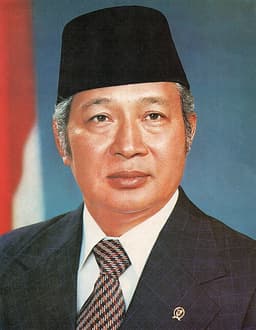
Soeharto
General · Modern
62.0Total
Basic Information
Born
-100
1921
Died
-44
—
Era
Ancient
Modern
Nationality
Roman Republic
Indonesia
Occupation
General
General
Civilization
Western
Eastern
Score Comparison
Military (10%)
88.0
55.0
Political (20%)
78.0
70.0
Influence (20%)
85.0
55.0
Legacy (20%)
82.0
58.0
Leadership (15%)
80.0
78.0
Strategy (15%)
85.0
60.0
TOTAL
82.8
62.0
Julius Caesar — Complete Timeline
58 BC
Gallic WarsWar◆ Major
Caesar, as proconsul of Gaul, launched a series of campaigns that conquered all of Gaul (modern France, Belgium, and parts of Switzerland). He fought numerous battles, including against the Helvetii, the Belgae, and the Gallic chieftain Vercingetorix. The wars brought immense wealth and a loyal army to Caesar.
Gallic WarsConquestRoman Expansion
Impact: regional
49 BC
Crossing the RubiconPolitical Action◆ Major
Caesar led Legio XIII across the Rubicon River into Italy, defying the Roman Senate's order to disband his army. This act triggered a civil war against Pompey and the Optimates, ultimately leading to Caesar's dictatorship and the end of the Roman Republic.
Roman Civil WarEnd of RepublicPower Struggle
Impact: global
48 BC
Battle of PharsalusWar◆ Major
Caesar's outnumbered army defeated the larger forces of Pompey the Great at Pharsalus in Greece. Caesar's tactical use of a reserve line to counter Pompey's cavalry charge proved decisive. Pompey fled to Egypt, where he was assassinated, leaving Caesar as the undisputed master of the Roman world.
Roman Civil WarBattleDecisive Victory
Impact: regional
44 BC
Appointment as Dictator for LifePolitical Action◆ Major
The Roman Senate appointed Caesar dictator perpetuo (dictator for life), granting him unprecedented personal power. This move concentrated military, legislative, and judicial authority in one person, effectively ending the Roman Republic's traditional system of checks and balances and alarming many senators.
DictatorshipEnd of RepublicPower Consolidation
Impact: regionaldestructive
Assassination on the Ides of MarchPolitical Action◆ Major
A group of Roman senators, led by Marcus Junius Brutus and Gaius Cassius Longinus, stabbed Caesar to death at a meeting of the Senate in the Theatre of Pompey. The assassination was intended to restore the Republic, but instead triggered another civil war that led to the rise of the Roman Empire.
AssassinationRoman PoliticsEnd of Republic
Impact: globaldestructive
Soeharto — Complete Timeline
1966 AD
Assumed Power via SupersemarPolitical Action
Soeharto received the Supersemar order from President Sukarno, granting him authority to restore order after the 30 September Movement. This marked the beginning of his rise to power.
Power TransitionSupersemarIndonesia
Impact: national
1967 AD
Inaugurated as Acting PresidentPolitical Action◆ Major
Soeharto was inaugurated as acting president, replacing Sukarno. He formally became president in 1968, beginning the New Order regime that lasted 32 years.
PresidencyNew OrderIndonesia
Impact: national
1975 AD
Invasion of East TimorWar◆ Major
Soeharto ordered the invasion of East Timor following its declaration of independence. The occupation resulted in widespread human rights abuses and an estimated 100,000-200,000 deaths.
InvasionEast TimorHuman Rights
Impact: regionaldestructive
1998 AD
Resignation Amidst Economic CrisisPolitical Action
Soeharto resigned as president after massive protests triggered by the Asian Financial Crisis. His resignation ended the New Order regime and led to democratic reforms.
ResignationCrisisReformasi
Impact: nationaltragic
Expert Analysis
Julius Caesar vs Soeharto
# The Rubicon and the Palace: Caesar and Soeharto
On a January morning in 49 BCE, a Roman general paused at a narrow stream in northern Italy. The Rubicon River was small, almost insignificant, yet crossing it meant war—an act of treason against the Senate that had ordered him to disband his army. Gaius Julius Caesar weighed the decision for a moment, then gave the order. "The die is cast," he reportedly said, and marched his legion into history.
Two thousand years later, on a March morning in 1966, an Indonesian general named Soeharto stood in the palace of President Sukarno in Jakarta. The old revolutionary leader, weakened by years of political crisis, had just handed him a document called Supersemar—an order granting Soeharto authority to restore order after the chaos of the 30 September Movement. Unlike Caesar's dramatic crossing, there was no river, no famous quote. Just a signature on paper. Yet both men, in that moment, crossed their own Rubicons. One would transform the world; the other would transform a nation.
Origins
Caesar was born into the patrician Julian clan, a family with ancient lineage but modest political influence in the late Republic. His father died when he was sixteen, leaving him to navigate Roman politics in an era of civil wars, corruption, and the twilight of republican institutions. He was educated in rhetoric, philosophy, and military arts—the tools of a Roman aristocrat who dreamed of glory.
Soeharto was born in 1921 in a small village in Java, the son of a low-level civil servant and a peasant woman. His childhood was marked by poverty and the death of his father; he was raised by relatives and spent his early years in traditional Javanese culture, which emphasized hierarchy, deference, and spiritual power. Unlike Caesar, he had no classical education—he trained as a soldier in the Dutch colonial army, then the Japanese occupation forces, then the Indonesian independence struggle. His world was not the forum and the battlefield of Gaul, but the rice paddies and jungles of an archipelago emerging from colonialism.
Rise to Power
Caesar's path to power was a masterclass in political ambition. He built alliances, borrowed fortunes to fund public spectacles, and rose through the Roman cursus honorum—quaestor, aedile, praetor, consul. His military genius bloomed in Gaul, where he conquered a vast territory, wrote commentaries that made him a legend, and forged a loyal army that would follow him anywhere. When the Senate ordered him to return to Rome without his troops, he chose war.
Soeharto's rise was more cautious, more patient. He was a competent but not brilliant officer during the Indonesian Revolution, known for his efficiency and loyalty rather than charisma. In the 1960s, as President Sukarno's regime lurched toward economic collapse and political chaos, Soeharto positioned himself as the steady hand. The attempted coup of 30 September 1965 was his opportunity: he crushed the rebellion, blamed the Communist Party, and systematically eliminated his rivals. By 1966, he held Supersemar; by 1967, he was acting president; by 1968, he had consolidated absolute power. Where Caesar seized glory, Soeharto seized control.
Leadership & Governance
Caesar governed as a reformer and dictator. He centralized authority, reformed the calendar, extended citizenship to provincials, and initiated massive public works. As a general, he was brilliant—his siege of Alesia, his lightning campaigns in Egypt and Asia Minor, his victory at Pharsalus against Pompey's larger army. His political wisdom, however, was flawed: he pardoned his enemies, underestimated their resentment, and failed to build lasting institutions for his reforms. He ruled as a king in all but name, and that cost him everything.
Soeharto's New Order regime was built on stability and development. He crushed dissent, imprisoned political opponents, and maintained power through a network of military loyalists, family cronies, and economic patronage. His achievements were real: Indonesia achieved food self-sufficiency, attracted foreign investment, and experienced decades of rapid economic growth. But the costs were immense—widespread corruption, the brutal occupation of East Timor (invaded in 1975), and the suppression of democracy. He was not a military genius; his strategy score of 57.6 reflects a career of cautious maneuvering rather than bold campaigns. His genius was political: a score of 69.3 in political maneuvering, built on patience, ruthlessness, and an understanding of Javanese traditions of power.
Triumph & Tragedy
Caesar's greatest moment was his triumph—the conquest of Gaul, the defeat of his rivals, the dictatorship that made him master of Rome. His tragedy was the Ides of March, 44 BCE, when sixty senators stabbed him to death in the Senate chamber. He had seen the conspiracy coming but walked into it anyway, perhaps believing his destiny was greater than their daggers.
Soeharto's greatest moment was the economic transformation of Indonesia—from hyperinflation and starvation in the 1960s to a rising middle class and regional power by the 1990s. His tragedy was the Asian Financial Crisis of 1997-1998, which shattered the economic miracle, triggered massive protests, and forced his resignation in May 1998. Unlike Caesar, he died in his bed in 2008, a wealthy man, but his legacy was already crumbling.
Character & Destiny
Caesar was driven by ambition, glory, and a belief in his own destiny. He was generous, charismatic, and ruthless when necessary. His personality shaped his decisions—the crossing of the Rubicon, the pardon of enemies, the refusal to take precautions against assassination. He believed he could control fate. He was wrong.
Soeharto was driven by a different force: the Javanese concept of *ratu adil*—the just king who brings order to a chaotic world. He saw himself as a father figure, a stabilizer, a man whose authority was natural and unquestionable. His personality was reserved, calculating, and deeply suspicious of open politics. He built a system that depended entirely on him, and when the crisis came, there was no one to succeed him.
Legacy
Caesar's legacy is the Roman Empire. His assassination led to another civil war, then to the rise of Augustus, and to a system of imperial rule that shaped Western civilization for two millennia. His name became synonymous with autocracy—"Caesar" became "Kaiser" and "Tsar." He is remembered as a military genius, a political revolutionary, and a warning about the dangers of absolute power.
Soeharto's legacy is more ambiguous. He is remembered in Indonesia as both a developer and a dictator—the man who brought stability and growth, but also corruption and repression. His New Order regime shaped modern Indonesia, for better and worse, but his fall left a country grappling with the institutions he never built. His legacy score of 72.2 reflects a figure who was neither transformative nor forgotten.
Conclusion
Two generals, two centuries, two worlds. Caesar crossed a river and changed history forever; Soeharto took a piece of paper and changed a nation for a generation. Both rose through violence, governed through will, and fell through the limits of their own systems. Caesar's tragedy was that he saw himself as a god; Soeharto's tragedy was that he saw himself as a father. In the end, both discovered that power, however absolute, is never permanent. The die is always cast, but history is the only judge.
Rankings
🥇
Julius CaesarLeader
Mil: 88.0Pol: 78.0Inf: 85.0
82.8
🥈
Soeharto
Mil: 55.0Pol: 70.0Inf: 55.0
62.0
+20.8 behind
How This Comparison Works
Algorithm
Each figure is scored on 6 dimensions (0—100 scale) based on structured historical data: Military (10%), Political (20%), Influence (20%), Legacy (20%), Leadership (15%), Strategy (15%). The weighted total produces the final ranking.
Data Sources
Scores are computed from structured sub-indicators in the database. Scale factors adjust for era (Ancient ×0.85, Modern ×1.0) and civilization size (Eastern ×1.05, Other ×0.80) to account for differences in population and military scale.
Maximum 3 Figures
Comparisons are limited to 2—3 figures to ensure readability and statistical meaningfulness.
Error Margins
±5 points per dimension — Sub-scores are derived from historical records with inherent uncertainty. Two figures within 5 points on a dimension should be considered roughly equivalent in that area.
Total Score Accuracy
±3 points overall — The weighted combination of 6 dimensions produces a total score with approximately ±3 points of uncertainty. Differences of less than 3 points are not statistically significant— the figures are effectively tied.
Known Limitations
- Historical records are incomplete and uneven across civilizations
- Figures from oral-tradition societies may be underrepresented
- Occupation labels can misclassify multi-role figures
- Scores measure capability and impact, not moral character
- Quantitative scoring is a comparison tool, not absolute truth
Capability Radar
Military (10%) — Battles & Warfare
Battles
95
35
Win Rate
92
40
Expansion
97
20
Political (20%) — Governance & Reform
Reform
90
55
Diplomacy
85
65
Economy
82
70
Influence (20%) — Cultural & Global Reach
Cultural
88
50
Global
94
55
Legacy (20%) — Historical Impact
Historical
95
60
Longevity
96
55
Leadership (15%) — Power & Stability
Tenure
75
85
Stability
60
75
Strategy (15%) — Tactics & Innovation
Strategy
94
45
Tactics
96
30
Reform
88
60
Similar Comparisons
Comments & Discussion
CrossroadsKing6/16/2026
The comparison is flawed because Caesar actually faced real consequences. Crossing the Rubicon meant potential execution if he failed; Soeharto just had Sukarno sign a piece of paper while the military already controlled Jakarta. One risked everything, the other risked nothing but dinner being delayed.
河界将军6/16/2026
评历史,别只数死人。苏哈托杀了五十万到一百万印尼人还敢自称父亲,凯撒在高卢杀了一百万也愿意承认战争残酷。真正区别不在数字,在人品。苏哈托不该和凯撒比,和波尔布特比才对。
Rhetorica6/16/2026
Caesar had charisma, style, and intellectual depth—wrote his own commentaries, debated Cicero, reformed the calendar. Soeharto? A Javanese bureaucrat who spoke in platitudes and let his wife's cronies run the economy. One built a legend, the other just built a bank account.
墨香史官6/16/2026
表面看都是权力交接,实质天差地别。凯撒过卢比孔河,是一个阶层挑战腐败元老院制度。苏哈托接苏佩玛尔,只是卡斯蒂派在内斗间隙换了个更强硬的军阀。前者改变西方千年历史走向,后者不过是印尼第五个暴君的替补。
DatalDude6/16/2026
Chessboard comparison needs context: Caesar's Rome totaled ~60M people; Soeharto's Indonesia ~110M. Using the "correlation of forces" metric, Caesar's dictatorship lasted 5 years before assassination, Soeharto's 32 years. Do the math on tyranny density per capita per year.