Loading...
Cao Cao vs Soeharto
Cao Cao leads by 15.5 pts · 2 figures compared
…
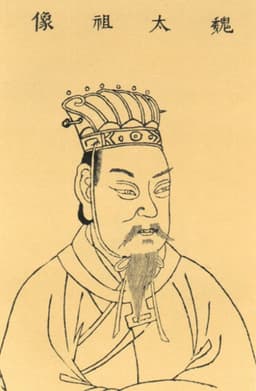
Cao Cao
General · Ancient
77.5Total
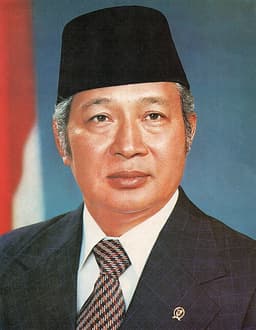
Soeharto
General · Modern
62.0Total
Basic Information
Born
155
1921
Died
220
—
Era
Ancient
Modern
Nationality
China
Indonesia
Occupation
General
General
Civilization
Eastern
Eastern
Score Comparison
Military (10%)
88.0
55.0
Political (20%)
59.0
70.0
Influence (20%)
82.0
55.0
Legacy (20%)
83.0
58.0
Leadership (15%)
64.4
78.0
Strategy (15%)
89.4
60.0
TOTAL
77.5
62.0
Cao Cao — Complete Timeline
190 AD
Formation of the Coalition against Dong ZhuoPolitical Action
Cao Cao joined a coalition of regional warlords led by Yuan Shao to overthrow the tyrannical chancellor Dong Zhuo, who had seized control of the Han court. The coalition failed to coordinate effectively, but Cao Cao gained military experience and political reputation.
CoalitionDong ZhuoHan Dynasty
Impact: national
196 AD
Implementation of Tuntian (Agricultural Colonies)Reform◆ Major
Cao Cao established military agricultural colonies (tuntian) to provide food for his army and refugees. Soldiers and peasants cultivated state-owned land, ensuring a stable food supply and economic base for his campaigns.
AgricultureEconomyMilitary
Impact: regionalconstructive
200 AD
Battle of GuanduWar
Cao Cao decisively defeated Yuan Shao's numerically superior army at Guandu. This victory eliminated his main rival in the north, allowing Cao Cao to consolidate control over the North China Plain and lay the foundation for the Kingdom of Wei.
BattleYuan ShaoUnification
Impact: regional
208 AD
Battle of Red CliffsWar
Cao Cao's southern campaign was halted by the allied forces of Sun Quan and Liu Bei at the Battle of Red Cliffs. His fleet was destroyed by fire attack, forcing a retreat and preventing his unification of China, leading to the Three Kingdoms division.
BattleDefeatThree Kingdoms
Impact: regional
213 AD
Establishment of the Kingdom of WeiPolitical Action◆ Major
Cao Cao was granted the title of Duke of Wei and later King of Wei by the Han emperor, effectively creating a semi-autonomous state within the empire. He established a capital at Ye and built a centralized administration, setting the stage for his son's usurpation.
WeiStatehoodHan Dynasty
Impact: national
Soeharto — Complete Timeline
1966 AD
Assumed Power via SupersemarPolitical Action
Soeharto received the Supersemar order from President Sukarno, granting him authority to restore order after the 30 September Movement. This marked the beginning of his rise to power.
Power TransitionSupersemarIndonesia
Impact: national
1967 AD
Inaugurated as Acting PresidentPolitical Action◆ Major
Soeharto was inaugurated as acting president, replacing Sukarno. He formally became president in 1968, beginning the New Order regime that lasted 32 years.
PresidencyNew OrderIndonesia
Impact: national
1975 AD
Invasion of East TimorWar◆ Major
Soeharto ordered the invasion of East Timor following its declaration of independence. The occupation resulted in widespread human rights abuses and an estimated 100,000-200,000 deaths.
InvasionEast TimorHuman Rights
Impact: regionaldestructive
1998 AD
Resignation Amidst Economic CrisisPolitical Action
Soeharto resigned as president after massive protests triggered by the Asian Financial Crisis. His resignation ended the New Order regime and led to democratic reforms.
ResignationCrisisReformasi
Impact: nationaltragic
Expert Analysis
Cao Cao vs Soeharto
# The General and the Strongman
On a sweltering summer day in 200, Cao Cao stood before the Yellow River at Guandu, his army outnumbered perhaps ten to one by Yuan Shao’s forces. He had gambled everything on a single battle. On a humid night in Jakarta in May 1998, Suharto sat in the presidential palace, the streets boiling with protesters, his thirty-two-year grip on Indonesia dissolving like morning mist. Two generals, two continents, fourteen centuries apart. One built an empire from chaos; the other built a regime that crumbled under its own weight. What separates a general who becomes a legend from one who becomes a footnote?
Origins
Cao Cao was born in 155, into the twilight of the Han dynasty—a world of crumbling institutions, eunuch intrigue, and peasant rebellion. His father was an adopted son of a powerful eunuch, giving Cao Cao connections but also a whiff of scandal in a society that prized pedigree. He grew up in Luoyang, the imperial capital, watching the rot from close quarters. He was clever, ruthless, and literate—a rare combination. He wrote poetry in the classical style even as he learned the art of war.
Suharto was born in 1921, in a small village in central Java, into a world of Dutch colonialism and Javanese mysticism. His father was a minor irrigation official who died when Suharto was young; his mother remarried several times. He grew up poor, in a culture that valued hierarchy, deference, and the belief that power flowed from spiritual authority. He was not particularly bookish. He joined the Dutch colonial army, then the Japanese-sponsored militia during World War II, then the Indonesian independence struggle. He learned to survive by bending with the wind.
Rise to Power
Cao Cao’s rise was violent and personal. In 190, he joined a coalition of warlords to overthrow Dong Zhuo, the tyrant who had seized the child emperor. The coalition failed—its leaders squabbled, its armies melted away. Cao Cao learned a bitter lesson: alliances are fragile, and only independent power matters. He spent the next decade fighting, scheming, and absorbing territory. His turning point came in 196, when he persuaded the Han emperor to move to his capital, Xuchang. He now held the imperial seal. He could issue decrees in the emperor’s name, making his enemies rebels. It was a masterstroke of political theater.
Suharto’s rise was more careful, more patient. He was a loyal officer in the Indonesian army, never the most brilliant, never the most ambitious—or so it seemed. The turning point came in 1965-66, after an abortive coup that killed six generals. Suharto, then commander of the army’s strategic reserve, seized the moment. He blamed the coup on the Communist Party, orchestrated a bloody purge that killed perhaps half a million people, and then extracted the Supersemar order from President Sukarno—a piece of paper that gave him authority to "restore order." By 1967, he was acting president. By 1968, he was president. The old order was gone, and the New Order had begun.
Leadership & Governance
Cao Cao governed through a blend of terror and pragmatism. He knew that a general who cannot feed his army is a general who loses his army. In 196, he implemented the *tuntian* system: military agricultural colonies where soldiers and refugees farmed state land, splitting the harvest. This solved his supply problem and settled the land. He also recruited talent without regard for pedigree—farmers, scholars, former enemies—anyone who could serve. His famous edicts on "seeking the worthy" are still quoted in China. He was harsh: he executed deserters, massacred cities that resisted, and once killed an entire household for hiding a fugitive. But he was also effective. He unified northern China, restored order, and patronized literature.
Suharto governed through a system of control. He built a regime that mixed military power, family cronyism, and Javanese paternalism. He called it the "New Order"—a promise of stability after the chaos of Sukarno’s Guided Democracy. The economy grew: foreign investment flowed in, rice production doubled, and a middle class emerged. But the growth was built on corruption. Suharto’s family and friends controlled the oil, the timber, the cloves, the toll roads. Anyone who challenged the system was crushed—journalists jailed, students shot, separatists bombed. In 1975, he ordered the invasion of East Timor, a former Portuguese colony that had declared independence. The occupation lasted twenty-four years and killed perhaps 200,000 people. Suharto called it "integration."
Triumph & Tragedy
Cao Cao’s greatest triumph was the Battle of Guandu in 200. Against a larger, better-supplied enemy, he burned Yuan Shao’s supply depot and routed his army. It was a victory of strategy over numbers, of nerve over hesitation. His greatest tragedy came eight years later, at the Battle of Red Cliffs in 208. He had unified the north and now marched south to conquer the rest of China. But his army, unaccustomed to naval warfare, was torched by the allied fleets of Sun Quan and Liu Bei. The defeat was catastrophic. It ended his dream of a unified China and set the stage for the Three Kingdoms period.
Suharto’s triumph was economic. In the 1970s and 1980s, Indonesia grew at over 7% a year. Poverty fell from 60% to under 20%. He was hailed by Western bankers as a model for the developing world. His tragedy was the Asian Financial Crisis of 1997-98. The rupiah collapsed, banks failed, and prices soared. The middle class that had grown under him now filled the streets. Suharto, old and isolated, could not adapt. He clung to power for months, then resigned in May 1998. His family’s fortune—estimated at tens of billions—became a global symbol of kleptocracy.
Character & Destiny
Cao Cao was a man of contradictions. He wrote tender poems about the suffering of the people, then ordered massacres. He admired loyalty, but killed his own friend when he became a rival. He said, "Rather I betray the world than the world betray me." His character was forged in the furnace of a dying dynasty, where only the ruthless survived. He died in 220, at age 65, of a brain tumor—according to some accounts. He left behind a unified north, a strong state, and a son who would found the Cao Wei dynasty.
Suharto was a man of masks. In public, he was the *bapak*—the father—smiling, calm, speaking in Javanese riddles. In private, he was cold and calculating. He believed in *nrimo*—acceptance of fate—but he also believed in accumulating power. His character was shaped by Javanese court culture, where power is something that must be held in balance, like a spinning top. He could not imagine letting go. When he finally resigned, he retreated to his family compound, rarely speaking in public again. He died in 2008, at age 86, still unrepentant.
Legacy
Cao Cao is remembered as a genius and a villain. In Chinese opera, he wears a white face—the color of treachery. But historians see a founder. He stabilized the north, reformed agriculture, and set the stage for the eventual reunification of China under the Jin dynasty. His poetry is still read. His strategies are still studied. He is, in the words of one scholar, "the most controversial figure in Chinese history."
Suharto is remembered as a developer and a dictator. Indonesia’s economy grew under him, but the cost was repression and corruption. His legacy is deeply contested. Some Indonesians remember the stability and the rice; others remember the disappeared and the dead. He left no enduring institutions, no intellectual tradition, no successor. His regime collapsed like a house of cards because it was built on nothing but power.
Conclusion
Two generals, two paths. Cao Cao fought in an age of open chaos, where a man could rise by force of will and talent. Suharto rose in an age of hidden order, where a man could rise by patience and manipulation. Cao Cao built a state that outlasted him; Suharto built a regime that depended on him. One is remembered as a founder, the other as a caretaker. The difference is not just in their actions, but in what they left behind. Cao Cao left a legacy of ambition and achievement; Suharto left a legacy of opportunity and betrayal. In the end, the general who writes poems is remembered longer than the general who only writes orders.
Rankings
🥇
Cao CaoLeader
Mil: 88.0Pol: 59.0Inf: 82.0
77.5
🥈
Soeharto
Mil: 55.0Pol: 70.0Inf: 55.0
62.0
+15.5 behind
How This Comparison Works
Algorithm
Each figure is scored on 6 dimensions (0—100 scale) based on structured historical data: Military (10%), Political (20%), Influence (20%), Legacy (20%), Leadership (15%), Strategy (15%). The weighted total produces the final ranking.
Data Sources
Scores are computed from structured sub-indicators in the database. Scale factors adjust for era (Ancient ×0.85, Modern ×1.0) and civilization size (Eastern ×1.05, Other ×0.80) to account for differences in population and military scale.
Maximum 3 Figures
Comparisons are limited to 2—3 figures to ensure readability and statistical meaningfulness.
Error Margins
±5 points per dimension — Sub-scores are derived from historical records with inherent uncertainty. Two figures within 5 points on a dimension should be considered roughly equivalent in that area.
Total Score Accuracy
±3 points overall — The weighted combination of 6 dimensions produces a total score with approximately ±3 points of uncertainty. Differences of less than 3 points are not statistically significant— the figures are effectively tied.
Known Limitations
- Historical records are incomplete and uneven across civilizations
- Figures from oral-tradition societies may be underrepresented
- Occupation labels can misclassify multi-role figures
- Scores measure capability and impact, not moral character
- Quantitative scoring is a comparison tool, not absolute truth
Capability Radar
Military (10%) — Battles & Warfare
Battles
95
35
Win Rate
88
40
Expansion
92
20
Political (20%) — Governance & Reform
Reform
88
55
Diplomacy
82
65
Economy
86
70
Influence (20%) — Cultural & Global Reach
Cultural
85
50
Global
75
55
Legacy (20%) — Historical Impact
Historical
92
60
Longevity
90
55
Leadership (15%) — Power & Stability
Tenure
85
85
Stability
78
75
Strategy (15%) — Tactics & Innovation
Strategy
96
45
Tactics
97
30
Reform
90
60
Similar Comparisons
Comments & Discussion
THE_BELEAGUERED_STRATEGIST6/16/2026
Cao Cao’s victory at Guandu wasn’t just a matter of luck or strategy—it was a logistical masterpiece. He burned Yuan Shao’s supply wagons while enduring a siege himself. Suharto’s 1998 collapse? That wasn’t a battle; it was a total failure of internal cohesion. Once his military patrons smelled weakness, they abandoned him. Cao Cao won because he controlled the supply lines, the information, and the morale of his troops. Suharto lost because his regime was a patronage network, not an army.
数据侦探6/16/2026
说曹操以少胜多?少来了。官渡之战前袁绍内部早就是散沙,田丰被打入大牢,许攸叛逃,张郃倒戈。曹操不过是收割了敌方内乱的果实。苏哈托的倒台呢?经济危机才是真操盘手,1997年印尼盾暴跌八成,IMF开条件才逼他下台。两个人都不是天才,只是风口上的猪——只不过一个风停了,一个居然把风给驯服了。
CLASSICS_FORENSIC6/16/2026
Put down the strategikon and pick up a history of self-deception. Suharto’s fatal error wasn’t economic mismanagement—it was ignoring the Javanese concept of *wahyu*, divine legitimacy. Every Dalang knows a puppet who claims the Light from Heaven while stealing from the masses will have the *wayang* strings cut by the ancestors. Cao Cao, by contrast, never claimed to be more than a Han loyalist—he left the Mandate of Heaven to his son. Suharto grabbed for god-status and got Jakarta’s pavement.
历史重构者6/16/2026
别把诸侯和独裁者比较到一块儿。曹操打的是军阀混战,目标是统一天下,周边刘备、孙权谁不是想踩他上位?苏哈托呢?他靠屠杀五十万“共党嫌疑”起家,手上沾满同胞血。曹操乱世杀人叫手段,苏哈托和平时期杀人叫罪行。拿军事天才跟屠夫比,不是历史比较,是历史误读。一个是枭雄,一个是暴君,中间隔着道德悬崖。