Loading...
Shaka Zulu vs Soeharto
Shaka Zulu leads by 8.2 pts · 2 figures compared
…
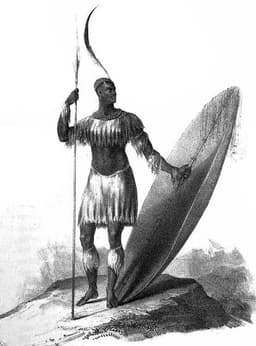
Shaka Zulu
General · Modern
70.2Total
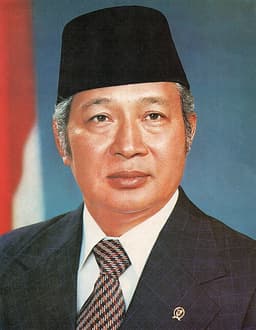
Soeharto
General · Modern
62.0Total
Basic Information
Born
1787
1921
Died
1828
—
Era
Modern
Modern
Nationality
Zulu Kingdom
Indonesia
Occupation
General
General
Civilization
Other
Eastern
Score Comparison
Military (10%)
80.0
55.0
Political (20%)
72.0
70.0
Influence (20%)
68.0
55.0
Legacy (20%)
68.0
58.0
Leadership (15%)
62.0
78.0
Strategy (15%)
80.8
60.0
TOTAL
70.2
62.0
Shaka Zulu — Complete Timeline
1816 AD
Introduction of the iklwa and horns of the buffalo formationReform
Shaka introduced the iklwa, a short stabbing spear, and the 'horns of the buffalo' tactical formation to the Zulu army. These innovations replaced the traditional throwing assegai and allowed for close-quarters combat, significantly increasing the Zulu's military effectiveness and enabling rapid conquest.
Military InnovationTacticsZulu Warfare
Impact: regional
1819 AD
Conquest of the Ndwandwe KingdomWar◆ Major
Shaka's Zulu army defeated the Ndwandwe kingdom at the Battle of Gqokli Hill, a decisive victory that eliminated a major rival. This conquest allowed Shaka to consolidate control over a large territory in present-day KwaZulu-Natal, marking the rise of the Zulu as a dominant regional power.
ConquestZulu ExpansionNdwandwe
Impact: regional
1828 AD
Assassination of ShakaPolitical Action◆ Major
Shaka was assassinated by his half-brothers Dingane and Mhlangana, with the support of his aunt Mkabayi. The coup ended his reign of terror and expansionist wars, leading to a period of instability and the eventual rise of Dingane as king.
AssassinationSuccession CrisisZulu Kingdom
Impact: regionaltragic
Soeharto — Complete Timeline
1966 AD
Assumed Power via SupersemarPolitical Action
Soeharto received the Supersemar order from President Sukarno, granting him authority to restore order after the 30 September Movement. This marked the beginning of his rise to power.
Power TransitionSupersemarIndonesia
Impact: national
1967 AD
Inaugurated as Acting PresidentPolitical Action◆ Major
Soeharto was inaugurated as acting president, replacing Sukarno. He formally became president in 1968, beginning the New Order regime that lasted 32 years.
PresidencyNew OrderIndonesia
Impact: national
1975 AD
Invasion of East TimorWar◆ Major
Soeharto ordered the invasion of East Timor following its declaration of independence. The occupation resulted in widespread human rights abuses and an estimated 100,000-200,000 deaths.
InvasionEast TimorHuman Rights
Impact: regionaldestructive
1998 AD
Resignation Amidst Economic CrisisPolitical Action
Soeharto resigned as president after massive protests triggered by the Asian Financial Crisis. His resignation ended the New Order regime and led to democratic reforms.
ResignationCrisisReformasi
Impact: nationaltragic
Expert Analysis
Shaka Zulu vs Soeharto
# The Spear and the Suit: Shaka Zulu and Soeharto, Architects of Power
On a hillside in present-day KwaZulu-Natal in 1828, a king lay bleeding from a dozen stab wounds, his last breath a whisper of betrayal. Half a world away and a century later, in the sweltering heat of Jakarta in May 1998, another ruler sat in a silent palace, the roar of a million protesters outside his windows signaling the end of an era. Shaka Zulu and Soeharto—one a warrior who forged an empire with iron and blood, the other a general who built a nation with bureaucracy and fear—stand as starkly contrasting answers to the same question: how does a man seize and hold power in a world of chaos?
Origins
Shaka was born an outcast. The illegitimate son of a minor Zulu chief, Senzangakhona, he spent his childhood in exile among the rival Mthethwa clan, mocked for his lineage and beaten for his pride. The land of early 19th-century southern Africa was a patchwork of small chieftaincies, locked in constant cattle raids and skirmishes. Violence was the air children breathed, and Shaka learned early that mercy was a luxury no one could afford. His mother, Nandi, instilled in him a ferocious will to survive, but the world gave him no reason to trust.
Soeharto was born into a different kind of poverty—a Javanese peasant family in the Dutch East Indies, where the colonial order was as rigid as any tribal hierarchy. His father, a minor irrigation official, died when Soeharto was young, and the boy was passed between relatives. But Java in the 1920s was not the Zulu kingdom; it was a system of clerks and schools, of Islamic mysticism and Dutch bureaucracy. Soeharto learned to read ledgers as well as faces, to smile while calculating. Where Shaka learned to fight, Soeharto learned to wait.
Rise to Power
Shaka’s ascent was a thunderclap. In 1816, after his father’s death, he returned to the Zulu clan with a small band of Mthethwa warriors. He seized the chieftaincy not through inheritance but through a swift, bloody coup, killing his half-brother Sigujana. Then he did what no one had done before: he reorganized his army from the ground up. He replaced the long throwing spear with the *iklwa*—a short, heavy-bladed stabbing weapon named for the sucking sound it made when pulled from a body—and drilled his men into a disciplined force that could close with an enemy in minutes, not hours. In 1819, at the Battle of Gqokli Hill, his Zulu army of perhaps 4,000 men faced the Ndwandwe kingdom’s 12,000. Shaka used his "horns of the buffalo" formation—a center to pin the enemy, and two flanking wings to encircle them—and annihilated his foes. The Ndwandwe king fled; the Zulu empire was born.
Soeharto’s rise was a slow-motion coup, a decade-long chess game. In 1965, Indonesia was tearing itself apart. President Sukarno, the charismatic revolutionary, had veered left, while the army, led by General Suharto (as he then spelled it), watched with growing alarm. The September 30 Movement—a supposed communist coup attempt—gave Soeharto his moment. He crushed the uprising in a single night, then spent months purging the military and the countryside of communist sympathizers, in a wave of killings that claimed hundreds of thousands of lives. In 1966, he received the Supersemar order—a piece of paper that transferred executive authority from a weakened Sukarno to him. It was a legal document, but it was backed by tanks. By 1967, he was acting president; by 1968, the New Order had begun.
Leadership & Governance
Shaka ruled through terror and transformation. He conscripted every able-bodied man into his regiments, forbade marriage until a soldier had killed an enemy, and broke the power of the hereditary chiefs by placing his own appointees over conquered territories. His military genius was undeniable—the *iklwa* and the buffalo horns were copied by enemies and allies alike—but his political wisdom was brittle. He centralized everything around his own person, leaving no institution that could survive him.
Soeharto ruled through co-option and control. He created a system—the New Order—where the army had a formal political role, where businessmen needed his approval to operate, and where elections were staged performances. He built schools, roads, and factories, and Indonesia’s economy grew at 7 percent a year for two decades. But the price was corruption on a staggering scale, and a secret police that crushed dissent. Soeharto’s genius was not military—his 1975 invasion of East Timor was a brutal, costly slog—but political. He understood that power in the modern world came not from the battlefield but from the budget.
Triumph & Tragedy
Shaka’s greatest triumph was the Zulu nation itself. In twelve years, he united dozens of warring clans into a single kingdom that stretched from the Indian Ocean to the Drakensberg Mountains. His greatest tragedy was his own paranoia. After his mother Nandi died in 1827, he ordered a year of mourning that banned planting crops, drinking milk, or having sex—a decree that caused a famine. He executed anyone who smiled. His half-brothers, fearing for their lives, struck first. On September 22, 1828, they stabbed him to death. He was 41.
Soeharto’s triumph was stability. After the chaos of Sukarno’s fall, he gave Indonesia 32 years of peace and growth—a rare achievement in the developing world. His tragedy was that the system he built for his own survival hollowed out the country’s institutions. When the Asian Financial Crisis hit in 1997, the rupiah collapsed, and the protests began. Soeharto, aged 76, clung to power for six months, offering reforms no one believed. On May 21, 1998, he resigned, a broken man in a dark suit. He died in 2008, still unrepentant.
Character & Destiny
Shaka was a man of fire—impulsive, brilliant, and incapable of compromise. He saw the world as a battlefield and treated every relationship as a tactical problem. That intensity built an empire, but it also isolated him. He had no allies, only subordinates and enemies.
Soeharto was a man of ice. He was famously inscrutable, rarely raising his voice, always calculating. He saw the world as a network of interests to be balanced. That patience kept him in power for three decades, but it also made him blind to the moment when the balance shifted against him. He could not adapt because he had never needed to.
Legacy
Shaka’s legacy is the Zulu identity itself. Today, millions of people call themselves Zulu, speak isiZulu, and trace their heritage to his kingdom. He is remembered as a founding father, a military genius, and a cautionary tale about the costs of absolute power. His innovations in warfare influenced armies across Africa, and his story has been told in books, films, and songs worldwide.
Soeharto’s legacy is more ambiguous. In Indonesia, some remember him as the "Father of Development" who brought prosperity; others recall the corruption, the repression, and the genocide in East Timor. His New Order institutions crumbled after his fall, but the habits of deference and cronyism linger. He is a ghost who still haunts Indonesian politics.
Conclusion
Two generals, two centuries, two empires. Shaka built a kingdom with a spear and died in a pool of his own blood. Soeharto built a state with a pen and died in a hospital bed, surrounded by family. One created a nation from nothing; the other preserved a nation from collapse. Both understood that power is a kind of violence—the difference is only in how it is wielded. And both learned, in the end, that the tools of power can cut the hand that holds them.
Rankings
🥇
Shaka ZuluLeader
Mil: 80.0Pol: 72.0Inf: 68.0
70.2
🥈
Soeharto
Mil: 55.0Pol: 70.0Inf: 55.0
62.0
+8.2 behind
How This Comparison Works
Algorithm
Each figure is scored on 6 dimensions (0—100 scale) based on structured historical data: Military (10%), Political (20%), Influence (20%), Legacy (20%), Leadership (15%), Strategy (15%). The weighted total produces the final ranking.
Data Sources
Scores are computed from structured sub-indicators in the database. Scale factors adjust for era (Ancient ×0.85, Modern ×1.0) and civilization size (Eastern ×1.05, Other ×0.80) to account for differences in population and military scale.
Maximum 3 Figures
Comparisons are limited to 2—3 figures to ensure readability and statistical meaningfulness.
Error Margins
±5 points per dimension — Sub-scores are derived from historical records with inherent uncertainty. Two figures within 5 points on a dimension should be considered roughly equivalent in that area.
Total Score Accuracy
±3 points overall — The weighted combination of 6 dimensions produces a total score with approximately ±3 points of uncertainty. Differences of less than 3 points are not statistically significant— the figures are effectively tied.
Known Limitations
- Historical records are incomplete and uneven across civilizations
- Figures from oral-tradition societies may be underrepresented
- Occupation labels can misclassify multi-role figures
- Scores measure capability and impact, not moral character
- Quantitative scoring is a comparison tool, not absolute truth
Capability Radar
Military (10%) — Battles & Warfare
Battles
85
35
Win Rate
90
40
Expansion
88
20
Political (20%) — Governance & Reform
Reform
85
55
Diplomacy
60
65
Economy
65
70
Influence (20%) — Cultural & Global Reach
Cultural
80
50
Global
70
55
Legacy (20%) — Historical Impact
Historical
85
60
Longevity
75
55
Leadership (15%) — Power & Stability
Tenure
70
85
Stability
55
75
Strategy (15%) — Tactics & Innovation
Strategy
90
45
Tactics
95
30
Reform
98
60
Similar Comparisons
Comments & Discussion
SpearGrip6/16/2026
Military historian here. Shaka revolutionized warfare with the iklwa short stabbing spear and the "buffalo horns" formation, but let's be honest—his empire relied on terror and total destruction. Soeharto used Western-backed military aid and mass killings in 1965-66 to crush rivals. Both were brutal strategists who understood that power requires annihilating opposition before they organize. Shaka's Madhlangubo dance was intimidation; Soeharto's New Order was bureaucratic terror. Different tools,
数据铁鞭6/16/2026
作为数据怀疑论者,我注意到一个关键差异:Shaka统治的Zulu王国约20万平方公里,人口约25万;而Soeharto控制着印尼190万平方公里,2亿人口。比较军事天才与官僚独裁者,就像比较核弹与机关枪。你无法用"效率"量化屠杀,但数据不会说谎:Shaka的Mfecane导致百万死亡,Soeharto的1965年大屠杀约50万至100万。规模不同,残酷等价。
ClassicsCipher6/16/2026
As a structuralist, I see Shaka as a Spartan helot turned tyrant—he used age-regiment systems (amabutho) to forge a warrior cult from scattered clans. Soeharto, contrastingly, played Dutch colonial divide-and-rule, co-opting Islamic and Communist factions. Shaka's power was personal, based on ritualized violence and loyalty; Soeharto's was institutional, hidden behind Pancasila rhetoric. One built a kingdom on spears, the other a kleptocracy on contracts. Both architects of fragile systems.
历史篡改师6/16/2026
Shaka被欧洲传教士们美化为"非洲拿破仑",实际他屠杀了无数族人,包括孕妇和小孩。而Soeharto在西方叙事中只是"发展独裁者",可他的家属控制了印尼40%的经济命脉。比较这两者,就是比较赤裸裸的暴力与虚伪的财政腐败。Shaka至少没伪装成民主派,Soeharto却搞了个假选举和Pancasila面具。我选原始暴力,因为它不撒谎。
Chronicler23706/16/2026
What strikes me is the legacy of paranoia. Shaka's constant purges—killing his own generals, burning villages—created a culture of suspicion that weakened the Zulu after his death. Soeharto's anti-communist purges and subsequent "black operation" surveillance state instilled fear across generations. Both rulers rooted power in trauma, but Shaka's violence was passionate, Soeharto's clinical. In the end, both fell to betrayal from within their own systems. Brutal symmetry.