Loading...
Justo Rufino Barrios vs Sitiveni Rabuka
Justo Rufino Barrios leads by 6.9 pts · 2 figures compared
…
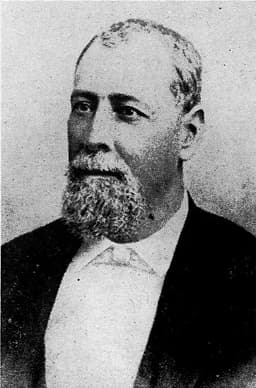
Justo Rufino Barrios
General · Modern
58.6Total
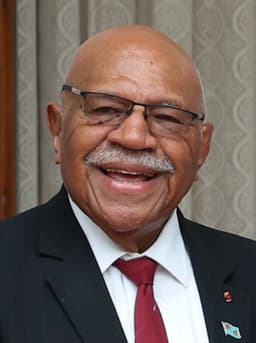
Sitiveni Rabuka
General · Modern
51.7Total
Basic Information
Born
1835
1948
Died
1885
—
Era
Modern
Modern
Nationality
Guatemala
Fiji
Occupation
General
General
Civilization
Western
Other
Score Comparison
Military (10%)
52.5
10.2
Political (20%)
72.0
60.0
Influence (20%)
60.0
53.3
Legacy (20%)
49.2
46.7
Leadership (15%)
65.0
85.0
Strategy (15%)
55.0
39.6
TOTAL
58.6
51.7
Justo Rufino Barrios — Complete Timeline
1871 AD
Enacted the Liberal Reforms of 1871Reform
Justo Rufino Barrios, after coming to power, implemented sweeping liberal reforms. These included the separation of church and state, confiscation of church lands, establishment of secular education, and promotion of coffee cultivation for export.
GuatemalaLiberal ReformSecularization
Impact: nationalprogressive
1873 AD
Modernized Guatemala's InfrastructureReform◆ Major
Barrios oversaw the construction of roads, telegraph lines, and railways, particularly to support coffee exports. He also promoted immigration and foreign investment, transforming Guatemala's economy.
GuatemalaInfrastructureEconomic Development
Impact: nationalconstructive
1885 AD
Killed at the Battle of ChalchuapaWar
Barrios was killed in battle at Chalchuapa, El Salvador, while leading an invasion to forcibly reunify Central America. His death ended the unification attempt and preserved the sovereignty of the individual Central American states.
Central AmericaBattleDeath
Impact: regionaltragic
Declared the Unification of Central AmericaPolitical Action◆ Major
Barrios unilaterally declared the reunification of the Central American republics by force. He issued a decree proclaiming himself supreme military commander of a unified Central America, leading to war with neighboring states.
Central AmericaUnificationWar
Impact: regionaldestructive
Sitiveni Rabuka — Complete Timeline
1987 AD
1987 Fijian Coup d'étatPolitical Action
Rabuka, as a colonel in the Fijian military, led a coup overthrowing the elected government of Timoci Bavadra. The coup was motivated by ethnic Fijian opposition to Indo-Fijian political influence. Rabuka declared Fiji a republic.
CoupMilitary InterventionEthnic Tension
Impact: nationaldestructive
1992 AD
1992 Election as Prime MinisterPolitical Action◆ Major
Rabuka transitioned from military leader to civilian politician, winning the 1992 general election as leader of the Fijian Political Party. He became Prime Minister, serving until 1999.
ElectionCivilian GovernmentPolitical Transition
Impact: national
1997 AD
1997 Constitution ReformReform◆ Major
Rabuka's government oversaw the adoption of a new constitution that removed ethnic-based voting and provided for a multi-ethnic government. The constitution aimed to reduce ethnic tensions and promote national unity.
ConstitutionReformEthnic Reconciliation
Impact: nationalconstructive
1999 AD
1999 General Election DefeatPolitical Action◆ Major
Rabuka's government was defeated in the general election by the Labour Party led by Mahendra Chaudhry. Rabuka stepped down as Prime Minister, marking the end of his first period in power.
Election DefeatGovernment ChangeChaudhry
Impact: national
2022 AD
2022 Return as Prime MinisterPolitical Action◆ Major
Rabuka led the People's Alliance to victory in the 2022 general election, forming a coalition government. He became Prime Minister again, 23 years after his previous tenure, promising democratic reforms.
ElectionReturn to PowerCoalition Government
Impact: national
Expert Analysis
Sitiveni Rabuka vs Justo Rufino Barrios
### The General Who Came Back
In the annals of history, few figures embody the paradox of the soldier-politician quite like Sitiveni Rabuka of Fiji and Justo Rufino Barrios of Guatemala. One overthrew a government in a coup, only to later become its democratic leader, returning to power after a generation. The other, a liberal reformer, died on a battlefield trying to forge a nation that never was. Their lives, separated by a century and a hemisphere, ask a single, haunting question: When a man takes power by the sword, can he ever truly lay it down?
### Origins
Sitiveni Rabuka was born in 1948 in the quiet village of Nakobo on the island of Vanua Levu, a son of a Methodist minister. His world was one of communal tradition, where the authority of chiefs and the rhythms of the sugar cane harvest defined life. The British colonial administration had left Fiji a deeply divided society, with indigenous Fijians owning the land and Indo-Fijian descendants of indentured laborers dominating the economy. Rabuka, a tall, athletic man, found his path in the military, a force trained in the British tradition of discipline and hierarchy. He was not a revolutionary by birth; he was an officer, a man of order.
Justo Rufino Barrios, born in 1835 in San Lorenzo, Guatemala, was a different breed. He was a *criollo* landowner from the coffee-growing highlands, a man of ambition and fire. His Guatemala was a feudal theocracy, dominated by the Catholic Church and conservative landowners. Barrios was a product of the Liberal era, a time when men believed progress could be legislated and tradition could be dynamited. He was a reformer with a gun, a man who saw the past as an enemy to be conquered.
### Rise to Power
Rabuka’s rise was sudden and, in a sense, reluctant. In 1987, a multi-ethnic coalition government led by Timoci Bavadra took power, threatening the political dominance of indigenous Fijians. Colonel Rabuka, then a 38-year-old military officer, acted. On May 14, he marched into Parliament, arrested the government, and declared martial law. It was a clean, efficient coup, carried out with the precision of a parade ground. He later claimed he did it to protect the indigenous Fijian way of life, but the act branded him a usurper. The world condemned him, and Fiji was expelled from the Commonwealth.
Barrios’s rise was a war. He fought alongside General Miguel García Granados in the 1871 Liberal Revolution, a bloody rebellion against the conservative regime. When Granados stepped down in 1873, Barrios was ready. He was elected president and never looked back. There was no hesitation, no apology. He seized power because he believed he was destined to modernize Guatemala. Where Rabuka’s coup was a defensive act to preserve a traditional order, Barrios’s was an offensive act to destroy one.
### Leadership & Governance
As a ruler, Rabuka proved to be a man of evolution. After leading the coup, he became prime minister in 1992, but his government was a balancing act between the military, the chiefs, and the Indo-Fijian community. His greatest achievement came in 1997, when he pushed through a new constitution that abolished ethnic voting and created a multi-racial democracy. It was an act of remarkable statesmanship from a man who had once torn the constitution apart. He lost the 1999 election and stepped down peacefully—a rare grace for a coup leader. Then, in 2022, at the age of 74, he returned as prime minister, leading a coalition government. He had come full circle.
Barrios ruled with a different energy. He was the architect of Guatemala’s Liberal Reforms of 1871: he separated church and state, expelled the Jesuits, established secular education, and seized church lands. He built railways, telegraph lines, and roads, all to fuel the coffee boom. But his reforms were not gentle. They were imposed by decree, and the indigenous Maya, whose communal lands were privatized, bore the cost. Barrios was a builder, but he built with a hammer, not a handshake.
### Triumph & Tragedy
Rabuka’s triumph was his return. To be a coup leader, then a democrat, then an opposition figure, and then a prime minister again, is a story of personal redemption that few political figures anywhere have achieved. His tragedy was the same: he could never escape the shadow of 1987. His 1997 constitution was a masterpiece of compromise, but it could not erase the ethnic wounds he had opened.
Barrios’s triumph was his vision of a unified Central America. In 1885, he declared the reunification of the isthmus by force. He led an army into El Salvador, believing he could recreate the old Federal Republic of Central America. His tragedy came on April 2, 1885, at the Battle of Chalchuapa. He was shot dead, leading a charge. His dream died with him. The Union of Central America, for which he gave his life, never materialized.
### Character & Destiny
Rabuka was a man of contradictions. He was a Methodist lay preacher who staged a coup, a nationalist who wrote a multi-racial constitution, a soldier who became a statesman. His personality was shaped by a deep, almost religious sense of duty to his people, but also by a pragmatic willingness to change. He was not a visionary like Barrios; he was a fixer, a man who reacted to events and then tried to repair them.
Barrios was a man of certainty. He believed in progress, in the power of the state, and in his own destiny. He was a liberal who used authoritarian methods, a democrat who died a dictator. His character was forged in the crucible of 19th-century *caudillismo*, where a man’s word was his bond and his rifle was his argument. He could not compromise because he saw no virtue in it.
### Legacy
Rabuka is remembered in Fiji as a flawed but essential figure. Some see him as the man who saved indigenous Fijian land rights; others see him as the man who destroyed the nation’s reputation. His legacy is a living one, still being written as he governs today. He proved that a coup leader can return to democracy, but the scars of his actions remain.
Barrios is remembered as the “Reformer of Guatemala,” his face on the 50-centavo coin, his name on streets and towns. But his legacy is contested. He modernized Guatemala, but he also dispossessed the Maya and sowed the seeds of a century of military rule. His statue in Guatemala City stands as a monument to ambition, both noble and tragic.
### Conclusion
Standing at the foot of Barrios’s equestrian statue in Guatemala City, one feels the weight of a dream that died in a single battle. In Suva, walking past the Parliament building Rabuka once stormed, one sees a building that still stands, still functions, still argues. The difference between these two generals is the difference between a man who learned to govern and a man who only knew how to conquer. Rabuka, for all his faults, found a way to put the gun down and pick up the ballot box. Barrios, for all his vision, could never stop pulling the trigger. History, in its quiet way, rewards the one who learns to listen.
Rankings
🥇
Justo Rufino BarriosLeader
Mil: 52.5Pol: 72.0Inf: 60.0
58.6
🥈
Sitiveni Rabuka
Mil: 10.2Pol: 60.0Inf: 53.3
51.7
+6.9 behind
How This Comparison Works
Algorithm
Each figure is scored on 6 dimensions (0—100 scale) based on structured historical data: Military (10%), Political (20%), Influence (20%), Legacy (20%), Leadership (15%), Strategy (15%). The weighted total produces the final ranking.
Data Sources
Scores are computed from structured sub-indicators in the database. Scale factors adjust for era (Ancient ×0.85, Modern ×1.0) and civilization size (Eastern ×1.05, Other ×0.80) to account for differences in population and military scale.
Maximum 3 Figures
Comparisons are limited to 2—3 figures to ensure readability and statistical meaningfulness.
Error Margins
±5 points per dimension — Sub-scores are derived from historical records with inherent uncertainty. Two figures within 5 points on a dimension should be considered roughly equivalent in that area.
Total Score Accuracy
±3 points overall — The weighted combination of 6 dimensions produces a total score with approximately ±3 points of uncertainty. Differences of less than 3 points are not statistically significant— the figures are effectively tied.
Known Limitations
- Historical records are incomplete and uneven across civilizations
- Figures from oral-tradition societies may be underrepresented
- Occupation labels can misclassify multi-role figures
- Scores measure capability and impact, not moral character
- Quantitative scoring is a comparison tool, not absolute truth
Capability Radar
Military (10%) — Battles & Warfare
Battles
45
5
Win Rate
55
5
Expansion
55
5
Political (20%) — Governance & Reform
Reform
70
50
Diplomacy
45
45
Economy
55
40
Influence (20%) — Cultural & Global Reach
Cultural
40
30
Global
30
20
Legacy (20%) — Historical Impact
Historical
50
40
Longevity
35
30
Leadership (15%) — Power & Stability
Tenure
50
55
Stability
30
35
Strategy (15%) — Tactics & Innovation
Strategy
50
10
Tactics
40
10
Reform
60
5
Similar Comparisons
Comments & Discussion
The Sword-Turned-Scepter6/16/2026
Rabuka's arc is the real "once a general, always a politician" story, but let's call it what it is: he only gave up power when it no longer served him or his allies. He overthrew a coalition government in 1987 because it threatened indigenous Fijian dominance — pure ethnic nationalism in epaulets. Then in 1999 he lost the election fair and square, spent years in the wilderness, and crawled back in 2022 only after Fiji’s coup cycle had exhausted itself. He didn't evolve; he just outlasted everyon
The Coffee Baron's Gambit6/16/2026
Barrios才是真正的理想主义者——他要用联邦制火炮把中美洲从保守派僧侣手里炸醒。1871年他靠咖啡大亨的银弹和自由派军官团杀进危地马拉城,然后干了什么?没收教会地产、建铁路、搞世俗教育,最后在查尔丘阿帕被萨尔瓦多军队乱枪打死。他为"中美洲统一"这种疯子梦想送了命,而Rabuka连自己国家的土地改革都不敢碰。一个是堂吉诃德,一个是会算术的军阀。
Data Doesn't Lie6/16/2026
你们这些故事讲得挺热血,但数字不会骗人:Rabuka执政的1987-1992年,斐济GDP年均增长只有1.8%,通胀飙升到12%;等他2022年回来,斐济债务占GDP已到80%。Barrios更离谱——他在位14年,危地马拉出口倒是涨了3倍,但土地集中度反而恶化了,最富的2%地主控制了70%耕地。说白了,这两个都不是改革家,只是穿西装的寡头。用暴力上台的人,永远在为暴力还债。
The Forgotten Fall6/16/2026
What strikes me isn't the coup or the democracy — it's that nobody remembers Barrios died chasing a ghost. In 1885, he personally led 5,000 Guatemalan soldiers into El Salvador, convinced that his "Central American Union" would succeed where Francisco Morazán failed. He was shot through the heart at the Battle of Chalchuapa, and his generals just... walked away. That's the difference: Rabuka survived to become an elder statesman; Barrios became a cautionary tale. The soldier who doesn't know whe
Pacific Pragmatist6/16/2026
Call Rabuka a democrat if you want, but I see a man who understands power the way a fisherman understands the tide. He staged the 1987 coup because he knew the Fijian chiefs would back him against the Indo-Fijian majority; he returned the country to democracy in 1990 because he knew the international community wouldn't let him hold on. And in 2022, he won the election because the military