Loading...
Justo Rufino Barrios vs Yitzhak Rabin
Yitzhak Rabin leads by 7.8 pts · 2 figures compared
…
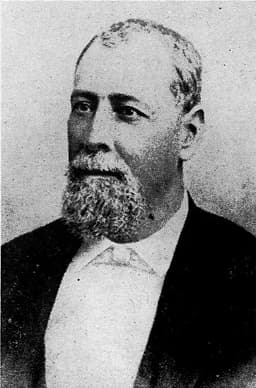
Justo Rufino Barrios
General · Modern
58.6Total
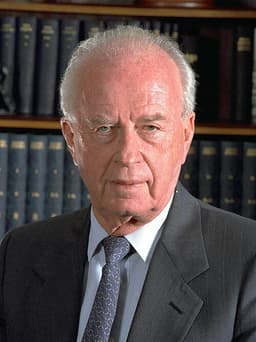
Yitzhak Rabin
General · Modern
66.4Total
Basic Information
Born
1835
1922
Died
1885
—
Era
Modern
Modern
Nationality
Guatemala
Israel
Occupation
General
General
Civilization
Western
Middle Eastern
Score Comparison
Military (10%)
52.5
61.7
Political (20%)
72.0
82.0
Influence (20%)
60.0
68.0
Legacy (20%)
49.2
55.0
Leadership (15%)
65.0
78.0
Strategy (15%)
55.0
55.0
TOTAL
58.6
66.4
Justo Rufino Barrios — Complete Timeline
1871 AD
Enacted the Liberal Reforms of 1871Reform
Justo Rufino Barrios, after coming to power, implemented sweeping liberal reforms. These included the separation of church and state, confiscation of church lands, establishment of secular education, and promotion of coffee cultivation for export.
GuatemalaLiberal ReformSecularization
Impact: nationalprogressive
1873 AD
Modernized Guatemala's InfrastructureReform◆ Major
Barrios oversaw the construction of roads, telegraph lines, and railways, particularly to support coffee exports. He also promoted immigration and foreign investment, transforming Guatemala's economy.
GuatemalaInfrastructureEconomic Development
Impact: nationalconstructive
1885 AD
Killed at the Battle of ChalchuapaWar
Barrios was killed in battle at Chalchuapa, El Salvador, while leading an invasion to forcibly reunify Central America. His death ended the unification attempt and preserved the sovereignty of the individual Central American states.
Central AmericaBattleDeath
Impact: regionaltragic
Declared the Unification of Central AmericaPolitical Action◆ Major
Barrios unilaterally declared the reunification of the Central American republics by force. He issued a decree proclaiming himself supreme military commander of a unified Central America, leading to war with neighboring states.
Central AmericaUnificationWar
Impact: regionaldestructive
Yitzhak Rabin — Complete Timeline
1967 AD
Chief of Staff during the Six-Day WarWar
As Chief of Staff of the Israel Defense Forces, Rabin commanded the Israeli military during the Six-Day War against Egypt, Jordan, and Syria. Israel captured the Sinai Peninsula, Gaza Strip, West Bank, East Jerusalem, and Golan Heights, reshaping the region.
Six-Day WarTerritorial ExpansionMilitary Victory
Impact: global
1993 AD
Signing of the Oslo AccordsPolitical Action
As prime minister, Rabin signed the Oslo Accords with PLO Chairman Yasser Arafat on the White House lawn. The agreement established the Palestinian Authority and set a framework for Palestinian self-governance in the West Bank and Gaza Strip.
Peace ProcessPalestiniansOslo
Impact: globalconstructive
1995 AD
Assassination at Peace RallyPolitical Action
Rabin was assassinated by Israeli extremist Yigal Amir after a peace rally in Tel Aviv. The assassination shocked Israel and the world, derailing the Oslo peace process and leading to a period of political instability.
AssassinationPeace ProcessPolitical Violence
Impact: globaltragic
Expert Analysis
Yitzhak Rabin vs Justo Rufino Barrios
### The General and the Peacemaker
On a cool November evening in 1995, Yitzhak Rabin stood before a crowd of 100,000 in Tel Aviv’s Kings of Israel Square, singing a song of peace. Moments later, three bullets from a right-wing extremist’s pistol ended his life—and with it, Israel’s most promising chance for a negotiated settlement with the Palestinians. A decade earlier and two thousand miles away, another general-president, Justo Rufino Barrios of Guatemala, had died in a very different manner: charging on horseback at the head of his army into Salvadoran fire, trying to reunite Central America by the sword. One man was felled by a fanatic’s bullet for making peace; the other by an enemy’s volley for making war. Both were generals who became political leaders. Both believed they were shaping their nations’ destinies. Why did their paths diverge so radically—and what does that tell us about the nature of power, vision, and the cost of conviction?
### Origins
Yitzhak Rabin was born in Jerusalem in 1922 to secular Zionist parents from Eastern Europe. He grew up in a Tel Aviv that was a dusty, pioneering town, where the ethos of labor and self-defense shaped a generation. The Holocaust and the 1948 War of Independence were formative traumas; survival was not abstract but daily. Rabin’s military career began in the Palmach, the elite strike force of the Jewish underground, and he rose through the ranks with a reputation for methodical planning and quiet intensity. He was a man of the map and the calculator, not the podium.
Justo Rufino Barrios, born in 1835 in the highlands of Guatemala, came from a different world entirely. His era was the turbulent aftermath of Central America’s independence from Spain—a region fractured into five republics, each ruled by caudillos who mixed personal ambition with liberal ideology. Barrios was a *ladino*—of mixed heritage—and a coffee planter who learned the politics of the machete and the rifle. He was a man of the hacienda and the battlefield, where honor was blood-deep and power was taken, not granted.
### Rise to Power
Rabin’s ascent was institutional. He became Chief of Staff of the Israel Defense Forces in 1964, at age 42, after a career of staff assignments and command roles. His defining moment came in June 1967, during the Six-Day War. As military commander, Rabin oversaw a stunning preemptive strike that destroyed the Egyptian air force on the ground and captured the Sinai, the Golan Heights, the West Bank, and East Jerusalem in six days. The victory was total, but it also planted the seeds of a future occupation that would haunt him. Rabin was not a politician by nature; he entered politics reluctantly, serving as ambassador to the United States before becoming prime minister in 1974.
Barrios’s rise was revolutionary. In 1871, he led a liberal uprising against the conservative government of Guatemala, seizing power after a series of bloody skirmishes. He was not elected; he conquered. His authority rested on the loyalty of the army and the support of coffee growers who wanted railroads, not church tithes. Within two years, he had consolidated control and began remaking Guatemala in the image of the European positivism he admired—secular, modern, and export-oriented.
### Leadership & Governance
As leaders, Rabin and Barrios could not have been more different in style. Rabin was a pragmatist, a man who believed in incremental steps. He was not charismatic—his speeches were wooden, his demeanor gruff—but he inspired trust through competence. As prime minister, he focused on security and economic stability. His great political achievement came in 1993, when he shook hands with Yasser Arafat on the White House lawn, signing the Oslo Accords. It was a decision born of realism: Rabin understood that Israel could not rule millions of Palestinians forever. “You don’t make peace with friends,” he once said. “You make peace with your enemies.”
Barrios was a visionary of a different stripe—a liberal autocrat who believed that progress could be imposed by decree and bayonet. His Liberal Reforms of 1871 separated church and state, abolished communal landholdings, and promoted coffee as the engine of the economy. He built roads, telegraph lines, and railways, transforming Guatemala’s infrastructure. But his reforms came at a brutal cost: indigenous communities were dispossessed, forced into labor on coffee plantations, and their traditional lands sold to foreign investors. Barrios saw modernization as a zero-sum game; the old order had to be destroyed.
### Triumph & Tragedy
Rabin’s greatest triumph was also his greatest tragedy. The Oslo Accords earned him a Nobel Peace Prize in 1994, but they also made him a target. Israeli settlers and right-wing religious nationalists saw him as a traitor who was giving away the biblical heartland. Rabin knew the risks; his security detail warned him constantly. Yet he continued to attend peace rallies, believing that the people’s support would protect him. On November 4, 1995, it did not. The assassin, Yigal Amir, was a law student who believed he was acting in God’s name. Rabin’s death did not halt the peace process, but it fatally wounded it.
Barrios’s triumph was his vision of a unified Central America. In 1885, he declared the reunification of the five republics by force, believing that only a single state could resist foreign domination and achieve prosperity. He invaded El Salvador with an army of 5,000 men. At the Battle of Chalchuapa on April 2, 1885, he was shot from his horse and killed. His dream died with him. The other Central American states, fearing his ambition, had united against him. His invasion achieved nothing but his own death and the collapse of his project.
### Character & Destiny
Rabin’s character was shaped by caution and a deep sense of responsibility. He was not a natural risk-taker; he calculated odds. The decision to pursue Oslo was a calculated risk—one he believed was necessary for Israel’s long-term survival. His tragedy was that his courage to make peace cost him his life, but it also immortalized him as a symbol of what might have been.
Barrios was driven by a different impulse: the will to dominate. He was a caudillo in the Latin American tradition—a man who saw himself as the embodiment of the nation. His fatal flaw was hubris. He believed that his army, his reforms, and his personal authority could overcome the centrifugal forces that had shattered Central America. He was wrong. His death on the battlefield was fitting for a man who lived by the sword.
### Legacy
Rabin’s legacy is one of unfinished peace. In Israel, he is remembered as a martyr for a cause that remains bitterly contested. The square where he was shot is now named Rabin Square. His notebooks, which he carried until the end, contained draft speeches and strategic plans—a testament to a man who believed that even the most intractable conflict could be managed by careful thought. His total score of 70.6 (Leadership: 83.4, Political: 77.7) reflects a leader who excelled in governance and influence but whose military and strategic scores (62.0 and 59.7) show a man who outgrew war.
Barrios’s legacy is more ambiguous. In Guatemala, he is honored as a modernizer and a reformer, but his methods—dispossession and authoritarian rule—are now condemned by historians. His dream of Central American unity remains unrealized, a ghost that still haunts the region. His total score of 68.9 (Military: 65.4, Political: 72.0) suggests a capable but flawed leader, one whose strategy (55.6) was his undoing.
### Conclusion
The stories of Rabin and Barrios are parables about the nature of leadership in times of fracture. Both men were generals who became statesmen, but they faced different enemies. Rabin’s enemy was within—the violence of ideology that could not accept compromise. Barrios’s enemy was the reality of a region too fragmented to be united by force. One died trying to build a bridge; the other, trying to build a wall. In the end, both were consumed by the very forces they sought to control. Their lives remind us that the most dangerous moment for a leader is not when they fail, but when they succeed—and that the hardest peace to make is often the one with one’s own people.
Rankings
🥇
Yitzhak RabinLeader
Mil: 61.7Pol: 82.0Inf: 68.0
66.4
🥈
Justo Rufino Barrios
Mil: 52.5Pol: 72.0Inf: 60.0
58.6
+7.8 behind
How This Comparison Works
Algorithm
Each figure is scored on 6 dimensions (0—100 scale) based on structured historical data: Military (10%), Political (20%), Influence (20%), Legacy (20%), Leadership (15%), Strategy (15%). The weighted total produces the final ranking.
Data Sources
Scores are computed from structured sub-indicators in the database. Scale factors adjust for era (Ancient ×0.85, Modern ×1.0) and civilization size (Eastern ×1.05, Other ×0.80) to account for differences in population and military scale.
Maximum 3 Figures
Comparisons are limited to 2—3 figures to ensure readability and statistical meaningfulness.
Error Margins
±5 points per dimension — Sub-scores are derived from historical records with inherent uncertainty. Two figures within 5 points on a dimension should be considered roughly equivalent in that area.
Total Score Accuracy
±3 points overall — The weighted combination of 6 dimensions produces a total score with approximately ±3 points of uncertainty. Differences of less than 3 points are not statistically significant— the figures are effectively tied.
Known Limitations
- Historical records are incomplete and uneven across civilizations
- Figures from oral-tradition societies may be underrepresented
- Occupation labels can misclassify multi-role figures
- Scores measure capability and impact, not moral character
- Quantitative scoring is a comparison tool, not absolute truth
Capability Radar
Military (10%) — Battles & Warfare
Battles
45
65
Win Rate
55
70
Expansion
55
50
Political (20%) — Governance & Reform
Reform
70
65
Diplomacy
45
85
Economy
55
60
Influence (20%) — Cultural & Global Reach
Cultural
40
55
Global
30
70
Legacy (20%) — Historical Impact
Historical
50
75
Longevity
35
60
Leadership (15%) — Power & Stability
Tenure
50
70
Stability
30
40
Strategy (15%) — Tactics & Innovation
Strategy
50
75
Tactics
40
60
Reform
60
55
Similar Comparisons
Comments & Discussion
SaberTactician6/16/2026
Comparing Rabin’s assassination to Barrios’ death in battle is actually an indictment of how we romanticize military leaders. Barrios died exactly how generals are supposed to—on a horse, leading a charge. Rabin died for the sin of trying to become something more than a general. Barrios’ death is a cliché; Rabin’s is a tragedy. The “peacemaker” label conveniently ignores that Rabin was the same man who ordered the 1982 Lebanon invasion. He didn’t evolve; he just realized he couldn’t win.
马背书生6/16/2026
拉宾将军是“刀马旦”——褪下戎装反被同袍所害;巴里奥斯则是“马革裹尸”的武行正统。两人都死于“信念”,但本质天差地别:拉宾死于背叛自己曾经代表的暴力逻辑,而巴里奥斯至死没走出那套“征服即正义”的殖民军官剧本。真正讽刺的是,历史往往把战死沙场者抬入英烈祠,却把死于讲和者钉上背叛者的十字架。拉宾的血染红了一个国家的转型,巴里奥斯的血却只是喂饱了另一场同样荒唐的战争。
WarsawDreamer6/16/2026
The real divergence is in how each man saw time. Barrios was a nineteenth-century romantic—he thought history was a horse charge, a personal will imposed on geography. Rabin was a twentieth-century realist—he knew history was a trap, and tried to negotiate his way out of it. Barrios died fulfilling his own legend; Rabin died because he tried to escape his. The cost of conviction? For Barrios, it was a predictable bullet. For Rabin, it was an unpredictable betrayal. That’s not courage versus cowa
烽火书生6/16/2026
说白了,这两个人的死法就是对“将军政治”最辛辣的嘲讽。巴里奥斯是旧式军人,死在战场上像是宿命的终章;但拉宾的死却证明:即使一个将军选择放下刀,刀也不会放过他。拉宾的悲剧