Loading...
Justo Rufino Barrios vs Muhammadu Buhari
Justo Rufino Barrios leads by 7.1 pts · 2 figures compared
…
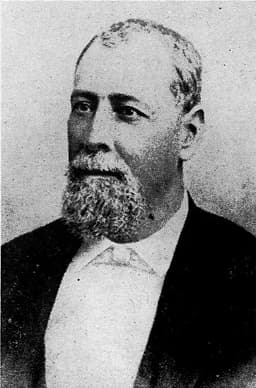
Justo Rufino Barrios
General · Modern
58.6Total
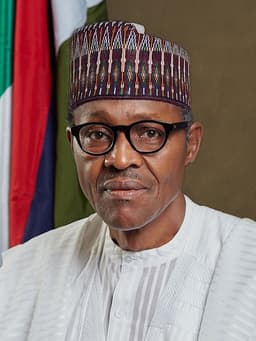
Muhammadu Buhari
General · Modern
51.5Total
Basic Information
Born
1835
1942
Died
1885
—
Era
Modern
Modern
Nationality
Guatemala
Nigeria
Occupation
General
General
Civilization
Western
Other
Score Comparison
Military (10%)
52.5
22.6
Political (20%)
72.0
68.0
Influence (20%)
60.0
53.3
Legacy (20%)
49.2
43.3
Leadership (15%)
65.0
72.0
Strategy (15%)
55.0
41.0
TOTAL
58.6
51.5
Justo Rufino Barrios — Complete Timeline
1871 AD
Enacted the Liberal Reforms of 1871Reform
Justo Rufino Barrios, after coming to power, implemented sweeping liberal reforms. These included the separation of church and state, confiscation of church lands, establishment of secular education, and promotion of coffee cultivation for export.
GuatemalaLiberal ReformSecularization
Impact: nationalprogressive
1873 AD
Modernized Guatemala's InfrastructureReform◆ Major
Barrios oversaw the construction of roads, telegraph lines, and railways, particularly to support coffee exports. He also promoted immigration and foreign investment, transforming Guatemala's economy.
GuatemalaInfrastructureEconomic Development
Impact: nationalconstructive
1885 AD
Killed at the Battle of ChalchuapaWar
Barrios was killed in battle at Chalchuapa, El Salvador, while leading an invasion to forcibly reunify Central America. His death ended the unification attempt and preserved the sovereignty of the individual Central American states.
Central AmericaBattleDeath
Impact: regionaltragic
Declared the Unification of Central AmericaPolitical Action◆ Major
Barrios unilaterally declared the reunification of the Central American republics by force. He issued a decree proclaiming himself supreme military commander of a unified Central America, leading to war with neighboring states.
Central AmericaUnificationWar
Impact: regionaldestructive
Muhammadu Buhari — Complete Timeline
1983 AD
1983 Nigerian coup d'étatPolitical Action
Major General Muhammadu Buhari led a military coup that overthrew the civilian government of President Shehu Shagari. Buhari cited corruption and economic mismanagement as justifications, and he became the head of state.
CoupMilitary RuleCorruption
Impact: nationaldestructive
1984 AD
War Against Indiscipline (WAI)Reform◆ Major
Buhari launched the War Against Indiscipline, a campaign to enforce discipline and order in Nigerian society. It included harsh penalties for minor offenses, such as queue-jumping, and was criticized for human rights abuses.
DisciplineSocial PolicyHuman Rights
Impact: nationaldestructive
1985 AD
Overthrow by Ibrahim BabangidaPolitical Action◆ Major
Buhari was overthrown in a palace coup led by his Chief of Army Staff, Ibrahim Babangida. Babangida cited Buhari's authoritarian style and failure to address the economy as reasons for the coup.
CoupOverthrowBabangida
Impact: national
2015 AD
Anti-corruption campaignReform◆ Major
Buhari launched a high-profile anti-corruption campaign, targeting government officials and recovering stolen assets. The campaign was praised internationally but criticized for being selective and politically motivated.
Anti-CorruptionReformGovernance
Impact: nationalconstructive
Election as President of NigeriaPolitical Action
Buhari won the 2015 Nigerian presidential election, defeating incumbent Goodluck Jonathan. This was the first time an opposition candidate had defeated a sitting president in Nigeria's history, marking a democratic milestone.
ElectionDemocracyOpposition Victory
Impact: nationalprogressive
Expert Analysis
Muhammadu Buhari vs Justo Rufino Barrios
# The Iron Will: Muhammadu Buhari and Justo Rufino Barrios
On a dusty parade ground in Lagos, December 1983, Major General Muhammadu Buhari stepped before the nation’s cameras. His face was stern, his uniform immaculate. He spoke of corruption, indiscipline, and a country that had lost its way. Half a world away and a century earlier, another general—Justo Rufino Barrios—had ridden into Guatemala City with similar convictions, convinced that only a strong hand could drag a fractured land into the modern age. Both men seized power to impose order. Both believed they alone could save their nations. But their paths diverged in ways that reveal much about the forces that shape leaders—and the leaders who shape history.
Origins
Muhammadu Buhari was born in 1942 in Daura, a small town in northern Nigeria, into a family of Fulani cattle herders. His world was one of tradition, Islamic piety, and British colonial rule. He joined the Nigerian Army as a young man, rising through the ranks during the civil war of the 1960s. His military training—first in Nigeria, then in Britain, India, and the United States—instilled in him a rigid sense of discipline. He learned to see problems as enemies to be crushed.
Justo Rufino Barrios, born in 1835 in San Lorenzo, Guatemala, came from a different soil. His family were coffee planters, part of a rising liberal class that chafed under the conservative, church-dominated order of Central America. Barrios was not a career soldier; he was a rancher and lawyer who took up arms when the liberal revolution called. His war was not against foreign colonizers but against the entrenched power of the Catholic Church and the landed aristocracy. Where Buhari’s formation was institutional, Barrios’s was ideological.
Rise to Power
Buhari entered history through a coup. On December 31, 1983, he led fellow officers in overthrowing President Shehu Shagari, whose civilian government had become synonymous with corruption and economic mismanagement. It was a swift, bloodless operation—the fourth coup in Nigeria’s thirteen years of independence. Buhari justified it as a “corrective” measure. The people, weary of chaos, largely cheered.
Barrios’s rise was more violent. In 1871, he joined the liberal rebellion led by Miguel García Granados, fighting pitched battles against conservative forces. After Granados stepped down, Barrios assumed the presidency in 1873. He had earned his power through gunpowder and grit. Unlike Buhari, who inherited a military machine, Barrios built his army from the ground up—and it answered to him alone.
Leadership & Governance
Buhari’s first regime (1983–1985) was defined by the War Against Indiscipline, or WAI. This campaign was Orwellian in its ambition: citizens were forced to queue in lines, civil servants had to arrive on time, and anyone caught littering faced public humiliation. Buhari imprisoned journalists, banned political activity, and ordered soldiers to whip lawbreakers. His goal was to forge a new Nigerian character—obedient, orderly, honest. But the economy cratered under falling oil prices, and his draconian methods bred resentment. In August 1985, his own chief of army staff, Ibrahim Babangida, overthrew him in a palace coup, citing “the strict and stern nature of the administration.”
Barrios’s reforms were sweeping but strategic. He separated church and state, secularized education, and abolished colonial-era land laws that favored the church. He built railways, telegraph lines, and roads—all to connect Guatemala’s highlands to the Pacific coast, where coffee could be shipped to Europe. His modernization was ruthless: he confiscated church lands, exiled conservative bishops, and suppressed indigenous uprisings with military force. Yet he also encouraged foreign investment and expanded coffee exports, creating a new elite loyal to him. Where Buhari tried to discipline a nation, Barrios tried to transform it.
Triumph & Tragedy
Buhari’s greatest triumph came not as a general but as a democratic politician. In 2015, thirty years after his overthrow, he won the Nigerian presidency in a free election—the first time an opposition candidate had defeated an incumbent in Nigeria’s history. He returned as a born-again democrat, promising to fight the corruption he once tried to crush by decree. His anti-corruption campaign recovered billions of dollars in stolen assets and jailed prominent officials. But his second term was marred by economic recession, a failing health, and a rising tide of insecurity—Boko Haram insurgency, farmer-herder clashes, separatist violence. The disciplinarian had become a frail old man presiding over a nation still in chaos.
Barrios’s tragedy was more dramatic. In 1885, he declared the reunification of Central America by force. He invaded El Salvador with an army of 5,000 men, expecting to sweep aside resistance. At the Battle of Chalchuapa on April 2, 1885, he led a cavalry charge—and was shot dead. His dream of a united Central America died with him. The invasion collapsed, and the republics remained divided. Barrios had staked everything on a single, reckless gamble and lost.
Character & Destiny
Buhari was a man of iron habits and narrow vision. He was incorruptible but inflexible, principled but unyielding. His military mind saw governance as a command-and-control operation: issue orders, enforce compliance, punish deviation. This worked in barracks but not in a democracy of 200 million people. His inability to delegate, his suspicion of dissent, and his preference for loyalists over experts ultimately undermined his second term. He was a man who never quite adapted to the world he sought to change.
Barrios was bolder, more charismatic, and more reckless. He was a visionary who could inspire loyalty and fear in equal measure. His liberal reforms laid the foundation for modern Guatemala, but his authoritarian methods also entrenched a pattern of military strongmen and state violence that plagued the country for generations. He died as he lived—charging forward, convinced that his will could reshape reality. It could not.
Legacy
Buhari’s legacy is deeply contested. To his supporters, he is a patriot who tried to clean up a corrupt system. To his critics, he is a relic of military autocracy who failed to govern democratically. His two regimes—one military, one civilian—bookend a period of Nigerian history marked by dashed hopes. He will be remembered as a transitional figure, a man who symbolized both the problem and the promise of Nigerian leadership.
Barrios is remembered as the “Reformer of Guatemala,” a founder of the modern state. His face appears on currency, his name adorns streets and schools. Yet his dream of Central American unity is a historical footnote, a cautionary tale of ambition overreach. He is honored as a nation-builder but also as a caudillo—a strongman who believed the end justified the means.
Conclusion
Standing at the end of their stories, Buhari and Barrios seem almost like mirror images: one who failed as a strongman and succeeded as a democrat, only to fail again; another who succeeded as a reformer and died as a conqueror, leaving a mixed legacy. Both men shared a conviction that history could be bent by will. Both learned, in different ways, that it bends back. Their lives remind us that leadership is never just about power—it is about timing, adaptability, and the humility to know that even the iron will must sometimes yield.
Rankings
🥇
Justo Rufino BarriosLeader
Mil: 52.5Pol: 72.0Inf: 60.0
58.6
🥈
Muhammadu Buhari
Mil: 22.6Pol: 68.0Inf: 53.3
51.5
+7.1 behind
How This Comparison Works
Algorithm
Each figure is scored on 6 dimensions (0—100 scale) based on structured historical data: Military (10%), Political (20%), Influence (20%), Legacy (20%), Leadership (15%), Strategy (15%). The weighted total produces the final ranking.
Data Sources
Scores are computed from structured sub-indicators in the database. Scale factors adjust for era (Ancient ×0.85, Modern ×1.0) and civilization size (Eastern ×1.05, Other ×0.80) to account for differences in population and military scale.
Maximum 3 Figures
Comparisons are limited to 2—3 figures to ensure readability and statistical meaningfulness.
Error Margins
±5 points per dimension — Sub-scores are derived from historical records with inherent uncertainty. Two figures within 5 points on a dimension should be considered roughly equivalent in that area.
Total Score Accuracy
±3 points overall — The weighted combination of 6 dimensions produces a total score with approximately ±3 points of uncertainty. Differences of less than 3 points are not statistically significant— the figures are effectively tied.
Known Limitations
- Historical records are incomplete and uneven across civilizations
- Figures from oral-tradition societies may be underrepresented
- Occupation labels can misclassify multi-role figures
- Scores measure capability and impact, not moral character
- Quantitative scoring is a comparison tool, not absolute truth
Capability Radar
Military (10%) — Battles & Warfare
Battles
45
10
Win Rate
55
10
Expansion
55
5
Political (20%) — Governance & Reform
Reform
70
30
Diplomacy
45
25
Economy
55
20
Influence (20%) — Cultural & Global Reach
Cultural
40
25
Global
30
25
Legacy (20%) — Historical Impact
Historical
50
30
Longevity
35
20
Leadership (15%) — Power & Stability
Tenure
50
45
Stability
30
15
Strategy (15%) — Tactics & Innovation
Strategy
50
15
Tactics
40
15
Reform
60
20
Similar Comparisons
Comments & Discussion
General's Ghost6/16/2026
Buhari and Barrios both believed in authoritarian salvation, but Barrios actually transformed Guatemala's infrastructure and secularized the state before being killed in battle. Buhari's "War Against Indiscipline" was theatrical—locking up journalists while corruption thrived under his nose. Barrios died for his ambition on the battlefield at Chalchuapa in 1885; Buhari retired to his farm twice. One was a revolutionary, the other a relic.
数据刀锋6/16/2026
对比数据完全失衡:巴里奥斯统治仅6年(1873-1879),布哈里累计掌权约10年(1983-1985, 2015-2023)。但尼日利亚人均GDP从1983年的1,400美元跌至2023年的1,100美元(按购买力平价),而危地马拉在巴里奥斯期间咖啡出口量翻了四倍。数据并不谎言,只是领袖的“铁腕”往往只铁在宣传中。
Latin Americanist Lens6/16/2026
Barrios unified Central America literally and conceptually—he led troops into El Salvador and Honduras to push his liberal agenda, even dying trying to reunite the isthmus. Buhari couldn't even keep Boko Haram contained in northeastern Nigeria, and his economic policies were nostalgia for 1970s oil prices dressed as "anti-corruption." Barrios was a nation-builder; Buhari was a caretaker with a stick.
旧书虫6/16/2026
让我纠正一个普遍误解:布哈里不是1983年才首次政变——1975年他就参与了推翻戈翁的政变,然后1976年又参与推翻穆尔塔拉·穆罕默德的未遂政变。他从来不是“纯洁的救世主”,而是权力游戏的老手。相比之下,巴里奥斯1871年推翻保守派政府后,至少推动宪政改革并废除教俗特权。一个是系统性投机者,一个是激进改革者。