Loading...
Justo Rufino Barrios vs Ramon Castilla
Ramon Castilla leads by 1.1 pts · 2 figures compared
…
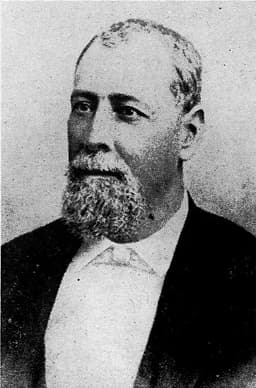
Justo Rufino Barrios
General · Modern
58.6Total
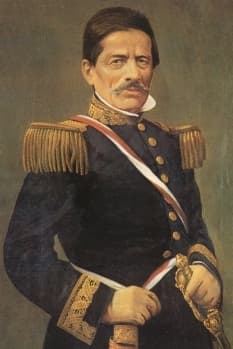
Ramon Castilla
General · Modern
59.7Total
Basic Information
Born
1835
1797
Died
1885
1867
Era
Modern
Modern
Nationality
Guatemala
Peru
Occupation
General
General
Civilization
Western
Western
Score Comparison
Military (10%)
52.5
40.0
Political (20%)
72.0
72.0
Influence (20%)
60.0
56.7
Legacy (20%)
49.2
52.0
Leadership (15%)
65.0
78.0
Strategy (15%)
55.0
60.0
TOTAL
58.6
59.7
Justo Rufino Barrios — Complete Timeline
1871 AD
Enacted the Liberal Reforms of 1871Reform
Justo Rufino Barrios, after coming to power, implemented sweeping liberal reforms. These included the separation of church and state, confiscation of church lands, establishment of secular education, and promotion of coffee cultivation for export.
GuatemalaLiberal ReformSecularization
Impact: nationalprogressive
1873 AD
Modernized Guatemala's InfrastructureReform◆ Major
Barrios oversaw the construction of roads, telegraph lines, and railways, particularly to support coffee exports. He also promoted immigration and foreign investment, transforming Guatemala's economy.
GuatemalaInfrastructureEconomic Development
Impact: nationalconstructive
1885 AD
Killed at the Battle of ChalchuapaWar
Barrios was killed in battle at Chalchuapa, El Salvador, while leading an invasion to forcibly reunify Central America. His death ended the unification attempt and preserved the sovereignty of the individual Central American states.
Central AmericaBattleDeath
Impact: regionaltragic
Declared the Unification of Central AmericaPolitical Action◆ Major
Barrios unilaterally declared the reunification of the Central American republics by force. He issued a decree proclaiming himself supreme military commander of a unified Central America, leading to war with neighboring states.
Central AmericaUnificationWar
Impact: regionaldestructive
Ramon Castilla — Complete Timeline
1824 AD
Battle of AyacuchoWar
Castilla fought as a junior officer in the decisive Battle of Ayacucho, which ended Spanish rule in Peru. This victory secured Peruvian independence and marked the end of the Spanish Empire in South America, shaping Castilla's nationalist views.
Peruvian War of IndependenceBattleLiberation
Impact: regional
1845 AD
First Presidency of PeruPolitical Action◆ Major
Castilla was elected President of Peru in 1845, serving until 1851. His first term focused on economic development, including the guano boom, and infrastructure projects such as railroads and ports, modernizing the Peruvian state.
PresidencyEconomic DevelopmentGuano
Impact: nationalconstructive
1854 AD
Abolition of Slavery in PeruReform◆ Major
During his second presidency, Castilla issued a decree abolishing slavery in Peru on December 3, 1854. This reform freed approximately 25,000 slaves and was part of a broader liberal agenda, though it faced opposition from slave-owning elites.
AbolitionSlaveryHuman Rights
Impact: nationalprogressive
Abolition of Indigenous TributeReform◆ Major
Castilla also abolished the indigenous tribute tax in 1854, which had been a burden on native communities since colonial times. This measure aimed to integrate indigenous peoples into the Peruvian state as equal citizens, though its implementation was uneven.
Indigenous RightsTax ReformCitizenship
Impact: nationalprogressive
1855 AD
Second Presidency and Guano BoomPolitical Action◆ Major
Castilla served a second term from 1855 to 1862, during the peak of the guano export boom. He used guano revenues to fund public works, pay off foreign debt, and modernize the military, but also faced criticism for corruption and over-reliance on a single resource.
PresidencyGuanoModernization
Impact: nationalconstructive
1860 AD
Constitutional Reform of 1860Reform◆ Major
Castilla oversaw the adoption of a new constitution in 1860, which established a centralized republic with a strong executive. The constitution remained in effect until 1920 and shaped Peru's political structure, though it limited regional autonomy.
ConstitutionPolitical ReformCentralization
Impact: nationalconstructive
Expert Analysis
Ramon Castilla vs Justo Rufino Barrios
# The Liberators' Burden: Ramon Castilla and Justo Rufino Barrios
On a December morning in 1854, in the Peruvian city of Huancayo, President Ramon Castilla signed a decree that would echo through the Andes for generations. He had just abolished slavery. Across the room, indigenous leaders watched as he also put his signature to a second document—the end of the tribute tax that had crushed their communities since the Spanish conquest. Castilla, a general who had fought for independence thirty years earlier, was now completing the revolution. Three decades later and a thousand miles north, another general-president, Justo Rufino Barrios of Guatemala, would also stand at a crossroads. He had modernized his country, built railways, and separated church and state. But where Castilla chose consolidation, Barrios chose conquest. He would die with a bullet in his chest on a Salvadoran battlefield, his dream of a united Central America buried with him.
Origins
Ramon Castilla was born in 1797 in Tarapacá, then a remote outpost of the Spanish Empire. His father was a Spanish official, his mother a Peruvian creole. The world of his childhood was one of colonial order, rigid hierarchy, and the slow decay of imperial power. He was twenty-three when the armies of San Martín and Bolívar began to sweep south, and he joined the patriot cause. At the Battle of Ayacucho in 1824, the young Castilla fought as a junior officer in the decisive engagement that ended three centuries of Spanish rule. That battlefield taught him something crucial: victory required discipline, not just courage.
Justo Rufino Barrios was born in 1835 in San Lorenzo, Guatemala, into a world already independent but fractured. The Central American Federation had collapsed in 1839, leaving five tiny republics squabbling over borders and customs houses. Barrios grew up in the western highlands, a region of coffee plantations and conservative landowners. His family was liberal in politics, which in nineteenth-century Guatemala meant anticlerical, pro-modernization, and deeply frustrated by the backwardness imposed by the Catholic Church and the old aristocracy. Barrios learned law, then took up a rifle.
Rise to Power
Castilla's path to power was patient and pragmatic. After Ayacucho, he served in various administrative and military posts, building a reputation as a competent officer and a reliable politician. He was not a charismatic revolutionary; he was a manager. In 1845, at the age of forty-eight, he was elected president of Peru. His first term was steady rather than spectacular: he balanced budgets, paid down foreign debt, and kept the army in check. He understood that Peru's future lay not in conquest but in commerce.
Barrios rose differently. In 1871, he joined a liberal revolt against Guatemala's conservative government. The rebellion succeeded, and Barrios emerged as the strongman of the new regime. He was thirty-six, impatient, and convinced that Guatemala's salvation required sweeping away the old order with a single, violent stroke. Where Castilla had waited decades, Barrios seized power in months.
Leadership & Governance
Castilla's greatest achievement was his handling of the guano boom. Between 1855 and 1862, during his second presidency, Peru exported mountains of bird droppings to Europe as fertilizer. The money was staggering—and dangerous. Other Latin American leaders had squandered such windfalls on palaces and wars. Castilla used it to build railroads, modernize the port of Callao, and fund public education. He also oversaw the adoption of the 1860 Constitution, which created a centralized republic with a strong executive. It was a conservative document, but it provided stability.
Barrios also modernized, but his reforms were more radical. He separated church and state, confiscated church lands, and expelled religious orders. He built roads and telegraph lines to connect Guatemala's coffee-growing regions to the coast. Coffee exports soared, and the economy grew. But his reforms came at a cost: indigenous communities lost their communal lands, and the new plantations created a system of debt peonage that was slavery in all but name. Castilla had freed slaves; Barrios created a new kind of serfdom.
Triumph & Tragedy
Castilla's finest hour was December 3, 1854. The abolition decree was not merely moral; it was strategic. By freeing slaves, he undercut the power of the old landed elite and gained the loyalty of thousands of new citizens. By abolishing indigenous tribute, he won the support of native communities. It was a masterstroke of political genius: reform as consolidation.
Barrios's tragedy came thirty-one years later. In 1885, he declared the reunification of Central America by force. He had the largest army in the region, modern weapons, and a burning conviction that history was on his side. On April 2, 1885, at the Battle of Chalchuapa in El Salvador, he led a charge and was killed instantly. His dream died with him. Central America remained fragmented, and his death plunged Guatemala into chaos.
Character & Destiny
Castilla was cautious, calculating, and patient. He understood that power was not about glory but about duration. He governed for seventeen years across two terms and died in 1867, respected and remembered. Barrios was impulsive, idealistic, and ruthless. He believed that history rewarded boldness. It did not.
Legacy
Castilla is remembered as Peru's great reformer, the man who ended slavery and built the foundations of the modern state. His name adorns streets, schools, and a province. Barrios is more contested. To liberals, he is the modernizer who broke the church's grip. To conservatives, he is the tyrant who destroyed traditional society. To Central Americans, he is the cautionary tale of a dreamer who tried to unite a region by force and died trying.
Conclusion
The difference between these two men is not a matter of talent. Both were capable, both were ambitious, both wanted to build something lasting. But Castilla understood that reform must be rooted in reality, while Barrios believed that will alone could reshape the world. The guano boom gave Castilla resources; his patience gave him wisdom. Barrios had will in abundance, but he lacked the restraint to know when to stop. In the end, Castilla's legacy is a nation that remembers him with pride. Barrios's legacy is a question that still haunts Central America: what might have been, if only he had lived?
Rankings
🥇
Ramon CastillaLeader
Mil: 40.0Pol: 72.0Inf: 56.7
59.7
🥈
Justo Rufino Barrios
Mil: 52.5Pol: 72.0Inf: 60.0
58.6
+1.1 behind
How This Comparison Works
Algorithm
Each figure is scored on 6 dimensions (0—100 scale) based on structured historical data: Military (10%), Political (20%), Influence (20%), Legacy (20%), Leadership (15%), Strategy (15%). The weighted total produces the final ranking.
Data Sources
Scores are computed from structured sub-indicators in the database. Scale factors adjust for era (Ancient ×0.85, Modern ×1.0) and civilization size (Eastern ×1.05, Other ×0.80) to account for differences in population and military scale.
Maximum 3 Figures
Comparisons are limited to 2—3 figures to ensure readability and statistical meaningfulness.
Error Margins
±5 points per dimension — Sub-scores are derived from historical records with inherent uncertainty. Two figures within 5 points on a dimension should be considered roughly equivalent in that area.
Total Score Accuracy
±3 points overall — The weighted combination of 6 dimensions produces a total score with approximately ±3 points of uncertainty. Differences of less than 3 points are not statistically significant— the figures are effectively tied.
Known Limitations
- Historical records are incomplete and uneven across civilizations
- Figures from oral-tradition societies may be underrepresented
- Occupation labels can misclassify multi-role figures
- Scores measure capability and impact, not moral character
- Quantitative scoring is a comparison tool, not absolute truth
Capability Radar
Military (10%) — Battles & Warfare
Battles
45
45
Win Rate
55
50
Expansion
55
30
Political (20%) — Governance & Reform
Reform
70
85
Diplomacy
45
70
Economy
55
75
Influence (20%) — Cultural & Global Reach
Cultural
40
55
Global
30
50
Legacy (20%) — Historical Impact
Historical
50
65
Longevity
35
60
Leadership (15%) — Power & Stability
Tenure
50
65
Stability
30
60
Strategy (15%) — Tactics & Innovation
Strategy
50
45
Tactics
40
40
Reform
60
55
Similar Comparisons
Comments & Discussion
GENERAL COMPASS6/16/2026
Castilla actually completed liberation while Barrios just imitated it with bullets. Abolishing slavery AND indigenous tribute in one stroke in 1854? That's a structural revolution, not just a fancy railway network. Barrios died chasing a fantasy union while Castilla built a nation. Two liberators, but only one knew the difference between freedom and conquest. History grades on outcomes, not intentions.
钢铁数据6/16/2026
别被道德叙事骗了。Castilla废除奴隶制时,秘鲁只有约25,000名奴隶,而土著人头税占了国库的三分之一。他不过是用理想主义口号换取了现代史的美名,实际上他的财政改革充满了实用主义算计。Barrios修铁路、搞电信、建学校,数据上现代化指数更高。所谓解放者叙事,不过是历史学家的选择性失忆。
CLASSICUS CONTRA6/16/2026
As a classical scholar, I see two versions of Caesarism. Castilla was Augustus—ending civil strife, consolidating reforms, dying in his bed. Barrios was Julius—charging across borders with grand visions, meeting a violent end at Chalchuapa. One built a stable principate, the other left a legacy of chaos. The lesson? True liberators know when to stop conquering and start governing.
边角史官6/16/2026
最讽刺的是Barrios之死。他死在萨尔瓦多的战场上,子弹穿透胸膛,怀里还揣着中美洲统一的草案。Castilla呢?1855年叛乱时,他躲进英国领事馆避难,靠外交斡旋重掌权力。一个将军靠步兵冲锋殉道,另一个靠外交手腕续命。历史偏爱死去的浪漫主义者,而活下来的实用主义者才是真正的赢家。你们选吧。
TACTICAL HISTORIAN6/16/2026
Let's talk battlefield effectiveness. Castilla won at Ayacucho as a junior officer—his real tactical genius came in navigating Peru's caudillo politics without major bloodshed. Barrios? His crackdown in Guatemala was efficient but brutal, leaving a legacy of resentment that undermined his reforms. Military history shows: the best leaders win without fighting their own people. Barrios died fighting Salvadorans; Castilla died surrounded by Peruvians he'd actually liberated.