Loading...
Justo Rufino Barrios vs Pyotr Wrangel
Justo Rufino Barrios leads by 8.8 pts · 2 figures compared
…
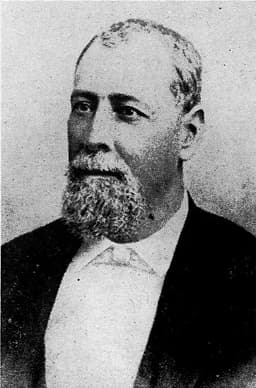
Justo Rufino Barrios
General · Modern
58.6Total

Pyotr Wrangel
General · Modern
49.8Total
Basic Information
Born
1835
1878
Died
1885
1928
Era
Modern
Modern
Nationality
Guatemala
Russia
Occupation
General
General
Civilization
Western
Western
Score Comparison
Military (10%)
52.5
55.0
Political (20%)
72.0
42.2
Influence (20%)
60.0
55.7
Legacy (20%)
49.2
45.8
Leadership (15%)
65.0
47.3
Strategy (15%)
55.0
55.0
TOTAL
58.6
49.8
Justo Rufino Barrios — Complete Timeline
1871 AD
Enacted the Liberal Reforms of 1871Reform
Justo Rufino Barrios, after coming to power, implemented sweeping liberal reforms. These included the separation of church and state, confiscation of church lands, establishment of secular education, and promotion of coffee cultivation for export.
GuatemalaLiberal ReformSecularization
Impact: nationalprogressive
1873 AD
Modernized Guatemala's InfrastructureReform◆ Major
Barrios oversaw the construction of roads, telegraph lines, and railways, particularly to support coffee exports. He also promoted immigration and foreign investment, transforming Guatemala's economy.
GuatemalaInfrastructureEconomic Development
Impact: nationalconstructive
1885 AD
Killed at the Battle of ChalchuapaWar
Barrios was killed in battle at Chalchuapa, El Salvador, while leading an invasion to forcibly reunify Central America. His death ended the unification attempt and preserved the sovereignty of the individual Central American states.
Central AmericaBattleDeath
Impact: regionaltragic
Declared the Unification of Central AmericaPolitical Action◆ Major
Barrios unilaterally declared the reunification of the Central American republics by force. He issued a decree proclaiming himself supreme military commander of a unified Central America, leading to war with neighboring states.
Central AmericaUnificationWar
Impact: regionaldestructive
Pyotr Wrangel — Complete Timeline
1920 AD
Evacuation of CrimeaWar◆ Major
In November 1920, Wrangel organized the evacuation of approximately 150,000 White Army soldiers and civilians from Crimea to Constantinople and other locations. This operation marked the final defeat of the White movement in the Russian Civil War.
Russian Civil WarEvacuationDefeat
Impact: regionaltragic
Appointed Commander of the White Army in Southern RussiaPolitical Action◆ Major
In April 1920, Wrangel succeeded Denikin as commander of the White Armed Forces of South Russia. He reorganized the army and established a government in Crimea, attempting to consolidate anti-Bolshevik forces during the final phase of the Russian Civil War.
Russian Civil WarWhite MovementCommand
Impact: regional
1924 AD
Formation of the Russian All-Military UnionPolitical Action
Wrangel founded the Russian All-Military Union (ROVS) in exile, a organization uniting White Army veterans. The union aimed to preserve military structure and continue anti-Bolshevik activities from abroad, operating primarily from Yugoslavia and France.
ExileWhite MovementOrganization
Impact: regional
Expert Analysis
Origins
Justo Rufino Barrios was born on July 19, 1835, in San Lorenzo, Guatemala, into a modest landowning family. He studied law at the Pontifical University of San Carlos, but his education was cut short by political turmoil. Barrios developed a strong liberal ideology influenced by the positivist ideas of the time. He began his career as a lawyer and local official, but soon joined the Liberal Revolution of 1871, which catapulted him into power.
Pyotr Nikolayevich Wrangel was born on August 27, 1878, in Mukuliai, Lithuania, into a noble Baltic German family. He attended the Imperial Mining Institute and later the Nicholas General Staff Academy, graduating in 1910. Wrangel served in the Russo-Japanese War and World War I, earning a reputation for courage and tactical skill. His aristocratic background and military education shaped his conservative worldview and loyalty to the Russian monarchy.
Rise to Power
Barrios rose to prominence as a military leader in the Liberal Revolution of 1871, which overthrew the conservative government. He became Minister of War under President Miguel García Granados and succeeded him as president in 1873. Barrios consolidated power by suppressing conservative opposition and implementing reforms. His key turning point was the enactment of the Liberal Reforms, which secularized the state and modernized the economy. He also declared the unification of Central America by force in 1885, a move that ultimately led to his death.
Wrangel rose through the ranks of the Imperial Russian Army during World War I, earning command of the 7th Cavalry Division. After the Bolshevik Revolution, he joined the White Army in southern Russia. He initially served under General Denikin but gained prominence for his discipline and strategic sense. In April 1920, Wrangel was appointed commander of the White Armed Forces of South Russia, succeeding Denikin. He reorganized the army and established a civil government in Crimea, his last stronghold.
Leadership & Governance
Barrios ruled Guatemala with an iron fist, centralizing power and modernizing the state. He separated church and state, confiscated church lands, and promoted secular education. He built infrastructure like roads, telegraph lines, and railways, especially to boost coffee exports. His governance score of 72.0 reflects his effectiveness in implementing reforms, but his authoritarian methods and suppression of dissent were costly. Barrios's attempt to reunify Central America by force was a strategic error, as it alienated neighboring states and led to his death at the Battle of Chalchuapa on April 2, 1885.
Wrangel governed Crimea as a military dictator but with a focus on civil order. He implemented land reforms to win peasant support, but his time was short. His political score of 42.2 indicates limited impact. Wrangel's leadership was marked by discipline and organization; he maintained morale among his troops even in defeat. However, he failed to secure foreign support or unite the fragmented White movement. His strategic score of 55.0 reflects competent but ultimately unsuccessful military campaigns.
Triumph & Tragedy
Barrios's greatest success was the Liberal Reforms, which transformed Guatemala's economy and society. Coffee exports boomed, and infrastructure improved. However, his greatest failure was the unification attempt, which not only cost him his life but also weakened Guatemala's position. The war with El Salvador and Honduras ended in disaster, and his death left the reforms unfinished. Barrios scored 52.5 in military and 49.2 in legacy, indicating mixed results.
Wrangel's triumph was the orderly evacuation of Crimea in November 1920, saving 150,000 lives. This operation demonstrated his organizational skill and humanity. His tragedy was the inevitable collapse of the White Army, as the Bolsheviks overwhelmed his forces. Wrangel's military score of 55.0 and leadership of 47.3 reflect his competence but also his inability to change the war's outcome. He died in exile in 1928, leaving a legacy of lost cause.
Character & Destiny
Barrios was a determined, visionary reformer with a ruthless streak. His belief in Central American unity bordered on obsession, leading him to risk everything. His character was shaped by liberal ideals and a desire for progress, but his authoritarian methods and lack of diplomacy doomed his grand project. Historians note his energy and intelligence but criticize his impulsiveness.
Wrangel was a aristocratic, disciplined officer who valued order and hierarchy. He was known for his integrity and coolness under pressure. However, his rigid adherence to monarchist principles and his inability to adapt to political realities limited his effectiveness. His destiny was to be the last standard-bearer of a lost cause, remembered more for his dignified retreat than his victories.
Legacy
Barrios's legacy is mixed. In Guatemala, he is remembered as a modernizer who laid the groundwork for economic growth, but his authoritarianism and the failure of Central American unity mar his record. His reforms had lasting impact: the separation of church and state, public education, and infrastructure projects endured. However, his death ended the unification dream. His influence score of 60.0 reflects regional significance.
Wrangel's legacy is primarily as a symbol of the White movement and the Russian exile community. He founded the Russian All-Military Union (ROVS), which preserved military traditions abroad. His evacuation of Crimea is a notable humanitarian effort. However, his political impact was minimal, and his name is little known outside military history. His influence score of 55.7 and legacy of 45.8 indicate limited long-term effect.
Conclusion
Justo Rufino Barrios had a greater impact than Pyotr Wrangel, as reflected in his higher total score of 58.6 versus 49.8. Barrios's reforms transformed Guatemala and influenced Central American history, while Wrangel's role as the last White commander was ultimately a footnote in the Russian Civil War. Barrios's military and leadership scores are higher, and his political and influence scores significantly exceed Wrangel's. Although both failed in their primary goals, Barrios's achievements in modernizing Guatemala outweigh Wrangel's limited legacy. The score gap of 8.8 points underscores this assessment.
Rankings
🥇
Justo Rufino BarriosLeader
Mil: 52.5Pol: 72.0Inf: 60.0
58.6
🥈
Pyotr Wrangel
Mil: 55.0Pol: 42.2Inf: 55.7
49.8
+8.8 behind
How This Comparison Works
Algorithm
Each figure is scored on 6 dimensions (0—100 scale) based on structured historical data: Military (10%), Political (20%), Influence (20%), Legacy (20%), Leadership (15%), Strategy (15%). The weighted total produces the final ranking.
Data Sources
Scores are computed from structured sub-indicators in the database. Scale factors adjust for era (Ancient ×0.85, Modern ×1.0) and civilization size (Eastern ×1.05, Other ×0.80) to account for differences in population and military scale.
Maximum 3 Figures
Comparisons are limited to 2—3 figures to ensure readability and statistical meaningfulness.
Error Margins
±5 points per dimension — Sub-scores are derived from historical records with inherent uncertainty. Two figures within 5 points on a dimension should be considered roughly equivalent in that area.
Total Score Accuracy
±3 points overall — The weighted combination of 6 dimensions produces a total score with approximately ±3 points of uncertainty. Differences of less than 3 points are not statistically significant— the figures are effectively tied.
Known Limitations
- Historical records are incomplete and uneven across civilizations
- Figures from oral-tradition societies may be underrepresented
- Occupation labels can misclassify multi-role figures
- Scores measure capability and impact, not moral character
- Quantitative scoring is a comparison tool, not absolute truth
Capability Radar
Military (10%) — Battles & Warfare
Battles
45
65
Win Rate
55
40
Expansion
55
30
Political (20%) — Governance & Reform
Reform
70
25
Diplomacy
45
40
Economy
55
20
Influence (20%) — Cultural & Global Reach
Cultural
40
25
Global
30
20
Legacy (20%) — Historical Impact
Historical
50
45
Longevity
35
20
Leadership (15%) — Power & Stability
Tenure
50
30
Stability
30
15
Strategy (15%) — Tactics & Innovation
Strategy
50
65
Tactics
40
70
Reform
60
55
Similar Comparisons
Comments & Discussion
No comments yet. Be the first to share your thoughts!