Loading...
Afonso de Albuquerque vs Justo Rufino Barrios
Afonso de Albuquerque leads by 21.0 pts · 2 figures compared
…
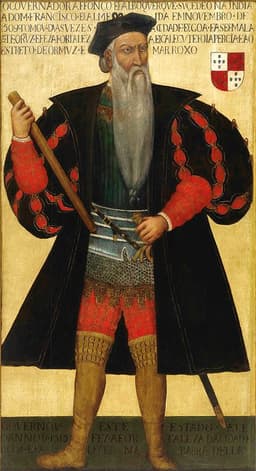
Afonso de Albuquerque
General · Medieval
79.6Total
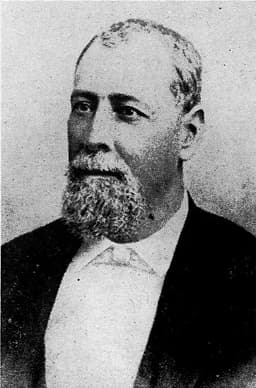
Justo Rufino Barrios
General · Modern
58.6Total
Basic Information
Born
1453
1835
Died
1515
1885
Era
Medieval
Modern
Nationality
Portugal
Guatemala
Occupation
General
General
Civilization
Western
Western
Score Comparison
Military (10%)
77.5
52.5
Political (20%)
88.0
72.0
Influence (20%)
80.0
60.0
Legacy (20%)
75.0
49.2
Leadership (15%)
78.0
65.0
Strategy (15%)
82.0
55.0
TOTAL
79.6
58.6
Afonso de Albuquerque — Complete Timeline
1503 AD
First voyage to IndiaWar◆ Major
Afonso de Albuquerque led a fleet to India, establishing the first Portuguese fort at Cochin. This voyage laid the foundation for Portuguese control of the Indian Ocean trade.
ExplorationColonialismIndia
Impact: global
1510 AD
Conquest of GoaWar◆ Major
Albuquerque captured Goa from the Sultan of Bijapur. He made Goa the capital of Portuguese India, a position it held for over 400 years.
ConquestColonialismIndia
Impact: regional
1511 AD
Conquest of MalaccaWar◆ Major
Albuquerque led a Portuguese fleet to capture the strategic port of Malacca. This gave Portugal control of the spice trade route between the Indian Ocean and the Pacific.
ConquestSpice TradeSoutheast Asia
Impact: global
1513 AD
Siege of AdenWar
Albuquerque attempted to capture Aden in Yemen but failed. This failure prevented Portugal from controlling the entrance to the Red Sea and limited their influence in the region.
SiegeFailureRed Sea
Impact: regional
1515 AD
Death at seaOther◆ Major
Afonso de Albuquerque died at sea off the coast of Goa, possibly from illness or poison. His death left the Portuguese Empire in the Indian Ocean without its most capable leader.
DeathLeadershipEmpire
Impact: regionaltragic
Justo Rufino Barrios — Complete Timeline
1871 AD
Enacted the Liberal Reforms of 1871Reform
Justo Rufino Barrios, after coming to power, implemented sweeping liberal reforms. These included the separation of church and state, confiscation of church lands, establishment of secular education, and promotion of coffee cultivation for export.
GuatemalaLiberal ReformSecularization
Impact: nationalprogressive
1873 AD
Modernized Guatemala's InfrastructureReform◆ Major
Barrios oversaw the construction of roads, telegraph lines, and railways, particularly to support coffee exports. He also promoted immigration and foreign investment, transforming Guatemala's economy.
GuatemalaInfrastructureEconomic Development
Impact: nationalconstructive
1885 AD
Killed at the Battle of ChalchuapaWar
Barrios was killed in battle at Chalchuapa, El Salvador, while leading an invasion to forcibly reunify Central America. His death ended the unification attempt and preserved the sovereignty of the individual Central American states.
Central AmericaBattleDeath
Impact: regionaltragic
Declared the Unification of Central AmericaPolitical Action◆ Major
Barrios unilaterally declared the reunification of the Central American republics by force. He issued a decree proclaiming himself supreme military commander of a unified Central America, leading to war with neighboring states.
Central AmericaUnificationWar
Impact: regionaldestructive
Expert Analysis
Afonso de Albuquerque vs Justo Rufino Barrios
### The Conqueror and the Reformer: Two Paths to Empire
History is a vast ledger of ambition, but few entries are as starkly contrasting as those of Afonso de Albuquerque and Justo Rufino Barrios. One, a Portuguese nobleman born in the twilight of the Middle Ages, forged an oceanic empire with cannon and caravel. The other, a Guatemalan liberal born into the tumultuous dawn of the modern era, tried to weld a shattered continent back together with a machete and a decree. Both were generals who died in the saddle of their grand designs, but their fates reveal the profound difference between building a world and trying to rebuild one.
### Origins
Afonso de Albuquerque entered the world in 1453 near Lisbon, a year that also saw the fall of Constantinople—a symbolic bookend for the old world. He was bred for service in the court of King Afonso V, learning mathematics and military strategy in a kingdom obsessed with breaking the Venetian and Muslim stranglehold on the spice trade. His Portugal was a small, poor nation looking outward, its destiny tied to the sea. Justo Rufino Barrios, born in 1835 in San Lorenzo, Guatemala, was a *ladino* of mixed heritage who grew up on a coffee plantation. His Central America was a land of fractured republics, bleeding from civil wars and haunted by the ghost of a failed federation. Where Albuquerque saw a blank ocean to be charted, Barrios saw a broken map to be mended.
### Rise to Power
Albuquerque’s ascent was methodical, a product of royal trust and proven competence. He first sailed to India in 1503, leading a fleet that established the first Portuguese fort at Cochin. This was not a bid for personal power but a dutiful execution of a national strategy. King Manuel I appointed him Governor of India in 1509, and later Viceroy, because he was a ruthless administrator who could be trusted to think for the crown, not for himself. Barrios’s rise was a coup. In 1871, he rode into power at the head of a liberal revolution, toppling a conservative regime. He was a caudillo, a man of the gun and the land, whose legitimacy came from victory in the field, not from a distant throne. His path was violent, personal, and deeply tied to the internal politics of a single country.
### Leadership & Governance
Albuquerque’s genius was strategic. He understood that the Portuguese Empire in the Indian Ocean would not be a land empire but a network of fortified ports. His capture of Goa in 1510 from the Sultan of Bijapur was a masterstroke—he made the city the capital of Portuguese India, a jewel that would be held for over four centuries. In 1511, he took Malacca, the strategic chokehold of the spice trade, giving Portugal control of the routes between the Indian Ocean and the Pacific. He governed with a blend of iron discipline and pragmatic tolerance, allowing local customs and even intermarriage to secure loyalty. Barrios’s leadership was a firestorm of reform. He separated church and state, secularized education, and built roads, telegraph lines, and railways to modernize Guatemala. But his military strategy was blunt. In 1885, he declared the unification of Central America by force—a decree, not a plan. He invaded El Salvador with a small army, believing his will alone could undo decades of national division.
### Triumph & Tragedy
Albuquerque’s greatest moment was the conquest of Malacca, a victory that cemented Portuguese dominance in Asia for a generation. His greatest failure was the Siege of Aden in 1513, where he failed to capture the city that guarded the Red Sea. This left the door to the Holy Land open to the Mamluks and Ottomans, a strategic wound he never healed. Barrios’s triumph was his domestic modernization—he transformed Guatemala from a sleepy backwater into a coffee-exporting powerhouse, albeit one built on the backs of dispossessed indigenous communities. His tragedy was his death. On April 2, 1885, at the Battle of Chalchuapa in El Salvador, he was shot from his horse and killed instantly. His dream of unification died with him, and his invasion collapsed into farce.
### Character & Destiny
Albuquerque was a man of cold calculation. He once wrote to his king, “If we are to be masters of the East, we must be masters of the sea.” He saw himself as an instrument of a larger design, and his decisions—brutal as they could be—were always strategic. Barrios was a man of romantic fury. He believed in progress and unity with a religious fervor, but he lacked the patience for diplomacy. His personality drove him to force history’s hand, and history broke him for it. Albuquerque died at sea off Goa in 1515, possibly poisoned, but his empire endured. Barrios died in a muddy field, and his federation dissolved before his body was cold.
### Legacy
Albuquerque’s legacy is the Portuguese Empire itself. He is remembered as a founder, a man whose total score of 77.1 in historical metrics reflects a figure of immense military (82.2) and political (80.0) skill. His name adorns forts and streets in Goa, Malacca, and Lisbon. Barrios’s legacy is more ambiguous. He is a hero to Guatemalan liberals and a villain to conservatives and indigenous communities. His total score of 68.9 reflects a man who was a great reformer but a poor strategist (55.6). He is remembered as the “Reformer of Guatemala” and the “Caudillo of Central America,” a man who tried to build a nation but only managed to build a legend.
### Conclusion
In the end, Albuquerque and Barrios stand as two sides of the same coin—the coin of ambition. Albuquerque built an empire that outlived him because he understood the geometry of power: control the sea, control the trade, control the fort. Barrios tried to build a nation that died with him because he mistook passion for power. One was a builder of worlds, the other a martyr to a dream. Both were generals, but only one was a conqueror. The other was a reformer who forgot that you cannot conquer a people who do not wish to be conquered. And in that difference lies a lesson for all who would remake the world: it is not enough to have a vision; you must also have the patience to see it through.
Rankings
🥇
Afonso de AlbuquerqueLeader
Mil: 77.5Pol: 88.0Inf: 80.0
79.6
🥈
Justo Rufino Barrios
Mil: 52.5Pol: 72.0Inf: 60.0
58.6
+21.0 behind
How This Comparison Works
Algorithm
Each figure is scored on 6 dimensions (0—100 scale) based on structured historical data: Military (10%), Political (20%), Influence (20%), Legacy (20%), Leadership (15%), Strategy (15%). The weighted total produces the final ranking.
Data Sources
Scores are computed from structured sub-indicators in the database. Scale factors adjust for era (Ancient ×0.85, Modern ×1.0) and civilization size (Eastern ×1.05, Other ×0.80) to account for differences in population and military scale.
Maximum 3 Figures
Comparisons are limited to 2—3 figures to ensure readability and statistical meaningfulness.
Error Margins
±5 points per dimension — Sub-scores are derived from historical records with inherent uncertainty. Two figures within 5 points on a dimension should be considered roughly equivalent in that area.
Total Score Accuracy
±3 points overall — The weighted combination of 6 dimensions produces a total score with approximately ±3 points of uncertainty. Differences of less than 3 points are not statistically significant— the figures are effectively tied.
Known Limitations
- Historical records are incomplete and uneven across civilizations
- Figures from oral-tradition societies may be underrepresented
- Occupation labels can misclassify multi-role figures
- Scores measure capability and impact, not moral character
- Quantitative scoring is a comparison tool, not absolute truth
Capability Radar
Military (10%) — Battles & Warfare
Battles
85
45
Win Rate
80
55
Expansion
95
55
Political (20%) — Governance & Reform
Reform
80
70
Diplomacy
85
45
Economy
80
55
Influence (20%) — Cultural & Global Reach
Cultural
70
40
Global
85
30
Legacy (20%) — Historical Impact
Historical
85
50
Longevity
80
35
Leadership (15%) — Power & Stability
Tenure
70
50
Stability
65
30
Strategy (15%) — Tactics & Innovation
Strategy
95
50
Tactics
90
40
Reform
75
60
Similar Comparisons
Comments & Discussion
No comments yet. Be the first to share your thoughts!