Loading...
Francisco Morazan vs Justo Rufino Barrios
Justo Rufino Barrios leads by 0.6 pts · 2 figures compared
…
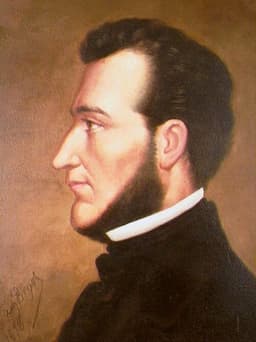
Francisco Morazan
General · Modern
58.0Total
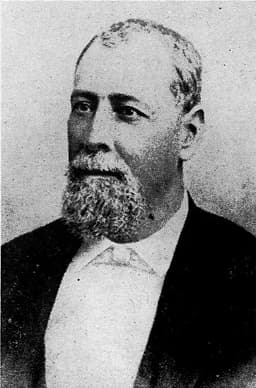
Justo Rufino Barrios
General · Modern
58.6Total
Basic Information
Born
1792
1835
Died
1842
1885
Era
Modern
Modern
Nationality
Honduras
Guatemala
Occupation
General
General
Civilization
Western
Western
Score Comparison
Military (10%)
52.5
52.5
Political (20%)
60.0
72.0
Influence (20%)
62.0
60.0
Legacy (20%)
50.0
49.2
Leadership (15%)
68.0
65.0
Strategy (15%)
55.0
55.0
TOTAL
58.0
58.6
Francisco Morazan — Complete Timeline
1824 AD
Abolition of slavery in Central AmericaReform◆ Major
As a key leader in the liberal movement, Moraz
AbolitionSlaveryLiberal Reform
Impact: regionalprogressive
1827 AD
Battle of La TrinidadWar◆ Major
Morazán led a liberal army to victory against conservative forces at La Trinidad, Honduras. This battle was a key turning point in the Central American civil war, allowing Morazán to consolidate power and eventually become president of the federation.
BattleLiberal VictoryCivil War
Impact: regional
1830 AD
Presidency of the Federal Republic of Central AmericaPolitical Action
Morazán was elected president of the Federal Republic of Central America, a union of Guatemala, El Salvador, Honduras, Nicaragua, and Costa Rica. He pursued liberal reforms including separation of church and state, free trade, and land reform, facing opposition from conservatives.
Federal RepublicLiberal ReformsCentral America
Impact: regionalconstructive
1842 AD
Execution by firing squadPolitical Action
After a failed attempt to restore the Federal Republic, Moraz
ExecutionEnd of FederationLiberal Defeat
Impact: regionaltragic
Justo Rufino Barrios — Complete Timeline
1871 AD
Enacted the Liberal Reforms of 1871Reform
Justo Rufino Barrios, after coming to power, implemented sweeping liberal reforms. These included the separation of church and state, confiscation of church lands, establishment of secular education, and promotion of coffee cultivation for export.
GuatemalaLiberal ReformSecularization
Impact: nationalprogressive
1873 AD
Modernized Guatemala's InfrastructureReform◆ Major
Barrios oversaw the construction of roads, telegraph lines, and railways, particularly to support coffee exports. He also promoted immigration and foreign investment, transforming Guatemala's economy.
GuatemalaInfrastructureEconomic Development
Impact: nationalconstructive
1885 AD
Killed at the Battle of ChalchuapaWar
Barrios was killed in battle at Chalchuapa, El Salvador, while leading an invasion to forcibly reunify Central America. His death ended the unification attempt and preserved the sovereignty of the individual Central American states.
Central AmericaBattleDeath
Impact: regionaltragic
Declared the Unification of Central AmericaPolitical Action◆ Major
Barrios unilaterally declared the reunification of the Central American republics by force. He issued a decree proclaiming himself supreme military commander of a unified Central America, leading to war with neighboring states.
Central AmericaUnificationWar
Impact: regionaldestructive
Expert Analysis
Francisco Morazan vs Justo Rufino Barrios
### The Dream That Wouldn’t Die
On a dusty road near Chalchuapa, El Salvador, on the morning of April 2, 1885, a bullet tore through the chest of a man who had sworn to reunite Central America or die trying. Justo Rufino Barrios, the iron-fisted liberal of Guatemala, fell from his horse, his grand ambition extinguished in a single, chaotic volley. Forty-three years earlier, another man had faced a firing squad in San José, Costa Rica. Francisco Morazán, the last great hope of a united Central America, had been betrayed, captured, and executed. He died defiant, still believing the union was worth dying for. Two men, one dream, two strikingly different paths to the same tragic end. Why did one die a president and the other a rebel? Why did one's reforms endure while the other's shattered in a single battle? The answer lies not just in their era, but in their very souls.
### Origins: The Land and the Law
Francisco Morazán was born in 1792 in Tegucigalpa, Honduras, into a creole family of modest means. His world was the twilight of Spanish colonial rule, a society rigidly divided by caste and privilege. He educated himself in the libraries of his town, devouring the works of Rousseau, Montesquieu, and the French Encyclopedists. His mind was forged in the fires of Enlightenment idealism—the belief that reason and law could perfect human society. He was a man of the nineteenth-century liberal tradition, where reform meant abolishing slavery, ending church privileges, and building a secular republic.
Justo Rufino Barrios, born in 1835 in San Lorenzo, Guatemala, belonged to a different world entirely. By his youth, Central America had already been fractured for nearly two decades. The hope of federation was a bitter memory. Barrios was a product of the coffee boom, the new economic engine that was reshaping Guatemala. He was a landowner, a pragmatist, and a man who understood power not as an idea but as a weapon. His liberalism was not the dreamy idealism of Morazán but the hard-edged, authoritarian liberalism of the late nineteenth century—railroads, telegraphs, and coffee exports, built on the backs of forced indigenous labor. If Morazán wanted to liberate people, Barrios wanted to modernize a nation, and he was willing to crush anyone who stood in his way.
### Rise to Power: The General and the Coup
Morazán’s rise was a story of guerrilla warfare and political maneuvering. In 1827, at the Battle of La Trinidad, he led a ragged liberal army to a stunning victory against conservative forces, a battle that turned him into a national hero. By 1830, he was elected president of the Federal Republic of Central America, a union of five states that had been teetering on the brink of collapse. His path was one of persuasion, coalition-building, and military brilliance in the field. He was a general who believed in the republic.
Barrios, by contrast, came to power through a coup. In 1871, he and a fellow liberal, Miguel García Granados, overthrew the conservative government of Guatemala. Barrios was not elected to lead a union; he seized a nation. His rise was swift, violent, and decisive. Within two years, he had consolidated power and declared himself president. His path was not about building consensus but about breaking opposition—exiling bishops, confiscating church lands, and executing rivals. He was a general who believed in the state, and he was the state.
### Leadership & Governance: Reform by Sword, Reform by Decree
As president of the Federal Republic, Morazán enacted the most progressive reforms Central America had ever seen. In 1824, he abolished slavery, a radical act in a region where plantation owners still relied on bonded labor. He established freedom of the press, secularized education, and promoted free trade. But his governance was a constant struggle. The conservative forces of Guatemala, led by the powerful Aycinena family and the Catholic Church, fought him at every turn. Morazán’s union was a house of cards, held together by his personal charisma and military victories, but lacking the institutional strength to survive.
Barrios was a different kind of reformer. His Liberal Reforms of 1871 were not about freedom; they were about efficiency. He separated church and state not out of principle but to seize the church’s vast landholdings and sell them to coffee planters. He modernized Guatemala’s infrastructure—building roads, railways, and telegraph lines—but only to connect coffee plantations to ports. He expelled the Jesuits and abolished monastic orders, not to liberate minds but to break the church’s economic power. His reforms were ruthless, effective, and deeply unequal. Under Barrios, Guatemala became a modern state, but it was a state built on the exploitation of indigenous communities, who were forced into labor on the coffee fincas.
### Triumph & Tragedy: The Dream Collapses
Morazán’s greatest triumph was also his greatest tragedy. He held the Federal Republic together for nearly a decade, a feat of political and military will. But by 1839, the union had splintered into warring states. Morazán fled into exile, only to return in 1842 in a desperate attempt to restore the federation. He landed in Costa Rica, rallied a small army, and briefly took power. But he was betrayed, captured, and on September 15, 1842, executed by firing squad. His last words, according to legend, were: “I die with the consolation that I have sought the good of my country.”
Barrios’s triumph was the transformation of Guatemala. By 1885, he had built a centralized, modern state with a professional army and a booming coffee economy. But his ambition was not satisfied. He wanted to be the man who finally reunited Central America. On February 28, 1885, he issued a decree proclaiming himself supreme military commander of the reunified republic. He invaded El Salvador, expecting a quick victory. Instead, he met a coalition of Central American armies at Chalchuapa. He was killed in the first hour of battle, his dream dying with him. His body was taken back to Guatemala City, where he was buried with honors, but his union died on the battlefield.
### Character & Destiny: The Idealist and the Iron Fist
Morazán was a man of conviction, but his conviction was his undoing. He believed that reason and law could overcome centuries of division. He was a brilliant general but a poor politician—he could win battles but could not build institutions. His idealism made him inspiring but also naive. He thought the union could survive on goodwill alone, and he was wrong.
Barrios was a man of will. He understood that power was not an idea but a force. He built Guatemala into a modern state not by persuading people but by crushing them. But his will was also his flaw. He believed that force alone could reunite Central America, and he was wrong. He overestimated his army, underestimated his enemies, and died in a hail of bullets. His tragedy was not that he failed, but that he never understood why he failed.
### Legacy: What They Left Behind
Morazán is remembered as the “Simón Bolívar of Central America.” His face appears on the currency of Honduras and El Salvador, and his name adorns streets and schools across the region. He is the symbol of a lost dream, the martyr of unity. His legacy is one of hope, however unfulfilled.
Barrios is remembered as the “Reformer of Guatemala.” He is praised for modernizing the country and damned for destroying its indigenous communities. His legacy is one of progress and brutality, inextricably mixed. In Guatemala, he is a controversial figure—a builder and a tyrant. His dream of reunification is largely forgotten, buried with him at Chalchuapa.
### Conclusion: The Unfinished Bridge
Two men, one dream, two graves. Morazán died a martyr, his ideals intact, his failure noble. Barrios died a conqueror, his ambition shattered, his methods brutal. Both wanted the same thing: a united Central America. Both achieved the same thing: a broken dream. But they approached that dream from opposite directions. Morazán tried to build a bridge of laws; Barrios tried to build a bridge of steel. Neither bridge reached the other side. Perhaps the lesson is that unity cannot be forced, nor can it be wished into existence. It must be built, stone by stone, by people who are willing to compromise, not just to fight. And that, in the end, is what both men—for all their brilliance, for all their flaws—could never do.
Rankings
🥇
Justo Rufino BarriosLeader
Mil: 52.5Pol: 72.0Inf: 60.0
58.6
🥈
Francisco Morazan
Mil: 52.5Pol: 60.0Inf: 62.0
58.0
+0.6 behind
How This Comparison Works
Algorithm
Each figure is scored on 6 dimensions (0—100 scale) based on structured historical data: Military (10%), Political (20%), Influence (20%), Legacy (20%), Leadership (15%), Strategy (15%). The weighted total produces the final ranking.
Data Sources
Scores are computed from structured sub-indicators in the database. Scale factors adjust for era (Ancient ×0.85, Modern ×1.0) and civilization size (Eastern ×1.05, Other ×0.80) to account for differences in population and military scale.
Maximum 3 Figures
Comparisons are limited to 2—3 figures to ensure readability and statistical meaningfulness.
Error Margins
±5 points per dimension — Sub-scores are derived from historical records with inherent uncertainty. Two figures within 5 points on a dimension should be considered roughly equivalent in that area.
Total Score Accuracy
±3 points overall — The weighted combination of 6 dimensions produces a total score with approximately ±3 points of uncertainty. Differences of less than 3 points are not statistically significant— the figures are effectively tied.
Known Limitations
- Historical records are incomplete and uneven across civilizations
- Figures from oral-tradition societies may be underrepresented
- Occupation labels can misclassify multi-role figures
- Scores measure capability and impact, not moral character
- Quantitative scoring is a comparison tool, not absolute truth
Capability Radar
Military (10%) — Battles & Warfare
Battles
55
45
Win Rate
60
55
Expansion
40
55
Political (20%) — Governance & Reform
Reform
70
70
Diplomacy
45
45
Economy
50
55
Influence (20%) — Cultural & Global Reach
Cultural
45
40
Global
35
30
Legacy (20%) — Historical Impact
Historical
50
50
Longevity
40
35
Leadership (15%) — Power & Stability
Tenure
55
50
Stability
30
30
Strategy (15%) — Tactics & Innovation
Strategy
55
50
Tactics
50
40
Reform
45
60
Similar Comparisons
Comments & Discussion
No comments yet. Be the first to share your thoughts!