Loading...
J. B. M. Hertzog vs Justo Rufino Barrios
Justo Rufino Barrios leads by 2.5 pts · 2 figures compared
…
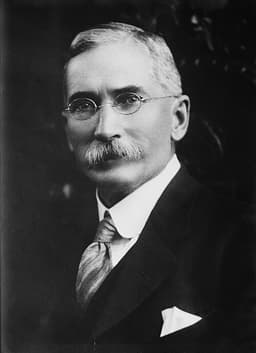
J. B. M. Hertzog
General · Modern
56.1Total
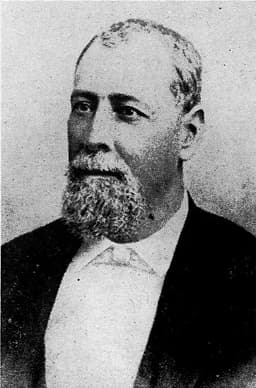
Justo Rufino Barrios
General · Modern
58.6Total
Basic Information
Born
1866
1835
Died
1942
1885
Era
Modern
Modern
Nationality
South Africa
Guatemala
Occupation
General
General
Civilization
Other
Western
Score Comparison
Military (10%)
25.0
52.5
Political (20%)
60.0
72.0
Influence (20%)
56.7
60.0
Legacy (20%)
50.0
49.2
Leadership (15%)
79.8
65.0
Strategy (15%)
60.0
55.0
TOTAL
56.1
58.6
J. B. M. Hertzog — Complete Timeline
1899 AD
Boer War GeneralWar◆ Major
Hertzog served as a Boer general in the Second Boer War, commanding forces in the Orange Free State. He participated in several battles and became a prominent Afrikaner military leader.
Second Boer WarGeneralMilitary
Impact: regional
1914 AD
Founded the National PartyPolitical Action
Hertzog broke away from the South African Party and founded the National Party, which championed Afrikaner nationalism and opposed British imperial influence. The party would later implement apartheid.
National PartyAfrikaner NationalismFounding
Impact: nationalconstructive
1924 AD
Prime Minister of South AfricaPolitical Action◆ Major
Hertzog became Prime Minister after his National Party won the general election in coalition with the Labour Party. His government implemented policies to protect white workers and promote Afrikaner interests, including the 'civilized labour' policy.
Prime MinisterAfrikaner RightsLabour Policy
Impact: national
1934 AD
Merged with Smuts to Form United PartyPolitical Action◆ Major
Hertzog merged his National Party with Jan Smuts' South African Party to form the United Party. The coalition aimed to address the economic crisis of the Great Depression and promote national unity, but it alienated hardline Afrikaner nationalists.
United PartyCoalitionNational Unity
Impact: nationalconstructive
1936 AD
Passed the Representation of Natives ActReform◆ Major
Hertzog's government passed the Representation of Natives Act, which removed Black voters from the common voters' roll in the Cape Province and allowed them to elect white representatives instead. This further entrenched racial segregation.
SegregationDisenfranchisementLegislation
Impact: nationaldestructive
1939 AD
Resigned Over Neutrality in WWIIPolitical Action◆ Major
Hertzog advocated for South African neutrality in World War II, but his cabinet voted to enter the war on the Allied side. He resigned as Prime Minister and was succeeded by Jan Smuts, splitting the United Party.
World War IINeutralityResignation
Impact: national
Justo Rufino Barrios — Complete Timeline
1871 AD
Enacted the Liberal Reforms of 1871Reform
Justo Rufino Barrios, after coming to power, implemented sweeping liberal reforms. These included the separation of church and state, confiscation of church lands, establishment of secular education, and promotion of coffee cultivation for export.
GuatemalaLiberal ReformSecularization
Impact: nationalprogressive
1873 AD
Modernized Guatemala's InfrastructureReform◆ Major
Barrios oversaw the construction of roads, telegraph lines, and railways, particularly to support coffee exports. He also promoted immigration and foreign investment, transforming Guatemala's economy.
GuatemalaInfrastructureEconomic Development
Impact: nationalconstructive
1885 AD
Killed at the Battle of ChalchuapaWar
Barrios was killed in battle at Chalchuapa, El Salvador, while leading an invasion to forcibly reunify Central America. His death ended the unification attempt and preserved the sovereignty of the individual Central American states.
Central AmericaBattleDeath
Impact: regionaltragic
Declared the Unification of Central AmericaPolitical Action◆ Major
Barrios unilaterally declared the reunification of the Central American republics by force. He issued a decree proclaiming himself supreme military commander of a unified Central America, leading to war with neighboring states.
Central AmericaUnificationWar
Impact: regionaldestructive
Expert Analysis
J. B. M. Hertzog vs Justo Rufino Barrios
### The General as Statesman: Two Paths to Power, Two Destinies
In the searing heat of a South African summer in 1939, an aging prime minister faced a choice that would shatter his political career. James Barry Munnik Hertzog had spent decades fighting for his people, first with a rifle, then with a ballot box. Now, with the world plunging into war, he argued for neutrality—a stance that had served his nation before. Across the Atlantic, in the jungles of Central America, another general-president had faced his own moment of truth fifty-four years earlier. Justo Rufino Barrios, riding at the head of an army he had built from scratch, charged into the guns of El Salvador, convinced that only force could reunite the broken dream of a Central American federation. One man died on the battlefield, his ambition buried with him. The other died in office, but his legacy would prove equally tragic. What drove these two soldiers-turned-statesmen down such different roads?
### Origins
Hertzog was born in 1866 on a farm in the Cape Colony, the son of a Boer frontiersman. His childhood was steeped in the memory of the Great Trek and the bitter resentment of British rule. He studied law in the Netherlands, returning to the Orange Free State with a sharp legal mind and a burning conviction that the Afrikaner people must never again be subjugated. Barrios, born in 1835 in San Lorenzo, Guatemala, came from a different world—a land of volcanic highlands and coffee plantations, where the struggle was not against a distant empire but against the conservative oligarchy that had ruled since independence. Where Hertzog’s grievances were cultural and linguistic, Barrios’s were ideological. The Guatemalan had studied liberal philosophy, and his war was against the Church, the old aristocracy, and the very idea that Central America should remain fractured.
### Rise to Power
Hertzog’s path to power was forged in the crucible of the Second Boer War. As a general commanding forces in the Orange Free State from 1899, he earned a reputation for tactical competence and stubborn defiance. When the war ended in British victory, he channeled his military prestige into politics. In 1914, he broke from the South African Party to found the National Party, a vehicle for Afrikaner nationalism that promised to protect his people from English domination. Barrios’s rise was swifter and bloodier. He came to power in 1871 through a liberal revolution, toppling the conservative regime with a coalition of coffee growers and intellectuals. Where Hertzog had to navigate the complexities of a parliamentary system, Barrios simply seized the presidency and never let go.
### Leadership & Governance
As prime minister from 1924, Hertzog governed with a paradoxical blend of pragmatism and prejudice. He forged a coalition with the Labour Party, passed protective tariffs for white workers, and promoted Afrikaans as an official language. His military background gave him a cautious, methodical approach—he was a builder, not a destroyer. In 1934, he merged his National Party with Jan Smuts’s South African Party to form the United Party, a grand coalition meant to stabilize the country during the Depression. Barrios ruled Guatemala with a far heavier hand. Between 1873 and 1885, he modernized infrastructure, building roads, telegraph lines, and railways to support coffee exports. He separated Church and state, expropriated ecclesiastical lands, and promoted secular education. His military score of 65.4 reflects a leader who never hesitated to use force, while his political score of 72.0 shows a man who understood that reform required iron will.
### Triumph & Tragedy
Hertzog’s greatest triumph was also his most damning. In 1936, his government passed the Representation of Natives Act, removing Black voters from the common roll in the Cape Province. It was a calculated betrayal—a sop to white unity that laid the legal foundation for apartheid. His tragedy came in 1939, when he resigned rather than lead South Africa into war against Germany. The man who had fought the British now found himself isolated, his vision of neutrality rejected by his own cabinet. Barrios’s moment of glory was his declaration in 1885 that he would reunify Central America by force. It was a quixotic dream, one that ignored the fierce nationalism of the other republics. He died that same year at the Battle of Chalchuapa, shot from his horse while leading a charge. His total score of 68.9 reflects a life cut short by his own ambition.
### Character & Destiny
Hertzog was a man of principle, but his principles were narrow. He fought for Afrikaner rights while systematically denying those of others. His legal training made him cautious, his military experience made him stubborn, and his nationalism made him blind to the broader injustices of his time. Barrios was a revolutionary who believed that progress could be imposed at gunpoint. His liberal reforms were genuine, but his dream of unity was a fantasy. Both men were prisoners of their eras—Hertzog of the racial obsessions of early twentieth-century South Africa, Barrios of the romantic nationalism that swept nineteenth-century Latin America.
### Legacy
Today, Hertzog is remembered as a father of Afrikaner nationalism and an architect of segregation. His name adorns streets and towns, but his policies haunt a nation still grappling with apartheid’s legacy. Barrios is a more ambiguous figure—a modernizer who dragged Guatemala into the twentieth century, but also a caudillo who died trying to conquer his neighbors. His statue stands in Guatemala City, but his dream of Central American unity remains as distant as ever.
### Conclusion
In the end, both men illustrate the terrible tension between the soldier and the statesman. Hertzog chose politics over war, yet his political victories sowed the seeds of future conflict. Barrios chose war over politics, and his death on the battlefield ended his dream forever. Their stories remind us that leadership is not just about power—it is about the choices leaders make when power is in their hands. One chose to build walls, the other to tear them down. Both failed, but their failures illuminate the narrow path between principle and folly that every leader must walk.
Rankings
🥇
Justo Rufino BarriosLeader
Mil: 52.5Pol: 72.0Inf: 60.0
58.6
🥈
J. B. M. Hertzog
Mil: 25.0Pol: 60.0Inf: 56.7
56.1
+2.5 behind
How This Comparison Works
Algorithm
Each figure is scored on 6 dimensions (0—100 scale) based on structured historical data: Military (10%), Political (20%), Influence (20%), Legacy (20%), Leadership (15%), Strategy (15%). The weighted total produces the final ranking.
Data Sources
Scores are computed from structured sub-indicators in the database. Scale factors adjust for era (Ancient ×0.85, Modern ×1.0) and civilization size (Eastern ×1.05, Other ×0.80) to account for differences in population and military scale.
Maximum 3 Figures
Comparisons are limited to 2—3 figures to ensure readability and statistical meaningfulness.
Error Margins
±5 points per dimension — Sub-scores are derived from historical records with inherent uncertainty. Two figures within 5 points on a dimension should be considered roughly equivalent in that area.
Total Score Accuracy
±3 points overall — The weighted combination of 6 dimensions produces a total score with approximately ±3 points of uncertainty. Differences of less than 3 points are not statistically significant— the figures are effectively tied.
Known Limitations
- Historical records are incomplete and uneven across civilizations
- Figures from oral-tradition societies may be underrepresented
- Occupation labels can misclassify multi-role figures
- Scores measure capability and impact, not moral character
- Quantitative scoring is a comparison tool, not absolute truth
Capability Radar
Military (10%) — Battles & Warfare
Battles
45
45
Win Rate
40
55
Expansion
20
55
Political (20%) — Governance & Reform
Reform
60
70
Diplomacy
55
45
Economy
50
55
Influence (20%) — Cultural & Global Reach
Cultural
50
40
Global
45
30
Legacy (20%) — Historical Impact
Historical
55
50
Longevity
40
35
Leadership (15%) — Power & Stability
Tenure
65
50
Stability
45
30
Strategy (15%) — Tactics & Innovation
Strategy
50
50
Tactics
45
40
Reform
30
60
Similar Comparisons
Comments & Discussion
No comments yet. Be the first to share your thoughts!