Loading...
Justo Rufino Barrios vs Prem Tinsulanonda
Justo Rufino Barrios leads by 1.4 pts · 2 figures compared
…
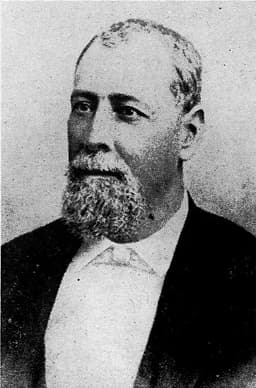
Justo Rufino Barrios
General · Modern
58.6Total
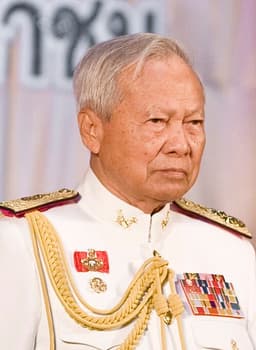
Prem Tinsulanonda
General · Modern
57.2Total
Basic Information
Born
1835
1920
Died
1885
—
Era
Modern
Modern
Nationality
Guatemala
Thailand
Occupation
General
General
Civilization
Western
Eastern
Score Comparison
Military (10%)
52.5
50.0
Political (20%)
72.0
59.3
Influence (20%)
60.0
54.9
Legacy (20%)
49.2
47.5
Leadership (15%)
65.0
78.0
Strategy (15%)
55.0
60.0
TOTAL
58.6
57.2
Justo Rufino Barrios — Complete Timeline
1871 AD
Enacted the Liberal Reforms of 1871Reform
Justo Rufino Barrios, after coming to power, implemented sweeping liberal reforms. These included the separation of church and state, confiscation of church lands, establishment of secular education, and promotion of coffee cultivation for export.
GuatemalaLiberal ReformSecularization
Impact: nationalprogressive
1873 AD
Modernized Guatemala's InfrastructureReform◆ Major
Barrios oversaw the construction of roads, telegraph lines, and railways, particularly to support coffee exports. He also promoted immigration and foreign investment, transforming Guatemala's economy.
GuatemalaInfrastructureEconomic Development
Impact: nationalconstructive
1885 AD
Killed at the Battle of ChalchuapaWar
Barrios was killed in battle at Chalchuapa, El Salvador, while leading an invasion to forcibly reunify Central America. His death ended the unification attempt and preserved the sovereignty of the individual Central American states.
Central AmericaBattleDeath
Impact: regionaltragic
Declared the Unification of Central AmericaPolitical Action◆ Major
Barrios unilaterally declared the reunification of the Central American republics by force. He issued a decree proclaiming himself supreme military commander of a unified Central America, leading to war with neighboring states.
Central AmericaUnificationWar
Impact: regionaldestructive
Prem Tinsulanonda — Complete Timeline
1980 AD
Appointed Prime Minister after a coupPolitical Action◆ Major
Prem Tinsulanonda was appointed Prime Minister of Thailand by the military after a coup. He served for over eight years, overseeing a period of political stability and economic growth.
Prime MinisterMilitary RuleStability
Impact: national
1981 AD
Survived a coup attemptPolitical Action◆ Major
Prem survived a coup attempt by military officers loyal to the 'Young Turks' faction. The coup failed due to lack of support and the loyalty of key military units, allowing Prem to remain in power.
Coup AttemptPolitical CrisisMilitary
Impact: national
1988 AD
Resigned as Prime MinisterPolitical Action◆ Major
Prem resigned as Prime Minister after the general election, handing over power to a civilian government led by Chatichai Choonhavan. His resignation marked a rare peaceful transition of power in Thai politics.
ResignationDemocratic TransitionPeaceful
Impact: nationalconstructive
2016 AD
Appointed Regent of ThailandPolitical Action
After the death of King Bhumibol, Prem was appointed Regent of Thailand until the ascension of King Maha Vajiralongkorn. He served as a key figure in the transition of the monarchy.
RegentMonarchyTransition
Impact: national
Expert Analysis
Prem Tinsulanonda vs Justo Rufino Barrios
The General and the Reformer
On a sweltering April morning in 1885, a Guatemalan general in a white uniform led his cavalry straight into a hail of bullets outside the town of Chalchuapa, El Salvador. Justo Rufino Barrios died on the battlefield, his dream of reuniting Central America by force dying with him. Just over a century later, in 2016, another general—Prem Tinsulanonda of Thailand—was appointed regent of his kingdom, the ultimate symbol of stability in a nation that had endured more than a dozen coups. Both men were soldiers who became rulers. Both wielded immense power. Yet one ended his life in a suicidal charge, while the other died in bed, revered as a kingmaker. What explains the difference? The answer lies not in their ambitions, but in their understanding of power itself.
Origins
Prem Tinsulanonda was born in 1920 in Songkhla, a quiet province in southern Thailand, into a family of modest means. His father was a schoolteacher, his mother a homemaker. The young Prem grew up in the shadow of absolute monarchy—King Rama VII still reigned—but also in the shadow of change. Thailand, then Siam, was a rare Southeast Asian nation never colonized, and its elite were acutely aware that survival required adaptation. Prem entered the Chulachomklao Royal Military Academy, graduating in 1941, just as World War II engulfed the region. He was a product of Thailand’s peculiar political culture: a monarchy that survived by bending, a military that ruled by consensus, and a society that valued harmony over confrontation.
Justo Rufino Barrios, born in 1835, came from an entirely different world. He was a *ladino*—of mixed Spanish and indigenous descent—from San Lorenzo, a small town in Guatemala’s western highlands. His father was a farmer, but young Justo studied law at the University of San Carlos, then became a rancher and coffee planter. Guatemala in the 1850s was a conservative backwater, dominated by the Catholic Church and a landed aristocracy that had resisted liberal reforms for decades. Barrios grew up in a nation fractured by civil wars and ethnic divisions, where power was seized, not inherited. He learned early that change came through violence.
Rise to Power
Prem’s ascent was slow, patient, and almost invisible. He served as a staff officer in the 1950s and 1960s, building networks rather than reputations. His breakthrough came in 1980, when a military coup toppled the civilian government of Prime Minister Kriangsak Chamanan. The generals needed a leader who could calm the streets and reassure the palace. Prem, then a relatively obscure general, was appointed prime minister. He was not a revolutionary; he was a compromise candidate. His power came not from his own ambition, but from the fact that he threatened no one—at least not yet.
Barrios rose through bullets and blood. In 1871, he joined the liberal rebellion against President Vicente Cerna, a conservative holdover. The rebellion succeeded, and Barrios quickly became the strongman of the new regime. By 1873, he was president. He did not wait for consensus; he imposed it. Within months, he had expelled the Jesuits, confiscated church lands, and begun building a railway to the Atlantic. His rise was a classic Latin American *caudillo* story: a man on horseback who promised progress and delivered it with a machete.
Leadership & Governance
Prem governed as a listener, not a commander. His style was indirect, almost Socratic. He held weekly meetings with military factions, business leaders, and palace officials, never revealing his own position until he sensed a consensus. He survived a coup attempt in 1981 by the "Young Turks"—a reformist military faction—not by crushing them, but by letting them exhaust themselves. The coup failed because the army’s senior officers, the king, and the Bangkok elite all refused to support it. Prem understood that in Thailand, power was a web of relationships, not a single sword.
Barrios governed as a builder and a destroyer. He modernized Guatemala at breakneck speed: roads, telegraphs, railways, coffee plantations. He separated church and state, established secular education, and invited foreign investment. But his reforms came at a cost. Indigenous communities lost their communal lands to coffee barons. Political opponents were exiled or shot. Barrios saw himself as a force of history, dragging a backward nation into the modern world. He had no patience for negotiation. When Central America’s other republics refused his call for reunification, he declared war on them.
Triumph & Tragedy
Prem’s greatest triumph was his resignation. In 1988, after eight years in power, he called a general election and handed the government to the winner, Chatichai Choonhavan, a civilian. This was almost unheard of in Thai politics—military strongmen did not voluntarily step down. But Prem understood that his real power lay not in the prime minister’s office, but in his relationship with King Bhumibol and the military hierarchy. By leaving the formal position, he became a permanent behind-the-scenes power broker, a role he would hold for nearly three decades. His tragedy was Thailand’s: the nation remained politically unstable, but Prem’s very success made him the indispensable man, a crutch that the country could not discard.
Barrios’s triumph was his vision. He was the first Central American leader to truly believe that the isthmus could be one nation again, as it had been briefly under the Federal Republic of Central America. He built railways and roads that connected Guatemala to the sea, and he forced the church to surrender its medieval privileges. But his tragedy was total. In 1885, he issued a decree proclaiming the unification of Central America, then marched into El Salvador with a small army. At Chalchuapa, his troops were routed. Barrios died on the battlefield, shot through the chest. His dream died with him. Central America remained fragmented, and Guatemala slipped back into dictatorship.
Character & Destiny
Prem was a man of patience and indirection. He rarely spoke in public, never raised his voice, and cultivated an air of Buddhist detachment. He was, by all accounts, incorruptible—a rare quality in Thai politics. His personality shaped a destiny of longevity. He died in 2019 at the age of 98, having served as regent of Thailand after King Bhumibol’s death in 2016. In his final years, he was the closest thing to a living institution in Thai public life.
Barrios was a man of fire and action. He was impulsive, brave, and utterly convinced of his own righteousness. "I would rather die standing than live on my knees," he reportedly said. His personality shaped a destiny of martyrdom. He died at 49, a bullet in his chest, his grand plan in ruins. But in death, he became a symbol—the martyr of Central American unity.
Legacy
Prem’s legacy is ambiguous. He is remembered as a stabilizer, the man who kept Thailand from falling into civil war during the turbulent 1980s. But he is also criticized for entrenching military influence over politics, a system that eventually led to the 2014 coup and years of authoritarian rule. The palace and the army still invoke his memory as a model of virtuous leadership. His total score of 68.4 reflects this ambivalence: high in political skill and leadership, moderate in military and strategic achievement.
Barrios’s legacy is more dramatic but equally contested. To liberals, he is a hero who broke the church’s power and modernized Guatemala. To indigenous communities, he is a villain who stole their land and crushed their culture. His attempt at unification is seen as either noble folly or dangerous megalomania. His total score of 68.9 is almost identical to Prem’s, but for opposite reasons: high in military and political action, low in strategy and long-term governance.
Conclusion
Standing in the hills of Chalchuapa, where Barrios fell, or in the marble halls of Bangkok, where Prem sat in silent counsel, one senses the same truth: power is not a possession, but a relationship. Barrios thought he could impose his will on history. Prem knew that history is a river, and the wise leader learns to float. Both were generals. Both were reformers. But one tried to bend the world to his vision, while the other bent himself to the world. In the end, the patient listener outlasted the charging cavalryman. Yet both left their nations transformed—and still searching for peace.
Rankings
🥇
Justo Rufino BarriosLeader
Mil: 52.5Pol: 72.0Inf: 60.0
58.6
🥈
Prem Tinsulanonda
Mil: 50.0Pol: 59.3Inf: 54.9
57.2
+1.4 behind
How This Comparison Works
Algorithm
Each figure is scored on 6 dimensions (0—100 scale) based on structured historical data: Military (10%), Political (20%), Influence (20%), Legacy (20%), Leadership (15%), Strategy (15%). The weighted total produces the final ranking.
Data Sources
Scores are computed from structured sub-indicators in the database. Scale factors adjust for era (Ancient ×0.85, Modern ×1.0) and civilization size (Eastern ×1.05, Other ×0.80) to account for differences in population and military scale.
Maximum 3 Figures
Comparisons are limited to 2—3 figures to ensure readability and statistical meaningfulness.
Error Margins
±5 points per dimension — Sub-scores are derived from historical records with inherent uncertainty. Two figures within 5 points on a dimension should be considered roughly equivalent in that area.
Total Score Accuracy
±3 points overall — The weighted combination of 6 dimensions produces a total score with approximately ±3 points of uncertainty. Differences of less than 3 points are not statistically significant— the figures are effectively tied.
Known Limitations
- Historical records are incomplete and uneven across civilizations
- Figures from oral-tradition societies may be underrepresented
- Occupation labels can misclassify multi-role figures
- Scores measure capability and impact, not moral character
- Quantitative scoring is a comparison tool, not absolute truth
Capability Radar
Military (10%) — Battles & Warfare
Battles
45
20
Win Rate
55
25
Expansion
55
10
Political (20%) — Governance & Reform
Reform
70
55
Diplomacy
45
60
Economy
55
50
Influence (20%) — Cultural & Global Reach
Cultural
40
30
Global
30
30
Legacy (20%) — Historical Impact
Historical
50
40
Longevity
35
35
Leadership (15%) — Power & Stability
Tenure
50
65
Stability
30
60
Strategy (15%) — Tactics & Innovation
Strategy
50
30
Tactics
40
30
Reform
60
35
Similar Comparisons
Comments & Discussion
No comments yet. Be the first to share your thoughts!