Loading...
Justo Rufino Barrios vs Plutarco Elias Calles
Justo Rufino Barrios leads by 0.1 pts · 2 figures compared
…
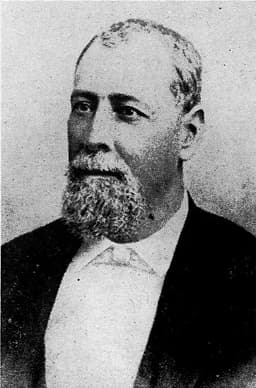
Justo Rufino Barrios
General · Modern
58.6Total
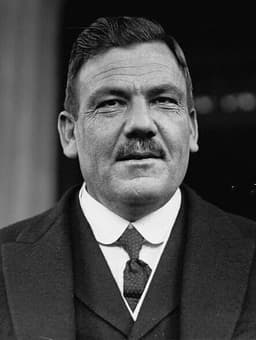
Plutarco Elias Calles
General · Modern
58.5Total
Basic Information
Born
1835
1877
Died
1885
1945
Era
Modern
Modern
Nationality
Guatemala
Mexico
Occupation
General
General
Civilization
Western
Western
Score Comparison
Military (10%)
52.5
40.0
Political (20%)
72.0
70.3
Influence (20%)
60.0
68.0
Legacy (20%)
49.2
40.0
Leadership (15%)
65.0
78.0
Strategy (15%)
55.0
52.5
TOTAL
58.6
58.5
Justo Rufino Barrios — Complete Timeline
1871 AD
Enacted the Liberal Reforms of 1871Reform
Justo Rufino Barrios, after coming to power, implemented sweeping liberal reforms. These included the separation of church and state, confiscation of church lands, establishment of secular education, and promotion of coffee cultivation for export.
GuatemalaLiberal ReformSecularization
Impact: nationalprogressive
1873 AD
Modernized Guatemala's InfrastructureReform◆ Major
Barrios oversaw the construction of roads, telegraph lines, and railways, particularly to support coffee exports. He also promoted immigration and foreign investment, transforming Guatemala's economy.
GuatemalaInfrastructureEconomic Development
Impact: nationalconstructive
1885 AD
Killed at the Battle of ChalchuapaWar
Barrios was killed in battle at Chalchuapa, El Salvador, while leading an invasion to forcibly reunify Central America. His death ended the unification attempt and preserved the sovereignty of the individual Central American states.
Central AmericaBattleDeath
Impact: regionaltragic
Declared the Unification of Central AmericaPolitical Action◆ Major
Barrios unilaterally declared the reunification of the Central American republics by force. He issued a decree proclaiming himself supreme military commander of a unified Central America, leading to war with neighboring states.
Central AmericaUnificationWar
Impact: regionaldestructive
Plutarco Elias Calles — Complete Timeline
1915 AD
Governorship of SonoraPolitical Action
Calles served as Governor of Sonora from 1915 to 1919, implementing radical reforms including land redistribution, anti-clerical laws, and labor rights. His governorship established him as a key figure in the Sonoran dynasty and a proponent of revolutionary change.
GovernorshipSonoraReforms
Impact: regionalconstructive
1924 AD
Presidency of MexicoPolitical Action◆ Major
Calles was elected President of Mexico in 1924, serving until 1928. His administration continued revolutionary reforms, including land reform, labor rights, and secularization, but also faced opposition from the Catholic Church and conservative groups.
PresidencyMexican RevolutionReforms
Impact: nationalconstructive
1926 AD
Cristero WarWar◆ Major
Calles enforced anti-clerical laws, including the Calles Law, which restricted the Catholic Church's role in society. This sparked the Cristero War (1926-1929), a violent rebellion by Catholic peasants against the state, resulting in tens of thousands of deaths.
Cristero WarAnti-clericalismReligious Conflict
Impact: nationaldestructive
1928 AD
MaximatoPolitical Action◆ Major
After his presidency, Calles remained the de facto ruler of Mexico during the Maximato (1928-1934), controlling puppet presidents. He continued to influence policy, but his power waned as President L
MaximatoPolitical ControlCárdenas
Impact: national
1929 AD
Founding of the National Revolutionary Party (PNR)Political Action
Calles founded the National Revolutionary Party (PNR) in 1929, which later became the Institutional Revolutionary Party (PRI). This party dominated Mexican politics for over 70 years, institutionalizing the revolution's legacy and centralizing power.
Political PartyPRIInstitutionalization
Impact: nationalconstructive
Expert Analysis
Plutarco Elias Calles vs Justo Rufino Barrios
### The Iron Fist and the Liberal Dream
On a dusty morning in 1926, Mexican President Plutarco Elías Calles signed a law that would ignite a firestorm. Across the border, in the highlands of Guatemala, the ghost of another strongman, Justo Rufino Barrios, still haunted the cobblestone streets of Antigua. Both men were generals, reformers, and architects of a new order. Yet one built a political dynasty that would rule for seven decades, while the other perished on a battlefield chasing a dream of unity. What drove these two titans of Latin American history down such divergent paths? The answer lies not just in their ambitions, but in the soil of their nations and the temper of their times.
### Origins
Calles was born in 1877 in the northern Mexican state of Sonora, a hardscrabble region shaped by the desert and the Mexican Revolution. His father was a failed merchant, his mother a devout Catholic. Calles grew up poor, working as a schoolteacher and later a bartender. He was a self-made man, pragmatic and ruthless, forged in the crucible of revolutionary chaos. His Mexico was a fractured nation bleeding from a decade of civil war, where the old order of Porfirio Díaz had collapsed, and new men fought for power.
Barrios, born in 1835 in San Lorenzo, Guatemala, came from a different world. He was a landowner, a coffee planter, a product of the Central American oligarchy. Educated in liberal thought, he absorbed the ideals of the Enlightenment filtered through the lens of French positivism. His Guatemala was a sleepy, conservative backwater dominated by the Catholic Church and entrenched elites. Where Calles learned to survive by bending men to his will, Barrios learned to dream of remaking a continent.
### Rise to Power
Calles rose through the ranks of the Mexican Revolution not as a charismatic general like Pancho Villa or Emiliano Zapata, but as a shrewd administrator. He became Governor of Sonora in 1915, at age 38, and used the post as a laboratory for radical reform: redistributing land, breaking the power of the Church, and building a state apparatus loyal to him. His path was one of relentless consolidation—each step calculated, each enemy neutralized. By 1924, he was president, a position he reached not through battlefield glory but through the backroom deals and alliances that defined the Sonoran dynasty.
Barrios’s rise was swifter and more violent. In 1871, he led a liberal revolt against the conservative government of Guatemala, seizing power at the age of 36. Unlike Calles, who built a political machine from the ground up, Barrios rode into power as a caudillo—a military strongman with a personal following. His legitimacy came from the barrel of a gun, and he never forgot it.
### Leadership & Governance
As president from 1924 to 1928, Calles ruled with iron discipline. He secularized the state with the Calles Law of 1926, which banned religious orders, closed monasteries, and expelled foreign priests. This triggered the Cristero War, a bloody rebellion of Catholic peasants that killed an estimated 90,000 people. Calles did not flinch. He saw the Church as a rival state, and he crushed it. Yet his genius was political, not military. After his presidency, he engineered the Maximato (1928–1934), ruling through puppet presidents while founding the National Revolutionary Party (PNR) in 1929. This party, later renamed the Institutional Revolutionary Party (PRI), would dominate Mexico for 71 years. Calles built not a personal dictatorship, but a system.
Barrios, by contrast, governed as a modernizer with a vision. He enacted the Liberal Reforms of 1871, separating church and state, secularizing education, and abolishing monastic orders. He built roads, telegraph lines, and railways to support coffee exports—Guatemala’s economic lifeline. He welcomed foreign investment, particularly from Germany and the United States, and modernized the army. His governance was energetic but personal; he was the state. Where Calles created institutions, Barrios created projects.
### Triumph & Tragedy
Calles’s greatest triumph was the PNR, a machine that outlived him. His tragedy was the Cristero War, a conflict that stained his legacy with blood and proved that secularization could not be imposed by decree alone. Yet he survived it, and his system survived him. Barrios’s triumph was the transformation of Guatemala from a sleepy backwater into a modernizing state. His tragedy came in 1885, when he declared the unification of Central America by force. He invaded El Salvador, convinced that only a single, strong republic could resist foreign domination. At the Battle of Chalchuapa on April 2, 1885, he was shot from his horse and killed. His dream died with him.
### Character & Destiny
Calles was a builder of systems, cold and calculating. He understood that power in Mexico required a coalition of regional strongmen, labor unions, and peasant leagues. He was not a man of grand gestures but of patient, often brutal, organization. His personality—secretive, pragmatic, and suspicious—shaped a political culture that valued loyalty over ideology. Barrios was a man of action, impulsive and visionary. He believed in the power of the will, in the force of a single man to reshape history. His personality—charismatic, arrogant, and impatient—drove him to overreach. One built a party; the other built a tombstone.
### Legacy
Calles is remembered as the *Jefe Máximo* of the Mexican Revolution, the architect of the PRI, and the man who broke the Church’s power. His legacy is contested: some see him as a modernizer, others as an authoritarian who stifled democracy. Yet the PRI ruled Mexico until 2000, a testament to his institutional genius. Barrios is remembered as the *Reformer of Guatemala*, the man who dragged his nation into the modern world. But his dream of Central American unity died at Chalchuapa. Today, he is a national hero in Guatemala, but a cautionary tale in the rest of the region.
### Conclusion
Two generals, two nations, two visions. Calles built a machine that outlasted him; Barrios built a dream that could not. The difference was not in their courage or their intelligence, but in their understanding of power. Calles knew that power is a river—it must be channeled, dammed, and distributed. Barrios believed it was a fire—it must be unleashed. One created a dynasty; the other created a legend. And in the end, the river outlasts the flame.
Rankings
🥇
Justo Rufino BarriosLeader
Mil: 52.5Pol: 72.0Inf: 60.0
58.6
🥈
Plutarco Elias Calles
Mil: 40.0Pol: 70.3Inf: 68.0
58.5
+0.1 behind
How This Comparison Works
Algorithm
Each figure is scored on 6 dimensions (0—100 scale) based on structured historical data: Military (10%), Political (20%), Influence (20%), Legacy (20%), Leadership (15%), Strategy (15%). The weighted total produces the final ranking.
Data Sources
Scores are computed from structured sub-indicators in the database. Scale factors adjust for era (Ancient ×0.85, Modern ×1.0) and civilization size (Eastern ×1.05, Other ×0.80) to account for differences in population and military scale.
Maximum 3 Figures
Comparisons are limited to 2—3 figures to ensure readability and statistical meaningfulness.
Error Margins
±5 points per dimension — Sub-scores are derived from historical records with inherent uncertainty. Two figures within 5 points on a dimension should be considered roughly equivalent in that area.
Total Score Accuracy
±3 points overall — The weighted combination of 6 dimensions produces a total score with approximately ±3 points of uncertainty. Differences of less than 3 points are not statistically significant— the figures are effectively tied.
Known Limitations
- Historical records are incomplete and uneven across civilizations
- Figures from oral-tradition societies may be underrepresented
- Occupation labels can misclassify multi-role figures
- Scores measure capability and impact, not moral character
- Quantitative scoring is a comparison tool, not absolute truth
Capability Radar
Military (10%) — Battles & Warfare
Battles
45
45
Win Rate
55
50
Expansion
55
30
Political (20%) — Governance & Reform
Reform
70
85
Diplomacy
45
65
Economy
55
60
Influence (20%) — Cultural & Global Reach
Cultural
40
70
Global
30
60
Legacy (20%) — Historical Impact
Historical
50
75
Longevity
35
70
Leadership (15%) — Power & Stability
Tenure
50
70
Stability
30
55
Strategy (15%) — Tactics & Innovation
Strategy
50
55
Tactics
40
40
Reform
60
60
Similar Comparisons
Comments & Discussion
Cristero's Reckoning6/16/2026
Calles gets too much credit as a reformer. Sure, he modernized Mexico's economy and infrastructure, but his anti-Catholic laws in 1926 sparked the Cristero War, killing an estimated 90,000 people. Barrios was equally brutal but at least pushed for Central American unification without starting a religious civil war. Calles built a dynasty on blood and church-burning; Barrios died on a battlefield with his dream intact.
王朝制造者6/16/2026
卡列斯比巴里奥斯更像个政客。他创立了国民革命党,直接为后来的墨西哥一党制铺路,整整七十年。巴里奥斯呢?死在战场上,中美洲统一梦碎一地,连个继承人都没留下。卡列斯懂得怎么让权力制度化,巴里奥斯只会拿刀砍人——结果是两人的遗产天差地别。
Data Skeptic6/16/2026
This comparison romanticizes "ambition" but ignores economic context. Barrios had Guatemala's coffee export boom backing his liberal reforms, while Calles inherited a post-revolutionary wreck with hyperinflation. Calles devalued the peso; Barrios built railroads. Neither was a saint, but Barrios actually boosted GDP per capita by 15% in the 1870s—Calles just borrowed and spent. The numbers don't lie on who delivered better short-term growth.
古道观察者6/16/2026
两人都崇拜实证主义,但巴里奥斯更虔诚。他在1880年代推行教育改革,强制印第安儿童学西班牙语,想打造“理性公民”;卡列斯只是把教会踢出教育系统,却没真正改变社会结构。巴里奥斯至少像个狂热的思想家,卡列斯就是个冷血的实用机器。前者为理想赴死,后者为权力活着。
Revisionist's Edge6/16/2026
Forget their "achievements"—both were authoritarians who crushed dissent with the same iron fist. Calles banned strikes and muzzled press under the 1925 Ley de Imprenta; Barrios exiled or killed opponents like a mafia boss. The difference? Calles got a dynasty named after him (the Maximato) and a spot in PRI history books. Barrios got a statue in Guatemala City that pigeons use. Popularity isn't morality.