Loading...
This comparison has not been analyzed yet.
One-time AI generation (~1 minute). Scores and timeline are already available below.
Justo Rufino Barrios vs Mikael of Wollo
Justo Rufino Barrios leads by 6.0 pts · 2 figures compared
…
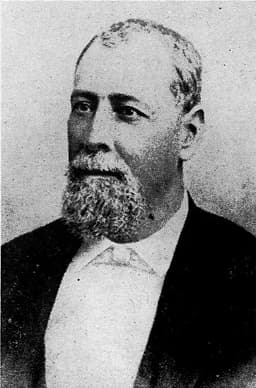
Justo Rufino Barrios
General · Modern
58.6Total

Mikael of Wollo
General · Modern
52.6Total
Basic Information
Born
1835
1850
Died
1885
1918
Era
Modern
Modern
Nationality
Guatemala
Ethiopia
Occupation
General
General
Civilization
Western
Other
Score Comparison
Military (10%)
52.5
63.3
Political (20%)
72.0
46.6
Influence (20%)
60.0
55.7
Legacy (20%)
49.2
44.2
Leadership (15%)
65.0
62.0
Strategy (15%)
55.0
50.0
TOTAL
58.6
52.6
Justo Rufino Barrios — Complete Timeline
1871 AD
Enacted the Liberal Reforms of 1871Reform
Justo Rufino Barrios, after coming to power, implemented sweeping liberal reforms. These included the separation of church and state, confiscation of church lands, establishment of secular education, and promotion of coffee cultivation for export.
GuatemalaLiberal ReformSecularization
Impact: nationalprogressive
1873 AD
Modernized Guatemala's InfrastructureReform◆ Major
Barrios oversaw the construction of roads, telegraph lines, and railways, particularly to support coffee exports. He also promoted immigration and foreign investment, transforming Guatemala's economy.
GuatemalaInfrastructureEconomic Development
Impact: nationalconstructive
1885 AD
Killed at the Battle of ChalchuapaWar
Barrios was killed in battle at Chalchuapa, El Salvador, while leading an invasion to forcibly reunify Central America. His death ended the unification attempt and preserved the sovereignty of the individual Central American states.
Central AmericaBattleDeath
Impact: regionaltragic
Declared the Unification of Central AmericaPolitical Action◆ Major
Barrios unilaterally declared the reunification of the Central American republics by force. He issued a decree proclaiming himself supreme military commander of a unified Central America, leading to war with neighboring states.
Central AmericaUnificationWar
Impact: regionaldestructive
Mikael of Wollo — Complete Timeline
1870 AD
Conversion to Christianity and rise to powerPolitical Action◆ Major
Mikael, originally an Oromo Muslim noble named Mohammed Ali, converted to Christianity and adopted the name Mikael. He allied with Emperor Yohannes IV, who appointed him Ras of Wollo, making him a key regional power broker.
ConversionAllianceWollo
Impact: regionalconstructive
1896 AD
Role in the Battle of AdwaWar
Ras Mikael commanded a large contingent of Oromo cavalry at the Battle of Adwa, where Ethiopian forces decisively defeated the Italian army. His troops played a crucial role in the victory, which secured Ethiopian independence.
Battle of AdwaItalyIndependence
Impact: globalconstructive
1913 AD
Support for Lij Iyasu's successionPolitical Action◆ Major
Mikael supported his grandson, Lij Iyasu, as heir to Emperor Menelik II. After Menelik's death, Mikael became a powerful regent, but Iyasu's controversial policies led to his deposition in 1916, weakening Mikael's position.
SuccessionLij IyasuRegency
Impact: national
This comparison has not been analyzed yet.
One-time AI generation (~1 minute). Scores and timeline are already available below.
Rankings
🥇
Justo Rufino BarriosLeader
Mil: 52.5Pol: 72.0Inf: 60.0
58.6
🥈
Mikael of Wollo
Mil: 63.3Pol: 46.6Inf: 55.7
52.6
+6.0 behind
How This Comparison Works
Algorithm
Each figure is scored on 6 dimensions (0—100 scale) based on structured historical data: Military (10%), Political (20%), Influence (20%), Legacy (20%), Leadership (15%), Strategy (15%). The weighted total produces the final ranking.
Data Sources
Scores are computed from structured sub-indicators in the database. Scale factors adjust for era (Ancient ×0.85, Modern ×1.0) and civilization size (Eastern ×1.05, Other ×0.80) to account for differences in population and military scale.
Maximum 3 Figures
Comparisons are limited to 2—3 figures to ensure readability and statistical meaningfulness.
Error Margins
±5 points per dimension — Sub-scores are derived from historical records with inherent uncertainty. Two figures within 5 points on a dimension should be considered roughly equivalent in that area.
Total Score Accuracy
±3 points overall — The weighted combination of 6 dimensions produces a total score with approximately ±3 points of uncertainty. Differences of less than 3 points are not statistically significant— the figures are effectively tied.
Known Limitations
- Historical records are incomplete and uneven across civilizations
- Figures from oral-tradition societies may be underrepresented
- Occupation labels can misclassify multi-role figures
- Scores measure capability and impact, not moral character
- Quantitative scoring is a comparison tool, not absolute truth
Capability Radar
Military (10%) — Battles & Warfare
Battles
45
65
Win Rate
55
70
Expansion
55
55
Political (20%) — Governance & Reform
Reform
70
30
Diplomacy
45
45
Economy
55
25
Influence (20%) — Cultural & Global Reach
Cultural
40
30
Global
30
15
Legacy (20%) — Historical Impact
Historical
50
35
Longevity
35
20
Leadership (15%) — Power & Stability
Tenure
50
50
Stability
30
35
Strategy (15%) — Tactics & Innovation
Strategy
50
65
Tactics
40
60
Reform
60
40
Similar Comparisons
Comments & Discussion
No comments yet. Be the first to share your thoughts!