Loading...
Justo Rufino Barrios vs Manuel Noriega
Justo Rufino Barrios leads by 17.5 pts · 2 figures compared
…
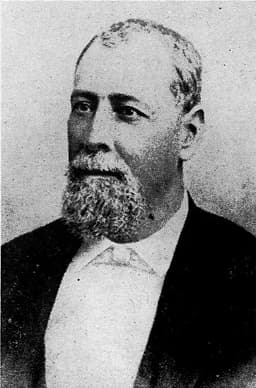
Justo Rufino Barrios
General · Modern
58.6Total

Manuel Noriega
General · Modern
41.1Total
Basic Information
Born
1835
1934
Died
1885
—
Era
Modern
Modern
Nationality
Guatemala
Panama
Occupation
General
General
Civilization
Western
Western
Score Comparison
Military (10%)
52.5
25.9
Political (20%)
72.0
29.3
Influence (20%)
60.0
52.5
Legacy (20%)
49.2
39.2
Leadership (15%)
65.0
50.7
Strategy (15%)
55.0
35.7
TOTAL
58.6
41.1
Justo Rufino Barrios — Complete Timeline
1871 AD
Enacted the Liberal Reforms of 1871Reform
Justo Rufino Barrios, after coming to power, implemented sweeping liberal reforms. These included the separation of church and state, confiscation of church lands, establishment of secular education, and promotion of coffee cultivation for export.
GuatemalaLiberal ReformSecularization
Impact: nationalprogressive
1873 AD
Modernized Guatemala's InfrastructureReform◆ Major
Barrios oversaw the construction of roads, telegraph lines, and railways, particularly to support coffee exports. He also promoted immigration and foreign investment, transforming Guatemala's economy.
GuatemalaInfrastructureEconomic Development
Impact: nationalconstructive
1885 AD
Killed at the Battle of ChalchuapaWar
Barrios was killed in battle at Chalchuapa, El Salvador, while leading an invasion to forcibly reunify Central America. His death ended the unification attempt and preserved the sovereignty of the individual Central American states.
Central AmericaBattleDeath
Impact: regionaltragic
Declared the Unification of Central AmericaPolitical Action◆ Major
Barrios unilaterally declared the reunification of the Central American republics by force. He issued a decree proclaiming himself supreme military commander of a unified Central America, leading to war with neighboring states.
Central AmericaUnificationWar
Impact: regionaldestructive
Manuel Noriega — Complete Timeline
1983 AD
Assumption of de facto leadership of PanamaPolitical Action◆ Major
Noriega became commander of the Panamanian Defense Forces, consolidating power after the death of Omar Torrijos. He effectively ruled Panama as a military dictator, controlling the government and suppressing political opposition.
DictatorshipMilitary RulePower Consolidation
Impact: nationaldestructive
1985 AD
Alleged involvement in the death of Hugo SpadaforaOther
Opposition leader Hugo Spadafora was found decapitated near the Costa Rican border. Noriega was widely accused of ordering the murder, which increased domestic and international pressure against his regime.
MurderPolitical ViolenceHuman Rights
Impact: nationaldestructive
1989 AD
1989 United States invasion of PanamaWar
The U.S. launched Operation Just Cause to overthrow Noriega. U.S. forces invaded Panama, defeated the Panamanian Defense Forces, and captured Noriega. The invasion resulted in hundreds of civilian casualties and the installation of a new government.
InvasionU.S. InterventionRegime Change
Impact: globaldestructive
1992 AD
Noriega's trial and conviction in the United StatesPolitical Action◆ Major
Noriega was tried in a U.S. federal court in Miami on charges of drug trafficking, racketeering, and money laundering. He was convicted and sentenced to 40 years in prison, later reduced to 30 years.
TrialDrug TraffickingJustice
Impact: globaldestructive
Expert Analysis
Origins
Justo Rufino Barrios was born on July 19, 1835, in San Lorenzo, Guatemala, into a family of landowners. He studied law at the University of San Carlos but left to join the military. His early career was shaped by the conservative rule of Rafael Carrera, which he opposed. Barrios became a leading figure in the liberal movement that sought to modernize Guatemala.
Manuel Noriega was born on February 11, 1934, in Panama City, Panama, into a poor family. He was sent to a military academy in Peru, where he trained as an engineer. Noriega later joined the Panamanian National Guard, becoming an intelligence officer under Omar Torrijos. His early life was marked by ambition and a willingness to work with the CIA.
Rise to Power
Barrios rose to power through the Liberal Revolution of 1871, which overthrew the conservative government. He became a general and then president in 1873 after winning elections. His key ally was Miguel García Granados, but Barrios quickly overshadowed him. By 1876, Barrios had consolidated power and began implementing reforms.
Noriega's rise was more gradual. He became chief of military intelligence in the 1970s, serving as a key aide to Torrijos. After Torrijos's death in 1981, Noriega outmaneuvered rivals to become commander of the Panamanian Defense Forces in 1983. He effectively ruled Panama, though he never held the presidency. His power was based on control of the military and intelligence networks.
Leadership & Governance
Barrios was a reformer who enacted the Liberal Reforms of 1871, separating church and state, confiscating church lands, and promoting public education. He built roads, telegraph lines, and railways to boost coffee exports. His governance was authoritarian but progressive, aiming to modernize Guatemala. He scored 65.0 in leadership, reflecting his decisive executive actions.
Noriega ruled through corruption and intimidation. He allowed drug trafficking through Panama, using the proceeds to enrich himself and his allies. He maintained power by suppressing dissent and rigging elections. His leadership score of 50.7 reflects his ability to control a small nation but his lack of constructive reforms. He was more a warlord than a governor.
Triumph & Tragedy
Barrios's greatest success was modernizing Guatemala's infrastructure and economy, increasing coffee exports. He also declared the unification of Central America in 1885, a bold vision. His tragedy was his death at the Battle of Chalchuapa on April 2, 1885, which ended the unification attempt. He scored 72.0 in politics for his reform agenda.
Noriega's triumph was maintaining power for a decade despite U.S. pressure. He also negotiated the Panama Canal Treaty's implementation. His tragedy was the 1989 U.S. invasion (Operation Just Cause), which toppled him. He was captured, tried in Miami for drug trafficking, and sentenced to 40 years. His political score of 29.3 reflects his criminal governance.
Character & Destiny
Barrios was determined and visionary, willing to die for Central American unity. His character was authoritarian but principled, focused on progress. His destiny was a martyr's death, which ended his project but preserved his legacy as a reformer.
Noriega was cunning and ruthless, a survivor who played both sides. His character was devoid of ideology, driven by personal gain. His destiny was imprisonment and disgrace, a cautionary tale of corruption. Historians view him as a dictator who prioritized power over people.
Legacy
Barrios is remembered as one of Guatemala's most significant presidents, a liberal reformer who modernized the country. His unification attempt, though failed, inspired later Central American integration efforts. His legacy score of 49.2 reflects mixed results but lasting influence.
Noriega's legacy is overwhelmingly negative. He is seen as a drug lord and dictator who damaged Panama's reputation. The U.S. invasion removed him but left a legacy of intervention. His legacy score of 39.2 reflects his infamy.
Conclusion
Justo Rufino Barrios had a greater impact than Manuel Noriega. Barrios scored 58.6 overall, while Noriega scored 41.1. Barrios's reforms shaped Guatemala's development, and his unification vision had regional significance. Noriega's rule was parasitic, leaving no positive legacy. While Barrios failed in his grand ambition, his efforts were constructive; Noriega's were destructive. Barrios is the more historically significant figure.
Rankings
🥇
Justo Rufino BarriosLeader
Mil: 52.5Pol: 72.0Inf: 60.0
58.6
🥈
Manuel Noriega
Mil: 25.9Pol: 29.3Inf: 52.5
41.1
+17.5 behind
How This Comparison Works
Algorithm
Each figure is scored on 6 dimensions (0—100 scale) based on structured historical data: Military (10%), Political (20%), Influence (20%), Legacy (20%), Leadership (15%), Strategy (15%). The weighted total produces the final ranking.
Data Sources
Scores are computed from structured sub-indicators in the database. Scale factors adjust for era (Ancient ×0.85, Modern ×1.0) and civilization size (Eastern ×1.05, Other ×0.80) to account for differences in population and military scale.
Maximum 3 Figures
Comparisons are limited to 2—3 figures to ensure readability and statistical meaningfulness.
Error Margins
±5 points per dimension — Sub-scores are derived from historical records with inherent uncertainty. Two figures within 5 points on a dimension should be considered roughly equivalent in that area.
Total Score Accuracy
±3 points overall — The weighted combination of 6 dimensions produces a total score with approximately ±3 points of uncertainty. Differences of less than 3 points are not statistically significant— the figures are effectively tied.
Known Limitations
- Historical records are incomplete and uneven across civilizations
- Figures from oral-tradition societies may be underrepresented
- Occupation labels can misclassify multi-role figures
- Scores measure capability and impact, not moral character
- Quantitative scoring is a comparison tool, not absolute truth
Capability Radar
Military (10%) — Battles & Warfare
Battles
45
15
Win Rate
55
10
Expansion
55
5
Political (20%) — Governance & Reform
Reform
70
10
Diplomacy
45
30
Economy
55
15
Influence (20%) — Cultural & Global Reach
Cultural
40
15
Global
30
30
Legacy (20%) — Historical Impact
Historical
50
25
Longevity
35
10
Leadership (15%) — Power & Stability
Tenure
50
40
Stability
30
10
Strategy (15%) — Tactics & Innovation
Strategy
50
15
Tactics
40
20
Reform
60
10
Similar Comparisons
Comments & Discussion
No comments yet. Be the first to share your thoughts!