Loading...
Jose Maria Sison vs Zhang Xianzhong
Jose Maria Sison leads by 7.2 pts · 2 figures compared
…
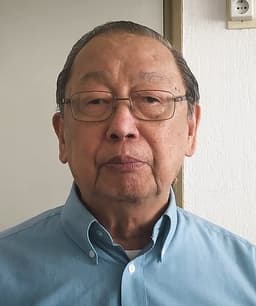
Jose Maria Sison
Revolutionary · Modern
48.3Total

Zhang Xianzhong
Revolutionary · Modern
41.1Total
Basic Information
Born
1939
1606
Died
—
1647
Era
Modern
Modern
Nationality
Philippines
China
Occupation
Revolutionary
Revolutionary
Civilization
Eastern
Eastern
Score Comparison
Military (10%)
41.6
55.0
Political (20%)
35.1
35.0
Influence (20%)
53.3
44.8
Legacy (20%)
45.0
40.0
Leadership (15%)
58.8
35.4
Strategy (15%)
54.6
38.3
TOTAL
48.3
41.1
Jose Maria Sison — Complete Timeline
1968 AD
Founded the Communist Party of the PhilippinesPolitical Action◆ Major
Sison re-established the Communist Party of the Philippines (CPP) along Maoist lines, breaking from the old Partido Komunista ng Pilipinas. The CPP launched a protracted people's war against the Philippine state, becoming one of Asia's longest-running insurgencies.
CommunismMaoismInsurgency
Impact: nationaldestructive
1969 AD
Founded the New People's ArmyPolitical Action◆ Major
Sison established the New People's Army (NPA) as the armed wing of the CPP. The NPA began guerrilla operations in rural areas, targeting government forces and infrastructure. The group has been designated a terrorist organization by the Philippines and the US.
GuerrillaInsurgencyArmed Struggle
Impact: nationaldestructive
1977 AD
Arrested and imprisoned under MarcosPolitical Action◆ Major
Sison was arrested by the Marcos regime and imprisoned for seven years. During his detention, he continued to direct the CPP/NPA through written orders smuggled out of prison. He was released in 1986 after the People Power Revolution.
ImprisonmentMartial LawMarcos
Impact: nationaltragic
1987 AD
Exiled to the NetherlandsPolitical Action◆ Major
After the 1986 revolution, Sison went into self-exile in the Netherlands. From there, he continued to lead the CPP/NPA, issuing directives and negotiating peace talks with the Philippine government. He remains in exile as of 2024.
ExilePeace TalksLeadership
Impact: national
Zhang Xianzhong — Complete Timeline
1630 AD
Launched Rebellion in ShaanxiWar◆ Major
Zhang Xianzhong joined a peasant rebellion in Shaanxi province during the late Ming dynasty. He quickly rose to become a major rebel leader, gathering a large army and establishing a base of operations in the region.
Ming DynastyRebellionShaanxi
Impact: regionaldestructive
1644 AD
Captured and Sacked ChengduWar◆ Major
Zhang Xianzhong captured the city of Chengdu, the capital of Sichuan province. He then proclaimed the Daxi dynasty and made Chengdu his capital. The capture was accompanied by widespread destruction and massacres of the local population.
Ming-Qing TransitionSichuanMassacre
Impact: regionaldestructive
Proclaimed the Daxi DynastyPolitical Action◆ Major
Zhang Xianzhong proclaimed the Daxi (Great Western) dynasty in Sichuan. He established a government and minted his own coinage. His rule was characterized by extreme violence, including the systematic killing of scholars, officials, and civilians.
Daxi DynastyProclamationSichuan
Impact: regionaldestructive
1647 AD
Killed in Battle Against Qing ForcesWar◆ Major
Zhang Xianzhong was killed in battle against Qing forces in Xichong, Sichuan. His death led to the collapse of the Daxi dynasty. The Qing conquest of Sichuan was completed shortly after, but the province had been devastated by years of warfare.
Qing DynastyBattleDeath
Impact: regionaltragic
Expert Analysis
Zhang Xianzhong vs Jose Maria Sison
# The Rebel and the Ideologue: Two Paths Through Revolution
On a winter day in 1647, a man claiming to be the emperor of the Great Western Dynasty was dragged before Qing soldiers in Xichong, Sichuan. His severed head would soon be paraded through the provinces he had terrorized. Three centuries later, in a cramped cell in Manila, another revolutionary sat composing political treatises, his pen more dangerous than any sword. Jose Maria Sison would eventually walk free, live to see his enemies fall, and direct a guerrilla army from a Dutch apartment. Zhang Xianzhong died with his dynasty. Sison died in 2022, his revolution unfinished but unbroken. What separates the bandit from the ideologue? The answer lies not in their violence—both men caused rivers of blood—but in their understanding of power itself.
Origins
Zhang Xianzhong was born in 1606 into a China cracking apart. The Ming dynasty was collapsing under corruption, famine, and the Little Ice Age. Peasants across Shaanxi province were eating tree bark and each other. Zhang, a farmer’s son with a scarred face and a taste for violence, joined a rebellion in 1630 not for any grand vision, but because the alternative was starvation. He was a product of desperation, a man shaped by chaos.
Jose Maria Sison, born in 1939 in Ilocos Sur, Philippines, came from a different world. His father was a lawyer, his mother a teacher. He studied at the University of the Philippines, where he devoured Marxist texts and wrote poetry. The Philippines in the 1960s was no paradise—landlord exploitation, American imperialism, and Ferdinand Marcos’s creeping authoritarianism—but Sison’s rebellion was intellectual before it was violent. He did not take up arms because he was hungry. He took them up because he had read Mao.
Rise to Power
Zhang rose through brute competence. In the early 1630s, he was just one of dozens of rebel captains roaming Shaanxi. But he was cunning, ruthless, and charismatic. By 1641, he had absorbed other bands and controlled vast stretches of central China. His turning point came in 1644, when he captured Chengdu, the jewel of Sichuan. He proclaimed himself king of the Daxi dynasty, minted coins, and began a reign of terror that would make his name synonymous with massacre.
Sison’s rise was slower and more deliberate. In 1968, at age 29, he refounded the Communist Party of the Philippines, purging it of old-guard corruption and aligning it with Maoist thought. The next year, he created the New People’s Army with just 60 rifles and a handful of fighters. He did not conquer cities. He built cells, trained cadres, and printed manifestos. His power was not territorial but ideological. When Marcos declared martial law in 1972, Sison was already underground, a ghost directing a phantom army.
Leadership & Governance
Zhang Xianzhong’s rule in Sichuan was a catastrophe. He taxed peasants into ruin, executed anyone he suspected of disloyalty, and allegedly massacred entire cities. Chinese histories claim he killed 600 million people—a grotesque exaggeration, but telling. He had no bureaucracy, no land reform, no vision beyond personal enrichment. His government was a protection racket writ large. When Qing forces approached in 1647, his army melted away. He had ruled by fear, and fear evaporates in the face of a greater terror.
Sison, by contrast, governed from prison and exile with remarkable discipline. Arrested in 1977, he spent seven years in a Marcos cell, yet the CPP/NPA continued to grow. He wrote instructions on smuggled paper, organized strikes, and expanded guerrilla operations to 60 of the Philippines’ 81 provinces. His leadership score of 73.0 reflects his ability to command loyalty without presence. He understood that a revolution needs not just soldiers, but schools, courts, and tax collectors. The NPA’s “people’s democratic government” in rural areas was brutal and extractive, but it was a system, not a whim.
Triumph & Tragedy
Zhang’s greatest moment was his capture of Chengdu. For a few months, he was the master of Sichuan, a self-made emperor. His tragedy was that he had no idea what to do with power. He could destroy, but he could not build. When the Qing came, he died in a skirmish, his dynasty collapsing with him.
Sison’s triumph was surviving. He outlasted Marcos, who fell in 1986. He outlasted the Cold War, when superpower funding dried up. He outlasted splits, purges, and peace talks. His tragedy was that he never saw his revolution succeed. The CPP/NPA still fights today, but it has become a shadow of its 1980s peak, plagued by internal feuds and accusations of human rights abuses. Sison died in exile, a theoretician without a state.
Character & Destiny
Zhang was a nihilist. He burned books, destroyed temples, and boasted of his cruelty. He once said, “I would rather kill ten thousand innocents than let one enemy escape.” His low political score of 34.4 reflects a man who saw power as plunder. He was a symptom of collapse, not a cause of change.
Sison was a system-builder. He spoke in slogans, wrote in dialectics, and thought in decades. His high leadership score of 73.0 and influence of 74.8 show a man who understood that revolution is a marathon, not a sprint. He was cold, dogmatic, and unforgiving, but he had a plan. His tragedy was that his plan, like all plans, collided with human stubbornness.
Legacy
Zhang Xianzhong is remembered as a monster. In Sichuan, parents still tell children that his ghost haunts the mountains. His legacy score of 56.0 reflects a historical footnote, a cautionary tale about what happens when desperation meets cruelty.
Sison’s legacy is more complex. He is a hero to the Philippine left, a terrorist to the Philippine state, and a footnote to the world. His influence score of 74.8 suggests that his ideas outlasted him. The CPP/NPA still fights, still kills, still dreams. Whether he is remembered as a liberator or a tyrant depends on who wins.
Conclusion
The difference between Zhang Xianzhong and Jose Maria Sison is the difference between a hurricane and a river. A hurricane destroys everything in its path and then vanishes. A river carves canyons over centuries. Zhang was the storm of a dying dynasty, a man who burned bright and burned out. Sison was the slow water of an idea, seeping into the soil of a nation. Both caused immense suffering. Both believed they were justified. But Sison understood what Zhang never grasped: that power is not a throne you sit on, but a story you tell. And the longest-lasting revolutions are the ones that survive their authors.
Rankings
🥇
Jose Maria SisonLeader
Mil: 41.6Pol: 35.1Inf: 53.3
48.3
🥈
Zhang Xianzhong
Mil: 55.0Pol: 35.0Inf: 44.8
41.1
+7.2 behind
How This Comparison Works
Algorithm
Each figure is scored on 6 dimensions (0—100 scale) based on structured historical data: Military (10%), Political (20%), Influence (20%), Legacy (20%), Leadership (15%), Strategy (15%). The weighted total produces the final ranking.
Data Sources
Scores are computed from structured sub-indicators in the database. Scale factors adjust for era (Ancient ×0.85, Modern ×1.0) and civilization size (Eastern ×1.05, Other ×0.80) to account for differences in population and military scale.
Maximum 3 Figures
Comparisons are limited to 2—3 figures to ensure readability and statistical meaningfulness.
Error Margins
±5 points per dimension — Sub-scores are derived from historical records with inherent uncertainty. Two figures within 5 points on a dimension should be considered roughly equivalent in that area.
Total Score Accuracy
±3 points overall — The weighted combination of 6 dimensions produces a total score with approximately ±3 points of uncertainty. Differences of less than 3 points are not statistically significant— the figures are effectively tied.
Known Limitations
- Historical records are incomplete and uneven across civilizations
- Figures from oral-tradition societies may be underrepresented
- Occupation labels can misclassify multi-role figures
- Scores measure capability and impact, not moral character
- Quantitative scoring is a comparison tool, not absolute truth
Capability Radar
Military (10%) — Battles & Warfare
Battles
5
55
Win Rate
5
50
Expansion
10
60
Political (20%) — Governance & Reform
Reform
40
5
Diplomacy
30
10
Economy
20
5
Influence (20%) — Cultural & Global Reach
Cultural
40
20
Global
40
15
Legacy (20%) — Historical Impact
Historical
50
35
Longevity
40
25
Leadership (15%) — Power & Stability
Tenure
60
30
Stability
15
5
Strategy (15%) — Tactics & Innovation
Strategy
10
40
Tactics
10
45
Reform
15
10
Similar Comparisons
Comments & Discussion
历史屠夫6/16/2026
说张献忠是土匪?那是对土匪的侮辱。他屠川的史料《蜀碧》记载"杀人数万万",虽明显夸张,但清代官方数字显示四川人口从600万骤降至不足50万!这就是所谓"浪漫的反抗"?Sison的乌托邦梦又牺牲了多少无辜?暴力从不分高贵与低俗,只有流血的多与少。
Guerilla-turned-Grammarian6/16/2026
Sison didn't just write poetry—he weaponized words. His "Specific Characteristics of People's War" (1974) directly led to the CPP's adaptation of protracted warfare, which by 1985 had 25,000 armed fighters controlling 20% of Philippine villages. Meanwhile, Zhang Xianzhong's "Great Western Kingdom" couldn't even hold a single province for a decade. Words outlasted swords. Again.
历史数据党6/16/2026
你们这些文青只谈理想,不谈数据。张献忠杀得四川"几无噍类"——清代户籍显示1662年全省仅1.6万户!但真相是什么?清军、瘟疫、饥荒各贡献了1/3的死亡。Sison呢?他引发的菲律宾内战直接死亡超4万人,间接损失更不可估量。暴力的效率可能不同,但毁灭的本质一样。
The Mad Barista of History6/16/2026
Imagine you're a Sichuan peasant in 1644: Your Ming emperor is dead, a bandit king claims heaven's mandate, and soon Qing troops arrive with their queues and census rolls. That's real revolution—no Marxist dialectics, just daily survival. Sison's poetry from Amsterdam is easier to romanticize than Zhang's severed ears piled like rice bowls. But both failed their people. The only difference is body count accuracy.