Loading...
Ho Chi Minh vs Jose Maria Sison
Ho Chi Minh leads by 14.6 pts · 2 figures compared
…
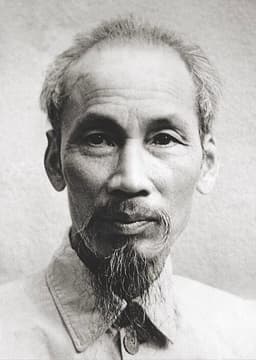
Ho Chi Minh
Revolutionary · Modern
62.9Total
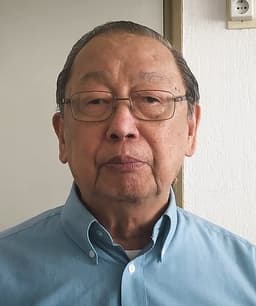
Jose Maria Sison
Revolutionary · Modern
48.3Total
Basic Information
Born
1890
1939
Died
1969
—
Era
Modern
Modern
Nationality
Vietnam
Philippines
Occupation
Revolutionary
Revolutionary
Civilization
Eastern
Eastern
Score Comparison
Military (10%)
55.0
41.6
Political (20%)
72.0
35.1
Influence (20%)
62.0
53.3
Legacy (20%)
58.0
45.0
Leadership (15%)
72.0
58.8
Strategy (15%)
58.0
54.6
TOTAL
62.9
48.3
Ho Chi Minh — Complete Timeline
1941 AD
Establishment of the Viet MinhPolitical Action◆ Major
Ho Chi Minh founded the Viet Minh (League for the Independence of Vietnam) in southern China. This coalition of nationalist and communist groups became the primary force for Vietnamese independence, fighting both Japanese occupation and French colonialism.
Viet MinhIndependence MovementWorld War II
Impact: nationalconstructive
1945 AD
Declaration of Independence of VietnamPolitical Action
Ho Chi Minh proclaimed the Democratic Republic of Vietnam in Hanoi's Ba Dinh Square, citing the US Declaration of Independence. This established the Viet Minh government and began the struggle for independence from French colonial rule.
IndependenceVietnamDecolonization
Impact: nationalconstructive
1954 AD
Battle of Dien Bien PhuWar
Ho Chi Minh's Viet Minh forces, under General Giap, defeated the French garrison at Dien Bien Phu. This victory ended French colonial rule in Indochina and led to the Geneva Accords dividing Vietnam at the 17th parallel.
Vietnam WarDecolonizationFrench Indochina
Impact: regional
Geneva AccordsPolitical Action◆ Major
Ho Chi Minh's delegation signed the Geneva Accords, temporarily dividing Vietnam at the 17th parallel. The agreement promised nationwide elections in 1956, which were never held, leading to the permanent division of Vietnam.
Geneva ConferenceDivision of VietnamDiplomacy
Impact: regional
1959 AD
Start of the Vietnam WarWar
Ho Chi Minh's government in North Vietnam authorized armed struggle against the US-backed South Vietnamese regime. This escalated into the Vietnam War, a prolonged conflict that resulted in millions of deaths and US withdrawal in 1973.
Vietnam WarCold WarCommunism
Impact: globaldestructive
Jose Maria Sison — Complete Timeline
1968 AD
Founded the Communist Party of the PhilippinesPolitical Action◆ Major
Sison re-established the Communist Party of the Philippines (CPP) along Maoist lines, breaking from the old Partido Komunista ng Pilipinas. The CPP launched a protracted people's war against the Philippine state, becoming one of Asia's longest-running insurgencies.
CommunismMaoismInsurgency
Impact: nationaldestructive
1969 AD
Founded the New People's ArmyPolitical Action◆ Major
Sison established the New People's Army (NPA) as the armed wing of the CPP. The NPA began guerrilla operations in rural areas, targeting government forces and infrastructure. The group has been designated a terrorist organization by the Philippines and the US.
GuerrillaInsurgencyArmed Struggle
Impact: nationaldestructive
1977 AD
Arrested and imprisoned under MarcosPolitical Action◆ Major
Sison was arrested by the Marcos regime and imprisoned for seven years. During his detention, he continued to direct the CPP/NPA through written orders smuggled out of prison. He was released in 1986 after the People Power Revolution.
ImprisonmentMartial LawMarcos
Impact: nationaltragic
1987 AD
Exiled to the NetherlandsPolitical Action◆ Major
After the 1986 revolution, Sison went into self-exile in the Netherlands. From there, he continued to lead the CPP/NPA, issuing directives and negotiating peace talks with the Philippine government. He remains in exile as of 2024.
ExilePeace TalksLeadership
Impact: national
Expert Analysis
Ho Chi Minh vs Jose Maria Sison
### The Revolutionary’s Crossroads
In the autumn of 1969, two revolutionary leaders faced very different fates. In Hanoi, Ho Chi Minh lay dying, his frail body failing after decades of relentless struggle. Millions of Vietnamese mourned a man who had become the living symbol of their nation’s independence. Half a world away, in the Philippines, a young intellectual named Jose Maria Sison was just beginning his long journey. He had founded the Communist Party of the Philippines the year before, and the New People’s Army was already taking up arms. Both men dreamed of liberating their people from foreign domination and domestic oppression. Both studied the same Marxist texts. Yet their paths diverged so dramatically that one became a national father figure, while the other remains a controversial, exiled ideologue. What explains this difference? The answer lies not in their ideas, but in the soil in which those ideas were planted.
### Origins
Ho Chi Minh was born Nguyen Sinh Cung in 1890 in a small village in French-occupied Vietnam. He grew up under the shadow of colonial rule, watching his father—a scholar-official—resist the French in quiet, dignified ways. His childhood was marked by hunger, injustice, and the burning desire to see his country free. But Ho was not a man of the classroom; he was a man of the world. At age 21, he signed on as a cook’s assistant on a French steamer and spent the next three decades wandering the globe—New York, London, Paris, Moscow, and China. He washed dishes, retouched photographs, and studied the revolutions of others. He absorbed the ideas of Lenin, the tactics of the Chinese Communists, and the soul of Vietnamese nationalism. By the time he founded the Viet Minh in 1941, he had become something rare: a revolutionary who understood both theory and practice, the local and the global.
Jose Maria Sison, born in 1939, came from a very different world. He was the son of a wealthy landowner in the northern Philippines, a family that had prospered under American colonial rule. He attended elite schools, studied at the University of the Philippines, and became a professor of English literature. His radicalization came not from hunger or exile, but from reading Mao Zedong’s writings and witnessing the corruption of the Marcos regime. He was a bookish revolutionary, one who built his movement from textbooks and manifestos. Where Ho Chi Minh had learned revolution in the streets of Paris and the jungles of China, Sison learned it in university libraries and student protest rallies. This difference in origins—one forged in the furnace of colonial poverty, the other in the relative comfort of the Filipino elite—shaped everything that followed.
### Rise to Power
Ho Chi Minh’s rise was a masterclass in patience and pragmatism. He did not rush to seize power; he built it brick by brick. In 1941, he established the Viet Minh as a broad coalition of nationalists, not just communists. He understood that in Vietnam, the fight for independence would always trump the fight for class struggle. When Japan invaded during World War II, he worked with the American OSS, using their support to strengthen his position. In August 1945, he seized the moment of Japan’s surrender, marching into Hanoi and declaring independence. His speech famously began with the words of the American Declaration of Independence—a deliberate, brilliant nod to the global audience he knew he needed. He was not just a revolutionary; he was a diplomat, a strategist, and a master of timing.
Sison’s rise was more ideological and less flexible. In 1968, he founded the Communist Party of the Philippines along strict Maoist lines, rejecting the old, compromised Partido Komunista ng Pilipinas. The next year, he established the New People’s Army. His movement was pure, uncompromising, and deeply theoretical. He saw the Philippines as a semi-colonial, semi-feudal society that required a “protracted people’s war” in the countryside. But unlike Ho, Sison had no foreign allies of consequence. He had no OSS to supply him, no Soviet Union to bankroll him, no Chinese army to train his troops. He had only his books and his conviction. His movement grew, but it grew slowly, in the shadows, without the dramatic turning points that marked Ho’s career. He was arrested in 1977 and spent seven years in prison, continuing to direct his party from behind bars. When he was released and exiled to the Netherlands in 1987, he became a revolutionary in absentia—a leader who wrote letters and directives but never again set foot on the soil he sought to liberate.
### Leadership & Governance
Ho Chi Minh was a leader who understood the art of the possible. He was not a military genius like his general Vo Nguyen Giap, nor a rigid ideologue like many of his contemporaries. He was a unifier, a man who could sit with peasants in the morning, negotiate with French diplomats at noon, and write poetry at night. During the Battle of Dien Bien Phu in 1954, he gave Giap the space to fight his own war, trusting his commander’s tactical brilliance while he focused on the political front. The victory was stunning: a ragtag peasant army defeated the modern French garrison, ending colonial rule in Indochina. Ho then signed the Geneva Accords, accepting the temporary division of Vietnam at the 17th parallel—a bitter compromise, but one that bought time. He knew that revolution was a marathon, not a sprint.
Sison’s leadership was more dogmatic. He insisted on the primacy of Maoist theory, even when the realities of the Philippines demanded flexibility. The New People’s Army fought a long, grinding guerrilla war in the countryside, but it never achieved the mass mobilization that the Viet Minh had. Sison’s movement remained a sect, not a nation. He governed from exile, issuing decrees and purging dissenters, but he could never build the kind of broad coalition that Ho had assembled. Where Ho embraced nationalists, Buddhists, and even former colonial officials, Sison demanded ideological purity. This made his movement ideologically coherent but politically isolated.
### Triumph & Tragedy
Ho Chi Minh’s greatest triumph was the 1954 victory at Dien Bien Phu, but his greatest tragedy was the division of Vietnam that followed. He lived to see the Vietnam War escalate, to watch American bombers devastate his country, but he died in 1969, six years before the fall of Saigon. He never saw the final unification he had fought his entire life to achieve. That was his tragedy: to die before the dream was fulfilled.
Sison’s tragedy is different. He lived long enough to see his movement become a permanent insurgency, but never a revolution. The NPA still fights today, but it has become a shadow of its former self, weakened by internal purges, government crackdowns, and the changing nature of Philippine society. Sison remains in exile, writing essays and giving interviews, a revolutionary without a revolution.
### Character & Destiny
Ho Chi Minh was a man of immense charisma and strategic patience. He once said, “It was patriotism, not communism, that inspired me.” This was not a lie; it was the key to his success. He understood that in Vietnam, nationalism was the engine, and communism was the vehicle. He was also a man of deep personal humility—he lived simply, dressed in peasant clothes, and ate the same food as his soldiers. This earned him the devotion of millions.
Sison, by contrast, was a man of the intellect, not the soil. He was a scholar-revolutionary, more comfortable with ideas than with people. His character was rigid, his commitment to theory unwavering. This gave him clarity of purpose but limited his ability to adapt. He once wrote that “the revolutionary must be willing to sacrifice everything,” but he made that sacrifice from a comfortable home in the Netherlands, far from the jungles where his followers died.
### Legacy
Ho Chi Minh’s legacy is monumental. He is revered in Vietnam as “Uncle Ho,” the father of the nation. His image adorns every public building, his mausoleum in Hanoi is a pilgrimage site, and his name is synonymous with Vietnamese independence. He is remembered not just as a revolutionary, but as a national hero. In the West, he is a complex figure—vilified by some, romanticized by others—but no one denies his impact on the 20th century.
Sison’s legacy is more contested. In the Philippines, he is either a visionary or a terrorist, depending on whom you ask. His movement has caused thousands of deaths, but it has also forced the government to address rural poverty and inequality. He remains a figure of the margins, not the center. His name does not appear in school textbooks the way Ho’s does. He is a revolutionary who never quite became a legend.
### Conclusion
What separates these two men is not the purity of their ideas, but the depth of their connection to their people. Ho Chi Minh became a nation because he understood that revolution is not about ideology alone—it is about the land, the people, and the moment. Sison remained a movement because he never fully escaped the library. In the end, history judges revolutionaries not by their theories, but by their outcomes. One man united a country; the other divided a movement. One is remembered with reverence; the other, with ambiguity. Their stories remind us that the most powerful force in any revolution is not the manifesto—it is the man who can make the people believe that their struggle is his own.
Rankings
🥇
Ho Chi MinhLeader
Mil: 55.0Pol: 72.0Inf: 62.0
62.9
🥈
Jose Maria Sison
Mil: 41.6Pol: 35.1Inf: 53.3
48.3
+14.6 behind
How This Comparison Works
Algorithm
Each figure is scored on 6 dimensions (0—100 scale) based on structured historical data: Military (10%), Political (20%), Influence (20%), Legacy (20%), Leadership (15%), Strategy (15%). The weighted total produces the final ranking.
Data Sources
Scores are computed from structured sub-indicators in the database. Scale factors adjust for era (Ancient ×0.85, Modern ×1.0) and civilization size (Eastern ×1.05, Other ×0.80) to account for differences in population and military scale.
Maximum 3 Figures
Comparisons are limited to 2—3 figures to ensure readability and statistical meaningfulness.
Error Margins
±5 points per dimension — Sub-scores are derived from historical records with inherent uncertainty. Two figures within 5 points on a dimension should be considered roughly equivalent in that area.
Total Score Accuracy
±3 points overall — The weighted combination of 6 dimensions produces a total score with approximately ±3 points of uncertainty. Differences of less than 3 points are not statistically significant— the figures are effectively tied.
Known Limitations
- Historical records are incomplete and uneven across civilizations
- Figures from oral-tradition societies may be underrepresented
- Occupation labels can misclassify multi-role figures
- Scores measure capability and impact, not moral character
- Quantitative scoring is a comparison tool, not absolute truth
Capability Radar
Military (10%) — Battles & Warfare
Battles
65
5
Win Rate
60
5
Expansion
55
10
Political (20%) — Governance & Reform
Reform
85
40
Diplomacy
90
30
Economy
40
20
Influence (20%) — Cultural & Global Reach
Cultural
75
40
Global
75
40
Legacy (20%) — Historical Impact
Historical
85
50
Longevity
70
40
Leadership (15%) — Power & Stability
Tenure
70
60
Stability
50
15
Strategy (15%) — Tactics & Innovation
Strategy
80
10
Tactics
70
10
Reform
75
15
Similar Comparisons
Comments & Discussion
Historian8256/16/2026
Ho Chi Minh was a pragmatic revolutionary who adapted Marxism to Vietnamese peasant realities, while Sison remains an ivory-tower ideologue who never led a mass movement. Uncle Ho lived with his fighters in jungle caves; Sison directs armed struggle from European exile. The difference? Ho buried his nose in Vietnamese soil for three decades; Sison buried his nose in textbooks. One earned a nation, the other only footnotes.|zh|胡志明是能把马克思主义变成农民手中锄头的实践家,而西松永远是个在象牙塔里背诵《毛泽东选集》的学院派。当胡志明在越北丛林里吃着木薯指挥奠边府战
Chronicler78546/16/2026
Let's talk concrete outcomes: Ho Chi Minh's forces defeated France at Dien Bien Phu (1954) and fought the US to a stalemate. Sison's NPA, after 50 years, controls zero provinces and has degenerated into collecting revolutionary taxes from tricycle drivers. The CPP cadres live better than their "peasant base" with their Mao suits and Blackberry phones. The real measure of a revolutionary isn't how many pages they write, but how much territory they hold.|zh|数据不会说谎:胡志明领导的军队在奠边府围歼1.6万法军,最后把山姆大叔逼上谈判桌
Chronicler85656/16/2026
The key difference is nationalism vs. Dogma. Ho Chi Minh was first a Vietnamese patriot who used communism as a tool; Sison is first a communist who uses Filipino suffering as a revolutionary textbook. Ho wrote his testament in blood on the Ho Chi Minh Trail; Sison writes position papers from Utrecht. When Ho's revolution needed flexibility, he made deals with the French, Americans, and Chinese. Sison would rather split his party over proper Maoist terminology than win a single barrio.|zh|根本分歧在于