Loading...
Jose Maria Sison vs Vladimir Lenin
Vladimir Lenin leads by 22.9 pts · 2 figures compared
…
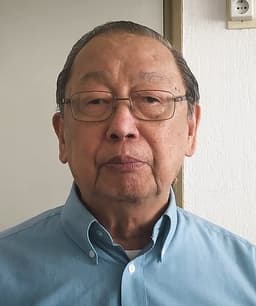
Jose Maria Sison
Revolutionary · Modern
48.3Total
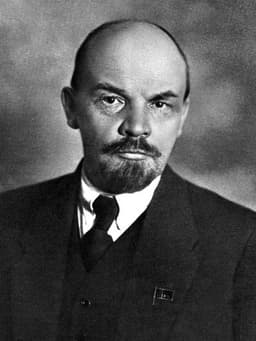
Vladimir Lenin
Revolutionary · Modern
71.2Total
Basic Information
Born
1939
1870
Died
—
1924
Era
Modern
Modern
Nationality
Philippines
Russia
Occupation
Revolutionary
Revolutionary
Civilization
Eastern
Western
Score Comparison
Military (10%)
41.6
30.0
Political (20%)
35.1
78.0
Influence (20%)
53.3
82.0
Legacy (20%)
45.0
72.0
Leadership (15%)
58.8
80.0
Strategy (15%)
54.6
60.0
TOTAL
48.3
71.2
Jose Maria Sison — Complete Timeline
1968 AD
Founded the Communist Party of the PhilippinesPolitical Action◆ Major
Sison re-established the Communist Party of the Philippines (CPP) along Maoist lines, breaking from the old Partido Komunista ng Pilipinas. The CPP launched a protracted people's war against the Philippine state, becoming one of Asia's longest-running insurgencies.
CommunismMaoismInsurgency
Impact: nationaldestructive
1969 AD
Founded the New People's ArmyPolitical Action◆ Major
Sison established the New People's Army (NPA) as the armed wing of the CPP. The NPA began guerrilla operations in rural areas, targeting government forces and infrastructure. The group has been designated a terrorist organization by the Philippines and the US.
GuerrillaInsurgencyArmed Struggle
Impact: nationaldestructive
1977 AD
Arrested and imprisoned under MarcosPolitical Action◆ Major
Sison was arrested by the Marcos regime and imprisoned for seven years. During his detention, he continued to direct the CPP/NPA through written orders smuggled out of prison. He was released in 1986 after the People Power Revolution.
ImprisonmentMartial LawMarcos
Impact: nationaltragic
1987 AD
Exiled to the NetherlandsPolitical Action◆ Major
After the 1986 revolution, Sison went into self-exile in the Netherlands. From there, he continued to lead the CPP/NPA, issuing directives and negotiating peace talks with the Philippine government. He remains in exile as of 2024.
ExilePeace TalksLeadership
Impact: national
Vladimir Lenin — Complete Timeline
1903 AD
Founding of the Bolshevik PartyPolitical Action
At the Second Congress of the Russian Social Democratic Labour Party in London, Lenin led a split that created the Bolshevik faction. The Bolsheviks advocated for a disciplined vanguard party of professional revolutionaries, a key element of Lenin's political strategy.
Political PartyRevolutionIdeology
Impact: global
1917 AD
April ThesesPolitical Action◆ Major
Lenin returned to Russia from exile and published the April Theses, calling for the overthrow of the Provisional Government, transfer of power to the soviets, and an end to World War I. This document set the Bolshevik agenda for the coming revolution.
RevolutionIdeologyPolitical Strategy
Impact: national
October RevolutionPolitical Action
Lenin led the Bolshevik seizure of power in Petrograd, capturing key government buildings and the Winter Palace. The revolution overthrew the Provisional Government and established the world's first socialist state, the Russian Soviet Federative Socialist Republic.
RevolutionCoupCommunism
Impact: global
1918 AD
Treaty of Brest-LitovskPolitical Action◆ Major
Lenin signed a separate peace treaty with the Central Powers, ceding vast territories including Ukraine, Belarus, and the Baltic states. The treaty ended Russia's involvement in World War I but caused significant territorial losses and internal opposition.
TreatyWorld War ITerritorial Loss
Impact: globaldestructive
1921 AD
New Economic Policy (NEP)Reform◆ Major
Lenin introduced the NEP, allowing limited private enterprise and market mechanisms to revive the war-torn Soviet economy. The policy replaced War Communism, permitting small-scale capitalism while the state retained control of major industries.
Economic ReformPolicyRecovery
Impact: nationalconstructive
1922 AD
Establishment of the Soviet UnionPolitical Action
Lenin oversaw the creation of the Union of Soviet Socialist Republics (USSR), a federation of Soviet republics. The new state consolidated Bolshevik control over much of the former Russian Empire and became a model for communist states worldwide.
State FormationCommunismFederation
Impact: global
Expert Analysis
Vladimir Lenin vs Jose Maria Sison
# The Revolutionary’s Lonely Road
In the winter of 1917, a balding man with a pointed beard stepped off a sealed train at Finland Station in Petrograd, greeted by thousands of workers and soldiers waving red flags. Vladimir Lenin had returned from exile to claim his revolution. Half a century later, in the summer of 1968, a young Filipino intellectual named Jose Maria Sison stood before a gathering of peasant activists in a remote village in Luzon, founding a new communist party with little fanfare and no train. One man would seize power in months; the other would spend a lifetime fighting for it from afar. What separates a revolutionary who remakes the world from one who spends decades in the shadows? The answer lies not only in circumstance but in the very nature of their revolutions—and the worlds they sought to overthrow.
Origins
Lenin was born into privilege in 1870, the son of a school inspector in Simbirsk, a provincial town on the Volga. His elder brother Alexander was hanged for plotting to assassinate the Tsar, an event that seared young Vladimir with both grief and a cold resolve. Educated in law and steeped in Marxist theory, Lenin belonged to a generation of Russian intellectuals who saw the Tsarist autocracy as a rotting edifice, ready to collapse. He was a man of the European tradition, shaped by the industrializing West and the philosophical currents of Marx and Engels.
Sison, born in 1939 in the northern Philippines, grew up in a very different empire—one of American influence, feudal landholdings, and a fragile democracy that masked deep inequality. His father was a provincial official; his mother came from a landowning family. Sison studied at the University of the Philippines, where he encountered Marxist ideas filtered through Mao Zedong’s lens of peasant revolution. Where Lenin saw factories and proletarians, Sison saw rice paddies and peasants. Where Lenin faced a crumbling monarchy, Sison faced a resilient oligarchy backed by the United States.
Rise to Power
Lenin’s path was swift and brutal. In 1903, at the Second Congress of the Russian Social Democratic Labour Party in London, he engineered a split, creating the Bolshevik faction—a tightly disciplined vanguard of professional revolutionaries. He spent years in exile, writing, plotting, and waiting. The First World War broke the Tsar’s regime, and in February 1917, the monarchy fell. Lenin returned in April with his “April Theses,” demanding not just reform but the overthrow of the Provisional Government. By October, he had led a near-bloodless coup in Petrograd, seizing the Winter Palace and declaring Soviet power.
Sison’s rise was slower and more arduous. In 1968, he re-founded the Communist Party of the Philippines (CPP) along Maoist lines, breaking from a failed older party. A year later, he established the New People’s Army (NPA), launching guerrilla operations in the countryside. But he never came close to seizing the capital. In 1977, President Ferdinand Marcos arrested him, and Sison spent seven years in prison. Even after the 1986 People Power Revolution that ousted Marcos, Sison did not return to power—he went into exile in the Netherlands in 1987, directing his movement from a small apartment in Utrecht.
Leadership & Governance
Lenin was a master of political organization and ruthless pragmatism. He centralized power, crushed dissent, and created the Cheka—the secret police—to eliminate enemies. Yet he also showed flexibility: in 1921, facing economic collapse, he introduced the New Economic Policy, allowing limited private enterprise to save the revolution. His military strategy was less impressive—the Red Army won the Civil War largely through Trotsky’s organization and sheer numbers—but his political genius was undeniable. He founded the Soviet Union in 1922, a federation that would become a superpower.
Sison, by contrast, governed only in theory. From exile, he wrote and directed the CPP/NPA, but his control was always contested. The NPA waged a long guerrilla war in the Philippine countryside, but it never captured a major city or formed a government. Sison’s military score (52) reflects a movement that could harass but not conquer. His political score (54) shows a leader who inspired loyalty but could not translate it into state power. He was a theorist and organizer, not a ruler.
Triumph & Tragedy
Lenin’s greatest moment was the October Revolution itself—a stunning coup that brought the world’s first communist state to life. His greatest tragedy was the civil war and terror that followed, claiming millions of lives. He died in 1924, his body mummified and enshrined in Red Square, a symbol of a revolution that had already begun to devour its children.
Sison’s triumph is survival itself. He has outlived Marcos, the Cold War, and the collapse of the Soviet Union. His movement still exists, fighting in the hills of the Philippines. But his tragedy is irrelevance on the world stage. He never held power, never signed a treaty, never built a state. He is a revolutionary without a revolution.
Character & Destiny
Lenin was cold, calculating, and fanatically certain. He believed history was on his side, and he acted with the force of that conviction. “There are no morals in politics,” he once said. “There is only expedience.” His personality—ruthless, disciplined, impatient—matched the moment. Russia was a powder keg, and he lit the fuse.
Sison is more patient, more intellectual, more resigned. He is a man of theories and long wars. “The revolution is a protracted people’s war,” he wrote. His personality suited a struggle that would last decades, not days. But the Philippines was no Russia—no world war, no collapsing state, no mass proletariat. His revolution was always a dream deferred.
Legacy
Lenin’s legacy is immense and terrible. He created a system that shaped the 20th century, inspiring revolutions from China to Cuba, but also establishing a template for totalitarian rule. His name is carved into history, whether as liberator or tyrant.
Sison’s legacy is smaller but real. The CPP/NPA remains one of the world’s longest-running communist insurgencies. He is revered by his followers, ignored by most Filipinos, and condemned by the Philippine government. His influence score (74.8) is surprisingly high, not because he changed the world, but because he kept a flame alive in a dark corner of it.
Conclusion
Lenin and Sison are separated by more than time and geography. They represent two faces of revolution: the one that succeeds and the one that endures. Lenin’s revolution was a thunderclap; Sison’s is a slow rain. One man built a state that shook the world; the other built a movement that outlasted its own era. In the end, the difference is not in their ideas—both believed in Marxist revolution—but in the soil where those ideas were planted. Lenin found a dying empire; Sison found a resilient democracy. One seized history; the other became its footnote. And yet, as the Philippine insurgency drags into its sixth decade, perhaps Sison understood something Lenin never had to learn: that sometimes, the longest revolutions are the ones that never quite end.
Rankings
🥇
Vladimir LeninLeader
Mil: 30.0Pol: 78.0Inf: 82.0
71.2
🥈
Jose Maria Sison
Mil: 41.6Pol: 35.1Inf: 53.3
48.3
+22.9 behind
How This Comparison Works
Algorithm
Each figure is scored on 6 dimensions (0—100 scale) based on structured historical data: Military (10%), Political (20%), Influence (20%), Legacy (20%), Leadership (15%), Strategy (15%). The weighted total produces the final ranking.
Data Sources
Scores are computed from structured sub-indicators in the database. Scale factors adjust for era (Ancient ×0.85, Modern ×1.0) and civilization size (Eastern ×1.05, Other ×0.80) to account for differences in population and military scale.
Maximum 3 Figures
Comparisons are limited to 2—3 figures to ensure readability and statistical meaningfulness.
Error Margins
±5 points per dimension — Sub-scores are derived from historical records with inherent uncertainty. Two figures within 5 points on a dimension should be considered roughly equivalent in that area.
Total Score Accuracy
±3 points overall — The weighted combination of 6 dimensions produces a total score with approximately ±3 points of uncertainty. Differences of less than 3 points are not statistically significant— the figures are effectively tied.
Known Limitations
- Historical records are incomplete and uneven across civilizations
- Figures from oral-tradition societies may be underrepresented
- Occupation labels can misclassify multi-role figures
- Scores measure capability and impact, not moral character
- Quantitative scoring is a comparison tool, not absolute truth
Capability Radar
Military (10%) — Battles & Warfare
Battles
5
20
Win Rate
5
35
Expansion
10
70
Political (20%) — Governance & Reform
Reform
40
95
Diplomacy
30
75
Economy
20
60
Influence (20%) — Cultural & Global Reach
Cultural
40
80
Global
40
90
Legacy (20%) — Historical Impact
Historical
50
95
Longevity
40
85
Leadership (15%) — Power & Stability
Tenure
60
55
Stability
15
40
Strategy (15%) — Tactics & Innovation
Strategy
10
55
Tactics
10
30
Reform
15
85
Similar Comparisons
Comments & Discussion
铁血史官6/16/2026
列宁是典型的精英革命家,他哥哥的死让他恨透了沙皇制度,但他出身特权阶级,这种人革命是为了权力,不是人民。1917年十月革命,他靠德国资助的密封火车回国,这算哪门子纯正革命?菲律宾的希松才是真草根,从吕宋农村一步步干起。列宁的成功靠的是欧洲工业化的底子,希松在落后的群岛打游击,这才是硬碰硬。别给列宁贴金,他不过是历史运气好!
MilitaryMind6/16/2026
Lenin's revolution was a product of timing—WWI had gutted Russia, soldiers were deserting, and the Tsar had already abdicated by February 1917. He didn't "seize power" out of thin air; he rode a wave of chaos that Sison never had. Sison, fighting in post-colonial Philippines against US-backed regimes, faced a stable state with deep rural support for insurgency. Numbers tell the story: Lenin had 200,000 Bolsheviks by October; Sison launched with maybe 100 cadres. Context isn't everything, but it'
ClassicsScholar6/16/2026
Forget the Marxist jargon; revolutionary success often hinges on the opponent's fragility. Lenin faced a Tsarist state crumbling under war, with peasants already revolting and the army mutinying. Sison confronted a Philippine state propped up by the US, with a sophisticated military and a landowning elite that bought off reforms. Lenin could write "State and Revolution" knowing St. Petersburg's workers would storm the Winter Palace that year. Sison wrote "Philippine Society and Revolution" knowi
民间历史家6/16/2026
我看历史不能光看成功与否。列宁在1917年11月一夜之间推翻临时政府,但他在1924年就死了,留下的苏联变成了官僚机器。希松在1968年成立菲共,至今还在战斗,虽然被流放荷兰,但他在国内的影响力持续了50多年,连杜特尔特都和他和谈过。这种坚持,比列宁那种投机性革命更珍贵。别迷信“群众是历史创造者”这种套话,革命者的命根子在于韧劲。
DataSkeptic6/16/2026
Here's the cold truth: Lenin had a European rail network, urban factories full of workers, and a wartime collapse of state authority. Sison had archipelagic geography, a peasant population, and a Cold War superpower backing his enemy. The stats are uneven—Russia's urban population was 20% by 1917; the Philippines was 60% rural in 1968. Lenin could mobilize industrial workers; Sison had to build a base from scratch in rice paddies. Don't romanticize failure. Sison's longevity is real, but