Loading...
Jose Maria Sison vs Sun Yat-sen
Sun Yat-sen leads by 4.2 pts · 2 figures compared
…
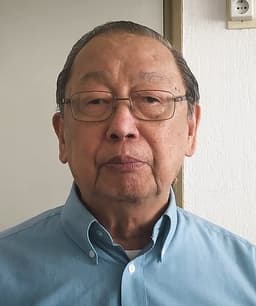
Jose Maria Sison
Revolutionary · Modern
48.3Total
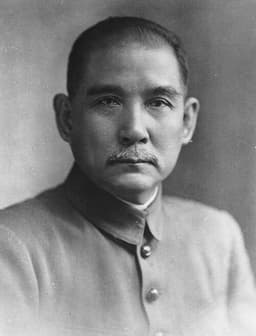
Sun Yat-sen
Revolutionary · Modern
52.5Total
Basic Information
Born
1939
1866
Died
—
1925
Era
Modern
Modern
Nationality
Philippines
China
Occupation
Revolutionary
Revolutionary
Civilization
Eastern
Eastern
Score Comparison
Military (10%)
41.6
45.0
Political (20%)
35.1
68.0
Influence (20%)
53.3
61.0
Legacy (20%)
45.0
58.0
Leadership (15%)
58.8
33.5
Strategy (15%)
54.6
30.3
TOTAL
48.3
52.5
Jose Maria Sison — Complete Timeline
1968 AD
Founded the Communist Party of the PhilippinesPolitical Action◆ Major
Sison re-established the Communist Party of the Philippines (CPP) along Maoist lines, breaking from the old Partido Komunista ng Pilipinas. The CPP launched a protracted people's war against the Philippine state, becoming one of Asia's longest-running insurgencies.
CommunismMaoismInsurgency
Impact: nationaldestructive
1969 AD
Founded the New People's ArmyPolitical Action◆ Major
Sison established the New People's Army (NPA) as the armed wing of the CPP. The NPA began guerrilla operations in rural areas, targeting government forces and infrastructure. The group has been designated a terrorist organization by the Philippines and the US.
GuerrillaInsurgencyArmed Struggle
Impact: nationaldestructive
1977 AD
Arrested and imprisoned under MarcosPolitical Action◆ Major
Sison was arrested by the Marcos regime and imprisoned for seven years. During his detention, he continued to direct the CPP/NPA through written orders smuggled out of prison. He was released in 1986 after the People Power Revolution.
ImprisonmentMartial LawMarcos
Impact: nationaltragic
1987 AD
Exiled to the NetherlandsPolitical Action◆ Major
After the 1986 revolution, Sison went into self-exile in the Netherlands. From there, he continued to lead the CPP/NPA, issuing directives and negotiating peace talks with the Philippine government. He remains in exile as of 2024.
ExilePeace TalksLeadership
Impact: national
Sun Yat-sen — Complete Timeline
1894 AD
Founded the Revive China SocietyPolitical Action◆ Major
Sun Yat-sen founded the Revive China Society (Xingzhonghui) in Honolulu, the first modern revolutionary organization among overseas Chinese. The society aimed to overthrow the Qing dynasty and establish a republic, marking the beginning of organized revolutionary activity.
RevolutionOverseas ChineseRepublic
Impact: nationalconstructive
1911 AD
Led the Xinhai RevolutionPolitical Action
Sun Yat-sen's revolutionary activities culminated in the Wuchang Uprising of October 1911, which sparked the Xinhai Revolution. The uprising spread across China, leading to the abdication of the Qing emperor in 1912 and the end of 2,000 years of imperial rule.
RevolutionQing DynastyRepublic
Impact: globalconstructive
1912 AD
Proclaimed the Republic of ChinaPolitical Action
On January 1, 1912, Sun Yat-sen was inaugurated as the provisional president of the Republic of China in Nanjing. He proclaimed the establishment of the first republic in Asia, based on his Three Principles of the People: nationalism, democracy, and livelihood.
RepublicPresidencyThree Principles
Impact: globalconstructive
Resigned Presidency in Favor of Yuan ShikaiPolitical Action◆ Major
To secure the abdication of the Qing emperor and avoid civil war, Sun Yat-sen resigned the provisional presidency in February 1912 in favor of Yuan Shikai. This decision, while pragmatic, allowed Yuan to consolidate power and later attempt to restore the monarchy.
Power TransferYuan ShikaiCompromise
Impact: national
1919 AD
Reorganized the KuomintangPolitical Action◆ Major
Sun Yat-sen reorganized the Chinese Revolutionary Party into the Kuomintang (KMT) in 1919, with a more centralized structure. He later accepted Soviet aid and CCP members into the party under the policy of 'alliance with Russia and the Communists,' reshaping the revolutionary movement.
KuomintangSoviet AllianceCCP
Impact: nationalconstructive
Expert Analysis
Sun Yat-sen vs Jose Maria Sison
### The Revolutionary’s Shadow: Sun Yat-sen and Jose Maria Sison
In the winter of 1912, Sun Yat-sen stood before the new Republic of China, a man who had toppled an empire but could not hold its throne. A century later, in a university office in the Netherlands, Jose Maria Sison typed out directives for a guerrilla army he had never seen, his revolution frozen in time. Both men dedicated their lives to upheaval, yet one became the father of a nation, the other the ghost of a perpetual insurgency. What explains the chasm between their fates?
### Origins
Sun Yat-sen was born in 1866 to a peasant family in Guangdong, a province that had long fermented rebellion against the Qing dynasty. His education was a hybrid of Chinese classics and Western medicine, a blend that gave him a foot in two worlds. The Opium Wars and the humiliation of China by foreign powers seared his youth; he saw revolution not as a choice but as a necessity. By his twenties, he was already plotting in Honolulu, his mind shaped by the democratic ideals of the West and the bitter reality of a decaying empire.
Jose Maria Sison, born in 1939 in Ilocos Sur, Philippines, came from a landowning family. He studied at the University of the Philippines, where the Cold War and the writings of Mao Zedong electrified a generation. While Sun witnessed the collapse of a dynasty, Sison watched the corruption of a republic under Ferdinand Marcos. His enemy was not a foreign emperor but a native dictator, and his weapon was not a constitution but a peasant army.
### Rise to Power
Sun’s rise was a long, bitter grind. In 1894, he founded the Revive China Society in Honolulu, a tiny seed in a vast empire. For seventeen years, he staged failed uprisings, fled to Japan, Europe, and America, and lived as a perpetual exile. His turning point came not by his hand but by accident: the Wuchang Uprising of October 1911, sparked by a bomb explosion, caught him off guard in Denver. He rushed back to China, and by January 1912, he was proclaimed provisional president of the Republic of China. His path was one of persistence, luck, and the sudden collapse of an ancient order.
Sison’s rise was more deliberate, more ideological. In 1968, he re-founded the Communist Party of the Philippines (CPP) along Maoist lines, breaking from the old, compromised Partido Komunista ng Pilipinas. A year later, he established the New People’s Army (NPA), launching guerrilla operations in the rural Luzon. His revolution was not a sudden storm but a slow fire, fed by land grievances and student anger. By 1977, he was arrested by Marcos, but his imprisonment only deepened his mystique. From jail, he continued to direct the movement, a shadow leader in a cage.
### Leadership & Governance
Sun Yat-sen was a political visionary, not a military commander. His score of 45.4 in military reflects a man who never led an army into battle. Instead, his genius was in ideas: the Three Principles of the People—nationalism, democracy, and livelihood—became the bedrock of modern Chinese politics. As president, he lasted only months. In February 1912, he resigned in favor of Yuan Shikai, a warlord, to secure the Qing emperor’s abdication and avoid civil war. It was a tragic compromise, a leader who gave up power for unity. His political score of 80.0 speaks to his ability to inspire, but his governance was a series of setbacks, reorganizations, and exiles.
Sison, by contrast, scored higher in military (52.0) but lower in political (54.4). He was a theorist of armed struggle, writing treatises on people’s war while his NPA ambushed government patrols. His leadership was remote, intellectual, and uncompromising. He never held a presidency or a ministry; his governance was the party, the cadre, the guerrilla zone. Where Sun sought to build a state, Sison sought to destroy one. His strategy score of 30.0 is telling: he was a revolutionary of the mind, not the battlefield.
### Triumph & Tragedy
Sun’s greatest triumph was the Xinhai Revolution of 1911, which ended 2,000 years of imperial rule. His tragedy was that he could not hold what he had won. He spent his final years in a perpetual struggle against warlords, his republic a fragile dream. He died in 1925 at 58, a disappointed man, yet his legacy would outlive him.
Sison’s triumph was the survival of his movement. The CPP/NPA outlasted Marcos, survived the 1986 People Power Revolution, and continues to fight today, decades after his exile. His tragedy is that he never returned. Since 1987, he has lived in the Netherlands, directing a war from a desk, his revolution a permanent insurgency without end. He outlived his relevance, a father who could not see his children.
### Character & Destiny
Sun Yat-sen was a man of relentless optimism. He failed more than he succeeded, but his failures were stepping stones. He was a unifier, a man who could charm enemies and allies alike. His character was open, Westernized, and pragmatic; he resigned the presidency not out of weakness but out of a calculation that China needed peace.
Sison was a man of iron ideology. He never wavered from Maoist orthodoxy, even as the world changed. His character was closed, dogmatic, and intellectual; he saw compromise as betrayal. His destiny was to be a permanent outsider, a revolutionary without a country.
### Legacy
Sun Yat-sen is remembered as the founding father of the Republic of China, a figure honored in both Beijing and Taipei. His Three Principles are carved into the political DNA of modern China, even if his dream of democracy was never fully realized. His legacy score of 72.2 reflects a man who shaped history.
Sison’s legacy is more contested. To his followers, he is the “great teacher” of the Philippine revolution; to the state, a terrorist. His influence score of 74.8 is high, but his legacy of 63.2 is stained by decades of violence and a movement that has become a shadow of itself. He remains alive, a living fossil of a Cold War that ended long ago.
### Conclusion
Sun Yat-sen and Jose Maria Sison were both revolutionaries, but their revolutions took different shapes. Sun toppled an empire and built a nation, even if he could not rule it. Sison built a movement that never stopped fighting, even as it lost its purpose. One died with his dream half-realized; the other lives with his dream half-dead. In the end, the difference between them is not in ideology or courage, but in the tragic gap between the moment you seize history and the moment history seizes you.
Rankings
🥇
Sun Yat-senLeader
Mil: 45.0Pol: 68.0Inf: 61.0
52.5
🥈
Jose Maria Sison
Mil: 41.6Pol: 35.1Inf: 53.3
48.3
+4.2 behind
How This Comparison Works
Algorithm
Each figure is scored on 6 dimensions (0—100 scale) based on structured historical data: Military (10%), Political (20%), Influence (20%), Legacy (20%), Leadership (15%), Strategy (15%). The weighted total produces the final ranking.
Data Sources
Scores are computed from structured sub-indicators in the database. Scale factors adjust for era (Ancient ×0.85, Modern ×1.0) and civilization size (Eastern ×1.05, Other ×0.80) to account for differences in population and military scale.
Maximum 3 Figures
Comparisons are limited to 2—3 figures to ensure readability and statistical meaningfulness.
Error Margins
±5 points per dimension — Sub-scores are derived from historical records with inherent uncertainty. Two figures within 5 points on a dimension should be considered roughly equivalent in that area.
Total Score Accuracy
±3 points overall — The weighted combination of 6 dimensions produces a total score with approximately ±3 points of uncertainty. Differences of less than 3 points are not statistically significant— the figures are effectively tied.
Known Limitations
- Historical records are incomplete and uneven across civilizations
- Figures from oral-tradition societies may be underrepresented
- Occupation labels can misclassify multi-role figures
- Scores measure capability and impact, not moral character
- Quantitative scoring is a comparison tool, not absolute truth
Capability Radar
Military (10%) — Battles & Warfare
Battles
5
15
Win Rate
5
10
Expansion
10
5
Political (20%) — Governance & Reform
Reform
40
85
Diplomacy
30
60
Economy
20
20
Influence (20%) — Cultural & Global Reach
Cultural
40
70
Global
40
65
Legacy (20%) — Historical Impact
Historical
50
80
Longevity
40
75
Leadership (15%) — Power & Stability
Tenure
60
30
Stability
15
15
Strategy (15%) — Tactics & Innovation
Strategy
10
20
Tactics
10
10
Reform
15
40
Similar Comparisons
Comments & Discussion
ThePaperTrail6/16/2026
Sun Yat-sen actually governed—even briefly. That’s the difference between theory and praxis. Sison never held power for a single day, directing the NPA from Utrecht while others died in Philippine jungles. Sun founded a republic, Sison founded a footnote. Guerrilla intellectuals romanticize failure, but history remembers Sun because he stood in Nanjing, not just a library.
山城老枪6/16/2026
孙中山至少把皇帝拉下了马,西松呢?他写了四十年理论,菲律宾共产党除了无尽的内斗和猎杀地方官员,做到了什么?革命不是写诗,你得敢站在台上,而不是躲在荷兰的发霉办公室里遥控别人的牺牲。
RebelAcademic6/16/2026
The real gap is outcome, not intent. Sun Yat-sen adapted: he abandoned his early anarcho-socialist rhetoric for a pragmatic Three Principles that actually mobilized urban elites, peasants, and overseas Chinese. Sison never adapted—kept repeating Maoist orthodoxy while the Philippines industrialised and urbanised. Revolutionary rigidity is just nostalgia with guns.
沉默的档案员6/16/2026
比较两人是故意的错位。孙中山活在帝国崩溃的旋涡里,失败后有人帮他重建。西松活在美国冷战后的霸权秩序里,菲律宾共产党早被情报机构渗成筛子。不是英雄对影子,是时机对绝境。最不公平的是,孙中山可以拥抱国家资本,西松连谈和的机会都没有。
Historian9746/16/2026
Sun Yat-sen unified a nation of 400 million people under a single revolutionary narrative. Sison’s CPP-NPA never controlled more than a few barangays. In any metric—mass mobilization, territorial control, institutional longevity—Sun is orders of magnitude greater. Comparing them paints Sun too small and Sison too big. Sometimes the numbers speak louder than ideology.