Loading...
Vladimir Lenin vs Zhang Xianzhong
Vladimir Lenin leads by 30.1 pts · 2 figures compared
…
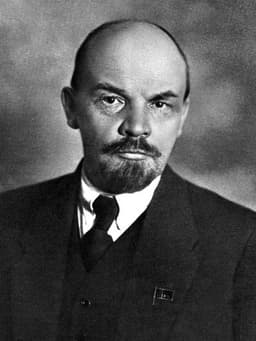
Vladimir Lenin
Revolutionary · Modern
71.2Total

Zhang Xianzhong
Revolutionary · Modern
41.1Total
Basic Information
Born
1870
1606
Died
1924
1647
Era
Modern
Modern
Nationality
Russia
China
Occupation
Revolutionary
Revolutionary
Civilization
Western
Eastern
Score Comparison
Military (10%)
30.0
55.0
Political (20%)
78.0
35.0
Influence (20%)
82.0
44.8
Legacy (20%)
72.0
40.0
Leadership (15%)
80.0
35.4
Strategy (15%)
60.0
38.3
TOTAL
71.2
41.1
Vladimir Lenin — Complete Timeline
1903 AD
Founding of the Bolshevik PartyPolitical Action
At the Second Congress of the Russian Social Democratic Labour Party in London, Lenin led a split that created the Bolshevik faction. The Bolsheviks advocated for a disciplined vanguard party of professional revolutionaries, a key element of Lenin's political strategy.
Political PartyRevolutionIdeology
Impact: global
1917 AD
April ThesesPolitical Action◆ Major
Lenin returned to Russia from exile and published the April Theses, calling for the overthrow of the Provisional Government, transfer of power to the soviets, and an end to World War I. This document set the Bolshevik agenda for the coming revolution.
RevolutionIdeologyPolitical Strategy
Impact: national
October RevolutionPolitical Action
Lenin led the Bolshevik seizure of power in Petrograd, capturing key government buildings and the Winter Palace. The revolution overthrew the Provisional Government and established the world's first socialist state, the Russian Soviet Federative Socialist Republic.
RevolutionCoupCommunism
Impact: global
1918 AD
Treaty of Brest-LitovskPolitical Action◆ Major
Lenin signed a separate peace treaty with the Central Powers, ceding vast territories including Ukraine, Belarus, and the Baltic states. The treaty ended Russia's involvement in World War I but caused significant territorial losses and internal opposition.
TreatyWorld War ITerritorial Loss
Impact: globaldestructive
1921 AD
New Economic Policy (NEP)Reform◆ Major
Lenin introduced the NEP, allowing limited private enterprise and market mechanisms to revive the war-torn Soviet economy. The policy replaced War Communism, permitting small-scale capitalism while the state retained control of major industries.
Economic ReformPolicyRecovery
Impact: nationalconstructive
1922 AD
Establishment of the Soviet UnionPolitical Action
Lenin oversaw the creation of the Union of Soviet Socialist Republics (USSR), a federation of Soviet republics. The new state consolidated Bolshevik control over much of the former Russian Empire and became a model for communist states worldwide.
State FormationCommunismFederation
Impact: global
Zhang Xianzhong — Complete Timeline
1630 AD
Launched Rebellion in ShaanxiWar◆ Major
Zhang Xianzhong joined a peasant rebellion in Shaanxi province during the late Ming dynasty. He quickly rose to become a major rebel leader, gathering a large army and establishing a base of operations in the region.
Ming DynastyRebellionShaanxi
Impact: regionaldestructive
1644 AD
Captured and Sacked ChengduWar◆ Major
Zhang Xianzhong captured the city of Chengdu, the capital of Sichuan province. He then proclaimed the Daxi dynasty and made Chengdu his capital. The capture was accompanied by widespread destruction and massacres of the local population.
Ming-Qing TransitionSichuanMassacre
Impact: regionaldestructive
Proclaimed the Daxi DynastyPolitical Action◆ Major
Zhang Xianzhong proclaimed the Daxi (Great Western) dynasty in Sichuan. He established a government and minted his own coinage. His rule was characterized by extreme violence, including the systematic killing of scholars, officials, and civilians.
Daxi DynastyProclamationSichuan
Impact: regionaldestructive
1647 AD
Killed in Battle Against Qing ForcesWar◆ Major
Zhang Xianzhong was killed in battle against Qing forces in Xichong, Sichuan. His death led to the collapse of the Daxi dynasty. The Qing conquest of Sichuan was completed shortly after, but the province had been devastated by years of warfare.
Qing DynastyBattleDeath
Impact: regionaltragic
Expert Analysis
Vladimir Lenin vs Zhang Xianzhong
### The Revolutionary’s Gambit: Lenin and Zhang Xianzhong
On a cold November night in 1917, a balding, bearded man slipped into Petrograd’s Smolny Institute, his overcoat damp with rain, to orchestrate the capture of the Winter Palace. Just over three centuries earlier, a scarred, illiterate bandit named Zhang Xianzhong watched as his ragtag army breached the walls of Chengdu, Sichuan’s ancient capital. Both men were revolutionaries, and both sought to tear down the old order. But while Lenin’s name would come to define an ideology that spanned continents, Zhang Xianzhong’s became a byword for chaos and ruin. What drove these two men, born worlds apart in time and place, to such starkly different outcomes?
### Origins
Vladimir Ilyich Ulyanov, who later took the name Lenin, was born in 1870 into a family of minor nobility in Simbirsk, Russia. His father was a school inspector, his mother a cultured woman who taught him piano. The execution of his elder brother, Alexander, for plotting to assassinate the Tsar in 1887 seared Lenin’s soul, turning a bright student of law into a hardened revolutionary. He devoured Marx, studied the Paris Commune, and spent years in Siberian exile honing his theories. Lenin was a product of the late 19th-century European intellectual ferment—a man who believed history had a scientific direction.
Zhang Xianzhong, born in 1606, came from a world of famine and banditry. He was a peasant from Shaanxi province, where drought and government corruption had driven millions to desperation. As a young man, he was a soldier in the Ming dynasty’s army, but a crime—likely theft—forced him to flee into the hills. There, he joined a swelling tide of rebels, men who fought not for a manifesto but for survival. Zhang had no university, no exile library; his education was the sword and the campfire. The Ming dynasty was crumbling under internal decay and external Manchu pressure, and for men like Zhang, the only law was the one they made.
### Rise to Power
Lenin’s path was one of meticulous organization. In 1903, at the Second Congress of the Russian Social Democratic Labour Party in London, he engineered a split, creating the Bolshevik faction—a disciplined vanguard of professional revolutionaries. This was not a spontaneous uprising but a calculated move, a chess piece placed years before the game would be played. When the February Revolution of 1917 overthrew the Tsar, Lenin was in Swiss exile. He famously crossed Germany in a sealed train, arriving at Petrograd’s Finland Station to a crowd of workers. His April Theses, published that same month, called for “All Power to the Soviets” and the overthrow of the Provisional Government. It was a radical gamble, but Lenin sensed the war-weariness of the masses.
Zhang Xianzhong’s rise was far more brutal and immediate. In 1630, he joined a rebellion in Shaanxi, and his ferocity quickly elevated him. He was one of several rebel leaders—Li Zicheng was the other great name—who carved up a dying empire. Zhang’s turning point came in 1644, when he captured Chengdu and proclaimed the Daxi (Great Western) dynasty. He minted coins, set up a rudimentary bureaucracy, and ruled Sichuan with an iron fist. But unlike Lenin, he had no long-term ideology, no blueprint for a new society. His power rested on fear and the momentum of conquest. While Lenin debated with comrades in smoke-filled rooms, Zhang burned villages.
### Leadership & Governance
As ruler of the world’s first communist state, Lenin was a political genius. He built the Cheka secret police, suppressed dissent, and created the Red Army under Leon Trotsky. But he was also pragmatic. In 1918, he signed the Treaty of Brest-Litovsk, ceding vast territories to Germany—including Ukraine, Belarus, and the Baltics—to buy peace for his revolution. Critics called it betrayal, but Lenin saw it as a tactical retreat. In 1921, he introduced the New Economic Policy (NEP), allowing limited private enterprise to revive Russia’s shattered economy. He was a theorist who could bend theory to reality. His military score of 30.0 reflects his lack of battlefield command, but his political score of 80.0 and leadership of 72.0 show a man who ruled through ideas and institutions.
Zhang Xianzhong’s governance was a catastrophe. After capturing Sichuan, he launched a reign of terror, slaughtering officials, scholars, and peasants suspected of loyalty to the Ming. Historical accounts—though often exaggerated by Qing dynasty chroniclers—describe massacres so extensive that the province’s population plummeted. His military score of 63.4 shows he was a capable fighter, but his political score of 34.4 and leadership of 34.5 reveal a ruler who could not build, only destroy. He minted coins, but they bought nothing; he declared a dynasty, but it had no law. Where Lenin wrote pamphlets, Zhang signed death warrants.
### Triumph & Tragedy
Lenin’s greatest moment was the October Revolution of 1917, a nearly bloodless coup that reshaped the world. His greatest failure was the Russian Civil War that followed, a brutal conflict that killed millions and pushed the country to the brink. Yet he died in 1924 of a stroke, still in power, having established the Soviet Union in 1922. His tragedy was that his successors, particularly Stalin, would twist his vision into a dictatorship far worse than the Tsar’s.
Zhang Xianzhong’s triumph was fleeting. In 1644, he was master of Sichuan. In 1647, he was killed in battle against Qing forces in Xichong, his body left to rot. His dynasty collapsed within three years. His tragedy was not just his death but the destruction he left behind. Sichuan would not recover for decades, and the Qing, who conquered all of China, would paint him as a monster.
### Character & Destiny
Lenin was cold, calculating, and relentless. “We must systematically, persistently, and unswervingly utilize the apparatus of state power,” he wrote. He believed in the inevitability of history, and that belief gave him a steely resolve. Zhang Xianzhong was impulsive, violent, and suspicious. Legend says he once ordered the execution of his own generals on a whim. Lenin’s destiny was to found a superpower; Zhang’s was to be a footnote, a cautionary tale of what happens when revolution has no vision.
### Legacy
Lenin’s legacy is enormous. His body lies mummified in Red Square; his name adorns cities, statues, and ideologies. Marxist-Leninism would shape the 20th century, from China to Cuba. His total score of 69.5 reflects a man who, for all his flaws, changed the world. Zhang Xianzhong’s legacy is a warning. His total score of 49.1 places him among history’s failures. In Sichuan, his name is still whispered as the “Yellow Tiger,” a specter of devastation.
### Conclusion
Standing at the Winter Palace, Lenin saw a new world. Standing in Chengdu, Zhang saw only the ashes of the old. One had a theory; the other had a sword. In the end, the sword broke, and the theory endured—for better and for worse. Their stories remind us that revolution is not merely about toppling thrones; it is about what you build in their place. And that, perhaps, is the most unforgiving judgment of all.
Rankings
🥇
Vladimir LeninLeader
Mil: 30.0Pol: 78.0Inf: 82.0
71.2
🥈
Zhang Xianzhong
Mil: 55.0Pol: 35.0Inf: 44.8
41.1
+30.1 behind
How This Comparison Works
Algorithm
Each figure is scored on 6 dimensions (0—100 scale) based on structured historical data: Military (10%), Political (20%), Influence (20%), Legacy (20%), Leadership (15%), Strategy (15%). The weighted total produces the final ranking.
Data Sources
Scores are computed from structured sub-indicators in the database. Scale factors adjust for era (Ancient ×0.85, Modern ×1.0) and civilization size (Eastern ×1.05, Other ×0.80) to account for differences in population and military scale.
Maximum 3 Figures
Comparisons are limited to 2—3 figures to ensure readability and statistical meaningfulness.
Error Margins
±5 points per dimension — Sub-scores are derived from historical records with inherent uncertainty. Two figures within 5 points on a dimension should be considered roughly equivalent in that area.
Total Score Accuracy
±3 points overall — The weighted combination of 6 dimensions produces a total score with approximately ±3 points of uncertainty. Differences of less than 3 points are not statistically significant— the figures are effectively tied.
Known Limitations
- Historical records are incomplete and uneven across civilizations
- Figures from oral-tradition societies may be underrepresented
- Occupation labels can misclassify multi-role figures
- Scores measure capability and impact, not moral character
- Quantitative scoring is a comparison tool, not absolute truth
Capability Radar
Military (10%) — Battles & Warfare
Battles
20
55
Win Rate
35
50
Expansion
70
60
Political (20%) — Governance & Reform
Reform
95
5
Diplomacy
75
10
Economy
60
5
Influence (20%) — Cultural & Global Reach
Cultural
80
20
Global
90
15
Legacy (20%) — Historical Impact
Historical
95
35
Longevity
85
25
Leadership (15%) — Power & Stability
Tenure
55
30
Stability
40
5
Strategy (15%) — Tactics & Innovation
Strategy
55
40
Tactics
30
45
Reform
85
10
Similar Comparisons
Comments & Discussion
RED COMMISSAR6/16/2026
Lenin was a Marxist theorist who actually read books; Zhang was a peasant bandit who massacred his way through Sichuan. Comparing them as "revolutionaries" is an insult to Lenin's intellectual rigor. The Sichuan "Cannon" killed millions, while Lenin's Red Terror was a calculated political tool to stabilize a revolution—different scales, different mindsets. Zhang's chaos was nihilistic; Lenin's brutality had a blueprint.
统计学家6/16/2026
数据上根本没法比——张献忠屠川人口损失的说法从40万到600万都有,跨度大得离谱,而列宁时期内战加饥荒的死亡人数有可靠档案佐证。张献忠那“七杀碑”本身就是清代文人添油加醋的产物,别拿民国小报当历史。要我说,这就是个以讹传讹的强盗和一个有理论体系的独裁者的区别。
CLASSICS SAGE6/16/2026
Both men destroyed elites—Lenin targeted the bourgeoisie, Zhang the Ming loyalists—but their legacies diverge wildly. Lenin's Bolshevik coup was bookended by Marx's dialectics and the Comintern's spread; Zhang's rebellion was a Ming dynasty footnote that ended in his head on a spear. One created a global empire of ideology, the other a local legend of cannibalism. Context matters: Zhang was a symptom of a dying dynasty, Lenin a surgeon of a new world order.
野史猎人6/16/2026
你们高估列宁了!他1917年坐德国人的封闭火车回国,本质上也是靠外力夺权,跟张献忠借李自成的东风没两样。而且张献忠在四川搞“三年免征”的政策,比列宁的战时共产主义不知道高明到哪里去了!列宁那套集体农庄搞到240万人饿死乌克兰,张献忠好歹让农民喘了口气。不过是赢家写历史罢了。