Loading...
John Lambert vs To Lam
John Lambert leads by 6.1 pts · 2 figures compared
…
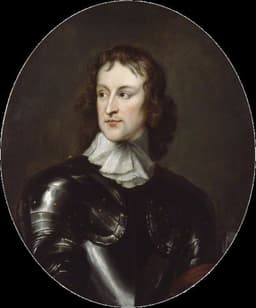
John Lambert
General · Modern
56.7Total
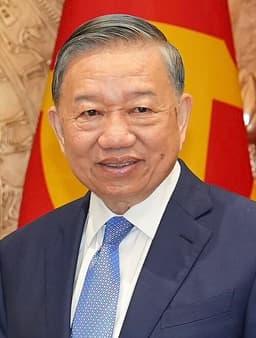
To Lam
General · Modern
50.6Total
Basic Information
Born
1619
1957
Died
1684
—
Era
Modern
Modern
Nationality
England
Vietnam
Occupation
General
General
Civilization
Western
Eastern
Score Comparison
Military (10%)
70.0
25.9
Political (20%)
45.0
68.0
Influence (20%)
59.0
51.8
Legacy (20%)
50.0
41.7
Leadership (15%)
68.0
72.0
Strategy (15%)
55.0
36.8
TOTAL
56.7
50.6
John Lambert — Complete Timeline
1648 AD
Battle of PrestonWar◆ Major
John Lambert commanded parliamentary forces at the Battle of Preston, defeating a Scottish royalist army. The victory helped secure the parliamentary cause in the Second English Civil War.
BattleEnglish Civil WarParliament
Impact: national
1653 AD
Drafted the Instrument of GovernmentPolitical Action◆ Major
John Lambert was the principal author of the Instrument of Government, the written constitution that established the Protectorate under Oliver Cromwell. The document created a Lord Protector and a Council of State, but was never fully implemented.
ConstitutionProtectorateCromwell
Impact: nationalconstructive
1662 AD
Exiled to GuernseyPolitical Action◆ Major
After the Restoration, John Lambert was tried for treason and exiled to the island of Guernsey. He spent the remainder of his life in captivity, never regaining political influence.
ExileRestorationPunishment
Impact: nationaltragic
To Lam — Complete Timeline
2016 AD
Appointed Minister of Public SecurityPolitical Action◆ Major
To Lam was appointed Minister of Public Security of Vietnam, overseeing the country's police and internal security forces. He played a key role in maintaining public order and combating crime.
Ministerial AppointmentSecurity Leadership
Impact: national
2024 AD
Elected President of VietnamPolitical Action◆ Major
To Lam was elected President of Vietnam by the National Assembly, succeeding Vo Van Thuong. He transitioned from security chief to head of state, continuing his influence in national politics.
PresidencyGovernment Leadership
Impact: national
Expert Analysis
John Lambert vs To Lam
# The General and the Guardian: Two Paths to Power in an Age of Upheaval
On a gray morning in 1662, John Lambert stood before a court in London, stripped of his command, his reputation, and soon his freedom. He had once been the architect of England’s only written constitution, the man who had crushed the king’s armies at Preston. Now he was a prisoner, his life’s work undone by the very monarchy he had helped overthrow. Four centuries later, in a very different world, To Lam sat in a marble hall in Hanoi, watching the National Assembly vote him into the presidency of Vietnam. His rise had been quieter, more deliberate—a slow ascent through the shadows of state security rather than the thunder of battle. Both men were generals. Both sought to shape their nations. But their journeys, and their fates, could not have been more different.
Origins
John Lambert was born in 1619 into the turbulent world of Stuart England. His father was a minor Yorkshire gentleman, and Lambert grew up on the edge of the gentry—close enough to power to taste it, far enough to resent its excesses. The English Civil War erupted when he was twenty-three, and he threw himself into the Parliamentary cause with the fervor of a man who saw history cracking open. The 1640s were a time of radical possibility: kings could be challenged, armies raised by commoners, and old hierarchies smashed. Lambert absorbed this spirit. He studied law at the Inns of Court, but his true education came on the battlefield.
To Lam was born in 1957 in a Vietnam still scarred by war. His childhood unfolded under the shadow of the American conflict, and his youth in the hard-peace years of socialist reconstruction. Where Lambert’s England was a cauldron of religious and political ferment, Lam’s Vietnam was a nation of discipline and survival. The Communist Party was not a debating society but a command structure. Lam learned early that power flowed through institutions, not individuals, and that the safest path was the one approved by the collective. He studied law as well, but at the People’s Security Academy, where the curriculum was less about liberty and more about order.
Rise to Power
Lambert’s rise was meteoric and bloody. In 1648, at the Battle of Preston, he commanded parliamentary forces against a Scottish royalist army. The victory was decisive—a masterclass in tactical aggression that broke the back of the Royalist cause. Lambert was not merely a soldier; he was a political general who understood that war and governance were inseparable. By 1653, he had become Oliver Cromwell’s right hand, drafting the Instrument of Government, the written constitution that established the Protectorate. It was a breathtaking act of political ambition: a military man creating the legal framework for a new republic.
To Lam’s rise was glacial by comparison. He spent decades inside the Ministry of Public Security, the vast apparatus that controls Vietnam’s police, intelligence, and internal surveillance. In 2016, he was appointed Minister, a role that placed him at the center of the party’s most sensitive operations. His power grew not through dramatic victories but through quiet accumulation—building networks, managing files, ensuring loyalty. When President Vo Van Thuong resigned in 2024 amid a corruption crackdown, Lam was the natural successor: a steady hand from the security establishment, trusted to maintain stability.
Leadership & Governance
Lambert governed as a visionary and a zealot. He believed that England could be remade through law and military discipline. The Instrument of Government was his masterpiece—a document that divided power between a Lord Protector, a council, and a parliament, with protections for religious toleration. But Lambert was also a man of the army, and when Cromwell died in 1658, he tried to hold the Protectorate together by force. He lacked the political subtlety to build lasting coalitions. His governance was a mixture of high ideals and brutal pragmatism, and it collapsed when the army fractured.
To Lam governs as a technician. His presidency, which began in 2024, is an extension of his security ministry: focused on rooting out corruption, consolidating party control, and managing the economy through surveillance. He has no grand constitutional vision. Vietnam already has a stable, if rigid, system. Lam’s genius is operational—he knows how to make the machinery of state run without friction. Where Lambert tried to write a new social contract, Lam merely enforces the existing one.
Triumph & Tragedy
Lambert’s greatest triumph was the Battle of Preston in 1648, where his strategic brilliance saved the Parliamentary cause. His greatest tragedy was the failure of the Instrument of Government. He had crafted a constitution that might have given England a stable republic, but he could not make it last. When the monarchy was restored in 1660, Lambert was tried for treason. In 1662, he was exiled to the island of Guernsey, where he spent the remainder of his life in obscurity, a ghost of the revolution he had helped lead.
To Lam’s triumphs are quieter. His tenure as security minister saw a dramatic reduction in organized crime and a tightening of party discipline. His tragedy is yet to be written—but it may be that he will be remembered as a caretaker, not a creator. His presidency began at a time of economic uncertainty and political consolidation, and his legacy will depend on whether he can steer Vietnam through its next transition without the chaos that consumed Lambert.
Character & Destiny
Lambert was a man of fire and ink. He had the arrogance of the self-made intellectual, convinced that his ideas could reshape the world. This confidence drove him to draft a constitution, but it also blinded him to the fragility of his support. He trusted the army too much and the people too little. In the end, his character was his undoing: he could win battles but not hearts.
To Lam is a man of shadow and system. He has survived for decades in a party that devours the reckless. His caution is his strength; his patience, his weapon. He rises not through brilliance but through reliability. His character is suited to a world where revolution is a memory, not a possibility.
Legacy
John Lambert is remembered, if at all, as a footnote to Cromwell—a brilliant general who wrote a forgotten constitution. His Instrument of Government was the first written constitution in the English-speaking world, but it is studied more by historians than by statesmen. His legacy is a warning: that military power and political vision, without deep roots, can be swept away.
To Lam’s legacy is unwritten. He will likely be remembered as a consolidator, a man who held the line during a period of transition. In a century, he may be a minor figure in the story of Vietnam’s rise—a general who became president, but who did not change the course of history.
Conclusion
Two generals, two centuries, two worlds. Lambert fought to create a new order and was destroyed by the old one. Lam fights to preserve an existing order and may be consumed by its contradictions. Both remind us that power is a river: it can carve canyons or erode quietly. The difference lies not in the man, but in the current he chooses to ride.
Rankings
🥇
John LambertLeader
Mil: 70.0Pol: 45.0Inf: 59.0
56.7
🥈
To Lam
Mil: 25.9Pol: 68.0Inf: 51.8
50.6
+6.1 behind
How This Comparison Works
Algorithm
Each figure is scored on 6 dimensions (0—100 scale) based on structured historical data: Military (10%), Political (20%), Influence (20%), Legacy (20%), Leadership (15%), Strategy (15%). The weighted total produces the final ranking.
Data Sources
Scores are computed from structured sub-indicators in the database. Scale factors adjust for era (Ancient ×0.85, Modern ×1.0) and civilization size (Eastern ×1.05, Other ×0.80) to account for differences in population and military scale.
Maximum 3 Figures
Comparisons are limited to 2—3 figures to ensure readability and statistical meaningfulness.
Error Margins
±5 points per dimension — Sub-scores are derived from historical records with inherent uncertainty. Two figures within 5 points on a dimension should be considered roughly equivalent in that area.
Total Score Accuracy
±3 points overall — The weighted combination of 6 dimensions produces a total score with approximately ±3 points of uncertainty. Differences of less than 3 points are not statistically significant— the figures are effectively tied.
Known Limitations
- Historical records are incomplete and uneven across civilizations
- Figures from oral-tradition societies may be underrepresented
- Occupation labels can misclassify multi-role figures
- Scores measure capability and impact, not moral character
- Quantitative scoring is a comparison tool, not absolute truth
Capability Radar
Military (10%) — Battles & Warfare
Battles
65
10
Win Rate
60
10
Expansion
40
10
Political (20%) — Governance & Reform
Reform
55
40
Diplomacy
50
40
Economy
45
30
Influence (20%) — Cultural & Global Reach
Cultural
35
20
Global
30
20
Legacy (20%) — Historical Impact
Historical
50
20
Longevity
40
20
Leadership (15%) — Power & Stability
Tenure
60
50
Stability
40
40
Strategy (15%) — Tactics & Innovation
Strategy
65
10
Tactics
70
10
Reform
55
10
Similar Comparisons
Comments & Discussion
Cromwell's Shadow6/16/2026
Lambert was the real brains behind the New Model Army's victories, yet history paints him as Cromwell's sidekick. His constitutional vision with the "Instrument of Government" was ahead of its time—a written check on executive power that England wouldn't see again for two centuries. To Lam, by contrast, inherited a one-party state and climbed through police ranks. One tried to build a republic of laws; the other mastered a system of control. Lambert lost, but he lost for something.
数据猎人6/16/2026
说Lambert比To Lam强?别被叙事骗了。Lambert的宪法只活了五年,To Lam掌管的越南gdp增长7%以上。数字不撒谎。Lambert搞政治纯粹靠军事背书,治下英格兰四分五裂;To Lam从公安部长升到国家主席,权力交接丝滑如油。你要比"影响",To Lam直接管着七千万人,Lambert连自己的自由都没保住。所谓"理念",输了就是废纸。
Classics Pedant6/16/2026
The parallels are tempting but false. Lambert emerged from a world where generals could draft constitutions and debate sovereignty in coffeehouses—a uniquely English chaos of ideas. To Lam operates in a Leninist framework where power flows through party channels, not battlefield reputations. Lambert's "Instrument of Government" was a radical experiment in written constitutionalism; To Lam's rise is a textbook example of security apparatus consolidation. Different games entirely.
红茶与米线6/16/2026
我烦透了这种"东西对比"的套路。Lambert是个英格兰乡绅,内战把他推上了风口浪尖;To Lam是越共机器里爬出来的官僚。前者在宗教狂热和共和理想中折腾,最后被复辟踩碎;后者在稳定至上、集体领导中步步为营。你硬要说"将军",Lambert真上阵砍人,To Lam管的是公安档案。根本就是两种动物,别往一个笼子里塞。
Steel & Silk6/16/2026
Admire Lambert's audacity—drafting a written constitution, banishing the monarchy, ruling through a "Protectorate" that was essentially a military dictatorship with philosophical pretensions. But he had zero staying power. To Lam understands something Lambert never did: that endurance is built through institutions, not personalities. Lambert's star burned out in a decade; To Lam has spent forty years methodically embedding himself into Vietnam's security state. One was a comet, the other a slow-