Loading...
John Lambert vs Muhammadu Buhari
John Lambert leads by 5.2 pts · 2 figures compared
…
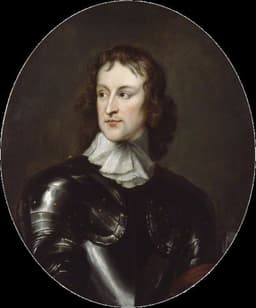
John Lambert
General · Modern
56.7Total
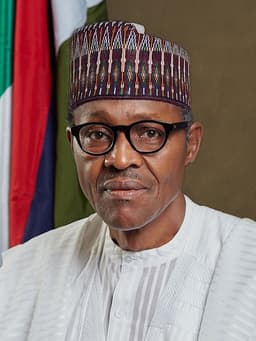
Muhammadu Buhari
General · Modern
51.5Total
Basic Information
Born
1619
1942
Died
1684
—
Era
Modern
Modern
Nationality
England
Nigeria
Occupation
General
General
Civilization
Western
Other
Score Comparison
Military (10%)
70.0
22.6
Political (20%)
45.0
68.0
Influence (20%)
59.0
53.3
Legacy (20%)
50.0
43.3
Leadership (15%)
68.0
72.0
Strategy (15%)
55.0
41.0
TOTAL
56.7
51.5
John Lambert — Complete Timeline
1648 AD
Battle of PrestonWar◆ Major
John Lambert commanded parliamentary forces at the Battle of Preston, defeating a Scottish royalist army. The victory helped secure the parliamentary cause in the Second English Civil War.
BattleEnglish Civil WarParliament
Impact: national
1653 AD
Drafted the Instrument of GovernmentPolitical Action◆ Major
John Lambert was the principal author of the Instrument of Government, the written constitution that established the Protectorate under Oliver Cromwell. The document created a Lord Protector and a Council of State, but was never fully implemented.
ConstitutionProtectorateCromwell
Impact: nationalconstructive
1662 AD
Exiled to GuernseyPolitical Action◆ Major
After the Restoration, John Lambert was tried for treason and exiled to the island of Guernsey. He spent the remainder of his life in captivity, never regaining political influence.
ExileRestorationPunishment
Impact: nationaltragic
Muhammadu Buhari — Complete Timeline
1983 AD
1983 Nigerian coup d'étatPolitical Action
Major General Muhammadu Buhari led a military coup that overthrew the civilian government of President Shehu Shagari. Buhari cited corruption and economic mismanagement as justifications, and he became the head of state.
CoupMilitary RuleCorruption
Impact: nationaldestructive
1984 AD
War Against Indiscipline (WAI)Reform◆ Major
Buhari launched the War Against Indiscipline, a campaign to enforce discipline and order in Nigerian society. It included harsh penalties for minor offenses, such as queue-jumping, and was criticized for human rights abuses.
DisciplineSocial PolicyHuman Rights
Impact: nationaldestructive
1985 AD
Overthrow by Ibrahim BabangidaPolitical Action◆ Major
Buhari was overthrown in a palace coup led by his Chief of Army Staff, Ibrahim Babangida. Babangida cited Buhari's authoritarian style and failure to address the economy as reasons for the coup.
CoupOverthrowBabangida
Impact: national
2015 AD
Anti-corruption campaignReform◆ Major
Buhari launched a high-profile anti-corruption campaign, targeting government officials and recovering stolen assets. The campaign was praised internationally but criticized for being selective and politically motivated.
Anti-CorruptionReformGovernance
Impact: nationalconstructive
Election as President of NigeriaPolitical Action
Buhari won the 2015 Nigerian presidential election, defeating incumbent Goodluck Jonathan. This was the first time an opposition candidate had defeated a sitting president in Nigeria's history, marking a democratic milestone.
ElectionDemocracyOpposition Victory
Impact: nationalprogressive
Expert Analysis
Muhammadu Buhari vs John Lambert
# The General as Reformer: John Lambert and Muhammadu Buhari
On a crisp autumn morning in 1653, John Lambert sat in a London chamber, quill in hand, drafting a document that would reshape English governance. Across centuries and continents, another general would one day seize power in Nigeria, driven by similar impulses to impose order on chaos. Both men believed that military discipline could cure political decay. Both would learn that the sword cuts both ways.
Origins
John Lambert was born in 1619 into the Yorkshire gentry, a world of manor houses and Puritan piety. The English Civil War erupted when he was in his twenties, and he chose Parliament's side not from radical conviction but from a sense of constitutional order. His era was one of theological fury and political experimentation—a time when men genuinely believed they could build Jerusalem in England's green and pleasant land.
Muhammadu Buhari was born in 1942 in Daura, northern Nigeria, into a Fulani family with traditions of military service. His world was one of postcolonial hope and ethnic tension, where the British had departed leaving behind a fragile federation. The Biafran War of the late 1960s would scar his generation, teaching them that national unity required iron fists.
Both emerged from societies fractured by civil conflict. But Lambert's England was debating the nature of representative government; Buhari's Nigeria was struggling to keep itself from splintering along tribal lines.
Rise to Power
Lambert rose through military merit. At the Battle of Preston in 1648, he commanded parliamentary forces with tactical brilliance, defeating a Scottish royalist army that threatened to restore the monarchy. His reward was influence, not crown. He became Oliver Cromwell's right-hand man, a general who understood that victory on the battlefield meant little without political architecture.
Buhari's path was swifter and bloodier. On December 31, 1983, Major General Buhari led a coup that overthrew President Shehu Shagari's civilian government. The coup was bloodless, but its message was clear: Nigeria's democracy had failed, and the military would restore order. Where Lambert rose within a revolutionary movement, Buhari rose against a failing state.
Leadership & Governance
Lambert's greatest achievement was the Instrument of Government, drafted in 1653. This written constitution established the Protectorate, creating a system where a Lord Protector (Cromwell) ruled with a council and parliament. It was Europe's first written constitution, a radical attempt to balance executive power with representation. Lambert believed that law, not men, should govern—a principle he learned on battlefields where discipline meant survival.
Buhari's governance took a different shape. In 1984, he launched the War Against Indiscipline (WAI), a campaign to enforce order through punishment. Soldiers forced latecomers to do push-ups; civil servants were jailed for lateness; market traders faced flogging for price gouging. The WAI was popular among Nigerians weary of corruption, but it was authoritarian populism, not constitutional engineering.
Lambert tried to build institutions; Buhari tried to enforce behavior. Both reflected their circumstances: Lambert operated in a revolutionary society where institutions were being created from scratch; Buhari governed a postcolonial state where institutions existed on paper but had rotted from within.
Triumph & Tragedy
Lambert's triumph was the Battle of Preston, where his tactical acumen saved the parliamentary cause. His tragedy came after Cromwell's death. When Richard Cromwell proved weak, Lambert tried to preserve the Protectorate, but General George Monck marched south, restored the Rump Parliament, and paved the way for Charles II's return. Lambert was arrested, tried for treason in 1662, and exiled to Guernsey, where he spent his final years in obscurity.
Buhari's triumph came in 2015, when he won the Nigerian presidency in a democratic election—the first opposition victory in Nigerian history. His military past, once a liability, became an asset: voters trusted him to fight corruption. But his second tragedy was slower. His anti-corruption campaign recovered stolen assets and jailed officials, yet Nigeria's economic stagnation continued. Critics accused him of selective justice, targeting political opponents while shielding allies.
Character & Destiny
Lambert was a constitutionalist at heart, a man who believed in laws even when they constrained him. When Cromwell rejected the crown, Lambert supported him; when the monarchy returned, Lambert refused to flee, accepting his fate with dignity. His character was that of a builder, not a destroyer.
Buhari was a disciplinarian shaped by military hierarchy. His War Against Indiscipline revealed a belief that Nigeria's problems stemmed from moral failure, not structural inequality. He governed with austerity, distrusting the very democracy that had brought him to power. His character was that of a stern father, impatient with the messiness of politics.
Legacy
Lambert left behind the idea of a written constitution, a seed that would flower centuries later in America and beyond. His Instrument of Government failed in its time, but it proved that governance could be codified, that power could be constrained by paper. Today, he is remembered by historians as Cromwell's brilliant subordinate, a footnote in a story dominated by greater names.
Buhari's legacy is more contested. To supporters, he restored Nigeria's dignity and proved that military men could submit to democracy. To critics, he was a nostalgic authoritarian who failed to modernize an oil-dependent economy. His anti-corruption campaign changed the conversation but not the system.
Conclusion
Two generals, separated by three centuries and a continent, united by the belief that order must precede liberty. Lambert tried to build the cage of law before releasing the beast of democracy; Buhari tried to impose discipline before granting freedom. Both failed in their own ways, yet both left marks on their nations' political DNA.
Perhaps the deepest lesson is this: military men make poor reformers because they see politics as a problem to be solved, not a process to be endured. Lambert understood this better than Buhari—he wrote constitutions, not decrees. But in the end, both were swept away by forces they could not control: Lambert by the restoration of monarchy, Buhari by the slow tide of democratic expectations. The general's tragedy is that he trains for war, but history demands peace.
Rankings
🥇
John LambertLeader
Mil: 70.0Pol: 45.0Inf: 59.0
56.7
🥈
Muhammadu Buhari
Mil: 22.6Pol: 68.0Inf: 53.3
51.5
+5.2 behind
How This Comparison Works
Algorithm
Each figure is scored on 6 dimensions (0—100 scale) based on structured historical data: Military (10%), Political (20%), Influence (20%), Legacy (20%), Leadership (15%), Strategy (15%). The weighted total produces the final ranking.
Data Sources
Scores are computed from structured sub-indicators in the database. Scale factors adjust for era (Ancient ×0.85, Modern ×1.0) and civilization size (Eastern ×1.05, Other ×0.80) to account for differences in population and military scale.
Maximum 3 Figures
Comparisons are limited to 2—3 figures to ensure readability and statistical meaningfulness.
Error Margins
±5 points per dimension — Sub-scores are derived from historical records with inherent uncertainty. Two figures within 5 points on a dimension should be considered roughly equivalent in that area.
Total Score Accuracy
±3 points overall — The weighted combination of 6 dimensions produces a total score with approximately ±3 points of uncertainty. Differences of less than 3 points are not statistically significant— the figures are effectively tied.
Known Limitations
- Historical records are incomplete and uneven across civilizations
- Figures from oral-tradition societies may be underrepresented
- Occupation labels can misclassify multi-role figures
- Scores measure capability and impact, not moral character
- Quantitative scoring is a comparison tool, not absolute truth
Capability Radar
Military (10%) — Battles & Warfare
Battles
65
10
Win Rate
60
10
Expansion
40
5
Political (20%) — Governance & Reform
Reform
55
30
Diplomacy
50
25
Economy
45
20
Influence (20%) — Cultural & Global Reach
Cultural
35
25
Global
30
25
Legacy (20%) — Historical Impact
Historical
50
30
Longevity
40
20
Leadership (15%) — Power & Stability
Tenure
60
45
Stability
40
15
Strategy (15%) — Tactics & Innovation
Strategy
65
15
Tactics
70
15
Reform
55
20
Similar Comparisons
Comments & Discussion
LAMBERT’S GHOST6/16/2026
As a military historian, I see Lambert owning the superior strategic vision. He didn’t just crush rebellions—he drafted the Instrument of Government, the only written constitution England ever had. Buhari’s coups were reactive, cleaning up messes his peers created. Lambert tried to forge a new state; Buhari just paused Nigeria’s decay. One built a framework; the other froze a failing system. The difference is centuries, but also intent.
沙漠之鹰6/16/2026
作为数据怀疑论者,我发现评价这两个将军时,后人给Lambert更多体制变革的荣誉,却对Buhari的经济指标选择性失明。Buhari执政时尼日利亚石油收入下滑,GDP却仍高于前任。Lambert的Protectorate几年后就被推翻。历史喜欢美化失败的实验者,而非受困于现实的务实者。你们夸Lambert的宪法,我只看实际产出。
THE SWORD AND THE SEAL6/16/2026
A classics scholar would note the shared tragic pattern: both men believed military virtue could impose civic order. Lambert quoted Livy in Parliament, seeing himself as a new Cincinnatus. Buhari invoked discipline as a cure for corruption—pure Platonic guardianship. But not even a general can will virtue into a republic. They both failed because they thought order could be enforced from above, not grown from below. Same hubris, different uniforms.
尼日利亚之镜6/16/2026
作为一个历史发烧友,我坚决站Buhari这边。Lambert在权力巅峰写了份没人记得的宪法;Buhari在2015年和平交出权力,完成尼日利亚历史上第一次政党轮替。真正改革政体的不是起草者,而是懂得退出的人。Lambert被放逐后郁郁而终,Buhari两次未能彻底打击腐败却留下民主传承。两人都想整顿烂摊子,但Buhari的遗产更真实。
裁缝的剪刀6/16/2026
作为修正主义批评者,我拒绝为这两人贴“改革者”标签。Lambert投靠Cromwell推护国公体制,本质是新强人打破旧强人;Buhari先搞军事政变,后以民选身份回归,玩的就是权势轮回。历史总爱给将军们镀金,但他们的共同点不是改革,而是对权力的痴迷。Lambert砍了国王脑袋换独裁,Buhari怼走民选政府又回来——刀口从不正对权势者自身。