Loading...
John Lambert vs Yitzhak Rabin
Yitzhak Rabin leads by 9.7 pts · 2 figures compared
…
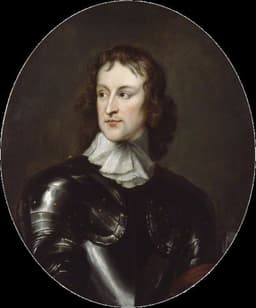
John Lambert
General · Modern
56.7Total
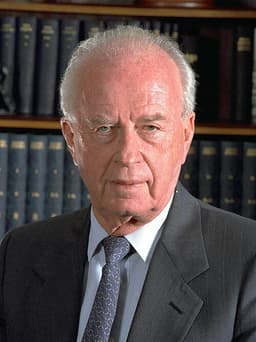
Yitzhak Rabin
General · Modern
66.4Total
Basic Information
Born
1619
1922
Died
1684
—
Era
Modern
Modern
Nationality
England
Israel
Occupation
General
General
Civilization
Western
Middle Eastern
Score Comparison
Military (10%)
70.0
61.7
Political (20%)
45.0
82.0
Influence (20%)
59.0
68.0
Legacy (20%)
50.0
55.0
Leadership (15%)
68.0
78.0
Strategy (15%)
55.0
55.0
TOTAL
56.7
66.4
John Lambert — Complete Timeline
1648 AD
Battle of PrestonWar◆ Major
John Lambert commanded parliamentary forces at the Battle of Preston, defeating a Scottish royalist army. The victory helped secure the parliamentary cause in the Second English Civil War.
BattleEnglish Civil WarParliament
Impact: national
1653 AD
Drafted the Instrument of GovernmentPolitical Action◆ Major
John Lambert was the principal author of the Instrument of Government, the written constitution that established the Protectorate under Oliver Cromwell. The document created a Lord Protector and a Council of State, but was never fully implemented.
ConstitutionProtectorateCromwell
Impact: nationalconstructive
1662 AD
Exiled to GuernseyPolitical Action◆ Major
After the Restoration, John Lambert was tried for treason and exiled to the island of Guernsey. He spent the remainder of his life in captivity, never regaining political influence.
ExileRestorationPunishment
Impact: nationaltragic
Yitzhak Rabin — Complete Timeline
1967 AD
Chief of Staff during the Six-Day WarWar
As Chief of Staff of the Israel Defense Forces, Rabin commanded the Israeli military during the Six-Day War against Egypt, Jordan, and Syria. Israel captured the Sinai Peninsula, Gaza Strip, West Bank, East Jerusalem, and Golan Heights, reshaping the region.
Six-Day WarTerritorial ExpansionMilitary Victory
Impact: global
1993 AD
Signing of the Oslo AccordsPolitical Action
As prime minister, Rabin signed the Oslo Accords with PLO Chairman Yasser Arafat on the White House lawn. The agreement established the Palestinian Authority and set a framework for Palestinian self-governance in the West Bank and Gaza Strip.
Peace ProcessPalestiniansOslo
Impact: globalconstructive
1995 AD
Assassination at Peace RallyPolitical Action
Rabin was assassinated by Israeli extremist Yigal Amir after a peace rally in Tel Aviv. The assassination shocked Israel and the world, derailing the Oslo peace process and leading to a period of political instability.
AssassinationPeace ProcessPolitical Violence
Impact: globaltragic
Expert Analysis
Yitzhak Rabin vs John Lambert
# Two Men Who Shaped History, Then Were Crushed by It
On a warm November evening in 1995, Yitzhak Rabin stood before a crowd of 100,000 people in Tel Aviv’s Kings of Israel Square, singing “The Song of Peace.” Moments later, three bullets from an Israeli extremist’s pistol ended his life. Two hundred miles away, in a cold English Channel island prison, another soldier-politician had already been dead for three centuries—John Lambert, the man who helped draft the world’s first written constitution for a modern republic, then vanished into exile. One died in a flash of violence, the other in slow obscurity. Both had tried to build something new with their hands, and both were destroyed by the very forces they helped unleash.
Origins
Yitzhak Rabin was born in Jerusalem in 1922 to a family of Labor Zionist pioneers. His father, a Ukrainian immigrant, and his mother, a Russian-born activist, raised him in a world where survival depended on collective effort and military readiness. The British Mandate of Palestine was a cauldron of competing dreams, and Rabin learned early that power flowed through the barrel of a gun. He joined the Palmach, the elite strike force of the Jewish underground, at age 19, and by 1948 he was commanding a brigade in the War of Independence. His world was small, intense, and defined by an iron necessity: the Jewish state must exist, and he would help build it.
John Lambert was born in 1619 in the Yorkshire village of Kirkby Malham, into a family of minor gentry. England was then a kingdom torn between king and Parliament, between Anglican orthodoxy and Puritan reform. Lambert studied law at the Inns of Court in London, but the outbreak of the Civil War in 1642 pulled him into the New Model Army—Oliver Cromwell’s revolutionary force. Unlike Rabin, who grew up in a world of clear enemies and clear goals, Lambert entered a chaos of shifting alliances: royalists against parliamentarians, Presbyterians against Independents, generals against politicians. He had to think on his feet, and his legal training gave him a taste for order amid the storm.
Rise to Power
Rabin’s ascent was meteoric but conventional for a soldier in a new nation. As Chief of Staff of the Israel Defense Forces in 1967, he commanded the Six-Day War—a lightning campaign that captured the Sinai, Gaza, the West Bank, and the Golan Heights. The victory was so complete that it seemed to confirm Israel’s invincibility. But Rabin understood something his fellow generals often missed: military triumph could become a political trap. The captured territories brought millions of Palestinians under Israeli rule, and Rabin, a pragmatist, saw that occupation was unsustainable. He retired from the army in 1968, entered politics, and by 1974 became prime minister for the first time—a soldier learning to be a statesman.
Lambert’s rise was more turbulent. At the Battle of Preston in 1648, he commanded parliamentary forces that crushed a Scottish royalist army, cementing his reputation as a brilliant cavalry officer. But Lambert’s true genius was political. After Cromwell dissolved the Rump Parliament in 1653, Lambert drafted the Instrument of Government—a written constitution that created a Protectorate with Cromwell as Lord Protector. It was a radical document: for the first time in English history, executive power was limited by a council and a parliament, and religious toleration was extended to most Protestants. Lambert believed he was building a stable republic. Instead, he was building his own prison.
Leadership & Governance
Rabin’s leadership style was blunt, unsentimental, and deeply practical. As prime minister during the Oslo process, he shook hands with Yasser Arafat—a man he had once called a terrorist—because he calculated that peace was the only way to preserve Israel’s Jewish majority and democratic character. He was not a visionary; he was a problem-solver. “You don’t make peace with friends,” he said. “You make it with very unsavory enemies.” His military background made him trust process over promises: he insisted on phased withdrawals, security arrangements, and hard deadlines. But the same pragmatism that made him effective also made him vulnerable. He could not convince his own people that the risks were worth taking.
Lambert governed differently. As the architect of the Instrument of Government, he tried to impose constitutional order on a revolution that had no patience for rules. Cromwell respected Lambert’s intellect but distrusted his ambition; the Protectorate was a dictatorship in republican clothing, and Lambert’s document—with its powerful Protector and weak Parliament—reflected that contradiction. When Cromwell died in 1658, Lambert tried to seize power, but the army fractured, and the monarchy was restored in 1660. Lambert’s attempt to cage power with paper failed because the lion of revolution refused to lie down.
Triumph & Tragedy
Rabin’s greatest moment came on the White House lawn on September 13, 1993, when he signed the Oslo Accords. The image of Rabin shaking Arafat’s hand, with Bill Clinton beaming between them, seemed to promise a new Middle East. But the triumph was hollow. Rabin’s assassination on November 4, 1995, by Yigal Amir—a Jewish law student who believed peace was treason—shattered the process. The tragedy was not just his death, but the death of trust. After Rabin, Israeli politics lurched rightward, and the Oslo vision collapsed into the Second Intifada.
Lambert’s triumph was the Instrument of Government itself—the first written constitution in the English-speaking world. But his tragedy was the Restoration. In 1660, Charles II returned to the throne, and Lambert was tried for treason. He was spared execution but exiled to the island of Guernsey, where he lived out his final 22 years in a stone fortress overlooking the sea. The man who had helped write a constitution for a republic died forgotten, while the monarchy he had fought against endured.
Character & Destiny
Rabin’s character was shaped by the Israeli ethos of *ein breira*—“no alternative.” He believed that history forced choices, and he chose peace even when it cost him his life. His bluntness made him unpopular with ideologues on both sides, but it also made him credible. He was not a charismatic leader; he was a grim one, and that grimness may have been his greatest asset. He knew the cost of war because he had paid it himself.
Lambert was more intellectual, more ambitious, and ultimately more isolated. He believed that constitutions could tame revolutions, but he underestimated the raw power of monarchy and the hunger for stability. In the end, both men were undone by the same paradox: they tried to create order through violence, and violence consumed them.
Legacy
Rabin is remembered as a martyr for peace, but his legacy is contested. The Oslo Accords failed, yet the idea of a two-state solution survives because of him. His assassination is a cautionary tale about the dangers of extremism within one’s own camp. In Israel, his name is invoked by both left and right, each claiming his mantle for their own purposes.
Lambert’s legacy is quieter but no less profound. The Instrument of Government influenced the American Constitution, and his ideas about written fundamental law and religious toleration echo in modern democracies. Yet he is almost unknown outside academic circles—a footnote in the story of England’s turbulent century.
Conclusion
Rabin and Lambert never met, but their lives trace a common arc: the soldier who becomes a statesman, the revolutionary who tries to build a lasting peace, and the tragic fall that follows. Both believed that history could be bent by will and reason. Both were wrong—not because they failed, but because they succeeded too well. Rabin’s peace was killed before it could grow; Lambert’s constitution was buried by a restored monarchy. Yet their efforts remain, like fossils in the rock of history, waiting to be rediscovered by a future generation that might finally understand what they were reaching for.
Rankings
🥇
Yitzhak RabinLeader
Mil: 61.7Pol: 82.0Inf: 68.0
66.4
🥈
John Lambert
Mil: 70.0Pol: 45.0Inf: 59.0
56.7
+9.7 behind
How This Comparison Works
Algorithm
Each figure is scored on 6 dimensions (0—100 scale) based on structured historical data: Military (10%), Political (20%), Influence (20%), Legacy (20%), Leadership (15%), Strategy (15%). The weighted total produces the final ranking.
Data Sources
Scores are computed from structured sub-indicators in the database. Scale factors adjust for era (Ancient ×0.85, Modern ×1.0) and civilization size (Eastern ×1.05, Other ×0.80) to account for differences in population and military scale.
Maximum 3 Figures
Comparisons are limited to 2—3 figures to ensure readability and statistical meaningfulness.
Error Margins
±5 points per dimension — Sub-scores are derived from historical records with inherent uncertainty. Two figures within 5 points on a dimension should be considered roughly equivalent in that area.
Total Score Accuracy
±3 points overall — The weighted combination of 6 dimensions produces a total score with approximately ±3 points of uncertainty. Differences of less than 3 points are not statistically significant— the figures are effectively tied.
Known Limitations
- Historical records are incomplete and uneven across civilizations
- Figures from oral-tradition societies may be underrepresented
- Occupation labels can misclassify multi-role figures
- Scores measure capability and impact, not moral character
- Quantitative scoring is a comparison tool, not absolute truth
Capability Radar
Military (10%) — Battles & Warfare
Battles
65
65
Win Rate
60
70
Expansion
40
50
Political (20%) — Governance & Reform
Reform
55
65
Diplomacy
50
85
Economy
45
60
Influence (20%) — Cultural & Global Reach
Cultural
35
55
Global
30
70
Legacy (20%) — Historical Impact
Historical
50
75
Longevity
40
60
Leadership (15%) — Power & Stability
Tenure
60
70
Stability
40
40
Strategy (15%) — Tactics & Innovation
Strategy
65
75
Tactics
70
60
Reform
55
55
Similar Comparisons
Comments & Discussion
SamuraiOfThePeaceProcess6/16/2026
Sure, Rabin was a general who won wars, but the real test of leadership isn't just winning battles—it's winning peace. He had the courage to shake Arafat's hand and embrace the Oslo Accords, even knowing it might get him killed. That's a level of strategic vision Lambert never had. Lambert was a brilliant constitutional draftsman, sure, but he was ultimately a loser who ended up in exile. Rabin gave his life for peace; Lambert just faded away.
穿越时空的织布匠6/16/2026
说真的,拿17世纪的英国军官跟20世纪的以色列总理比,这本身就是扯淡。历史环境差了三百年,价值观、政治结构、国际局势完全不一样。Lambert活在宗教战争和君主制的阴影下,而Rabin面对的是世俗民族主义和恐怖主义。这种比较就像在问“哪只恐龙更聪明”——根本没法衡量。唯一能说的是,两个人都被他们试图改变的系统碾碎了,一个瞬间,一个缓慢。
FactsOverFeelings6/16/2026
Statistically speaking, the comparison is meaningless. Rabin's assassination was a singular, high-impact event that shaped the modern Middle East. Lambert's fall was a slow political death in a century of radical change. One death changed the course of a nation; the other was a footnote in a civil war. Rabin's legacy is tangible—the Oslo Accords, the peace process, a Nobel Prize. Lambert's legacy is a constitutional draft that never really worked and a reputation as a failed radical.
孤独的共和国守护者6/16/2026
我不同意。Lambert的《人民公约》是英国历史上第一个也是唯一一个成文共和宪法,这比什么《奥斯陆协议》重要多了。协议不过是权宜之计,而宪法是文明的基石。Rabin是现实政治家和战术家,Lambert是理论家和法学家。问题是,理论家在历史里总是输家。Lambert不被理解,被放逐,被遗忘,只有我们这些书呆子记得他。Rabin至少死得轰轰烈烈,全世界都为他哀悼。
CromwellApologist6/16/2026
Let's be honest—Lambert was a better soldier than Rabin. Rabin won the Six-Day War, sure, but Lambert fought in the New Model Army, which revolutionized European warfare. Cavalry tactics, discipline, logistics—Lambert was a pioneer. Rabin was a product of a national army, a system built by others. Lambert helped build the system from scratch. And his constitutional work? It prefigured everything from the US Constitution to modern parliamentary systems. Rabin was a good manager; Lambert was a cre