Loading...
John Lambert vs Sitiveni Rabuka
John Lambert leads by 5.0 pts · 2 figures compared
…
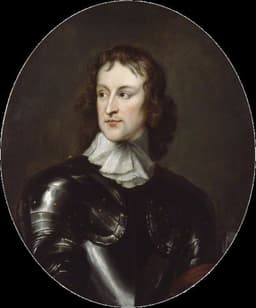
John Lambert
General · Modern
56.7Total
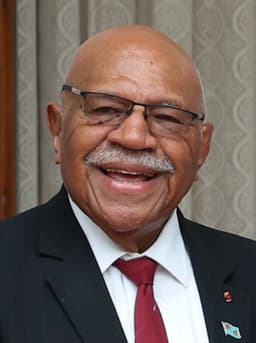
Sitiveni Rabuka
General · Modern
51.7Total
Basic Information
Born
1619
1948
Died
1684
—
Era
Modern
Modern
Nationality
England
Fiji
Occupation
General
General
Civilization
Western
Other
Score Comparison
Military (10%)
70.0
10.2
Political (20%)
45.0
60.0
Influence (20%)
59.0
53.3
Legacy (20%)
50.0
46.7
Leadership (15%)
68.0
85.0
Strategy (15%)
55.0
39.6
TOTAL
56.7
51.7
John Lambert — Complete Timeline
1648 AD
Battle of PrestonWar◆ Major
John Lambert commanded parliamentary forces at the Battle of Preston, defeating a Scottish royalist army. The victory helped secure the parliamentary cause in the Second English Civil War.
BattleEnglish Civil WarParliament
Impact: national
1653 AD
Drafted the Instrument of GovernmentPolitical Action◆ Major
John Lambert was the principal author of the Instrument of Government, the written constitution that established the Protectorate under Oliver Cromwell. The document created a Lord Protector and a Council of State, but was never fully implemented.
ConstitutionProtectorateCromwell
Impact: nationalconstructive
1662 AD
Exiled to GuernseyPolitical Action◆ Major
After the Restoration, John Lambert was tried for treason and exiled to the island of Guernsey. He spent the remainder of his life in captivity, never regaining political influence.
ExileRestorationPunishment
Impact: nationaltragic
Sitiveni Rabuka — Complete Timeline
1987 AD
1987 Fijian Coup d'étatPolitical Action
Rabuka, as a colonel in the Fijian military, led a coup overthrowing the elected government of Timoci Bavadra. The coup was motivated by ethnic Fijian opposition to Indo-Fijian political influence. Rabuka declared Fiji a republic.
CoupMilitary InterventionEthnic Tension
Impact: nationaldestructive
1992 AD
1992 Election as Prime MinisterPolitical Action◆ Major
Rabuka transitioned from military leader to civilian politician, winning the 1992 general election as leader of the Fijian Political Party. He became Prime Minister, serving until 1999.
ElectionCivilian GovernmentPolitical Transition
Impact: national
1997 AD
1997 Constitution ReformReform◆ Major
Rabuka's government oversaw the adoption of a new constitution that removed ethnic-based voting and provided for a multi-ethnic government. The constitution aimed to reduce ethnic tensions and promote national unity.
ConstitutionReformEthnic Reconciliation
Impact: nationalconstructive
1999 AD
1999 General Election DefeatPolitical Action◆ Major
Rabuka's government was defeated in the general election by the Labour Party led by Mahendra Chaudhry. Rabuka stepped down as Prime Minister, marking the end of his first period in power.
Election DefeatGovernment ChangeChaudhry
Impact: national
2022 AD
2022 Return as Prime MinisterPolitical Action◆ Major
Rabuka led the People's Alliance to victory in the 2022 general election, forming a coalition government. He became Prime Minister again, 23 years after his previous tenure, promising democratic reforms.
ElectionReturn to PowerCoalition Government
Impact: national
Expert Analysis
Sitiveni Rabuka vs John Lambert
# The General Who Wrote a Constitution, and the Coup Leader Who Learned Democracy
On a gray November morning in 1662, John Lambert stood on a windswept quay in London, watching the coast of England recede. He was being exiled to Guernsey, a barren island in the Channel, for the crime of having tried to write a constitution for a republic. Nearly three and a half centuries later, on a humid May day in 1987, Colonel Sitiveni Rabuka marched into Fiji’s Parliament House in Suva, seized the prime minister at gunpoint, and announced that he had overthrown the government. One man ended his life in chains; the other ended his as a democratically elected prime minister. What drove these two soldiers—both men of action, both convinced they were saving their nations—to such opposite fates?
Origins
John Lambert was born in 1619 into the Yorkshire gentry, a world of manor houses, Puritan piety, and simmering resentment against King Charles I’s arbitrary rule. His father had been a lawyer; his family had connections to the parliamentary cause. When civil war erupted in 1642, Lambert was a young man of twenty-three, educated in the law and in the art of war, ready to choose a side. He chose Parliament, not out of ideological fervor alone, but because the world he belonged to—the world of propertied, Protestant Englishmen—felt threatened by a king who seemed to govern by whim.
Sitiveni Rabuka, born in 1948, came from a different world entirely. He was a commoner from the island of Cakaudrove, raised in a Fijian village where chiefs held authority and the Methodist church shaped daily life. Fiji had been a British colony for decades, and its politics were a fragile compromise between indigenous Fijians and the descendants of Indian indentured laborers brought over in the late nineteenth century. Rabuka joined the military, rising through the ranks of a small, professional army that had never fired a shot in anger. He was a man of discipline and ambition, but also of deep loyalty to Fijian tradition—a loyalty that would soon collide with democracy.
Rise to Power
Lambert’s path to prominence was forged in battle. At the Battle of Preston in 1648, he commanded parliamentary forces against a Scottish royalist army that had invaded England to restore the king. The victory was decisive, and Lambert emerged as one of Oliver Cromwell’s most trusted lieutenants. But Lambert was not merely a soldier; he was a political thinker. When Cromwell dissolved the Rump Parliament in 1653, Lambert helped design the Instrument of Government, the first written constitution in English history. It created a Protectorate, with Cromwell as Lord Protector, but also established a parliament and a council of state. For a brief moment, England had a written framework for governance—a radical experiment in a world of monarchies.
Rabuka’s rise was faster and more violent. In 1987, Fiji held a general election that brought Timoci Bavadra, an ethnic Indian, to power. For indigenous Fijians, this was an existential shock: they had always held political dominance, and now they feared losing their land and their culture. Rabuka, then a colonel, acted. On May 14, he led a bloodless coup, arresting Bavadra and declaring martial law. He justified it as a defense of Fijian rights, but the international community condemned him. Fiji was expelled from the Commonwealth, and its economy wobbled. Rabuka had seized power, but he had no idea what to do with it.
Leadership & Governance
Lambert’s leadership was that of a constitutionalist who believed in rules, even when he broke them. As the principal author of the Instrument of Government, he tried to balance executive power with parliamentary oversight. He was a capable military commander—his score of 73.2 in strategy reflects real skill—but his genius lay in governance. He helped shape the Protectorate’s policies, promoting religious toleration (for Protestants, at least) and legal reform. Yet he was also a man of contradictions: he supported Cromwell’s authoritarian tendencies, then opposed them when Cromwell dismissed Parliament. Lambert wanted order, but he also wanted liberty, and he never quite reconciled the two.
Rabuka’s governance was a long, painful education. After the 1987 coup, he appointed himself prime minister, but his regime was unstable. He faced international isolation, economic decline, and internal dissent. In 1992, he won a general election and began a slow transformation. The key moment came in 1997, when his government oversaw a new constitution that removed ethnic-based voting and created a multiracial democracy. It was a remarkable about-face: the man who had overthrown a government to preserve ethnic dominance now enshrined equality under law. Rabuka’s leadership score of 77.4 suggests a man who learned to lead not by force, but by persuasion. He stepped down after losing the 1999 election, accepting defeat peacefully—a lesson Lambert never had the chance to learn.
Triumph & Tragedy
Lambert’s greatest triumph was the Instrument of Government itself. It was a bold attempt to create a republic with a written constitution, centuries ahead of its time. But it was also his tragedy: when Cromwell died and the Protectorate collapsed, Lambert had no army to defend his creation. The monarchy was restored in 1660, and Lambert was arrested, tried for treason, and exiled to Guernsey. He spent the last twenty-two years of his life in captivity, forgotten by the nation he had tried to remake.
Rabuka’s triumph was his second act. After losing power in 1999, he could have faded into history as a coup leader. Instead, he returned in 2022, at the age of seventy-four, to lead the People’s Alliance to victory and become prime minister again—this time, democratically. His tragedy was the long shadow of 1987: the coup had set a precedent for military intervention in politics, and Fiji suffered further coups in 2000 and 2006. Rabuka’s legacy is forever stained by the violence he unleashed, even if he later tried to contain it.
Character & Destiny
Lambert was a man of principle, but his principles were rigid. He believed in constitutional government, but he also believed in military intervention when Parliament displeased him. He was a Puritan, convinced of his own righteousness, and that conviction made him inflexible. When the Restoration came, he could not bend, and so he broke. His total score of 71.7 reflects a man who was competent but not transcendent—a general who wrote laws, but could not make them last.
Rabuka was more pragmatic. He admitted his mistakes. In interviews, he called the 1987 coup “a mistake” and said he should have found other ways to protect Fijian interests. That humility allowed him to change. He learned that power without legitimacy is hollow, and that democracy, however flawed, is more stable than dictatorship. His legacy score of 61.2 is lower than Lambert’s, but his political score of 72.0 shows a man who mastered the art of survival and redemption.
Legacy
John Lambert is remembered, if at all, as a footnote in English history—a general who wrote a constitution that died with him. But his Instrument of Government was a precursor to later written constitutions, from America to India. He proved that soldiers could think, not just fight. He failed, but his failure was noble.
Sitiveni Rabuka is remembered as a paradox: a coup leader who became a democrat, a nationalist who learned to share power. His 1997 constitution transformed Fiji, and his return in 2022 showed that even flawed leaders can evolve. He is a cautionary tale and a story of redemption, all at once.
Conclusion
Two generals, centuries apart, on opposite sides of the world. One wrote a constitution and died in exile; one overthrew a government and later led it. Both believed they were saving their nations. The difference was not in their ambition, but in their capacity to learn. Lambert could not adapt; Rabuka could. In that difference lies a lesson for all who hold power: that the greatest victory is not the one won on the battlefield, but the one won over oneself.
Rankings
🥇
John LambertLeader
Mil: 70.0Pol: 45.0Inf: 59.0
56.7
🥈
Sitiveni Rabuka
Mil: 10.2Pol: 60.0Inf: 53.3
51.7
+5.0 behind
How This Comparison Works
Algorithm
Each figure is scored on 6 dimensions (0—100 scale) based on structured historical data: Military (10%), Political (20%), Influence (20%), Legacy (20%), Leadership (15%), Strategy (15%). The weighted total produces the final ranking.
Data Sources
Scores are computed from structured sub-indicators in the database. Scale factors adjust for era (Ancient ×0.85, Modern ×1.0) and civilization size (Eastern ×1.05, Other ×0.80) to account for differences in population and military scale.
Maximum 3 Figures
Comparisons are limited to 2—3 figures to ensure readability and statistical meaningfulness.
Error Margins
±5 points per dimension — Sub-scores are derived from historical records with inherent uncertainty. Two figures within 5 points on a dimension should be considered roughly equivalent in that area.
Total Score Accuracy
±3 points overall — The weighted combination of 6 dimensions produces a total score with approximately ±3 points of uncertainty. Differences of less than 3 points are not statistically significant— the figures are effectively tied.
Known Limitations
- Historical records are incomplete and uneven across civilizations
- Figures from oral-tradition societies may be underrepresented
- Occupation labels can misclassify multi-role figures
- Scores measure capability and impact, not moral character
- Quantitative scoring is a comparison tool, not absolute truth
Capability Radar
Military (10%) — Battles & Warfare
Battles
65
5
Win Rate
60
5
Expansion
40
5
Political (20%) — Governance & Reform
Reform
55
50
Diplomacy
50
45
Economy
45
40
Influence (20%) — Cultural & Global Reach
Cultural
35
30
Global
30
20
Legacy (20%) — Historical Impact
Historical
50
40
Longevity
40
30
Leadership (15%) — Power & Stability
Tenure
60
55
Stability
40
35
Strategy (15%) — Tactics & Innovation
Strategy
65
10
Tactics
70
10
Reform
55
5
Similar Comparisons
Comments & Discussion
GeneralJackboot6/16/2026
Lambert was a failed constitution-writer because he tried to impose a godly republic on a people who wanted a king. That's why he died in chains. Rabuka, on the other hand, understood raw power better. He seized Fiji to protect indigenous rights, then had the pragmatism to hand back control and win elections later. Lambert lectured England from his high horse; Rabuka adapted. One got a statue, the other a footnote. That tells you everything about political survival versus moral purity.
宪法铁腕6/16/2026
说Lambert是“共和国之父”纯属神话。他搞的《政府约法》不过是克伦威尔的军政府遮羞布——议会形同虚设,将军独揽大权。Rabuka至少诚实:1987年政变后他直言要维护斐济原住民主权,后来还主动推动1997年宪法,让印度裔有了平等席位。一个虚伪的理想主义者,一个务实的种族主义者?我选后者。历史不是道德比赛,是结果竞赛。
FijiFirstHistorian6/16/2026
The comparison misses the key difference: Rabuka actually succeeded in what he set out to do. He protected indigenous Fijian land rights from being sold to foreign interests, which was the real fear in 1987. Then he spent 12 years in the political wilderness, came back, and won a free election in 2022 as prime minister. Lambert? His constitution lasted five years, then collapsed into the Restoration. Rabuka's legacy—a multicultural democracy with indigenous safeguards—is still standing. That's n
数据破壁6/16/2026
把两个差300年的案例硬凑比较,属于历史爱好者的刻板印象狂欢。斐济1987年人均GDP约1800美元,识字率80%;1662年英格兰人均GDP可能不到800美元,识字率不足30%。Rabuka面对的是后殖民时代的族群政治,Lambert面对的是宗教战争余烬。背景不同,策略自然不同。非要找共同点:都是军人出身,都写了宪法。然后呢?香蕉和苹果都是水果,但没人拿它们比口感。
ClassicsPundit6/16/2026
Lambert's real tragedy wasn't failing to write a constitution—it was that he outlived his political usefulness. Cromwell needed a general, not a philosopher, and when Lambert tried to become a statesman, he was cast aside. Rabuka understood that lesson instinctively. He stepped down after his 1987 coup, let the interim government take the heat, then returned to power peacefully decades later. The difference is timing: Lambert stayed too long at the table; Rabuka knew when to walk away. Pure surv