Loading...
John Lambert vs Tadeusz Kosciuszko
Tadeusz Kosciuszko leads by 7.4 pts · 2 figures compared
…
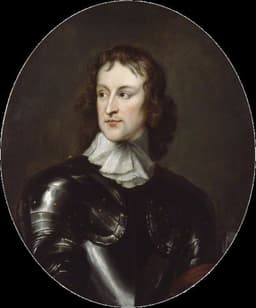
John Lambert
General · Modern
56.7Total
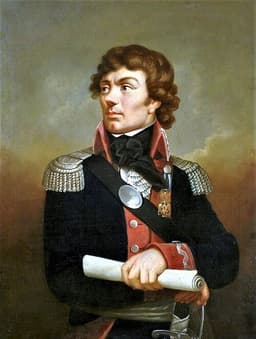
Tadeusz Kosciuszko
General · Modern
64.1Total
Basic Information
Born
1619
1746
Died
1684
1817
Era
Modern
Modern
Nationality
England
Poland
Occupation
General
General
Civilization
Western
Western
Score Comparison
Military (10%)
70.0
47.5
Political (20%)
45.0
68.0
Influence (20%)
59.0
68.0
Legacy (20%)
50.0
68.0
Leadership (15%)
68.0
64.5
Strategy (15%)
55.0
55.0
TOTAL
56.7
64.1
John Lambert — Complete Timeline
1648 AD
Battle of PrestonWar◆ Major
John Lambert commanded parliamentary forces at the Battle of Preston, defeating a Scottish royalist army. The victory helped secure the parliamentary cause in the Second English Civil War.
BattleEnglish Civil WarParliament
Impact: national
1653 AD
Drafted the Instrument of GovernmentPolitical Action◆ Major
John Lambert was the principal author of the Instrument of Government, the written constitution that established the Protectorate under Oliver Cromwell. The document created a Lord Protector and a Council of State, but was never fully implemented.
ConstitutionProtectorateCromwell
Impact: nationalconstructive
1662 AD
Exiled to GuernseyPolitical Action◆ Major
After the Restoration, John Lambert was tried for treason and exiled to the island of Guernsey. He spent the remainder of his life in captivity, never regaining political influence.
ExileRestorationPunishment
Impact: nationaltragic
Tadeusz Kosciuszko — Complete Timeline
1777 AD
Battle of Saratoga (engineering contributions)War◆ Major
Kosciuszko designed fortifications and selected defensive positions for the American army at Saratoga. His work contributed to the American victory, a turning point in the Revolutionary War.
American RevolutionSaratogaEngineering
Impact: regional
1778 AD
Fortification of West PointWar◆ Major
Kosciuszko was assigned to fortify West Point on the Hudson River. He designed and supervised the construction of fortifications that made the site a key American stronghold for the remainder of the war.
American RevolutionWest PointFortifications
Impact: regionalconstructive
1794 AD
Kosciuszko UprisingWar
Kosciuszko led a national uprising in Poland against Russian and Prussian occupation. He proclaimed the Act of Insurrection and won the Battle of Rac
Polish UprisingIndependenceDefeat
Impact: nationaltragic
Battle of RacławiceWar◆ Major
Kosciuszko led Polish forces, including peasant scythemen, to victory over a larger Russian army at Rac
Kosciuszko UprisingBattlePeasants
Impact: national
Capture and imprisonment at the Battle of MaciejowiceWar◆ Major
Kosciuszko was wounded and captured by Russian forces at the Battle of Maciejowice. His capture effectively ended the uprising, and he was imprisoned in St. Petersburg until 1796.
Kosciuszko UprisingCaptureImprisonment
Impact: nationaltragic
Expert Analysis
John Lambert vs Tadeusz Kosciuszko
# The General Who Built a Nation, and the General Who Wrote Its Laws
On a windswept hill in upstate New York in 1778, a Polish engineer in his early thirties surveyed the Hudson River and began sketching fortifications that would become West Point. Half a world away and a century earlier, in the smoke-choked chambers of Westminster, another soldier—an Englishman named John Lambert—dipped his quill into ink and drafted the first written constitution in the English-speaking world. Tadeusz Kosciuszko and John Lambert never met, never corresponded, and lived in different centuries. Yet both men were generals who helped shape the political destinies of their nations, and both ended their lives in defeat. One is remembered as a national hero; the other as a footnote. Why?
Origins
Kosciuszko was born in 1746 into the minor nobility of the Polish-Lithuanian Commonwealth, a vast but decaying republic that was slowly being carved up by its neighbors. He studied in Warsaw and Paris, absorbing Enlightenment ideas about liberty and republicanism. His Poland was a place of glorious memory and present tragedy—a once-mighty state now helpless before Russian, Prussian, and Austrian ambition. Lambert, born in 1619, came from a different world: Puritan England, a society convulsed by religious war and constitutional crisis. His father was a minor gentleman from Yorkshire, and young John grew up in the shadow of a monarchy that seemed determined to rule without Parliament. Both men were shaped by the great political storms of their eras, but those storms blew from different directions. Kosciuszko’s Poland was a victim of empire; Lambert’s England was a would-be empire itself.
Rise to Power
Lambert’s path to prominence was forged in battle. He fought for Parliament in the English Civil War, and by 1648, at the Battle of Preston, he commanded the forces that crushed a Scottish royalist army. That victory—a masterful display of strategy and coordination—made him one of Oliver Cromwell’s most trusted lieutenants. Lambert was not merely a soldier; he was a political architect. After Cromwell’s death, when the Protectorate staggered, Lambert helped draft the Instrument of Government in 1653, a document that attempted to balance executive power with a parliamentary system. It was a radical experiment, and it failed.
Kosciuszko’s rise was slower and more international. He left Poland for France, then crossed the Atlantic to join the American Revolution. At Saratoga in 1777, he designed the fortifications that helped secure one of the war’s most decisive victories. At West Point, he turned a bend in the Hudson into an unbreakable fortress. But his heart remained in Poland. In 1792, when Russia invaded, he returned to fight. By 1794, he was leading a national uprising—the Kosciuszko Uprising—against the occupiers. His rise was not political maneuvering but a desperate call to arms.
Leadership & Governance
Lambert was a politician who wore a general’s uniform. His military skill was real—Preston proved that—but his true genius lay in governance. The Instrument of Government was an audacious attempt to create a constitutional republic in an age of monarchy. It established a Lord Protector, a council, and a Parliament, and it tried to limit the power of any single man. Yet Lambert was no democrat; he believed in rule by the godly and the propertied. His leadership was pragmatic, legalistic, and ultimately brittle. When Cromwell died and the Protectorate collapsed, Lambert had no popular base to sustain him.
Kosciuszko was the opposite: a revolutionary who led by example. At the Battle of Racławice in 1794, he personally led peasant scythemen—men armed with farming tools—against Russian regulars and won. That victory electrified Poland. But Kosciuszko was not merely a general; he was a reformer. He proclaimed the emancipation of peasants, promising them land and freedom in exchange for their service. It was a radical act, born of genuine belief in equality, and it won him the love of the common people. Yet his governance was improvised, desperate, and short-lived.
Triumph & Tragedy
Lambert’s greatest moment was the drafting of the Instrument of Government—a triumph of political imagination. His tragedy came after the Restoration of Charles II in 1660. He was tried for treason, exiled to the island of Guernsey, and spent the remaining twenty-two years of his life in captivity. He died forgotten, his constitution abandoned, his name erased from the public record.
Kosciuszko’s triumph was Racławice, where peasants became soldiers and defeated an empire. His tragedy came later that same year, at the Battle of Maciejowice, where he was wounded, captured, and thrown into a Russian prison. The uprising collapsed. Poland was partitioned out of existence. Kosciuszko was eventually released, but he spent his final years in exile, refusing to serve any power that had betrayed his nation.
Character & Destiny
Lambert was a man of system and order. He believed that a written constitution could tame the chaos of revolution. He was disciplined, calculating, and politically astute—but he lacked the charisma to inspire a movement or the ruthlessness to hold power. His destiny was to be a builder whose building was torn down. Kosciuszko was a man of passion and principle. He believed in liberty for all, not just for nobles. He was brave, generous, and idealistic—but he could not compromise, and he could not win against overwhelming force. His destiny was to be a martyr whose cause outlived him.
Legacy
Lambert’s legacy is almost invisible. The Instrument of Government was the first written constitution of the modern era, a precursor to the American Constitution, but it is rarely remembered. His name appears in specialist histories of the Civil War, but he has no monuments, no national holiday, no songs sung in his honor. He is a ghost in the machinery of history.
Kosciuszko’s legacy is immense. He is a national hero in Poland, with bridges, mountains, and monuments bearing his name. He is honored in the United States as a foreign volunteer who helped win American independence. His uprising, though crushed, became a symbol of Polish resistance. His ideals of freedom and equality outlived the partitions and inspired later generations.
Conclusion
Why does one general become a legend and the other a footnote? The answer lies not in their abilities—both were talented men—but in the causes they served. Lambert fought for a constitution that was soon discarded; Kosciuszko fought for a nation that refused to die. Lambert’s England survived and thrived, and his role in its turbulent adolescence was forgotten. Kosciuszko’s Poland was erased, and so his memory became a lifeline for a people who had lost everything. Sometimes a man’s greatness is measured not by what he built, but by what he was willing to lose.
Rankings
🥇
Tadeusz KosciuszkoLeader
Mil: 47.5Pol: 68.0Inf: 68.0
64.1
🥈
John Lambert
Mil: 70.0Pol: 45.0Inf: 59.0
56.7
+7.4 behind
How This Comparison Works
Algorithm
Each figure is scored on 6 dimensions (0—100 scale) based on structured historical data: Military (10%), Political (20%), Influence (20%), Legacy (20%), Leadership (15%), Strategy (15%). The weighted total produces the final ranking.
Data Sources
Scores are computed from structured sub-indicators in the database. Scale factors adjust for era (Ancient ×0.85, Modern ×1.0) and civilization size (Eastern ×1.05, Other ×0.80) to account for differences in population and military scale.
Maximum 3 Figures
Comparisons are limited to 2—3 figures to ensure readability and statistical meaningfulness.
Error Margins
±5 points per dimension — Sub-scores are derived from historical records with inherent uncertainty. Two figures within 5 points on a dimension should be considered roughly equivalent in that area.
Total Score Accuracy
±3 points overall — The weighted combination of 6 dimensions produces a total score with approximately ±3 points of uncertainty. Differences of less than 3 points are not statistically significant— the figures are effectively tied.
Known Limitations
- Historical records are incomplete and uneven across civilizations
- Figures from oral-tradition societies may be underrepresented
- Occupation labels can misclassify multi-role figures
- Scores measure capability and impact, not moral character
- Quantitative scoring is a comparison tool, not absolute truth
Capability Radar
Military (10%) — Battles & Warfare
Battles
65
55
Win Rate
60
60
Expansion
40
30
Political (20%) — Governance & Reform
Reform
55
45
Diplomacy
50
55
Economy
45
35
Influence (20%) — Cultural & Global Reach
Cultural
35
65
Global
30
55
Legacy (20%) — Historical Impact
Historical
50
70
Longevity
40
60
Leadership (15%) — Power & Stability
Tenure
60
40
Stability
40
30
Strategy (15%) — Tactics & Innovation
Strategy
65
65
Tactics
70
70
Reform
55
50
Similar Comparisons
Comments & Discussion
GeneralLambert'sGhost6/16/2026
The analysis gets the military comparison backwards. Lambert wasn't just "a general who drafted laws"—he literally commanded the parliamentary forces that crushed the Levellers at Burford in 1649, the same radicals demanding the written constitution he later watered down. Kosciuszko actually *led* from the front at Saratoga and Maciejowice, bleeding for liberty. Lambert's "Instrument of Government" was a fig leaf for Cromwell's dictatorship, enforced at swordpoint. Give me the Polish engineer wh
KosciuszkoBuiltIt6/16/2026
拿西点军校的防御工事和一份没人记得的文件比较?笑死。美国独立战争期间,科希丘什科设计的外科医生堡(Fort Ticonderoga)直接决定了萨拉托加战役的走向——这才真正改变了历史进程。兰伯特的《政府约法》在1657年就失效了,而科希丘什科修建的工事直到1812年战争还在用。一个打造了军事遗产,另一个只留下了议会档案里的废纸。谁更像“立国者”,这还用问吗?
PolishEngineerFirst6/16/2026
Classics scholar here: Kosciuszko's 1794 proclamation at Połaniec granting serfs personal freedom was more radical than anything Lambert ever wrote. Lambert's constitution maintained property qualifications for voting, basically keeping power with the gentry. Kosciuszko tried to *revolutionize* Polish society from the ground up—freeing peasants, arming them, fighting for universal liberty. Lambert was a Puritan conservative who wanted a strongman government with a parliamentary fig leaf. Koscius
RevisionistReader6/16/2026
你们太美化科希丘什科了。他所谓的“农民解放”从未真正实施过,1794年起义几周后就被镇压了。而兰伯特的《政府约法》虽然在1653年有缺陷,但它是英语世界里第一个明确定义行政、立法和司法职能的成文宪法——哪怕只存在了四年,也影响了后来美国的制宪者。科希丘什科是英雄人物不假,但别忘了他的波兰同胞把犹太人当成替罪羊来集资打仗,这可不是什么光彩的历史。
DataSkepticDave6/16/2026
Let's talk numbers. Kosciuszko's Warsaw Uprising lasted exactly 82 days before total collapse. Lambert's Instrument of Government governed England, Scotland, and Ireland for nearly four years—that's 1,453 days of functional constitutional rule. By pure durability, Lambert's document wins. Also, Kosciuszko's American campaign involved maybe 5,000 men at peak; Lambert commanded 16,000 at Worcester. Scale matters. Yes, Kosciuszko's ideals were more