Loading...
John Lambert vs Sengge Rinchen
Sengge Rinchen leads by 0.2 pts · 2 figures compared
…
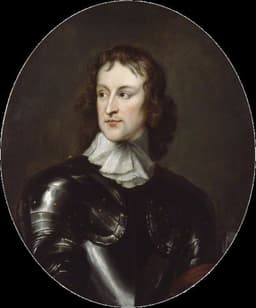
John Lambert
General · Modern
56.7Total
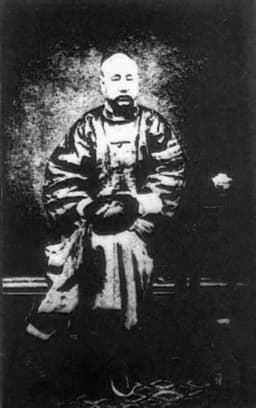
Sengge Rinchen
General · Modern
56.9Total
Basic Information
Born
1619
1811
Died
1684
1865
Era
Modern
Modern
Nationality
England
China
Occupation
General
General
Civilization
Western
Eastern
Score Comparison
Military (10%)
70.0
70.0
Political (20%)
45.0
43.7
Influence (20%)
59.0
55.0
Legacy (20%)
50.0
54.0
Leadership (15%)
68.0
67.0
Strategy (15%)
55.0
60.7
TOTAL
56.7
56.9
John Lambert — Complete Timeline
1648 AD
Battle of PrestonWar◆ Major
John Lambert commanded parliamentary forces at the Battle of Preston, defeating a Scottish royalist army. The victory helped secure the parliamentary cause in the Second English Civil War.
BattleEnglish Civil WarParliament
Impact: national
1653 AD
Drafted the Instrument of GovernmentPolitical Action◆ Major
John Lambert was the principal author of the Instrument of Government, the written constitution that established the Protectorate under Oliver Cromwell. The document created a Lord Protector and a Council of State, but was never fully implemented.
ConstitutionProtectorateCromwell
Impact: nationalconstructive
1662 AD
Exiled to GuernseyPolitical Action◆ Major
After the Restoration, John Lambert was tried for treason and exiled to the island of Guernsey. He spent the remainder of his life in captivity, never regaining political influence.
ExileRestorationPunishment
Impact: nationaltragic
Sengge Rinchen — Complete Timeline
1859 AD
Battle of Dagu FortsWar◆ Major
Sengge Rinchen commanded Qing forces defending the Dagu Forts against a British and French naval attack. His forces repelled the assault, sinking several enemy ships and inflicting heavy casualties, a rare Qing victory in the Second Opium War.
Second Opium WarBattleVictory
Impact: regional
1860 AD
Battle of PalikaoWar◆ Major
Sengge Rinchen commanded Qing cavalry at the Battle of Palikao against Anglo-French forces. His forces were decisively defeated by superior firepower, leading to the fall of Beijing and the burning of the Old Summer Palace.
Second Opium WarBattleDefeat
Impact: regionaltragic
1863 AD
Suppression of the Nian RebellionWar◆ Major
Sengge Rinchen led Qing forces against the Nian rebels in northern China. He achieved several victories but was ultimately killed in battle against the Nian in 1865, marking a turning point in the rebellion.
Nian RebellionCampaignDeath
Impact: regionaltragic
Expert Analysis
John Lambert vs Sengge Rinchen
# The Constitution and the Cavalryman
In the spring of 1653, John Lambert sat in a London chamber, his pen scratching across parchment as he drafted a document that would change England forever—the Instrument of Government, the first written constitution in the English-speaking world. Half a world away and two centuries later, in the summer of 1863, Sengge Rinchen mounted his horse on the dusty plains of northern China, leading his Mongol cavalry against waves of Nian rebels, knowing that one mistake would mean annihilation. One man built a framework for governance; the other fought to preserve an empire already crumbling beneath him. What drove these two generals down such divergent paths?
Origins
John Lambert was born in 1619 into the Yorkshire gentry, a class of men who believed deeply in the rights of Parliament and the rule of law. His father died when he was young, leaving him an estate and a burning ambition. The English Civil War erupted when Lambert was in his early twenties, and he threw himself into the parliamentary cause with the fervor of a man who saw the future in the clash of armies. His England was a nation tearing itself apart over sovereignty—who ruled, the king or the people's representatives?
Sengge Rinchen was born in 1811 into Mongol aristocracy, a world of horsemen and hereditary loyalty to the Qing dynasty. The Manchu emperors had ruled China for nearly two centuries, and for a Mongol prince like Sengge, service to the throne was not merely a career—it was an identity. His China was a civilization under siege from within and without: the Taiping Rebellion had already claimed millions of lives by the time he took command, and Western gunboats were forcing open ports along the coast. Where Lambert saw a chance to build something new, Sengge saw a world he had to defend from collapse.
Rise to Power
Lambert rose through the ranks of the New Model Army, that revolutionary fighting force that combined discipline with religious zeal. His moment came at the Battle of Preston in 1648, where he commanded parliamentary forces against a Scottish royalist army. The victory was decisive—Lambert outmaneuvered his opponents, cutting off their supply lines and forcing a surrender that effectively ended the Second Civil War. From that day, he was Oliver Cromwell's most trusted lieutenant, a man whose military brilliance was matched only by his political acumen.
Sengge Rinchen's rise was slower, more traditional. He proved himself in the borderlands of Mongolia, leading cavalry against bandits and rebellious tribes. But his true test came in 1859 at the Dagu Forts, where he commanded Qing forces against a British and French naval attack. His artillerymen repelled the Western fleet with devastating accuracy—a rare Chinese victory in the unequal wars of the nineteenth century. For a brief moment, Sengge Rinchen was the hero of the empire, the man who had stood up to the barbarians and won.
Leadership & Governance
Here the two men diverged completely. Lambert was not merely a general; he was a constitutionalist. In 1653, after Cromwell dissolved the Rump Parliament, Lambert drafted the Instrument of Government, which created a Lord Protector, a Council of State, and a Parliament with limited powers. It was a radical experiment—a written constitution that sought to balance executive authority with representative government. Lambert believed that military victory meant nothing without a lasting political framework. He was, in essence, a general who wanted to become a legislator.
Sengge Rinchen never thought in such terms. He was a cavalry commander in the Mongol tradition—ride hard, strike fast, and die for your emperor. His leadership was personal, not institutional. He led from the front, his horsemen charging with lances and bows against enemies armed with rifles and cannon. At the Battle of Palikao in 1860, he commanded 10,000 cavalry against Anglo-French forces. The result was a massacre. His riders were cut down by volley fire, and the road to Beijing lay open. Sengge learned the hard way that courage could not defeat technology.
Triumph & Tragedy
Lambert's greatest triumph was also the seed of his tragedy. The Instrument of Government gave England stability for five years, but when Cromwell died in 1658, the constitution collapsed. Lambert tried to hold the Protectorate together, but the army factions turned against him. In 1660, Charles II was restored to the throne, and Lambert was arrested, tried for treason, and exiled to the island of Guernsey. He spent the rest of his life in a stone fortress, watching the sea, his constitution forgotten.
Sengge Rinchen's tragedy was more violent. After the humiliation at Palikao, he retreated to the north and rebuilt his forces. In 1863, he threw himself into the campaign against the Nian Rebellion, a peasant uprising that had engulfed the provinces. He won victories, but the rebels kept coming. In 1865, during a skirmish in Shandong, Sengge Rinchen was surrounded and killed. His body was never recovered. The dynasty he had served so loyally would fall within fifty years.
Character & Destiny
Lambert was a builder, a man who believed that institutions could tame the chaos of history. His flaw was that he trusted too much in the power of paper. When the monarchy returned, his constitution was swept aside, and he was left with nothing but his principles. Sengge Rinchen was a fighter, a man who believed that loyalty and courage could hold back the tide. His flaw was that he could not see that the tide had already turned.
Legacy
John Lambert's Instrument of Government was forgotten for centuries, but its ideas—written constitutions, separation of powers, parliamentary sovereignty—became the foundation of modern democracy. Today, he is remembered not as a failed politician but as a visionary who glimpsed the future.
Sengge Rinchen is remembered in China as a tragic hero, a last defender of the old order. His defeat at Palikao is taught as a lesson in the dangers of clinging to tradition. But his courage is still honored, a reminder that even in defeat, there is dignity.
Conclusion
Two generals, two worlds. One wrote a constitution; the other charged into machine guns. Both lost everything, but both left something behind. Lambert proved that ideas outlast empires. Sengge Rinchen proved that some things—honor, loyalty, the willingness to die for what you believe—are worth remembering even when they fail. History does not always reward the victor. Sometimes it remembers the man who tried to build, and the man who tried to hold on.
Rankings
🥇
Sengge RinchenLeader
Mil: 70.0Pol: 43.7Inf: 55.0
56.9
🥈
John Lambert
Mil: 70.0Pol: 45.0Inf: 59.0
56.7
+0.2 behind
How This Comparison Works
Algorithm
Each figure is scored on 6 dimensions (0—100 scale) based on structured historical data: Military (10%), Political (20%), Influence (20%), Legacy (20%), Leadership (15%), Strategy (15%). The weighted total produces the final ranking.
Data Sources
Scores are computed from structured sub-indicators in the database. Scale factors adjust for era (Ancient ×0.85, Modern ×1.0) and civilization size (Eastern ×1.05, Other ×0.80) to account for differences in population and military scale.
Maximum 3 Figures
Comparisons are limited to 2—3 figures to ensure readability and statistical meaningfulness.
Error Margins
±5 points per dimension — Sub-scores are derived from historical records with inherent uncertainty. Two figures within 5 points on a dimension should be considered roughly equivalent in that area.
Total Score Accuracy
±3 points overall — The weighted combination of 6 dimensions produces a total score with approximately ±3 points of uncertainty. Differences of less than 3 points are not statistically significant— the figures are effectively tied.
Known Limitations
- Historical records are incomplete and uneven across civilizations
- Figures from oral-tradition societies may be underrepresented
- Occupation labels can misclassify multi-role figures
- Scores measure capability and impact, not moral character
- Quantitative scoring is a comparison tool, not absolute truth
Capability Radar
Military (10%) — Battles & Warfare
Battles
65
75
Win Rate
60
60
Expansion
40
20
Political (20%) — Governance & Reform
Reform
55
20
Diplomacy
50
50
Economy
45
20
Influence (20%) — Cultural & Global Reach
Cultural
35
40
Global
30
35
Legacy (20%) — Historical Impact
Historical
50
55
Longevity
40
30
Leadership (15%) — Power & Stability
Tenure
60
40
Stability
40
30
Strategy (15%) — Tactics & Innovation
Strategy
65
70
Tactics
70
80
Reform
55
30
Similar Comparisons
Comments & Discussion
IroncladQuill6/16/2026
Lambert's pen was deadlier than Sengge's lance. The Instrument of Government wasn't just parchment—it was the blueprint for modern constitutionalism, directly inspiring later American and French models. Sengge fought to prop up a crumbling Manchu dynasty that would fall within 50 years. Lambert's legacy endures every time a parliament meets; Sengge's bones rot in an unmarked grave, remembered only by niche history buffs. One built foundations, the other dug trenches. Easy choice.
草原弓弩6/16/2026
别被兰伯特的羊皮纸骗了。一个在书斋里写条文的人,和一位在战场上用命挡住数万捻军骑兵的将领,有什么可比性?僧格林沁1863年连杀十八骑,血染战袍,那些文官们懂什么叫真正的勇气吗?英国宪政?那是商人玩的把戏,中国需要的是铁骑和忠骨。
StatWatch6/16/2026
Numbers don't lie: the Instrument of Government lasted exactly 4 years before collapsing into Cromwell's Protectorate. Sengge Rinchen commanded over 10,000 Mongol cavalry for 20+ years, maintained unit cohesion through multiple campaigns. Lambert's "profound" document failed within his own lifetime. Sengge's tactics are still studied in Chinese military academies. Let's not romanticize the paper-pusher over the field commander.
戍边史官6/16/2026
比较这两位,得看清历史语境。兰伯特是英国宪政的实验者,僧格林沁是大清帝国的守护者。1859年,僧格林沁在大沽口布防重创英法联军,击沉四艘军舰,那才是真正的“守土有责”。兰伯特的文件是政治博弈的工具,僧格林沁的战马是民族存亡的防线。两人都很伟大,但基调完全不同——一个在创造未来,一个在捍卫过去。