Loading...
John Lambert vs Ramon Castilla
Ramon Castilla leads by 3.0 pts · 2 figures compared
…
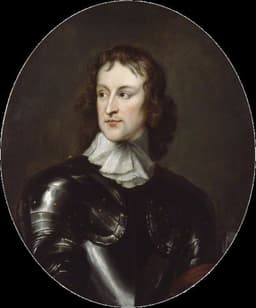
John Lambert
General · Modern
56.7Total
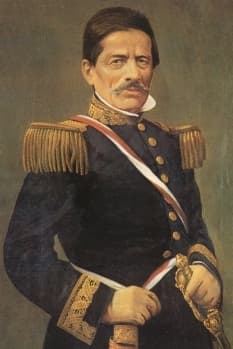
Ramon Castilla
General · Modern
59.7Total
Basic Information
Born
1619
1797
Died
1684
1867
Era
Modern
Modern
Nationality
England
Peru
Occupation
General
General
Civilization
Western
Western
Score Comparison
Military (10%)
70.0
40.0
Political (20%)
45.0
72.0
Influence (20%)
59.0
56.7
Legacy (20%)
50.0
52.0
Leadership (15%)
68.0
78.0
Strategy (15%)
55.0
60.0
TOTAL
56.7
59.7
John Lambert — Complete Timeline
1648 AD
Battle of PrestonWar◆ Major
John Lambert commanded parliamentary forces at the Battle of Preston, defeating a Scottish royalist army. The victory helped secure the parliamentary cause in the Second English Civil War.
BattleEnglish Civil WarParliament
Impact: national
1653 AD
Drafted the Instrument of GovernmentPolitical Action◆ Major
John Lambert was the principal author of the Instrument of Government, the written constitution that established the Protectorate under Oliver Cromwell. The document created a Lord Protector and a Council of State, but was never fully implemented.
ConstitutionProtectorateCromwell
Impact: nationalconstructive
1662 AD
Exiled to GuernseyPolitical Action◆ Major
After the Restoration, John Lambert was tried for treason and exiled to the island of Guernsey. He spent the remainder of his life in captivity, never regaining political influence.
ExileRestorationPunishment
Impact: nationaltragic
Ramon Castilla — Complete Timeline
1824 AD
Battle of AyacuchoWar
Castilla fought as a junior officer in the decisive Battle of Ayacucho, which ended Spanish rule in Peru. This victory secured Peruvian independence and marked the end of the Spanish Empire in South America, shaping Castilla's nationalist views.
Peruvian War of IndependenceBattleLiberation
Impact: regional
1845 AD
First Presidency of PeruPolitical Action◆ Major
Castilla was elected President of Peru in 1845, serving until 1851. His first term focused on economic development, including the guano boom, and infrastructure projects such as railroads and ports, modernizing the Peruvian state.
PresidencyEconomic DevelopmentGuano
Impact: nationalconstructive
1854 AD
Abolition of Slavery in PeruReform◆ Major
During his second presidency, Castilla issued a decree abolishing slavery in Peru on December 3, 1854. This reform freed approximately 25,000 slaves and was part of a broader liberal agenda, though it faced opposition from slave-owning elites.
AbolitionSlaveryHuman Rights
Impact: nationalprogressive
Abolition of Indigenous TributeReform◆ Major
Castilla also abolished the indigenous tribute tax in 1854, which had been a burden on native communities since colonial times. This measure aimed to integrate indigenous peoples into the Peruvian state as equal citizens, though its implementation was uneven.
Indigenous RightsTax ReformCitizenship
Impact: nationalprogressive
1855 AD
Second Presidency and Guano BoomPolitical Action◆ Major
Castilla served a second term from 1855 to 1862, during the peak of the guano export boom. He used guano revenues to fund public works, pay off foreign debt, and modernize the military, but also faced criticism for corruption and over-reliance on a single resource.
PresidencyGuanoModernization
Impact: nationalconstructive
1860 AD
Constitutional Reform of 1860Reform◆ Major
Castilla oversaw the adoption of a new constitution in 1860, which established a centralized republic with a strong executive. The constitution remained in effect until 1920 and shaped Peru's political structure, though it limited regional autonomy.
ConstitutionPolitical ReformCentralization
Impact: nationalconstructive
Expert Analysis
Ramon Castilla vs John Lambert
# The General and the Constitution: Why One Liberator Built a Nation While Another Built a Prison
On a December morning in 1854, a Peruvian general sat down in the city of Ayacucho and signed a decree that would forever change his country. The ink was barely dry when he issued another, then another—three strokes of the pen that abolished slavery, ended indigenous tribute, and set in motion a constitutional transformation. Across the Atlantic and two centuries earlier, another general had been equally prolific with his pen. John Lambert, the architect of England’s first written constitution, drafted the Instrument of Government in 1653 with the same confidence that he had commanded armies. Yet where Ramon Castilla died in office, hailed as a national father, Lambert died in a prison cell on the island of Guernsey, his name erased from the history books he helped write. What made the difference? The answer lies not in their talents, but in the worlds they tried to reshape.
Origins
Ramon Castilla was born in 1797 in Tarapacá, then a remote corner of the Spanish Empire in Peru. His father was a Spanish miner, his mother a Peruvian creole, and his childhood was shaped by the brutal hierarchies of colonial society. As a young man, he joined the royalist army, fighting for Spain against the independence movements sweeping Latin America. But in 1821, he switched sides, joining the patriot forces under José de San Martín. This was not idealism—it was survival. The war for independence was a civil war as much as a revolution, and Castilla learned early that power belonged to those who could navigate chaos.
John Lambert was born in 1619 into a Yorkshire gentry family, the son of a lawyer. England was a kingdom, but it was also a commonwealth of laws, and Lambert grew up in a world where Parliament and Crown were locked in an ancient struggle. He studied law at the Inns of Court, then took up arms for Parliament in 1642 when the Civil War erupted. Where Castilla’s world was collapsing and rebuilding, Lambert’s was fragmenting into factions. The difference was profound: Castilla fought to create a nation from a broken empire; Lambert fought to decide who would rule an existing one.
Rise to Power
Castilla’s rise was slow and pragmatic. He fought at the Battle of Ayacucho in 1824, the final victory that ended Spanish rule in Peru, but he was only a junior officer. In the chaotic decades that followed, he bounced between military commands and political offices, surviving coups and exiles. His breakthrough came in 1845, when he was elected president. He was not a charismatic revolutionary—he was a steady hand in a country that had seen thirty presidents in twenty years.
Lambert’s rise was meteoric. At the Battle of Preston in 1648, he commanded parliamentary forces and crushed a Scottish royalist army, earning a reputation as a military genius. He was Oliver Cromwell’s right-hand man, the strategist who designed the army that conquered Ireland and Scotland. By 1653, when Cromwell dissolved Parliament and became Lord Protector, Lambert was the second most powerful man in England. He drafted the Instrument of Government, a written constitution that limited Cromwell’s power and established a parliamentary system. It was a radical document for its time, and Lambert believed it would stabilize the republic.
Leadership & Governance
Castilla governed Peru during the guano boom, when bird droppings from coastal islands became the world’s most valuable fertilizer. He used this windfall not for personal enrichment but for national transformation. He built railways, modernized the navy, and expanded education. His abolition of slavery in 1854 was not just moral—it was strategic, freeing labor for the guano industry and undercutting the power of the old landed elite. The same decree abolished indigenous tribute, integrating native communities into the republic. His 1860 constitution centralized power in the presidency, but it also established civil rights and a professional bureaucracy. Castilla was a pragmatist who used state resources to build state capacity.
Lambert governed in a different key. His Instrument of Government was a masterpiece of constitutional theory, but it was never implemented as intended. Cromwell rejected its limits, and Lambert found himself sidelined. When Cromwell died in 1658, Lambert tried to restore the republic, but the army fractured. He lacked the political base that Castilla had built through patronage and reform. Where Castilla used guano revenues to buy loyalty, Lambert had only his reputation—and in the Restoration of 1660, that was not enough.
Triumph & Tragedy
Castilla’s greatest triumph was his second presidency, from 1855 to 1862. He was the undisputed master of Peru, and he used his power to modernize the country. His tragedy came later: the guano boom collapsed, and Peru fell into debt and war. But Castilla died in 1867, before the worst, and his reputation remained intact.
Lambert’s triumph was the Instrument of Government, a document that influenced later constitutions around the world. His tragedy was the Restoration. In 1660, when Charles II returned from exile, Lambert was tried for treason and sentenced to death. He was spared, but exiled to Guernsey, where he spent the last twenty-two years of his life in a cold stone castle, watching the sea. He died in 1684, forgotten by the country he had tried to remake.
Character & Destiny
Castilla was a survivor. He switched sides in war, adapted to changing politics, and never let ideology get in the way of opportunity. He was ruthless when necessary—he exiled rivals and crushed rebellions—but he was also generous, using state funds to build schools and hospitals. His personality was pragmatic, not visionary. He did not dream of a perfect republic; he built a functional one.
Lambert was a visionary. He believed in constitutional government, religious toleration, and the rule of law. But he was also inflexible. When Cromwell rejected his constitution, Lambert did not compromise—he withdrew. When the army split, he could not unite it. His tragedy was that he was a man of principles in an age of expediency. Castilla would have made a deal with the devil; Lambert would have written a constitution for hell.
Legacy
In Peru, Ramon Castilla is remembered as the “Liberator of the Slaves” and the father of the modern state. His image appears on currency, and his birthday is a national holiday. The 1860 constitution he wrote lasted until 1920. His legacy is tangible: roads, ports, schools, and a nation that, despite its troubles, survived.
John Lambert’s legacy is invisible. The Instrument of Government was repealed in 1657, and the Restoration erased it from history. But his ideas survived. The concept of a written constitution, with limits on executive power, influenced the American Founders and the framers of modern democracies. Lambert is a footnote in English history, but his ghost haunts every parliamentary debate about the limits of power.
Conclusion
Castilla and Lambert were both generals who became statesmen, but they lived in different worlds. Castilla built a nation from the rubble of an empire, using wealth and pragmatism to create stability. Lambert tried to remake an ancient kingdom with a piece of paper, and the kingdom broke him. The difference was not talent—both were brilliant—but circumstance. Castilla’s Peru was a blank slate; Lambert’s England was a palimpsest of centuries of tradition. One man wrote his name in stone; the other wrote his in water. Both, in their own ways, changed the world. But only one lived to see it.
Rankings
🥇
Ramon CastillaLeader
Mil: 40.0Pol: 72.0Inf: 56.7
59.7
🥈
John Lambert
Mil: 70.0Pol: 45.0Inf: 59.0
56.7
+3.0 behind
How This Comparison Works
Algorithm
Each figure is scored on 6 dimensions (0—100 scale) based on structured historical data: Military (10%), Political (20%), Influence (20%), Legacy (20%), Leadership (15%), Strategy (15%). The weighted total produces the final ranking.
Data Sources
Scores are computed from structured sub-indicators in the database. Scale factors adjust for era (Ancient ×0.85, Modern ×1.0) and civilization size (Eastern ×1.05, Other ×0.80) to account for differences in population and military scale.
Maximum 3 Figures
Comparisons are limited to 2—3 figures to ensure readability and statistical meaningfulness.
Error Margins
±5 points per dimension — Sub-scores are derived from historical records with inherent uncertainty. Two figures within 5 points on a dimension should be considered roughly equivalent in that area.
Total Score Accuracy
±3 points overall — The weighted combination of 6 dimensions produces a total score with approximately ±3 points of uncertainty. Differences of less than 3 points are not statistically significant— the figures are effectively tied.
Known Limitations
- Historical records are incomplete and uneven across civilizations
- Figures from oral-tradition societies may be underrepresented
- Occupation labels can misclassify multi-role figures
- Scores measure capability and impact, not moral character
- Quantitative scoring is a comparison tool, not absolute truth
Capability Radar
Military (10%) — Battles & Warfare
Battles
65
45
Win Rate
60
50
Expansion
40
30
Political (20%) — Governance & Reform
Reform
55
85
Diplomacy
50
70
Economy
45
75
Influence (20%) — Cultural & Global Reach
Cultural
35
55
Global
30
50
Legacy (20%) — Historical Impact
Historical
50
65
Longevity
40
60
Leadership (15%) — Power & Stability
Tenure
60
65
Stability
40
60
Strategy (15%) — Tactics & Innovation
Strategy
65
45
Tactics
70
40
Reform
55
55
Similar Comparisons
Comments & Discussion
No comments yet. Be the first to share your thoughts!