Loading...
John Lambert vs Oscar Mejia Victores
John Lambert leads by 4.8 pts · 2 figures compared
…
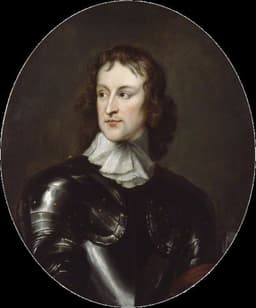
John Lambert
General · Modern
56.7Total

Oscar Mejia Victores
General · Modern
51.9Total
Basic Information
Born
1619
1930
Died
1684
—
Era
Modern
Modern
Nationality
England
Guatemala
Occupation
General
General
Civilization
Western
Western
Score Comparison
Military (10%)
70.0
22.6
Political (20%)
45.0
68.0
Influence (20%)
59.0
50.2
Legacy (20%)
50.0
43.3
Leadership (15%)
68.0
80.0
Strategy (15%)
55.0
41.0
TOTAL
56.7
51.9
John Lambert — Complete Timeline
1648 AD
Battle of PrestonWar◆ Major
John Lambert commanded parliamentary forces at the Battle of Preston, defeating a Scottish royalist army. The victory helped secure the parliamentary cause in the Second English Civil War.
BattleEnglish Civil WarParliament
Impact: national
1653 AD
Drafted the Instrument of GovernmentPolitical Action◆ Major
John Lambert was the principal author of the Instrument of Government, the written constitution that established the Protectorate under Oliver Cromwell. The document created a Lord Protector and a Council of State, but was never fully implemented.
ConstitutionProtectorateCromwell
Impact: nationalconstructive
1662 AD
Exiled to GuernseyPolitical Action◆ Major
After the Restoration, John Lambert was tried for treason and exiled to the island of Guernsey. He spent the remainder of his life in captivity, never regaining political influence.
ExileRestorationPunishment
Impact: nationaltragic
Oscar Mejia Victores — Complete Timeline
1983 AD
1983 Guatemalan coup d'étatPolitical Action◆ Major
Mejia Victores, then Defense Minister, led a coup that ousted President Efrain Rios Montt. He assumed the presidency, becoming the last military ruler of Guatemala.
CoupMilitary RuleGuatemala
Impact: nationaldestructive
1984 AD
Human rights abuses during his ruleOther◆ Major
During his presidency, Mejia Victores' government continued counterinsurgency operations that resulted in forced disappearances and massacres of indigenous Maya communities, as documented by truth commissions.
Human RightsCivil WarAtrocities
Impact: nationaltragic
1985 AD
Transition to civilian rulePolitical Action
Under pressure, Mejia Victores oversaw the drafting of a new constitution and called for democratic elections. He transferred power to civilian President Vinicio Cerezo in 1986, ending decades of military rule.
DemocratizationConstitutionElection
Impact: nationalconstructive
Expert Analysis
John Lambert vs Oscar Mejia Victores
### The General and the Constitution-Maker
On a cold December morning in 1653, John Lambert stood before the assembled officers of the New Model Army in London, presenting a document that would change England forever—the Instrument of Government, the first written constitution in the English-speaking world. Across the centuries and an ocean, in the steamy heat of Guatemala City on an August day in 1983, another general, Oscar Mejia Victores, seized power in a coup, promising order and reform. Both were soldiers who stepped into politics. Both wrote constitutions. Yet one ended his days in lonely exile on a windswept island, while the other handed over power to civilians and vanished into a quiet retirement. Why did these two generals, sharing so much on paper, walk such different paths?
### Origins
John Lambert was born in 1619, into a world of religious ferment and civil conflict. His Yorkshire upbringing steeped him in the Puritan cause, and the English Civil War offered a young man of talent a ladder to glory. The wars of the Three Kingdoms were not merely a dynastic squabble; they were a revolution in governance, religion, and the very idea of authority. Lambert, educated in law and bred for battle, embodied the paradoxical soldier-scholar of his age—a man who could quote scripture in one breath and plan a cavalry charge in the next.
Oscar Mejia Victores, born in 1930, entered a Guatemala still reeling from the overthrow of its democratic government in 1954. His world was one of Cold War paranoia, military oligarchy, and a society scarred by decades of civil war. The army was not just a profession but the only institution that held the country together—and the only path to power. Where Lambert’s England was inventing modern politics, Mejia’s Guatemala was struggling to survive them.
### Rise to Power
Lambert’s rise came on the battlefield. At the Battle of Preston in 1648, he commanded parliamentary forces that shattered a Scottish royalist army, securing the north for Parliament and earning him a reputation as a master of combined arms. He was Oliver Cromwell’s right hand, a man whose strategic mind matched his political ambition. When Cromwell became Lord Protector in 1653, Lambert was the natural choice to draft the Instrument of Government—a document that created a parliamentary republic with a strong executive, balancing military discipline with civilian rule.
Mejia Victores rose through the ranks of Guatemala’s brutal counterinsurgency campaign. In 1983, as Defense Minister under Efrain Rios Montt, he watched his superior’s regime crumble under accusations of genocide. The coup he led was not a revolution but a palace correction—a military man replacing another military man to preserve the army’s grip on power. His path was not one of battlefield glory but of bureaucratic maneuvering, a quiet coup in a country accustomed to them.
### Leadership & Governance
Lambert governed with a vision. The Instrument of Government was his masterpiece—a written constitution that divided power between a Lord Protector, a council, and a parliament. It was an attempt to institutionalize the revolution, to create a stable republic out of the chaos of civil war. As a military leader, Lambert was brilliant: his campaigns in Scotland and Ireland showed a grasp of logistics and psychology that rivaled Cromwell’s. But his political wisdom was flawed by arrogance. He believed that the army, having won the war, should dictate the peace—a belief that alienated civilian allies and sowed the seeds of his downfall.
Mejia Victores governed with a different calculus. His regime continued the dirty war against leftist guerrillas, with human rights abuses documented by international observers. Yet he also understood that the military could not rule forever. Under pressure from the United States and a weary populace, he oversaw the drafting of a new constitution in 1985 and called for democratic elections. His governance was not visionary but pragmatic—a slow, reluctant retreat from power. He was a general who saw the writing on the wall and chose to read it.
### Triumph & Tragedy
Lambert’s greatest moment was the drafting of the Instrument of Government—a document that enshrined religious toleration and parliamentary oversight, ideas centuries ahead of their time. His tragedy came after Cromwell’s death. When the Protectorate collapsed, Lambert tried to restore military rule, only to be outmaneuvered by General George Monck, who orchestrated the Restoration of Charles II. In 1662, Lambert was tried for treason and exiled to Guernsey, where he spent the rest of his life in a stone fortress, watching the tide wash against the walls.
Mejia Victores’ triumph was the transition itself. In 1985, he handed power to a civilian president, Vinicio Cerezo, ending decades of direct military rule. His tragedy was the blood on his hands—the disappeared, the tortured, the villages burned in the name of anticommunism. He left office not in chains but in obscurity, a man whose legacy was both a democratic opening and a legacy of pain.
### Character & Destiny
Lambert was a man of ideas and iron will. He believed in the rule of law—but only the law he wrote. His personality was that of a revolutionary who could not adapt to peace. He saw himself as the guardian of the Good Old Cause, the Puritan revolution that had remade England. But his inflexibility, his refusal to compromise, turned allies into enemies. His destiny was to be a footnote—a brilliant architect whose building collapsed around him.
Mejia Victores was a survivor, not a visionary. His character was shaped by the survival instincts of a military institution that had learned to bend rather than break. He understood that power, in the end, is about knowing when to let go. His destiny was to be a transition—a bridge between dictatorship and democracy, built from the stones of a brutal past.
### Legacy
Lambert’s legacy is the idea of a written constitution. The Instrument of Government influenced the American Founders and remains a landmark in constitutional history. But his reputation is tarnished by his association with military rule and his failed attempt to seize power. He is remembered, if at all, as a brilliant failure.
Mejia Victores’ legacy is more ambiguous. He is credited with Guatemala’s democratic transition, but his government’s human rights abuses haunt the nation. He is a figure of controversy—a man who opened a door but left a trail of blood behind him. His total score of 64.7 versus Lambert’s 71.7 reflects this ambiguity: higher in political pragmatism, lower in military and strategic achievement.
### Conclusion
Two generals, two constitutions, two fates. Lambert, the architect of a failed republic, died forgotten on a rock in the English Channel. Mejia Victores, the reluctant democrat, faded into a quiet retirement, his name a footnote in Guatemala’s troubled history. What drove their different outcomes? Lambert believed that power must be seized and held, that the righteous must rule. Mejia believed that power must be managed and relinquished, that survival is its own victory. In the end, the general who wrote a constitution for eternity saw it crumble in a decade, while the general who wrote one for expediency saw it last for generations. Perhaps the truest lesson is this: in politics, as in war, the greatest virtue is not strength, but the wisdom to know when to lay down the sword.
Rankings
🥇
John LambertLeader
Mil: 70.0Pol: 45.0Inf: 59.0
56.7
🥈
Oscar Mejia Victores
Mil: 22.6Pol: 68.0Inf: 50.2
51.9
+4.8 behind
How This Comparison Works
Algorithm
Each figure is scored on 6 dimensions (0—100 scale) based on structured historical data: Military (10%), Political (20%), Influence (20%), Legacy (20%), Leadership (15%), Strategy (15%). The weighted total produces the final ranking.
Data Sources
Scores are computed from structured sub-indicators in the database. Scale factors adjust for era (Ancient ×0.85, Modern ×1.0) and civilization size (Eastern ×1.05, Other ×0.80) to account for differences in population and military scale.
Maximum 3 Figures
Comparisons are limited to 2—3 figures to ensure readability and statistical meaningfulness.
Error Margins
±5 points per dimension — Sub-scores are derived from historical records with inherent uncertainty. Two figures within 5 points on a dimension should be considered roughly equivalent in that area.
Total Score Accuracy
±3 points overall — The weighted combination of 6 dimensions produces a total score with approximately ±3 points of uncertainty. Differences of less than 3 points are not statistically significant— the figures are effectively tied.
Known Limitations
- Historical records are incomplete and uneven across civilizations
- Figures from oral-tradition societies may be underrepresented
- Occupation labels can misclassify multi-role figures
- Scores measure capability and impact, not moral character
- Quantitative scoring is a comparison tool, not absolute truth
Capability Radar
Military (10%) — Battles & Warfare
Battles
65
10
Win Rate
60
10
Expansion
40
5
Political (20%) — Governance & Reform
Reform
55
55
Diplomacy
50
50
Economy
45
30
Influence (20%) — Cultural & Global Reach
Cultural
35
15
Global
30
15
Legacy (20%) — Historical Impact
Historical
50
30
Longevity
40
20
Leadership (15%) — Power & Stability
Tenure
60
40
Stability
40
35
Strategy (15%) — Tactics & Innovation
Strategy
65
15
Tactics
70
15
Reform
55
20
Similar Comparisons
Comments & Discussion
长剑之约6/16/2026
作为古典学爱好者,我必须说这两个人根本不在一个量级上。兰伯特是克伦威尔的左膀右臂,参与了普雷斯顿战役和邓巴战役的指挥,军事才能毋庸置疑。而梅希亚·比克托雷斯呢?他唯一的"战绩"是1983年推翻自己同僚的政变。一位是在内战中用剑写历史的人,另一位只是用枪抢座位的人。这一比较本身就很可笑。
数据怀疑论者6/16/2026
拿两个相隔330年、在不同大陆、不同政治传统下的将军做比较,本身就是方法论灾难。兰伯特的《政府约法》时期,英格兰人口约500万,识字率不到30%;1980年代的危地马拉人口800万,识字率近60%。变量太多了——殖民遗产、冷战格局、天主教与新教传统、社会阶层结构。这种跨时空比较除了给历史系研究生提供论文题目外,毫无实质意义。
The Redcoat's Heir6/16/2026
As a military historian, I’ll say this: Lambert knew how to transition from war to peace, which is the hardest trick in the book. Mejía Víctores never even tried; he inherited a country broken by decades of civil war and did nothing to disarm or reintegrate the military into democratic structures. Lambert’s downfall was Cromwell’s ambition—but his constitutional ideas survived. Mejía’s coup just reset the clock for another general. One man built a framework; the other built a pause button.
沉默的雨林6/16/2026
从拉美历史角度看,比克托雷斯根本不是"宪政缔造者"——他只是冷战的提线木偶。美国需要危地马拉有一个"干净的"独裁者来继续反游击战争,所以他推翻了更残暴的里奥斯·蒙特,然后匆忙搞了一个既得利益集团认可的新宪法。兰伯特至少是在内战后真心尝试建立共和制。比克托雷斯只是一个换脸术的产物,连军事独裁都算不上——只能算军事化妆师。
SocraticMethodMan6/16/2026
John Lambert was a genuine constitutional visionary who believed in written governance and parliamentary limits on power. Mejía Víctores, meanwhile, was a banana-republic strongman who copied the exact same playbook as Ríos Montt: take power by coup, rubber-stamp a constitution, then disappear when the heat got real. Lambert’s Instrument of Government was debated for months; Guatemala’s 1985 constitution was drafted by Yes-men after death squads had done their work. Let’s not compare genuine con