Loading...
John Lambert vs Olusegun Obasanjo
Olusegun Obasanjo leads by 3.5 pts · 2 figures compared
…
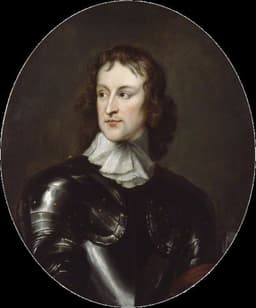
John Lambert
General · Modern
56.7Total
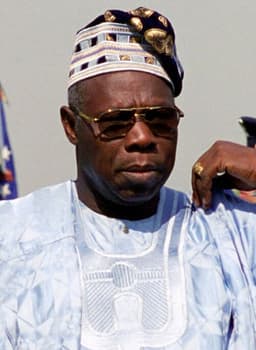
Olusegun Obasanjo
General · Modern
60.2Total
Basic Information
Born
1619
1937
Died
1684
—
Era
Modern
Modern
Nationality
England
Nigeria
Occupation
General
General
Civilization
Western
Other
Score Comparison
Military (10%)
70.0
45.0
Political (20%)
45.0
72.0
Influence (20%)
59.0
55.0
Legacy (20%)
50.0
54.0
Leadership (15%)
68.0
78.0
Strategy (15%)
55.0
60.0
TOTAL
56.7
60.2
John Lambert — Complete Timeline
1648 AD
Battle of PrestonWar◆ Major
John Lambert commanded parliamentary forces at the Battle of Preston, defeating a Scottish royalist army. The victory helped secure the parliamentary cause in the Second English Civil War.
BattleEnglish Civil WarParliament
Impact: national
1653 AD
Drafted the Instrument of GovernmentPolitical Action◆ Major
John Lambert was the principal author of the Instrument of Government, the written constitution that established the Protectorate under Oliver Cromwell. The document created a Lord Protector and a Council of State, but was never fully implemented.
ConstitutionProtectorateCromwell
Impact: nationalconstructive
1662 AD
Exiled to GuernseyPolitical Action◆ Major
After the Restoration, John Lambert was tried for treason and exiled to the island of Guernsey. He spent the remainder of his life in captivity, never regaining political influence.
ExileRestorationPunishment
Impact: nationaltragic
Olusegun Obasanjo — Complete Timeline
1976 AD
Military coup that brought Obasanjo to powerPolitical Action
Following the assassination of General Murtala Mohammed in a failed coup, Obasanjo, as Chief of Staff, Supreme Headquarters, succeeded him as head of state. He oversaw the continuation of the transition to civilian rule.
CoupSuccessionMilitary Rule
Impact: national
1979 AD
Handover of power to civilian governmentPolitical Action
Obasanjo voluntarily handed over power to the elected civilian government of Shehu Shagari, marking the first peaceful transfer of power from military to civilian rule in Nigeria. This act established a precedent for democratic transition.
DemocracyTransitionCivilian Rule
Impact: nationalconstructive
1999 AD
Election as President of NigeriaPolitical Action
Obasanjo won the 1999 Nigerian presidential election as the candidate of the People's Democratic Party (PDP). His victory ended 16 years of military rule and began the Fourth Nigerian Republic.
ElectionDemocracyFourth Republic
Impact: nationalprogressive
2005 AD
Debt relief from Paris ClubPolitical Action◆ Major
Obasanjo's government negotiated a debt relief agreement with the Paris Club, resulting in the cancellation of $18 billion of Nigeria's external debt. This freed up resources for domestic spending and was a major economic achievement.
Debt ReliefEconomyNegotiation
Impact: nationalconstructive
2006 AD
Third term bid failurePolitical Action◆ Major
Obasanjo attempted to amend the Nigerian constitution to allow him to run for a third term. The bid was rejected by the National Assembly, marking a significant political defeat and reinforcing term limits.
Third TermConstitutionDefeat
Impact: national
Expert Analysis
John Lambert vs Olusegun Obasanjo
# The General and the Statesman: Two Roads from the Battlefield
On a grey February morning in 1662, John Lambert stood shackled on a ship bound for Guernsey, his once-brilliant military career reduced to dust by the king he had helped defeat. Across the centuries and continents, in February 1976, another general—Olusegun Obasanjo—stepped into the vacuum left by a murdered head of state, not knowing that his path would lead to democracy, debt relief, and a contested legacy. Both men were soldiers who became architects of governance. One built a constitution that crumbled; the other built a transition that endured. Why did one end in exile and the other in a second act of power?
Origins
John Lambert was born in 1619 into the turbulent world of Stuart England, where religious strife and royal absolutism were boiling toward civil war. The son of a Yorkshire gentleman, he absorbed Puritan ideals and the belief that Parliament, not the crown, held the nation's true sovereignty. His era was one of radical possibility—when men dared to ask whether a king could be tried and executed.
Olusegun Obasanjo, born in 1937 in southwestern Nigeria, came of age in a different kind of storm: the dying gasp of British colonialism and the birth of a fractured nation. He joined the Nigerian Army in 1958, just two years before independence, and watched as military coups became the continent's default mechanism for political change. His generation inherited not a monarchy to overthrow, but a fragile state to hold together.
Rise to Power
Lambert's ascent was forged in fire. At the Battle of Preston in 1648, he commanded parliamentary forces against a Scottish royalist army and delivered a crushing victory that sealed the fate of King Charles I. His military score of 66.3 reflects competence rather than genius, but his strategic mind—rated at 73.2—earned him Oliver Cromwell's trust. Lambert became the man who could execute a plan and then write the rules for the new order.
Obasanjo's rise was quieter, more bureaucratic. He was Chief of Staff, Supreme Headquarters, when General Murtala Mohammed was assassinated in the failed coup of February 1976. Unlike Lambert, who fought his way to prominence, Obasanjo inherited power by surviving. His military score of 33.9 is strikingly low for a general, but his political score of 76.6 reveals his true weapon: the ability to navigate chaos without firing a shot.
Leadership & Governance
Here the two men diverge most sharply. Lambert was a constitutional visionary. In 1653, he drafted the Instrument of Government, the first written constitution in English history. It created a Protectorate under Cromwell, with a parliament, a council, and a separation of powers—ideas centuries ahead of their time. But Lambert's political wisdom (70.0) could not overcome the fatal flaw: the constitution rested on military force, not popular consent. When Cromwell died, the edifice collapsed.
Obasanjo governed with a different calculus. In 1979, he voluntarily handed power to the elected civilian government of Shehu Shagari—the first peaceful transition in Nigerian history. His leadership score of 83.4 reflects a rare quality among African strongmen: the willingness to step aside. Yet his return to power in 1999, after winning the presidency as a civilian, revealed a more complicated figure. He negotiated $18 billion in debt relief from the Paris Club in 2005, a triumph of economic diplomacy. But his failed attempt to amend the constitution for a third term in 2006 exposed the same temptation that doomed Lambert: the belief that one man's vision should outlast the rules.
Triumph & Tragedy
Lambert's greatest moment was also the seed of his destruction. The Instrument of Government was a masterpiece of political theory, but it institutionalized the very military rule it sought to transcend. When the monarchy was restored in 1660, Lambert was tried for treason. His exile to Guernsey in 1662 was not just punishment—it was erasure. He died in obscurity in 1684, a ghost of the revolution he helped create.
Obasanjo's triumph was his 1979 handover, a moment that made him a hero of African democracy. His tragedy was the third-term bid of 2006—a move that tarnished his reputation and reminded Nigerians that even reformers can be seduced by power. The failure of that bid, however, was itself a victory for the constitutional process he had helped build.
Character & Destiny
Lambert was a man of ideas trapped in an age of violence. His personality—rigid, principled, unwilling to compromise—made him a brilliant architect but a poor politician. He believed constitutions could change human nature. They cannot.
Obasanjo was a pragmatist who learned to bend without breaking. He understood that in Nigeria, survival meant knowing when to step forward and when to step back. His character was not heroic but adaptive—and adaptation, in the end, proved more durable than conviction.
Legacy
Lambert's legacy is invisible but profound. The Instrument of Government influenced later constitutional thinking, even as his name faded from history books. His score of 68.9 for legacy captures this paradox: a man who shaped the future but was forgotten by it.
Obasanjo's legacy is visible and contested. He is remembered as both the father of Nigeria's democratic transition and the would-be autocrat who tried to undermine it. His influence score of 72.2 reflects a life that still casts a long shadow over African politics.
Conclusion
John Lambert and Olusegun Obasanjo both learned that military power alone cannot govern. Lambert tried to solve this by writing a constitution; Obasanjo tried by writing a transition. One failed because he could not let go of the revolution; the other succeeded because he learned to let go of power—at least once. Their stories remind us that the hardest lesson for any general is that the battlefield and the ballot box require different kinds of courage. Lambert had the courage to imagine a new order; Obasanjo had the courage to step aside from it. In the end, the architect of the Instrument of Government died in exile, while the architect of Nigeria's first peaceful handover lived to see his legacy both celebrated and challenged. Perhaps that is the truest measure of their difference: one built a house that could not stand without him, while the other built a door that could open without him.
Rankings
🥇
Olusegun ObasanjoLeader
Mil: 45.0Pol: 72.0Inf: 55.0
60.2
🥈
John Lambert
Mil: 70.0Pol: 45.0Inf: 59.0
56.7
+3.5 behind
How This Comparison Works
Algorithm
Each figure is scored on 6 dimensions (0—100 scale) based on structured historical data: Military (10%), Political (20%), Influence (20%), Legacy (20%), Leadership (15%), Strategy (15%). The weighted total produces the final ranking.
Data Sources
Scores are computed from structured sub-indicators in the database. Scale factors adjust for era (Ancient ×0.85, Modern ×1.0) and civilization size (Eastern ×1.05, Other ×0.80) to account for differences in population and military scale.
Maximum 3 Figures
Comparisons are limited to 2—3 figures to ensure readability and statistical meaningfulness.
Error Margins
±5 points per dimension — Sub-scores are derived from historical records with inherent uncertainty. Two figures within 5 points on a dimension should be considered roughly equivalent in that area.
Total Score Accuracy
±3 points overall — The weighted combination of 6 dimensions produces a total score with approximately ±3 points of uncertainty. Differences of less than 3 points are not statistically significant— the figures are effectively tied.
Known Limitations
- Historical records are incomplete and uneven across civilizations
- Figures from oral-tradition societies may be underrepresented
- Occupation labels can misclassify multi-role figures
- Scores measure capability and impact, not moral character
- Quantitative scoring is a comparison tool, not absolute truth
Capability Radar
Military (10%) — Battles & Warfare
Battles
65
25
Win Rate
60
30
Expansion
40
20
Political (20%) — Governance & Reform
Reform
55
65
Diplomacy
50
75
Economy
45
55
Influence (20%) — Cultural & Global Reach
Cultural
35
45
Global
30
60
Legacy (20%) — Historical Impact
Historical
50
55
Longevity
40
50
Leadership (15%) — Power & Stability
Tenure
60
70
Stability
40
60
Strategy (15%) — Tactics & Innovation
Strategy
65
40
Tactics
70
35
Reform
55
50
Similar Comparisons
Comments & Discussion
Lambert's Last Stand6/16/2026
John Lambert didn't lose because he was a worse general—he lost because he bet on the wrong faction at the wrong time. By backing Lambert’s dwindling army against Monck, he played the military card when politics demanded compromise. Obasanjo, by contrast, read the room perfectly: he handed power to civilians in 1979 because he knew soldiers couldn’t govern forever. Lambert’s fatal flaw was believing swords could always win where words failed.
历史考场老裁缝6/16/2026
把Lambert和Obasanjo放一起比,根本就是硬凑。Lambert活在17世纪议会和君主的二元撕裂里,连洛克的社会契约都还没影儿,他被流放是因为克伦威尔体系本来就撑不住。Obasanjo活在20世纪末民主化浪潮里,他所做的每个选择都有冷战格局、国际压力垫底。拿一个古代英国失败者对比一个现代非洲掌权者,除了都当过兵,毛线共同点都没有。
Military_Corruption_PhD6/16/2026
Obasanjo’s ‘democratic transition’ in 1979 is one of Africa’s most overrated achievements. He literally drafted the military into the constitution, keeping generals in the cabinet and state governors. Nigeria switched from khaki to agbada but the power structure remained armed. Compare Lambert, who literally wrote the Instrument of Government—a written constitution that tried to limit executive power. Lambert failed, but at least he attempted structural control. Obasanjo just rebranded the junta
木心竹骨6/16/2026
Obasanjo第二次上台之后做的事,很值得我们警惕:2003年他动用军队镇压尼日尔三角洲的抗议,2007年强行让幕僚长接任总统,还搞了第三任修宪。这些手法听着熟不熟?军阀逻辑而已。Lambert至少是体制试验失败,Obasanjo是明明知道民主长什么样,還是回頭走老路。区别不在成就,在态度:一个还在做梦,一个早就不信了。
Classics_&_Dust6/16/2026
Let’s not romanticize Lambert’s ‘constitutionalism.’ The Instrument of Government he helped draft was a thinly veiled military dictatorship with a civilian mask—a protectorate where the army chose the Lord Protector. Sound familiar? Obasanjo’s 1979 constitution copied the American presidential system but grafted it onto a military command structure. Both men were fixers, not philosophers. Their difference is purely contingent: Lambert was on the losing side of history, Obasanjo on the winning on