Loading...
John Lambert vs Nicolas Soult
Nicolas Soult leads by 6.0 pts · 2 figures compared
…
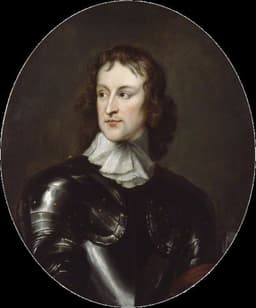
John Lambert
General · Modern
56.7Total
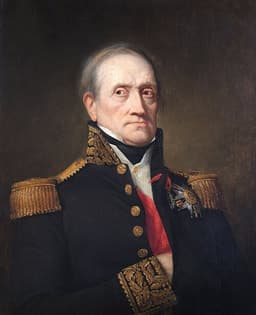
Nicolas Soult
General · Modern
62.7Total
Basic Information
Born
1619
1769
Died
1684
1851
Era
Modern
Modern
Nationality
England
France
Occupation
General
General
Civilization
Western
Western
Score Comparison
Military (10%)
70.0
74.7
Political (20%)
45.0
55.0
Influence (20%)
59.0
61.0
Legacy (20%)
50.0
54.0
Leadership (15%)
68.0
78.0
Strategy (15%)
55.0
65.4
TOTAL
56.7
62.7
John Lambert — Complete Timeline
1648 AD
Battle of PrestonWar◆ Major
John Lambert commanded parliamentary forces at the Battle of Preston, defeating a Scottish royalist army. The victory helped secure the parliamentary cause in the Second English Civil War.
BattleEnglish Civil WarParliament
Impact: national
1653 AD
Drafted the Instrument of GovernmentPolitical Action◆ Major
John Lambert was the principal author of the Instrument of Government, the written constitution that established the Protectorate under Oliver Cromwell. The document created a Lord Protector and a Council of State, but was never fully implemented.
ConstitutionProtectorateCromwell
Impact: nationalconstructive
1662 AD
Exiled to GuernseyPolitical Action◆ Major
After the Restoration, John Lambert was tried for treason and exiled to the island of Guernsey. He spent the remainder of his life in captivity, never regaining political influence.
ExileRestorationPunishment
Impact: nationaltragic
Nicolas Soult — Complete Timeline
1805 AD
Battle of AusterlitzWar◆ Major
Soult commanded the IV Corps at Austerlitz. He led the assault on the Pratzen Heights, breaking the Allied center and securing the decisive French victory.
Napoleonic WarsBattleCorps Command
Impact: global
1806 AD
Battle of Jena-AuerstedtWar◆ Major
Soult commanded the IV Corps at Jena. His forces pursued the retreating Prussian army, capturing thousands of prisoners and contributing to the collapse of the Prussian state.
Napoleonic WarsBattlePursuit
Impact: regional
1811 AD
Battle of AlbueraWar◆ Major
Soult commanded the French army at Albuera in Spain. His forces fought a bloody battle against the Anglo-Spanish army, resulting in a tactical stalemate but strategic French withdrawal.
Peninsular WarBattleStalemate
Impact: regional
1814 AD
Battle of ToulouseWar◆ Major
Soult commanded the French army at Toulouse against Wellington. The battle occurred after Napoleon's abdication, and Soult surrendered the city, ending the Peninsular War.
Peninsular WarBattleDefeat
Impact: regional
1830 AD
Minister of WarPolitical Action◆ Major
Soult served as Minister of War under King Louis-Philippe. He reorganized the French army, introduced conscription reforms, and prepared for colonial campaigns in Algeria.
MinistryReformsJuly Monarchy
Impact: nationalconstructive
1832 AD
Prime Minister of FrancePolitical Action◆ Major
Soult served as Prime Minister of France under Louis-Philippe. His government focused on maintaining order, suppressing republican uprisings, and consolidating the July Monarchy.
Prime MinisterJuly MonarchyGovernment
Impact: national
Expert Analysis
John Lambert vs Nicolas Soult
# The General and the Statesman: John Lambert and Nicolas Soult
On a grey morning in February 1662, John Lambert stood in the Tower of London, watching the river Thames slide past his prison window. Twenty years earlier, he had been one of the most powerful men in England, the architect of a written constitution that had no precedent in British history. Now he was a condemned traitor, saved from execution only by the mercy of a king he had helped depose. Across the Channel, a different fate awaited another soldier. In 1832, Nicolas Soult, who had once commanded Napoleon's IV Corps at Austerlitz, became Prime Minister of France. The same age that imprisoned one general elevated another to the highest civil office. What explains such divergent destinies?
Origins
John Lambert was born in 1619 into the Yorkshire gentry, a world of manor houses and local magistrates. His father had been a lawyer, his mother the daughter of a knight. The England of his youth was a kingdom wrestling with questions of sovereignty and faith—who ruled, king or Parliament? Bishop or Puritan? Lambert studied law at the Inns of Court, but the outbreak of civil war in 1642 pulled him from the courtroom to the battlefield. He was a man of the middling sort, not born to command, but shaped by a revolution that rewarded talent over title.
Nicolas Soult, born in 1769, came from a humbler world. His father was a notary in the small town of Saint-Amans-la-Bastide in Languedoc. The France of his youth was an absolute monarchy, but one cracking under the weight of its own contradictions. When the Revolution exploded in 1789, Soult was a twenty-year-old soldier in the Royal Army. He joined the revolutionary cause not out of ideology, but opportunity. The old aristocratic officer corps had fled; a man of ability could rise. And rise he did, from sergeant to general in less than a decade.
Rise to Power
Lambert’s path to power was forged in the crucible of the English Civil War. At the Battle of Preston in 1648, he commanded parliamentary forces against a Scottish royalist army. The victory was decisive—Oliver Cromwell called it "a glorious mercy." Lambert was thirty years old. But his real genius was not on the battlefield. After Cromwell’s death, when the Protectorate crumbled, Lambert turned to politics. In 1653, he drafted the Instrument of Government, the first written constitution in English history. It created a Lord Protector, a Council of State, and a Parliament with limited powers. For a brief moment, England had a republican government on paper.
Soult’s rise was more spectacular. At Austerlitz in 1805, Napoleon entrusted him with the decisive blow. Soult’s IV Corps stormed the Pratzen Heights, splitting the Allied army in two. Napoleon embraced him on the field. At Jena in 1806, Soult pursued the shattered Prussian army, capturing thousands. He became a Marshal of the Empire, a Duke of Dalmatia, one of the wealthiest men in Europe. But his greatest test came in Spain, where he fought Wellington in a brutal guerrilla war. The Battle of Albuera in 1811 was a bloody stalemate, but Soult held his ground. He was a master of maneuver, but not of conquest.
Leadership & Governance
Lambert’s leadership was ideological. He believed in a republic governed by law, not by a single man. His Instrument of Government attempted to balance executive power with parliamentary oversight—a radical idea for the seventeenth century. But he lacked the ruthlessness to enforce it. When Cromwell dismissed Parliament in 1655, Lambert supported him, but he grew uneasy as Cromwell moved toward monarchy. After Cromwell’s death, Lambert tried to restore the Protectorate, but the army was divided, the people exhausted. He was a thinker in an age of doers.
Soult’s leadership was pragmatic. He served Napoleon, then the Bourbon king Louis XVIII, then Napoleon again during the Hundred Days, then the Bourbons again, and finally King Louis-Philippe. His political survival was legendary. As Minister of War in 1830, he reorganized the French army, introducing conscription reforms that modernized the military. As Prime Minister from 1832 to 1834, he suppressed republican uprisings and maintained order. He was not a reformer; he was a stabilizer. His genius was knowing when to bend.
Triumph & Tragedy
Lambert’s greatest triumph was the Instrument of Government. For a few years, England had a written constitution that limited executive power—a precursor to the American Constitution more than a century later. His tragedy came with the Restoration. When Charles II returned in 1660, Lambert was arrested, tried for treason, and sentenced to death. The king commuted the sentence, but Lambert spent the rest of his life in exile on the island of Guernsey. He died in 1684, forgotten.
Soult’s triumph was Austerlitz, the battle that cemented Napoleon’s legend. His tragedy was Toulouse in 1814, where he fought Wellington after Napoleon had already abdicated. The battle was pointless; hundreds died for nothing. But Soult survived, and served again. He died in 1851, at the age of eighty-two, a Marshal of France, a Prime Minister, a man who had outlived his emperor.
Character & Destiny
Lambert was a man of principle in an age of compromise. He believed in a republic, but could not make it work. He was a brilliant lawyer, a capable general, but not a leader of men. His destiny was to be crushed by the monarchy he opposed. Soult was a man of ambition in an age of upheaval. He served every regime that came to power, because power was all that mattered. His destiny was to survive, to adapt, to die in bed.
Legacy
Lambert is remembered, if at all, as a footnote—the man who wrote a constitution that failed. But his Instrument of Government influenced later republican thinkers, and his vision of a written constitution echoed in America. Soult is remembered as a capable marshal, a competent minister, but not a great one. His name is on the Arc de Triomphe, but few visit it.
Conclusion
Two generals, two centuries, two fates. Lambert chose principle and lost everything. Soult chose survival and won everything. Which was the wiser? The answer depends on what you value. But perhaps the truest measure of a life is not how it ends, but what it leaves behind. Lambert left an idea. Soult left a career. In the long arc of history, ideas outlast careers.
Rankings
🥇
Nicolas SoultLeader
Mil: 74.7Pol: 55.0Inf: 61.0
62.7
🥈
John Lambert
Mil: 70.0Pol: 45.0Inf: 59.0
56.7
+6.0 behind
How This Comparison Works
Algorithm
Each figure is scored on 6 dimensions (0—100 scale) based on structured historical data: Military (10%), Political (20%), Influence (20%), Legacy (20%), Leadership (15%), Strategy (15%). The weighted total produces the final ranking.
Data Sources
Scores are computed from structured sub-indicators in the database. Scale factors adjust for era (Ancient ×0.85, Modern ×1.0) and civilization size (Eastern ×1.05, Other ×0.80) to account for differences in population and military scale.
Maximum 3 Figures
Comparisons are limited to 2—3 figures to ensure readability and statistical meaningfulness.
Error Margins
±5 points per dimension — Sub-scores are derived from historical records with inherent uncertainty. Two figures within 5 points on a dimension should be considered roughly equivalent in that area.
Total Score Accuracy
±3 points overall — The weighted combination of 6 dimensions produces a total score with approximately ±3 points of uncertainty. Differences of less than 3 points are not statistically significant— the figures are effectively tied.
Known Limitations
- Historical records are incomplete and uneven across civilizations
- Figures from oral-tradition societies may be underrepresented
- Occupation labels can misclassify multi-role figures
- Scores measure capability and impact, not moral character
- Quantitative scoring is a comparison tool, not absolute truth
Capability Radar
Military (10%) — Battles & Warfare
Battles
65
75
Win Rate
60
70
Expansion
40
65
Political (20%) — Governance & Reform
Reform
55
55
Diplomacy
50
65
Economy
45
50
Influence (20%) — Cultural & Global Reach
Cultural
35
45
Global
30
50
Legacy (20%) — Historical Impact
Historical
50
55
Longevity
40
50
Leadership (15%) — Power & Stability
Tenure
60
70
Stability
40
55
Strategy (15%) — Tactics & Innovation
Strategy
65
72
Tactics
70
78
Reform
55
60
Similar Comparisons
Comments & Discussion
BattleAxeBob6/16/2026
Lambert gets romanticized as a "constitutional visionary," but let’s be real—his Instrument of Government was a military dictatorship in disguise. The man literally wrote a constitution that made Cromwell Lord Protector for life, then tried to sideline Parliament when it disagreed. Soult was a pragmatic survivor who evolved with the regime, from royalist to Bonapartist back to royalist. Lambert failed because he believed in rigid ideals; Soult thrived because he understood power's fluid nature.
数据屠夫6/16/2026
把这两个人放在一起比较本身就有问题。Lambert的职业生涯是一条直线上升和急速坠落的抛物线,而Soult是一系列曲折的线段。数据上,Soult活了80年,几乎经历了法国所有政体;Lambert在50多岁就消失在了历史记录里。这不是什么"不同命运",而是完全不同的职业策略。Lambert把筹码押死在了一个人(克伦威尔)和一种政体上,Soult则是在每个路口都重新评估局势。谁的"军事实力"更强?看寿命和官职就知道答案了。|
ClassicSoultScholar6/16/2026
The real irony here is that Soult, often dismissed as Napoleon's "second-rate" marshal, actually achieved what Lambert never could: transferring battlefield command into peacetime bureaucracy. After Waterloo, Soult didn't just retire to write memoirs—he served as War Minister twice, reformed the French army, and even served as Foreign Minister. Lambert, for all his tactical brilliance at Dunbar (1650), couldn't adapt when the fighting stopped. He remained a soldier-politician when England needed
市井历史迷6/16/2026
说实话,我宁愿跟Soult喝酒聊天。Lambert那种清教徒式的严肃,整天讨论宪法草案和神学命题,听听就累。Soult在巴黎主持内阁时还偶尔去歌剧院应酬,Lambert在监狱里恐怕连抱怨都是引用圣经。论起战场之外的魅力,Soult明显更胜一筹。历史上那些能在宴会厅和战场之间自如切换的人,往往混得更好。Lambert输就输在他把政治当成了一场永不休会的布道会。|
RevisionistSlasher6/16/2026
各位捧Soult踩Lambert是不是太轻松了?别忘了,Soult在1813年维多利亚战役中指挥失误导致法军惨败,后来在西班牙烧杀抢掠的"丰功伟绩"怎么不提?而Lambert的《政府约法》虽然短命,但第一次在英格兰提出了成文宪法的概念——比美国早了130年。Soult只会随着政体变色龙般改变忠诚,