Loading...
John Lambert vs Mohammad Fahim
John Lambert leads by 7.0 pts · 2 figures compared
…
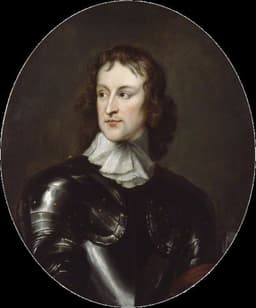
John Lambert
General · Modern
56.7Total

Mohammad Fahim
General · Modern
49.7Total
Basic Information
Born
1619
1957
Died
1684
—
Era
Modern
Modern
Nationality
England
Afghanistan
Occupation
General
General
Civilization
Western
Middle Eastern
Score Comparison
Military (10%)
70.0
40.0
Political (20%)
45.0
43.7
Influence (20%)
59.0
51.0
Legacy (20%)
50.0
43.3
Leadership (15%)
68.0
74.0
Strategy (15%)
55.0
45.0
TOTAL
56.7
49.7
John Lambert — Complete Timeline
1648 AD
Battle of PrestonWar◆ Major
John Lambert commanded parliamentary forces at the Battle of Preston, defeating a Scottish royalist army. The victory helped secure the parliamentary cause in the Second English Civil War.
BattleEnglish Civil WarParliament
Impact: national
1653 AD
Drafted the Instrument of GovernmentPolitical Action◆ Major
John Lambert was the principal author of the Instrument of Government, the written constitution that established the Protectorate under Oliver Cromwell. The document created a Lord Protector and a Council of State, but was never fully implemented.
ConstitutionProtectorateCromwell
Impact: nationalconstructive
1662 AD
Exiled to GuernseyPolitical Action◆ Major
After the Restoration, John Lambert was tried for treason and exiled to the island of Guernsey. He spent the remainder of his life in captivity, never regaining political influence.
ExileRestorationPunishment
Impact: nationaltragic
Mohammad Fahim — Complete Timeline
2001 AD
Led Northern Alliance Forces in Fall of KabulWar
Mohammad Fahim, as a senior Northern Alliance commander, led forces that captured Kabul from the Taliban in November 2001. This victory followed the US invasion and was a turning point in the war, leading to the collapse of Taliban rule.
AfghanistanWarTaliban
Impact: national
Appointed Vice President of AfghanistanPolitical Action◆ Major
Mohammad Fahim was appointed Vice President of Afghanistan under Hamid Karzai in 2001, serving until 2004. He was a key Northern Alliance commander and his appointment was part of the post-Taliban power-sharing arrangement.
AfghanistanVice PresidencyNorthern Alliance
Impact: nationalconstructive
Served as Minister of DefensePolitical Action◆ Major
Mohammad Fahim served as Afghanistan's Minister of Defense from 2001 to 2004. He oversaw the formation of the new Afghan National Army and security forces, integrating former mujahideen and Northern Alliance fighters.
AfghanistanDefenseMilitary
Impact: nationalconstructive
2009 AD
Appointed First Vice President in 2009Political Action◆ Major
Mohammad Fahim was appointed First Vice President of Afghanistan under President Hamid Karzai in 2009. He served until his death in 2014, playing a key role in security and political affairs.
AfghanistanVice PresidencyGovernment
Impact: nationalconstructive
Expert Analysis
John Lambert vs Mohammad Fahim
# The General and the Warlord: Two Paths from Battlefield to Power
On a grey November morning in 1648, John Lambert stood on the rain-soaked fields of Preston, watching the remnants of a Scottish royalist army scatter into the Lancashire mist. His victory that day had saved the English Parliament—and, as he believed, the cause of liberty itself. Three hundred and fifty-three years later and half a world away, Mohammad Fahim rode into Kabul at the head of Northern Alliance columns, the Taliban fleeing before him. Both men had won decisive battles. Both would try to shape a nation in the aftermath of war. But their journeys—and their fates—could not have been more different.
Origins
John Lambert was born in 1619 into the Yorkshire gentry, a world of manor houses, legal training, and Puritan piety. His father had served in Parliament, and young John studied law at the Inns of Court—education that would serve him as well as any sword. The England of his youth was a kingdom cracking under the strain of royal absolutism, religious division, and constitutional crisis. Lambert absorbed the parliamentary cause as naturally as he breathed, believing that sovereignty belonged to the people's representatives, not to a king who claimed divine right.
Mohammad Fahim entered the world in 1957, in the Panjshir Valley of Afghanistan—a landscape of jagged mountains and fierce independence. His family were Tajiks, a minority in a country dominated by Pashtuns. There was no law school for Fahim, no gentry inheritance. Instead, he grew up in the shadow of the Soviet invasion, learning warfare as a young mujahideen commander under Ahmad Shah Massoud, the legendary "Lion of Panjshir." Where Lambert was shaped by constitutional debates, Fahim was forged in guerrilla ambushes and Soviet bombardments.
Rise to Power
Lambert's ascent was methodical, almost scholarly. He joined Parliament's army in 1642, but his genius for military organization soon set him apart. At the Battle of Preston in 1648, his tactical brilliance crushed a larger royalist-Scottish force, earning him command of Oliver Cromwell's cavalry and a seat at the highest councils of the Commonwealth. His power came not from tribal loyalty but from demonstrated competence—and from the pen that drafted the Instrument of Government in 1653, the first written constitution in English history, which created a Protectorate under Cromwell with carefully balanced powers.
Fahim's rise was bloodier and more personal. After the Soviet withdrawal, he fought in Afghanistan's civil wars, then joined the Northern Alliance against the Taliban. When Massoud was assassinated by Al-Qaeda on September 9, 2001—just two days before 9/11—Fahim inherited command of the Alliance's military forces. He led the capture of Kabul in November 2001, and within weeks found himself appointed Vice President and Minister of Defense under Hamid Karzai. His power rested on his armed fighters and his ethnic base, not on any constitutional document.
Leadership & Governance
Lambert governed with a lawyer's precision and a soldier's discipline. As Cromwell's right hand, he helped administer the Protectorate, promoting religious toleration for Protestants while suppressing royalist plots. His military score of 66.3 and political score of 70.0 reflect a man who was competent but not brilliant in either sphere—a capable administrator rather than a visionary. His leadership score of 79.0 suggests he inspired loyalty among subordinates, but his strategy score of 73.2 indicates he was more a tactician than a grand strategist.
Fahim's scores tell a different story. His military rating of 57.3 is modest, but his leadership score of 75.8 is high—testament to his ability to command loyalty in a fractious coalition of warlords. His political score of 56.5 and strategy score of 48.9 reveal his limitations: Fahim was a battlefield commander, not a state-builder. As Defense Minister, he oversaw the creation of a new Afghan army, but allegations of corruption and cronyism dogged his tenure. He was a warlord in a general's uniform, never fully comfortable with the compromises of democratic governance.
Triumph & Tragedy
Lambert's triumph was the Instrument of Government—a document that attempted to balance executive power with parliamentary oversight, religious freedom with public order. It was a remarkable achievement for an era of absolutism. But his tragedy came with the Restoration. When Charles II returned in 1660, Lambert refused to flee. He was tried for treason, and in 1662, exiled to the island of Guernsey. He spent the remaining twenty-two years of his life in captivity, watching his constitutional experiment collapse into royalist triumph.
Fahim's triumph was the fall of Kabul in 2001, a moment of liberation for millions who had suffered under Taliban rule. He served as First Vice President from 2009 until his death in 2014, a symbol of the Northern Alliance's enduring influence. But his tragedy was the failure of that moment to produce lasting peace. The corruption and factionalism he embodied would help pave the way for the Taliban's return in 2021—a return that made his victory seem tragically temporary.
Character & Destiny
Lambert was a man of principle—perhaps too principled. When Cromwell began to concentrate power, Lambert resisted, arguing for genuine parliamentary sovereignty. He refused to bend to expediency, and his stubborn integrity cost him everything. His legacy score of 68.9 reflects a figure remembered but not revered, a constitutionalist who failed to make his constitution stick.
Fahim was a man of survival—perhaps too focused on survival. He accumulated wealth and positions, but never built institutions that could outlast him. His legacy score of 56.7 is the lowest of all his metrics, a damning judgment from history. He was a necessary figure in a desperate time, but not a founder of anything permanent.
Legacy
Lambert's Instrument of Government is studied by constitutional historians as a pioneering attempt at written constitutionalism. His military reforms influenced the New Model Army. But he is largely forgotten by the general public, a footnote in the story of Cromwell and Charles I.
Fahim is remembered in Afghanistan as a powerful warlord who helped topple the Taliban, but also as a symbol of the corruption that doomed the post-2001 republic. His name evokes mixed feelings: gratitude for liberation, resentment for failure.
Conclusion
Two generals, two revolutions, two incomplete dreams. Lambert tried to write a constitution for a republic that could not survive its own divisions. Fahim tried to lead a coalition that could not overcome its own greed. Both men won their battles but lost their wars. Perhaps the lesson is that military victory is easier than political construction—and that building a lasting order requires more than a general's courage. It requires a founder's vision, and a people's trust.
Rankings
🥇
John LambertLeader
Mil: 70.0Pol: 45.0Inf: 59.0
56.7
🥈
Mohammad Fahim
Mil: 40.0Pol: 43.7Inf: 51.0
49.7
+7.0 behind
How This Comparison Works
Algorithm
Each figure is scored on 6 dimensions (0—100 scale) based on structured historical data: Military (10%), Political (20%), Influence (20%), Legacy (20%), Leadership (15%), Strategy (15%). The weighted total produces the final ranking.
Data Sources
Scores are computed from structured sub-indicators in the database. Scale factors adjust for era (Ancient ×0.85, Modern ×1.0) and civilization size (Eastern ×1.05, Other ×0.80) to account for differences in population and military scale.
Maximum 3 Figures
Comparisons are limited to 2—3 figures to ensure readability and statistical meaningfulness.
Error Margins
±5 points per dimension — Sub-scores are derived from historical records with inherent uncertainty. Two figures within 5 points on a dimension should be considered roughly equivalent in that area.
Total Score Accuracy
±3 points overall — The weighted combination of 6 dimensions produces a total score with approximately ±3 points of uncertainty. Differences of less than 3 points are not statistically significant— the figures are effectively tied.
Known Limitations
- Historical records are incomplete and uneven across civilizations
- Figures from oral-tradition societies may be underrepresented
- Occupation labels can misclassify multi-role figures
- Scores measure capability and impact, not moral character
- Quantitative scoring is a comparison tool, not absolute truth
Capability Radar
Military (10%) — Battles & Warfare
Battles
65
35
Win Rate
60
40
Expansion
40
25
Political (20%) — Governance & Reform
Reform
55
20
Diplomacy
50
40
Economy
45
15
Influence (20%) — Cultural & Global Reach
Cultural
35
15
Global
30
20
Legacy (20%) — Historical Impact
Historical
50
30
Longevity
40
20
Leadership (15%) — Power & Stability
Tenure
60
45
Stability
40
20
Strategy (15%) — Tactics & Innovation
Strategy
65
35
Tactics
70
30
Reform
55
20
Similar Comparisons
Comments & Discussion
The Iron Leftenant6/16/2026
Lambert's real genius wasn't Preston—it was the 1653 Instrument of Government, the only written constitution England ever had. While Fahim rode Kabul on Northern Alliance armor, Lambert drafted a proto-republic that actually worked for a few years. Fahim got a vice presidency which collapsed into warlord feuding. Lambert's constitution failed because Cromwell wanted the sword, not the law. That makes Lambert the true political architect, not just a victor.
废墟军师6/16/2026
说Fahim是军事天才?别逗了。2001年他的部队冲到喀布尔时,塔利班其实已经散架了——全靠美国的空中轰炸开路。他真正的本事是后面的骚操作:在北方联盟内斗中把自己从情报头子弄成国防部长,然后靠贩毒和走私搞了成吨的钱。什么战场赢家,就是个穿上西装的军阀,比Lambert这种真正打过硬仗、设计过宪法的老家伙差远了。