Loading...
John Lambert vs Li Zongren
Li Zongren leads by 1.8 pts · 2 figures compared
…
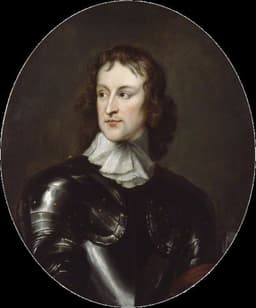
John Lambert
General · Modern
56.7Total
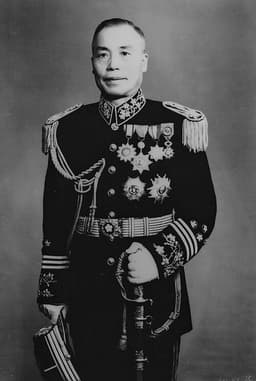
Li Zongren
General · Modern
58.5Total
Basic Information
Born
1619
1890
Died
1684
1969
Era
Modern
Modern
Nationality
England
China
Occupation
General
General
Civilization
Western
Eastern
Score Comparison
Military (10%)
70.0
65.0
Political (20%)
45.0
53.8
Influence (20%)
59.0
58.0
Legacy (20%)
50.0
52.0
Leadership (15%)
68.0
72.0
Strategy (15%)
55.0
56.8
TOTAL
56.7
58.5
John Lambert — Complete Timeline
1648 AD
Battle of PrestonWar◆ Major
John Lambert commanded parliamentary forces at the Battle of Preston, defeating a Scottish royalist army. The victory helped secure the parliamentary cause in the Second English Civil War.
BattleEnglish Civil WarParliament
Impact: national
1653 AD
Drafted the Instrument of GovernmentPolitical Action◆ Major
John Lambert was the principal author of the Instrument of Government, the written constitution that established the Protectorate under Oliver Cromwell. The document created a Lord Protector and a Council of State, but was never fully implemented.
ConstitutionProtectorateCromwell
Impact: nationalconstructive
1662 AD
Exiled to GuernseyPolitical Action◆ Major
After the Restoration, John Lambert was tried for treason and exiled to the island of Guernsey. He spent the remainder of his life in captivity, never regaining political influence.
ExileRestorationPunishment
Impact: nationaltragic
Li Zongren — Complete Timeline
1921 AD
Command of the Guangxi ArmyPolitical Action◆ Major
Li Zongren became a commander in the Guangxi Army and helped unify Guangxi province under the New Guangxi Clique. He established a powerful regional base that rivaled other warlords.
Guangxi CliqueMilitary CommandWarlord Era
Impact: regional
1926 AD
Alliance with the Nationalist GovernmentPolitical Action◆ Major
Li Zongren allied the Guangxi Clique with Chiang Kai-shek's Nationalist government during the Northern Expedition. His forces played a key role in defeating warlords and unifying China under KMT rule.
Northern ExpeditionAllianceKMT
Impact: nationalconstructive
1938 AD
Battle of TaierzhuangWar
Li Zongren commanded Chinese forces to a major victory over the Japanese at the Battle of Taierzhuang during the Second Sino-Japanese War. This was the first significant Chinese victory of the war and boosted national morale.
Second Sino-Japanese WarBattleVictory
Impact: nationalconstructive
1949 AD
Acting Presidency of the Republic of ChinaPolitical Action◆ Major
Li Zongren served as Acting President of the Republic of China after Chiang Kai-shek's resignation during the Chinese Civil War. He attempted to negotiate peace with the Communists but failed, leading to the KMT's retreat to Taiwan.
Chinese Civil WarPresidencyKMT
Impact: nationaltragic
Exile to the United StatesPolitical Action
After the Communist victory, Li Zongren fled to the United States, where he lived in exile. He criticized Chiang Kai-shek's leadership and advocated for a reformed KMT, but remained politically marginalized.
ExileChinese Civil WarPolitics
Impact: nationaltragic
Expert Analysis
John Lambert vs Li Zongren
The General Who Wrote a Constitution, and the General Who Became President
In the winter of 1662, an aging soldier sat alone on the windswept island of Guernsey, watching the waves crash against the prison walls that would hold him for the rest of his life. John Lambert, once the second most powerful man in England, the architect of a written constitution that preceded any in the modern world, had been reduced to a footnote in his nation’s memory. Nearly three centuries later, across the globe, another general found himself in exile—Li Zongren, who had briefly served as acting president of China, died in Beijing in 1969, having returned from American exile to a homeland that no longer needed him. Both men commanded armies, both shaped nations, and both ended their days far from the thrones they had helped topple. But the paths they walked, and the worlds they left behind, could not have been more different.
Origins
John Lambert was born in 1619 into the Yorkshire gentry, a world of manor houses, Puritan piety, and simmering resentment against the absolutist ambitions of King Charles I. The English Civil War that erupted when he was in his early twenties was not merely a political conflict—it was a collision of religious, legal, and constitutional visions. Lambert, educated in the law at the Inns of Court, absorbed the belief that sovereignty belonged to Parliament, not to any man. His England was a kingdom fighting to define itself, and he grew up breathing the air of constitutional crisis.
Li Zongren, born in 1890 in Guangxi, southern China, came of age in a very different chaos. The Qing Dynasty was in its final, rotting decades. Foreign powers carved up Chinese ports, rebellions flared across the countryside, and the old Confucian order was crumbling. Li, the son of a modest landowning family, was shaped by the violent pragmatism of warlord politics. There was no legal tradition to defend, no parliament to champion—only the brutal reality that power came from the barrel of a gun and the loyalty of men who would die for you. His China was not a kingdom fighting to define itself; it was an empire disintegrating.
Rise to Power
Lambert rose by proving himself indispensable on the battlefield. At the Battle of Preston in 1648, he commanded parliamentary forces against a Scottish royalist army and crushed them with a combination of tactical brilliance and relentless pursuit. Cromwell noticed. Lambert became Cromwell’s right-hand man, not merely as a soldier but as a political thinker. He was present at the trial of Charles I, though he did not sign the death warrant. By 1653, he had become the principal author of the Instrument of Government—the first written constitution in English history, creating a Protectorate with Cromwell as Lord Protector, but also establishing a Parliament and a separation of powers. Lambert believed that a nation could be governed by a document, not a dynasty.
Li Zongren’s rise was more elemental. In 1921, he became a commander in the Guangxi Army and, through a series of alliances and betrayals typical of the warlord era, unified Guangxi under the New Guangxi Clique. He was not a revolutionary; he was a consolidator. In 1926, he made a calculated alliance with Chiang Kai-shek’s Nationalist government during the Northern Expedition, lending his troops to the campaign that nominally unified China. But Li never trusted Chiang, and Chiang never trusted him. Their relationship was a dance of mutual suspicion, each knowing the other would turn when it served their interest.
Leadership & Governance
Lambert’s leadership style was architectural. He believed institutions could replace personalities. The Instrument of Government was his masterpiece—a document that tried to balance military necessity with civilian rule, religious tolerance with Protestant orthodoxy. But when Cromwell died in 1658, Lambert lacked the charisma to hold the system together. He tried to block the restoration of the monarchy, raising an army in 1660, but his men melted away. The nation wanted a king, not a constitution written by a general. Lambert’s political wisdom was ahead of its time, but useless in its time. His military genius was real—his strategy at Preston was studied for generations—but it could not win the peace.
Li Zongren’s leadership was improvisational. His greatest moment came in 1938, when he commanded Chinese forces at the Battle of Taierzhuang, the first major Chinese victory over the Japanese in the Second Sino-Japanese War. It was a bloody, grinding fight, and Li’s ability to coordinate disparate, poorly equipped units into a coherent defense was remarkable. Politically, he was a master of the balancing act—keeping Guangxi autonomous while appearing loyal to Chiang. In 1949, when Chiang resigned amid the Communist advance, Li became Acting President. But it was a hollow throne. The Nationalist army was collapsing, the Communists were crossing the Yangtze, and Li had no power base outside Guangxi. He fled to the United States, where he lived for sixteen years, writing memoirs and criticizing Chiang.
Triumph & Tragedy
Lambert’s triumph was the Instrument of Government—a document that, for a few years, gave England a republican constitution. His tragedy was that he believed a constitution could replace a king, and that men would obey paper. When Charles II returned in 1660, Lambert was tried for treason and exiled to Guernsey. He died there in 1684, a forgotten prisoner, while the monarchy he fought against solidified its power for another two centuries.
Li Zongren’s triumph was Taierzhuang—a victory that proved the Chinese could defeat the Japanese. His tragedy was that he could never escape the warlord system that made him. He was a provincial strongman in a nation that needed unity, a pragmatist in an age of ideology. After the Communist victory, he returned to China in 1965, hoping to be useful, but was marginalized. He died in 1969, a relic of a lost world.
Character & Destiny
Lambert was a man of principles, but principles without power are just words. He believed in parliamentary sovereignty, religious toleration, and constitutional government—ideas that would eventually triumph, but not in his lifetime. His stubbornness and his faith in legal structures made him a poor politician in a revolutionary age. He could not adapt when the army turned against him, and he could not compromise when the monarchy returned.
Li Zongren was a man of instincts, not ideas. He survived by reading the room, not by writing constitutions. His flexibility kept him alive through decades of chaos, but it also meant he had no lasting vision. He could win battles, but he could not build a nation. His destiny was to be a footnote in a story written by others.
Legacy
John Lambert’s legacy is invisible but foundational. The Instrument of Government was a failure, but it planted the seed that the United States would harvest in 1787. His belief that a nation could be governed by a written constitution, that power could be divided and checked, was revolutionary. Today, he is remembered only by historians. But his ghost walks through every constitutional republic.
Li Zongren’s legacy is more tangible but more ambiguous. He is celebrated in China as a patriotic general who beat the Japanese, but his warlord past and his flight to America complicate the narrative. He represents the tragedy of modern China—the talented men who could not unite the country, the generals who won battles but lost the war.
Conclusion
Both Lambert and Li were soldiers who reached for political power, and both failed. But their failures illuminate different truths. Lambert failed because his vision was too advanced for his time; Li failed because his vision was too limited for his. One tried to build a future with paper and ink; the other tried to hold onto a past with guns and loyalty. In the end, the waves of Guernsey and the silence of Beijing were the same—the sound of history moving on without them.
Rankings
🥇
Li ZongrenLeader
Mil: 65.0Pol: 53.8Inf: 58.0
58.5
🥈
John Lambert
Mil: 70.0Pol: 45.0Inf: 59.0
56.7
+1.8 behind
How This Comparison Works
Algorithm
Each figure is scored on 6 dimensions (0—100 scale) based on structured historical data: Military (10%), Political (20%), Influence (20%), Legacy (20%), Leadership (15%), Strategy (15%). The weighted total produces the final ranking.
Data Sources
Scores are computed from structured sub-indicators in the database. Scale factors adjust for era (Ancient ×0.85, Modern ×1.0) and civilization size (Eastern ×1.05, Other ×0.80) to account for differences in population and military scale.
Maximum 3 Figures
Comparisons are limited to 2—3 figures to ensure readability and statistical meaningfulness.
Error Margins
±5 points per dimension — Sub-scores are derived from historical records with inherent uncertainty. Two figures within 5 points on a dimension should be considered roughly equivalent in that area.
Total Score Accuracy
±3 points overall — The weighted combination of 6 dimensions produces a total score with approximately ±3 points of uncertainty. Differences of less than 3 points are not statistically significant— the figures are effectively tied.
Known Limitations
- Historical records are incomplete and uneven across civilizations
- Figures from oral-tradition societies may be underrepresented
- Occupation labels can misclassify multi-role figures
- Scores measure capability and impact, not moral character
- Quantitative scoring is a comparison tool, not absolute truth
Capability Radar
Military (10%) — Battles & Warfare
Battles
65
65
Win Rate
60
60
Expansion
40
60
Political (20%) — Governance & Reform
Reform
55
45
Diplomacy
50
60
Economy
45
40
Influence (20%) — Cultural & Global Reach
Cultural
35
40
Global
30
40
Legacy (20%) — Historical Impact
Historical
50
55
Longevity
40
45
Leadership (15%) — Power & Stability
Tenure
60
55
Stability
40
35
Strategy (15%) — Tactics & Innovation
Strategy
65
68
Tactics
70
70
Reform
55
55
Similar Comparisons
Comments & Discussion
No comments yet. Be the first to share your thoughts!