Loading...
James I of Aragon vs Napoleon Bonaparte
Napoleon Bonaparte leads by 12.2 pts · 2 figures compared
…
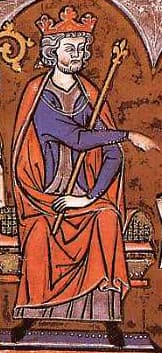
James I of Aragon
Emperor · Medieval
58.7Total

Napoleon Bonaparte
General · Modern
70.9Total
Basic Information
Born
1208
1769
Died
1276
1821
Era
Medieval
Modern
Nationality
Aragon
France
Occupation
Emperor
General
Civilization
Western
Western
Score Comparison
Military (10%)
74.7
94.0
Political (20%)
45.0
72.0
Influence (20%)
61.0
40.0
Legacy (20%)
54.0
80.0
Leadership (15%)
66.0
78.0
Strategy (15%)
58.0
90.0
TOTAL
58.7
70.9
James I of Aragon — Complete Timeline
1229 AD
Conquest of MallorcaWar◆ Major
James I led a fleet from Salou to invade the island of Mallorca, defeating the Almohad governor. The conquest added the Balearic Islands to the Crown of Aragon and established a base for Mediterranean trade.
ReconquistaConquestMallorca
Impact: regionalconstructive
1238 AD
Conquest of ValenciaWar◆ Major
James I captured the city of Valencia after a long siege, incorporating the Kingdom of Valencia into the Crown of Aragon. The conquest added a wealthy and populous territory to Aragon and extended Christian control down the Mediterranean coast.
ReconquistaConquestValencia
Impact: regionalconstructive
1258 AD
Treaty of CorbeilPolitical Action◆ Major
James I signed the Treaty of Corbeil with Louis IX of France, renouncing Aragonese claims to territories in southern France in exchange for French recognition of Aragonese rule over Roussillon and Montpellier. This treaty defined the border between France and Aragon.
TreatyBorderFranceAragon
Impact: regionalconstructive
1261 AD
Promulgation of the Furs of ValenciaReform◆ Major
James I granted the Kingdom of Valencia its own legal code, the Furs, which established a separate legal and administrative system for the new kingdom. This code balanced royal authority with local privileges and became a model for later Aragonese governance.
LawLegal CodeValencia
Impact: regionalconstructive
Napoleon Bonaparte — Complete Timeline
1799 AD
Coup of 18 BrumaireOther◆ Major
Napoleon Bonaparte, with support from his brother Lucien and key political figures, overthrew the Directory in a bloodless coup. He established the Consulate with himself as First Consul, effectively becoming the ruler of France. This event ended the French Revolution's most unstable period.
French RevolutionCoupRise to Power
Impact: regional
1804 AD
Promulgation of the Napoleonic CodeOther◆ Major
Napoleon enacted the Civil Code of the French, known as the Napoleonic Code, a comprehensive set of laws that replaced the fragmented feudal legal systems. The code established legal equality, protected property rights, and secularized law. It became the basis for legal systems in many European and world countries.
Legal ReformNapoleonic CodeCivil Law
Impact: globalconstructive
1805 AD
Battle of AusterlitzWar◆ Major
Napoleon's Grande Arm
Napoleonic WarsBattleDecisive Victory
Impact: global
1812 AD
Invasion of RussiaWar◆ Major
Napoleon led the Grande Arm
Napoleonic WarsInvasionDisaster
Impact: globaldestructive
1815 AD
Battle of WaterlooWar◆ Major
Napoleon's French army was defeated by the combined forces of the Duke of Wellington's Anglo-Allied army and Gebhard Leberecht von Bl
Napoleonic WarsBattleFinal Defeat
Impact: globaldestructive
Expert Analysis
james-i-of-aragon-vs-napoleon-bonaparte
The Conqueror and the Lawgiver
In the winter of 1808, Napoleon Bonaparte stood in the snow at Jena, watching his Grand Armée shatter the Prussian army. He had conquered half of Europe, redrawn maps with a stroke of his pen, and built an empire that stretched from Spain to Poland. Six centuries earlier, another king—James I of Aragon—had stood on the deck of a galley off the coast of Mallorca, watching his own fleet assemble. Both men were conquerors. Both reshaped their worlds. But one built a monument of fire that burned out in a generation; the other laid foundations that lasted a thousand years. What drove the difference?
Origins
Napoleon was born in 1769 on Corsica, an island that had just been sold to France by Genoa. His family was minor nobility, poor and resentful of French rule. He spoke Italian before French, and throughout his life carried a sense of being an outsider—a man who had to prove himself. The French Revolution erupted when he was twenty, toppling the old order and opening a path for talent over birth. Napoleon seized it with both hands.
James I was born in 1208 into a very different world. His father, King Peter II of Aragon, died in battle when James was only five years old. The boy king became a pawn of warring nobles, kidnapped by one faction, held captive in a castle at Monzón, and denied even a proper education. He learned early that power was not given—it was taken, and held through alliances, patience, and sheer will.
The difference in their origins shaped everything. Napoleon grew up in a world where the old rules were being torn apart; he could reinvent himself. James grew up in a world where the rules were ancient but fragile; he had to master them.
Rise to Power
Napoleon’s path was meteoric. At twenty-four, he cleared the streets of Paris with a “whiff of grapeshot,” saving the revolutionary government. At twenty-six, he led a ragged army across the Alps into Italy and won six battles in twelve days. By thirty, he was First Consul of France. By thirty-five, Emperor. He rose not through inheritance or marriage, but through sheer competence—and the willingness to sacrifice anything, including hundreds of thousands of men, to his ambition.
James I’s rise was slower and more precarious. He finally escaped his captors at age thirteen, and immediately had to fight to reclaim his own kingdom. He spent years subduing rebellious nobles, forging alliances with the Church, and learning the art of siege warfare. His first major conquest—the capture of Mallorca in 1229—came when he was twenty-one. He had prepared for it for years, building a fleet from scratch, negotiating with Genoese bankers, and waiting for the right moment.
Napoleon’s rise was a sprint; James’s was a marathon. One relied on speed and shock, the other on endurance and patience.
Leadership & Governance
As a ruler, Napoleon was a whirlwind. He reformed French law with the Napoleonic Code, which abolished feudal privileges, established equality before the law, and protected property rights. He centralized the state, created a modern bureaucracy, and built schools and roads. But he also created a cult of personality, crowned himself emperor, and placed his brothers on thrones across Europe. His reforms were brilliant—but they were tools of his ambition, not ends in themselves.
James I governed differently. When he conquered Valencia in 1238 after a long siege, he did not impose Aragonese law. Instead, he granted the kingdom its own legal code, the Furs of Valencia, in 1261. This allowed the conquered population to retain their customs, their language, and their legal system—as long as they accepted Aragonese sovereignty. It was a masterstroke of political wisdom, creating loyalty through autonomy.
Napoleon imposed unity through force; James achieved it through compromise. One centralized; the other decentralized. Both methods worked—but only one created a structure that outlasted its creator.
Triumph & Tragedy
Napoleon’s greatest moment was Austerlitz in 1805, where he destroyed the combined armies of Russia and Austria. His most devastating failure was the invasion of Russia in 1812, where he lost half a million men to winter, disease, and guerrilla warfare. The disaster broke his army and his legend. Exiled to Elba, he returned for a final, desperate gamble—Waterloo—and lost everything.
James I’s greatest moment was the capture of Valencia, which added a wealthy kingdom to the Crown of Aragon and opened the Mediterranean to Aragonese trade. His most significant failure was perhaps his inability to fully pacify the Muslim population of his new territories, leading to periodic revolts. But he died in 1276 in his own bed, at age sixty-seven, having ruled for sixty-three years—a king who kept his throne, his family, and his legacy intact.
Napoleon’s tragedy was hubris; James’s tragedy was merely limitation. One reached for the stars and fell; the other reached for what he could hold.
Character & Destiny
Napoleon was a man of fire. He was brilliant, ruthless, and endlessly ambitious. “Impossible,” he once said, “is a word to be found only in the dictionary of fools.” He believed that will could reshape reality—and for a while, it did. But his personality drove him to overreach. He could not stop. He could not share power. He could not accept limits.
James I was a man of earth. He was pragmatic, patient, and calculating. He knew when to fight and when to negotiate. He signed the Treaty of Corbeil with Louis IX of France in 1258, renouncing claims to southern France in exchange for recognition of his conquests. He understood that a good peace was better than a glorious war. His character did not drive him to destruction—it guided him toward consolidation.
Napoleon’s personality was his engine and his doom. James’s personality was his anchor.
Legacy
Napoleon’s legacy is immense but ambiguous. The Napoleonic Code influenced legal systems across Europe and the world. His military campaigns are still studied in war colleges. But he also caused millions of deaths, destabilized a continent, and left France smaller and weaker than he found it. He is remembered as a genius and a tyrant, a liberator and a conqueror.
James I’s legacy is quieter but more durable. The Kingdom of Valencia survived as a distinct entity within Spain until the eighteenth century. The Furs of Valencia became a model for legal pluralism. The Crown of Aragon became a Mediterranean power, trading with Italy, North Africa, and the Levant. He is remembered as “James the Conqueror”—but also as a king who built, not just destroyed.
Napoleon’s legacy is a flash of lightning; James’s is the slow growth of an oak.
Conclusion
Standing in the snow at Waterloo, Napoleon watched his empire collapse in a single day. He had conquered Europe but could not hold it. Six hundred years earlier, James I of Aragon had stood on the walls of Valencia, looking out over a city that would remain under Aragonese rule for centuries. Both men were conquerors. But one conquered for himself, and the other conquered for his kingdom.
The difference is not in ambition or talent—both had those in abundance. It is in wisdom. Napoleon believed that power was an end in itself. James understood that power was a means to build something that would outlast him. One built an empire of ego; the other built a kingdom of law. And that, in the end, is why one name is a legend—and the other is a foundation.
Rankings
🥇
Napoleon BonaparteLeader
Mil: 94.0Pol: 72.0Inf: 40.0
70.9
🥈
James I of Aragon
Mil: 74.7Pol: 45.0Inf: 61.0
58.7
+12.2 behind
How This Comparison Works
Algorithm
Each figure is scored on 6 dimensions (0—100 scale) based on structured historical data: Military (10%), Political (20%), Influence (20%), Legacy (20%), Leadership (15%), Strategy (15%). The weighted total produces the final ranking.
Data Sources
Scores are computed from structured sub-indicators in the database. Scale factors adjust for era (Ancient ×0.85, Modern ×1.0) and civilization size (Eastern ×1.05, Other ×0.80) to account for differences in population and military scale.
Maximum 3 Figures
Comparisons are limited to 2—3 figures to ensure readability and statistical meaningfulness.
Error Margins
±5 points per dimension — Sub-scores are derived from historical records with inherent uncertainty. Two figures within 5 points on a dimension should be considered roughly equivalent in that area.
Total Score Accuracy
±3 points overall — The weighted combination of 6 dimensions produces a total score with approximately ±3 points of uncertainty. Differences of less than 3 points are not statistically significant— the figures are effectively tied.
Known Limitations
- Historical records are incomplete and uneven across civilizations
- Figures from oral-tradition societies may be underrepresented
- Occupation labels can misclassify multi-role figures
- Scores measure capability and impact, not moral character
- Quantitative scoring is a comparison tool, not absolute truth
Capability Radar
Military (10%) — Battles & Warfare
Battles
70
95
Win Rate
75
90
Expansion
75
95
Political (20%) — Governance & Reform
Reform
70
95
Diplomacy
65
80
Economy
60
85
Influence (20%) — Cultural & Global Reach
Cultural
55
85
Global
50
90
Legacy (20%) — Historical Impact
Historical
60
95
Longevity
55
90
Leadership (15%) — Power & Stability
Tenure
75
85
Stability
60
70
Strategy (15%) — Tactics & Innovation
Strategy
70
95
Tactics
65
98
Reform
60
92
Similar Comparisons
Comments & Discussion
尼科洛的教徒6/17/2026
拿破仑那套“自己打天下自己当皇帝”的剧本,放到13世纪地中海的棋盘上根本玩不转。詹姆斯一世根本不需要滑铁卢——他靠的是《瓦伦西亚法典》和联姻,让阿拉贡的旗帜从巴塞罗那飘到雅典。拿破仑的帝国是一支没烧完的火把;詹姆斯的是多米诺骨牌,一推就是五百年。
ConquerorKing6/17/2026
Napoleon's empire was a dazzling supernova—brilliant, terrifying, and gone in 15 years. James I was a steady sun that lit the Mediterranean for centuries. The clue is in the strategy: Napoleon fought for glory and absolute control; James codified laws (the Furs de València) that let conquered peoples keep their customs while paying homage. That's not weakness—that's genius. One built a glass cathedral; the other, bedrock.
DataSkeptic6/17/2026
Let's be real: Napoleon conquered over 700,000 square kilometers in a decade. James I's entire expansion—Mallorca, Valencia, Murcia—all fit into maybe 50,000 locals. But raw area misses the point. Napoleon's success rate in battles was around 90%—until it wasn't. James won almost every siege he personally commanded, with zero catastrophic collapses. If we're measuring "durability of success," James wins hands down. Napoleon's exit strategy was Elba.
塞维利亚朝圣者6/17/2026
詹姆斯一世在1245年攻占比利亚雷亚尔时,他的加泰罗尼亚舰队比拿破仑在土伦港的船还大。但关键不在于吨位——詹姆斯懂得给占领区自治权,而拿破仑把莱茵同盟当作提款机。结果呢?前者让加泰罗尼亚语成为地中海贸易的语言;后者让法语在欧洲成了恨的代名词。这不是兵力问题,是政治脑回路的不同。
RevisionistCritic6/17/2026
Everyone romanticizes Napoleon as this self-made titan, but he inherited the most efficient military machine in Europe from the Revolution. James I was a literal hostage as a child, had zero formal training, and still pulled off the Reconquista's most systematic conquest. Also: Napoleon's conquests were financed by looting; James's by parliaments (Corts) that he had to convince. Democracy vs. dictatorship? No contest. James was the better statesman, hands down.
船长的航海日志6/17/2026
拿破仑在耶拿看着普鲁士军队溃败时,詹姆斯一世正在帕尔马湾数他的战船——但他手里没有《拿破仑法典》,只有一本《习惯法汇编》。这就解释了为什么拿破仑的帝国像玻璃一样脆:他靠命令统治;詹姆斯靠共识。历史证明,能靠谈判拿到瓦伦西亚的国王,比靠炮轰拿下柏林的人更长久