Loading...
Gojong of Goryeo vs James I of Aragon
James I of Aragon leads by 8.6 pts · 2 figures compared
…

Gojong of Goryeo
Emperor · Medieval
50.1Total
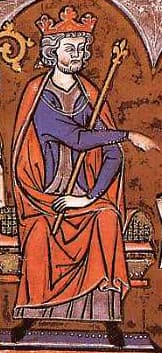
James I of Aragon
Emperor · Medieval
58.7Total
Basic Information
Born
1192
1208
Died
1259
1276
Era
Medieval
Medieval
Nationality
Korea
Aragon
Occupation
Emperor
Emperor
Civilization
Eastern
Western
Score Comparison
Military (10%)
47.5
74.7
Political (20%)
35.1
45.0
Influence (20%)
54.9
61.0
Legacy (20%)
48.3
54.0
Leadership (15%)
62.2
66.0
Strategy (15%)
50.0
58.0
TOTAL
50.1
58.7
Gojong of Goryeo — Complete Timeline
1231 AD
First Mongol invasion of GoryeoWar
Mongol forces under General Sartaq invaded Goryeo, capturing Kaesong and forcing King Gojong to flee to Ganghwa Island. The invasion devastated the countryside and led to a tributary agreement that was soon broken.
Mongol InvasionWarGoryeo
Impact: regionaldestructive
1232 AD
Relocation of the court to Ganghwa IslandPolitical Action◆ Major
King Gojong moved the royal court and government to Ganghwa Island to resist Mongol demands for submission. The island's natural defenses allowed Goryeo to continue resistance for nearly 30 years.
Capital MoveResistanceGoryeo
Impact: national
1251 AD
Compilation of the Tripitaka KoreanaCultural◆ Major
Under Gojong's patronage, the Buddhist canon was carved onto over 80,000 woodblocks to invoke divine protection against the Mongols. The Tripitaka Koreana remains one of the most complete and accurate versions of the Buddhist scriptures.
Buddhist CanonWoodblocksGoryeo
Impact: globalconstructive
1259 AD
Submission to the Mongol EmpirePolitical Action
After decades of war, King Gojong agreed to submit to the Mongol Empire, sending his son (future King Wonjong) as a hostage. The peace treaty ended the invasions but made Goryeo a vassal state of the Mongols.
SubmissionVassalageMongol Empire
Impact: regionaltragic
James I of Aragon — Complete Timeline
1229 AD
Conquest of MallorcaWar◆ Major
James I led a fleet from Salou to invade the island of Mallorca, defeating the Almohad governor. The conquest added the Balearic Islands to the Crown of Aragon and established a base for Mediterranean trade.
ReconquistaConquestMallorca
Impact: regionalconstructive
1238 AD
Conquest of ValenciaWar◆ Major
James I captured the city of Valencia after a long siege, incorporating the Kingdom of Valencia into the Crown of Aragon. The conquest added a wealthy and populous territory to Aragon and extended Christian control down the Mediterranean coast.
ReconquistaConquestValencia
Impact: regionalconstructive
1258 AD
Treaty of CorbeilPolitical Action◆ Major
James I signed the Treaty of Corbeil with Louis IX of France, renouncing Aragonese claims to territories in southern France in exchange for French recognition of Aragonese rule over Roussillon and Montpellier. This treaty defined the border between France and Aragon.
TreatyBorderFranceAragon
Impact: regionalconstructive
1261 AD
Promulgation of the Furs of ValenciaReform◆ Major
James I granted the Kingdom of Valencia its own legal code, the Furs, which established a separate legal and administrative system for the new kingdom. This code balanced royal authority with local privileges and became a model for later Aragonese governance.
LawLegal CodeValencia
Impact: regionalconstructive
Expert Analysis
Origins
Gojong of Goryeo (born 1192) was the 23rd monarch of the Goryeo dynasty, which had ruled Korea since 918. He ascended the throne in 1213 at age 21, inheriting a kingdom already under pressure from the rising Mongol Empire. His father, King Gangjong, had reigned only briefly, and Gojong grew up in a court factionalized between military rulers and civil officials. The Choe family held de facto power through the military regime, limiting Gojong's early authority.
James I of Aragon (born 1208) was the son of King Peter II of Aragon and Maria of Montpellier. His father died in 1213 at the Battle of Muret when James was only five, leaving him as a child-king under the regency of the Knights Templar and later his uncle, Sancho of Roussillon. James spent his early years in Monzón Castle under Templar tutelage, which shaped his pragmatic and independent character. He assumed personal rule in 1227 at age 19, after a turbulent minority marked by noble rebellions.
Rise to Power
Gojong's rise was not of his own making; he was placed on the throne by the Choe military regime, which had dominated Goryeo since 1196. The Choe family used the king as a figurehead while they controlled the army and bureaucracy. Gojong's first major challenge came in 1231 when the Mongol Empire, under Ögedei Khan, launched its first invasion of Goryeo. General Sartaq led a force that captured the capital Kaesong, forcing Gojong to flee to Ganghwa Island in 1232. This relocation became a turning point: from the island, Gojong and the Choe regime organized resistance that would last nearly three decades.
James I's rise was more direct. After securing his throne by suppressing rebellious nobles, he launched his first major campaign in 1229: the conquest of Mallorca. With a fleet of 150 ships and 15,000 men, he landed on the island in September 1229 and defeated the Almohad governor at the Battle of Portopí. The city of Palma fell in December 1229, and by 1231 the entire island was under Aragonese control. This success established James as a military leader and provided resources for future campaigns.
Leadership & Governance
Gojong's leadership was constrained by the Choe military dictatorship. He could not make independent decisions; the Choe family directed war policy. However, Gojong used cultural patronage as a form of resistance. In 1232, he ordered the compilation of the Tripitaka Koreana, a complete set of Buddhist scriptures carved onto 81,258 woodblocks. The project aimed to invoke divine protection against the Mongols. It took 16 years to complete (1236-1251) and cost immense resources. Gojong also maintained diplomatic contacts with the Mongols, sending tribute missions while refusing to submit fully.
James I was an active ruler who personally led campaigns and oversaw governance. He promulgated the Furs of Valencia in 1238, granting the newly conquered kingdom its own legal code separate from Aragon and Catalonia. This created a distinct identity for Valencia and facilitated integration. He also signed the Treaty of Corbeil (1258) with Louis IX of France, renouncing Aragonese claims to southern France in exchange for French recognition of his conquests in the south. James's leadership style was hands-on and pragmatic, though he often relied on nobles and the Church for support.
Triumph & Tragedy
Gojong's greatest triumph was preserving Goryeo's independence through decades of Mongol invasions. By moving the court to Ganghwa Island and using naval defenses, he kept the kingdom intact while the Mongols devastated the mainland. The Tripitaka Koreana stands as a cultural achievement that outlasted the conflict. However, his greatest failure was the eventual submission to the Mongols in 1259, after his death. His son Wonjong became a vassal, and the Mongol yoke led to centuries of interference. Gojong's strategy of prolonged resistance ultimately failed to prevent subjugation.
James I's triumphs include the conquest of Mallorca (1229-1231) and Valencia (1232-1245). Valencia, in particular, was a wealthy region that became a key part of the Crown of Aragon. The Furs of Valencia established a model for multicultural coexistence, allowing Muslims to remain under protection. His tragedy was the failure of his foreign policy regarding the Holy Land; his attempted crusade to Palestine in 1269 was a logistical disaster, and he was unable to secure lasting gains. Additionally, his later years were marred by conflicts with his son Peter III over succession.
Character & Destiny
Gojong was cautious and devout, relying on Buddhism and cultural projects to bolster morale. His decision to remain on Ganghwa Island for 27 years shows a stubborn commitment to resistance, but also a reluctance to negotiate. Historians note that his passivity allowed the Choe family to dominate, and he never fully asserted royal authority. His character was shaped by the existential threat of the Mongols, leading to a defensive mindset.
James I was ambitious, energetic, and pragmatic. He wrote an autobiography, the Llibre dels feits, one of the first royal autobiographies of the Middle Ages, detailing his campaigns. His character was marked by a desire for conquest and a willingness to compromise when necessary. The Treaty of Corbeil shows his diplomatic acumen. However, his impulsiveness sometimes led to overreach, as in the failed crusade. His destiny was to expand the Crown of Aragon to its Mediterranean zenith.
Legacy
Gojong's legacy is mixed. He is remembered as a king who resisted the Mongols but ultimately failed. The Tripitaka Koreana is a UNESCO World Heritage site and a symbol of Korean cultural resilience. However, his submission set the stage for Mongol domination that lasted until the late 14th century. His military score of 47.5 reflects the defensive nature of his campaigns, while political score of 35.1 shows his limited agency. Overall, his total score of 50.1 indicates a middling impact.
James I's legacy is more concrete. He expanded the Crown of Aragon into a Mediterranean power, adding Mallorca, Valencia, and territories in Occitania. The Furs of Valencia influenced legal development in Spain. He is revered as a national hero in Catalonia and Valencia, with numerous monuments and streets named after him. His military score of 74.7 and leadership of 66.0 reflect his successful conquests. His total score of 58.7 is higher than Gojong's, indicating greater overall impact.
Conclusion
James I of Aragon had a greater impact than Gojong of Goryeo. James's conquests permanently expanded the Crown of Aragon and shaped the history of Spain. Gojong's resistance was heroic but ultimately unsuccessful, and his submission led to centuries of foreign domination. While Gojong's cultural contributions are significant, James's territorial and legal achievements were more transformative. The score gap of 8.6 points supports this assessment: James's total score of 58.7 surpasses Gojong's 50.1, reflecting his more effective military and leadership. Thus, James I stands as the more consequential ruler.
Rankings
🥇
James I of AragonLeader
Mil: 74.7Pol: 45.0Inf: 61.0
58.7
🥈
Gojong of Goryeo
Mil: 47.5Pol: 35.1Inf: 54.9
50.1
+8.6 behind
How This Comparison Works
Algorithm
Each figure is scored on 6 dimensions (0—100 scale) based on structured historical data: Military (10%), Political (20%), Influence (20%), Legacy (20%), Leadership (15%), Strategy (15%). The weighted total produces the final ranking.
Data Sources
Scores are computed from structured sub-indicators in the database. Scale factors adjust for era (Ancient ×0.85, Modern ×1.0) and civilization size (Eastern ×1.05, Other ×0.80) to account for differences in population and military scale.
Maximum 3 Figures
Comparisons are limited to 2—3 figures to ensure readability and statistical meaningfulness.
Error Margins
±5 points per dimension — Sub-scores are derived from historical records with inherent uncertainty. Two figures within 5 points on a dimension should be considered roughly equivalent in that area.
Total Score Accuracy
±3 points overall — The weighted combination of 6 dimensions produces a total score with approximately ±3 points of uncertainty. Differences of less than 3 points are not statistically significant— the figures are effectively tied.
Known Limitations
- Historical records are incomplete and uneven across civilizations
- Figures from oral-tradition societies may be underrepresented
- Occupation labels can misclassify multi-role figures
- Scores measure capability and impact, not moral character
- Quantitative scoring is a comparison tool, not absolute truth
Capability Radar
Military (10%) — Battles & Warfare
Battles
40
70
Win Rate
20
75
Expansion
10
75
Political (20%) — Governance & Reform
Reform
30
70
Diplomacy
35
65
Economy
25
60
Influence (20%) — Cultural & Global Reach
Cultural
30
55
Global
30
50
Legacy (20%) — Historical Impact
Historical
50
60
Longevity
40
55
Leadership (15%) — Power & Stability
Tenure
60
75
Stability
20
60
Strategy (15%) — Tactics & Innovation
Strategy
25
70
Tactics
30
65
Reform
15
60
Similar Comparisons
Comments & Discussion
No comments yet. Be the first to share your thoughts!