Loading...
James I of Aragon vs Kublai Khan
Kublai Khan leads by 15.6 pts · 2 figures compared
…

James I of Aragon
Emperor · Medieval
58.7Total
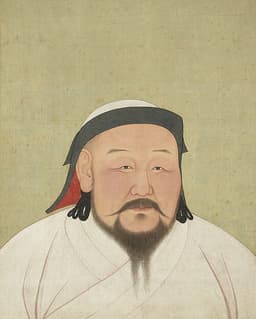
Kublai Khan
Emperor · Medieval
74.3Total
Basic Information
Born
1208
1215
Died
1276
1294
Era
Medieval
Medieval
Nationality
Aragon
Mongolia
Occupation
Emperor
Emperor
Civilization
Western
Eastern
Score Comparison
Military (10%)
74.7
77.5
Political (20%)
45.0
79.2
Influence (20%)
61.0
75.0
Legacy (20%)
54.0
70.0
Leadership (15%)
66.0
72.0
Strategy (15%)
58.0
76.0
TOTAL
58.7
74.3
James I of Aragon — Complete Timeline
1229 AD
Conquest of MallorcaWar◆ Major
James I led a fleet from Salou to invade the island of Mallorca, defeating the Almohad governor. The conquest added the Balearic Islands to the Crown of Aragon and established a base for Mediterranean trade.
ReconquistaConquestMallorca
Impact: regionalconstructive
1238 AD
Conquest of ValenciaWar◆ Major
James I captured the city of Valencia after a long siege, incorporating the Kingdom of Valencia into the Crown of Aragon. The conquest added a wealthy and populous territory to Aragon and extended Christian control down the Mediterranean coast.
ReconquistaConquestValencia
Impact: regionalconstructive
1258 AD
Treaty of CorbeilPolitical Action◆ Major
James I signed the Treaty of Corbeil with Louis IX of France, renouncing Aragonese claims to territories in southern France in exchange for French recognition of Aragonese rule over Roussillon and Montpellier. This treaty defined the border between France and Aragon.
TreatyBorderFranceAragon
Impact: regionalconstructive
1261 AD
Promulgation of the Furs of ValenciaReform◆ Major
James I granted the Kingdom of Valencia its own legal code, the Furs, which established a separate legal and administrative system for the new kingdom. This code balanced royal authority with local privileges and became a model for later Aragonese governance.
LawLegal CodeValencia
Impact: regionalconstructive
Kublai Khan — Complete Timeline
1260 AD
Adoption of Tibetan Buddhism as State ReligionCultural◆ Major
Kublai Khan appointed the Tibetan lama Drog
Tibetan BuddhismReligionMongol-Tibet Relations
Impact: regional
1271 AD
Proclamation of the Yuan DynastyPolitical Action◆ Major
Kublai Khan officially proclaimed the Yuan dynasty, adopting a Chinese-style dynastic name. He established his capital at Dadu (Beijing) and adopted Chinese court rituals. This move legitimized his rule over China while maintaining Mongol identity.
Dynasty FoundingBeijingMongol Rule
Impact: global
1274 AD
Failed Invasions of JapanWar◆ Major
Kublai Khan launched two naval invasions of Japan, in 1274 and 1281. Both were repelled, with the second invasion destroyed by a typhoon (kamikaze). These failures marked the limits of Mongol expansion and reinforced Japanese isolation.
Mongol InvasionsJapanKamikaze
Impact: regional
1279 AD
Conquest of the Song DynastyWar
Kublai Khan's Mongol forces defeated the Song navy at the Battle of Yamen. The last Song emperor drowned, ending the Song dynasty. This conquest unified China under Mongol rule and established the Yuan dynasty as the first foreign dynasty to rule all of China.
Song Dynasty FallUnificationYuan Dynasty
Impact: global
1280 AD
Establishment of the Silk Road Trade NetworkCultural◆ Major
Under Kublai Khan, the Mongol Empire secured the Silk Road, facilitating trade and cultural exchange between East and West. Marco Polo visited his court. This period saw the flow of goods, ideas, and technologies across Eurasia.
Silk RoadTradeCultural Exchange
Impact: globalconstructive
Expert Analysis
Origins
James I of Aragon was born in 1208 at Montpellier, the son of King Peter II of Aragon and Marie of Montpellier. His father died at the Battle of Muret in 1213 when James was five, leaving him as a child king under the regency of the Templars. He was raised in the castle of Monzón, receiving a military and religious education. His early years were marked by political instability and noble rebellions.
Kublai Khan was born in 1215, the fourth son of Tolui and Sorghaghtani Beki, making him the grandson of Genghis Khan. He grew up in the Mongol steppe, learning horsemanship and archery, but also received education in Chinese culture and administration from his mother, a Nestorian Christian. His early life was shaped by the Mongol expansion and the legacy of his grandfather.
Rise to Power
James I asserted his authority at age 15 by crushing a rebellion of Aragonese nobles in 1227. He then turned to external conquest, launching an expedition to the Balearic Islands in 1229. With a fleet from Salou, he landed on Mallorca and defeated the Almohad governor, adding the island to the Crown of Aragon. This success bolstered his prestige and resources.
Kublai Khan rose to prominence under his brother Möngke, who became Great Khan in 1251. Kublai was appointed governor of northern China, where he implemented effective administration and military campaigns. After Möngke's death in 1259, Kublai competed with his younger brother Ariq Böke for the khanship, winning in 1264. He then shifted focus to conquering the Song dynasty.
Leadership & Governance
James I was a hands-on military leader who personally led campaigns. He implemented the Furs of Valencia in 1240, granting the kingdom its own legal code and separate institutions, which fostered local autonomy and economic growth. He also signed the Treaty of Corbeil in 1258 with Louis IX of France, renouncing claims in southern France in exchange for French recognition of Aragonese conquests. His governance style was pragmatic, balancing noble power with royal authority.
Kublai Khan centralized power by adopting Chinese bureaucratic practices. He proclaimed the Yuan dynasty in 1271, moving his capital to Dadu (Beijing). He established a dual administration: Mongol military elites and Chinese civil officials. He adopted Tibetan Buddhism as the state religion in 1269, appointing Phagpa as imperial preceptor. He also promoted trade, securing the Silk Road, and welcomed foreign merchants like Marco Polo. His leadership scored 72.0, higher than James's 66.0.
Triumph & Tragedy
James I's greatest triumph was the conquest of Valencia after a long siege in 1238, adding a wealthy region to his realm. He also conquered Mallorca and Ibiza. His failure included the unsuccessful siege of Játiva in 1244 and ongoing conflicts with rebellious nobles. His political score of 45.0 reflects his struggles with internal governance.
Kublai Khan's greatest triumph was the conquest of the Song dynasty in 1279, unifying China for the first time in centuries. He also established the Yuan dynasty and fostered cultural exchange. His major failures were the two invasions of Japan in 1274 and 1281, both repelled, with the second destroyed by a typhoon. He also failed in invasions of Vietnam and Java. His military score of 77.5 outpaces James's 74.7.
Character & Destiny
James I was ambitious and energetic, known as 'the Conqueror.' He was a skilled strategist but often impulsive, leading to mixed results. His character drove him to expand Aragon's Mediterranean influence, but his political naivete caused internal strife. He died in 1276 at age 67, having secured a legacy of territorial expansion.
Kublai Khan was pragmatic and culturally adaptable, blending Mongol military power with Chinese governance. His character allowed him to rule a vast empire, but his later years were marred by overambitious campaigns and succession issues. He died in 1294 at age 78, leaving a strong but unstable dynasty.
Legacy
James I's legacy is the expansion of the Crown of Aragon into the Mediterranean, including the Balearics and Valencia. The Furs of Valencia influenced later legal codes. He is remembered in Catalan and Valencian history as a founder. His total score is 58.7.
Kublai Khan's legacy is the Yuan dynasty, which unified China and integrated it into the Mongol Empire. He facilitated trade and cultural exchange along the Silk Road, influencing world history. His total score is 74.3, significantly higher than James's. The Yuan dynasty lasted until 1368, and his impact on China and global trade was profound.
Conclusion
Kublai Khan had greater impact than James I of Aragon. Kublai's unification of China, establishment of a dynastic state, and promotion of transcontinental trade (scoring 75.0 in influence) far exceeded James's regional conquests. While James expanded Aragon's territory and legal systems, Kublai's empire shaped the course of Asian and world history. The score gap of 15.6 points reflects this difference in scale and enduring influence.
Rankings
🥇
Kublai KhanLeader
Mil: 77.5Pol: 79.2Inf: 75.0
74.3
🥈
James I of Aragon
Mil: 74.7Pol: 45.0Inf: 61.0
58.7
+15.6 behind
How This Comparison Works
Algorithm
Each figure is scored on 6 dimensions (0—100 scale) based on structured historical data: Military (10%), Political (20%), Influence (20%), Legacy (20%), Leadership (15%), Strategy (15%). The weighted total produces the final ranking.
Data Sources
Scores are computed from structured sub-indicators in the database. Scale factors adjust for era (Ancient ×0.85, Modern ×1.0) and civilization size (Eastern ×1.05, Other ×0.80) to account for differences in population and military scale.
Maximum 3 Figures
Comparisons are limited to 2—3 figures to ensure readability and statistical meaningfulness.
Error Margins
±5 points per dimension — Sub-scores are derived from historical records with inherent uncertainty. Two figures within 5 points on a dimension should be considered roughly equivalent in that area.
Total Score Accuracy
±3 points overall — The weighted combination of 6 dimensions produces a total score with approximately ±3 points of uncertainty. Differences of less than 3 points are not statistically significant— the figures are effectively tied.
Known Limitations
- Historical records are incomplete and uneven across civilizations
- Figures from oral-tradition societies may be underrepresented
- Occupation labels can misclassify multi-role figures
- Scores measure capability and impact, not moral character
- Quantitative scoring is a comparison tool, not absolute truth
Capability Radar
Military (10%) — Battles & Warfare
Battles
70
95
Win Rate
75
90
Expansion
75
95
Political (20%) — Governance & Reform
Reform
70
88
Diplomacy
65
85
Economy
60
90
Influence (20%) — Cultural & Global Reach
Cultural
55
85
Global
50
85
Legacy (20%) — Historical Impact
Historical
60
90
Longevity
55
80
Leadership (15%) — Power & Stability
Tenure
75
90
Stability
60
80
Strategy (15%) — Tactics & Innovation
Strategy
70
92
Tactics
65
85
Reform
60
88
Similar Comparisons
Comments & Discussion
No comments yet. Be the first to share your thoughts!