Loading...
J. B. M. Hertzog vs To Lam
J. B. M. Hertzog leads by 5.5 pts · 2 figures compared
…
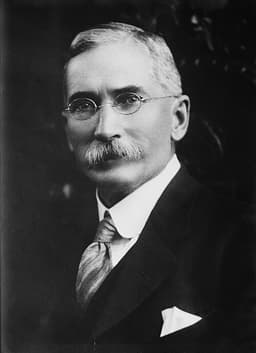
J. B. M. Hertzog
General · Modern
56.1Total
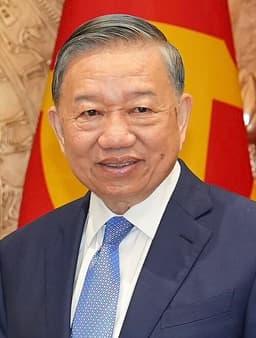
To Lam
General · Modern
50.6Total
Basic Information
Born
1866
1957
Died
1942
—
Era
Modern
Modern
Nationality
South Africa
Vietnam
Occupation
General
General
Civilization
Other
Eastern
Score Comparison
Military (10%)
25.0
25.9
Political (20%)
60.0
68.0
Influence (20%)
56.7
51.8
Legacy (20%)
50.0
41.7
Leadership (15%)
79.8
72.0
Strategy (15%)
60.0
36.8
TOTAL
56.1
50.6
J. B. M. Hertzog — Complete Timeline
1899 AD
Boer War GeneralWar◆ Major
Hertzog served as a Boer general in the Second Boer War, commanding forces in the Orange Free State. He participated in several battles and became a prominent Afrikaner military leader.
Second Boer WarGeneralMilitary
Impact: regional
1914 AD
Founded the National PartyPolitical Action
Hertzog broke away from the South African Party and founded the National Party, which championed Afrikaner nationalism and opposed British imperial influence. The party would later implement apartheid.
National PartyAfrikaner NationalismFounding
Impact: nationalconstructive
1924 AD
Prime Minister of South AfricaPolitical Action◆ Major
Hertzog became Prime Minister after his National Party won the general election in coalition with the Labour Party. His government implemented policies to protect white workers and promote Afrikaner interests, including the 'civilized labour' policy.
Prime MinisterAfrikaner RightsLabour Policy
Impact: national
1934 AD
Merged with Smuts to Form United PartyPolitical Action◆ Major
Hertzog merged his National Party with Jan Smuts' South African Party to form the United Party. The coalition aimed to address the economic crisis of the Great Depression and promote national unity, but it alienated hardline Afrikaner nationalists.
United PartyCoalitionNational Unity
Impact: nationalconstructive
1936 AD
Passed the Representation of Natives ActReform◆ Major
Hertzog's government passed the Representation of Natives Act, which removed Black voters from the common voters' roll in the Cape Province and allowed them to elect white representatives instead. This further entrenched racial segregation.
SegregationDisenfranchisementLegislation
Impact: nationaldestructive
1939 AD
Resigned Over Neutrality in WWIIPolitical Action◆ Major
Hertzog advocated for South African neutrality in World War II, but his cabinet voted to enter the war on the Allied side. He resigned as Prime Minister and was succeeded by Jan Smuts, splitting the United Party.
World War IINeutralityResignation
Impact: national
To Lam — Complete Timeline
2016 AD
Appointed Minister of Public SecurityPolitical Action◆ Major
To Lam was appointed Minister of Public Security of Vietnam, overseeing the country's police and internal security forces. He played a key role in maintaining public order and combating crime.
Ministerial AppointmentSecurity Leadership
Impact: national
2024 AD
Elected President of VietnamPolitical Action◆ Major
To Lam was elected President of Vietnam by the National Assembly, succeeding Vo Van Thuong. He transitioned from security chief to head of state, continuing his influence in national politics.
PresidencyGovernment Leadership
Impact: national
Expert Analysis
J. B. M. Hertzog vs To Lam
# The General as Statesman: Two Paths to Power in Divided Nations
In 1924, when J. B. M. Hertzog strode into the Union Buildings in Pretoria as South Africa’s prime minister, he carried the weight of a people who had lost a war but refused to surrender their identity. Exactly a century later, in 2024, To Lam stood before Vietnam’s National Assembly in Hanoi, accepting election as president after a career spent not on battlefields but in the shadowy corridors of internal security. Both men were generals. Both became heads of government. But the worlds they inhabited, the struggles they embodied, and the legacies they built could hardly have been more different.
Origins
Hertzog was born in 1866 on a farm in the Cape Colony, the son of a German immigrant and a Boer mother. He grew up speaking Afrikaans, a language then dismissed as a peasant dialect, and studied law in the Netherlands before returning to the Orange Free State. The Boer republics were pastoral, fiercely independent, and increasingly anxious about British imperial ambitions. When war came in 1899, Hertzog was thirty-three years old, a lawyer turned general, commanding men who rode horses and fired Mauser rifles against the might of the British Empire. The Boer War was not a distant conflict—it was a burning humiliation that seared itself into his generation’s soul.
To Lam was born in 1957 in Hung Yen province, north of Hanoi, just three years after the French defeat at Dien Bien Phu. His Vietnam was a nation forged in revolutionary struggle, where the Communist Party and the military were inseparable. Lam studied law at the People’s Security Academy, then rose through the Ministry of Public Security—the institution that had crushed dissent, surveilled the population, and protected the party’s monopoly on power. If Hertzog’s world was shaped by open warfare, Lam’s was shaped by the quiet, relentless machinery of state control.
Rise to Power
Hertzog entered politics as a Boer hero. After the Boer War ended in 1902, he helped negotiate the peace and then joined the first government of the Union of South Africa in 1910. But he quickly grew disillusioned with the dominance of English-speaking elites and the marginalization of Afrikaners. In 1914, he broke away to found the National Party, a vehicle for Afrikaner nationalism that promised to protect the language, culture, and economic interests of his people. The turning point came in 1924, when his party won the general election in coalition with the Labour Party. Hertzog became prime minister not through military coup or party appointment, but through the ballot box.
To Lam’s path was quieter and more deliberate. He spent decades inside the Ministry of Public Security, climbing through the ranks until he was appointed minister in 2016. His power came not from popular support but from control over the state’s security apparatus—the police, the intelligence services, the prisons. In Vietnam’s one-party system, advancement required loyalty, patience, and the ability to navigate factional politics. When President Vo Van Thuong resigned in 2024 amid anti-corruption purges, Lam was the natural successor: a general who could keep order, a security chief who knew where all the bodies were buried.
Leadership & Governance
Hertzog governed as a democrat and a nationalist. His first priority was to elevate Afrikaners from second-class status to full citizenship. He passed laws requiring bilingualism in government, protected Afrikaans in schools and universities, and promoted Afrikaner businesses. But his vision of South Africa was exclusive. In 1936, his government passed the Representation of Natives Act, stripping Black voters from the common roll in the Cape Province—a precursor to the full apartheid system that would follow. Hertzog believed he was defending his people; in practice, he was laying the foundations for racial oppression.
To Lam governs as a security specialist in a party-state. His expertise is not in economics or diplomacy but in surveillance, interrogation, and control. As president, he has continued the anti-corruption campaign that has swept through Vietnam’s political elite, removing rivals and consolidating power. Where Hertzog built coalitions and fought elections, Lam relies on the party’s internal discipline and the security forces’ loyalty. His governance is about stability, not reform; about order, not justice.
Triumph & Tragedy
Hertzog’s greatest triumph was also his greatest tragedy. In 1934, he merged his National Party with Jan Smuts’ South African Party to form the United Party, a grand coalition meant to unite white South Africans during the Great Depression. For a time, it worked. But the alliance was fragile, and when World War II broke out in 1939, Hertzog argued for neutrality—he had fought the British once and saw no reason to fight for them again. His cabinet voted to join the war. Hertzog resigned, his career ended not by defeat but by his own principles. He died three years later, a hero to Afrikaner nationalists but a figure increasingly out of step with the world.
To Lam’s triumph is his survival and ascent. In a system where presidents come and go, where corruption purges can destroy careers overnight, he has reached the top. But his tragedy may be that his legacy is inseparable from the security state he commanded. He will be remembered not as a reformer or a visionary, but as the man who kept the system running.
Character & Destiny
Hertzog was stubborn, principled, and proud—a man who could not bend even when bending might have saved him. His insistence on neutrality in 1939 cost him power, but it also preserved his integrity in the eyes of his followers. He believed that Afrikaner destiny was to rule themselves, and he never wavered from that conviction.
To Lam is opaque, patient, and calculating—a man who has spent decades learning when to strike and when to wait. His destiny was shaped not by a war of independence but by the quiet consolidation of a revolutionary state. He is a product of the system he now leads.
Legacy
Hertzog’s legacy is deeply contested. To Afrikaner nationalists, he was a founding father. To Black South Africans, he was an architect of disenfranchisement. His statue stands in Bloemfontein, but his name is absent from the streets of Soweto. He represents a path not taken—a white nationalism that could have chosen inclusion but chose exclusion instead.
To Lam’s legacy is still being written. He may be remembered as a stabilizing force in a turbulent time, or as the enforcer of a system that silences dissent. In Vietnam, where history is written by the party, his story will be told as one of service and loyalty.
Conclusion
Two generals, two nations, two centuries. Hertzog fought the British and died in the shadow of a war he refused to join. To Lam fought no foreign enemy but rose through the security state his revolution created. Both men sought power to protect their people—but their definitions of “their people” were radically different. In the end, what separates them is not military genius or political skill, but the nature of the struggles that made them. Hertzog’s war was about freedom from empire. To Lam’s war was about control within a state. One built a nation and divided it. The other inherited a divided nation and kept it intact. History will judge which was the greater tragedy.
Rankings
🥇
J. B. M. HertzogLeader
Mil: 25.0Pol: 60.0Inf: 56.7
56.1
🥈
To Lam
Mil: 25.9Pol: 68.0Inf: 51.8
50.6
+5.5 behind
How This Comparison Works
Algorithm
Each figure is scored on 6 dimensions (0—100 scale) based on structured historical data: Military (10%), Political (20%), Influence (20%), Legacy (20%), Leadership (15%), Strategy (15%). The weighted total produces the final ranking.
Data Sources
Scores are computed from structured sub-indicators in the database. Scale factors adjust for era (Ancient ×0.85, Modern ×1.0) and civilization size (Eastern ×1.05, Other ×0.80) to account for differences in population and military scale.
Maximum 3 Figures
Comparisons are limited to 2—3 figures to ensure readability and statistical meaningfulness.
Error Margins
±5 points per dimension — Sub-scores are derived from historical records with inherent uncertainty. Two figures within 5 points on a dimension should be considered roughly equivalent in that area.
Total Score Accuracy
±3 points overall — The weighted combination of 6 dimensions produces a total score with approximately ±3 points of uncertainty. Differences of less than 3 points are not statistically significant— the figures are effectively tied.
Known Limitations
- Historical records are incomplete and uneven across civilizations
- Figures from oral-tradition societies may be underrepresented
- Occupation labels can misclassify multi-role figures
- Scores measure capability and impact, not moral character
- Quantitative scoring is a comparison tool, not absolute truth
Capability Radar
Military (10%) — Battles & Warfare
Battles
45
10
Win Rate
40
10
Expansion
20
10
Political (20%) — Governance & Reform
Reform
60
40
Diplomacy
55
40
Economy
50
30
Influence (20%) — Cultural & Global Reach
Cultural
50
20
Global
45
20
Legacy (20%) — Historical Impact
Historical
55
20
Longevity
40
20
Leadership (15%) — Power & Stability
Tenure
65
50
Stability
45
40
Strategy (15%) — Tactics & Innovation
Strategy
50
10
Tactics
45
10
Reform
30
10
Similar Comparisons
Comments & Discussion
No comments yet. Be the first to share your thoughts!