Loading...
J. B. M. Hertzog vs Muhammadu Buhari
J. B. M. Hertzog leads by 4.6 pts · 2 figures compared
…
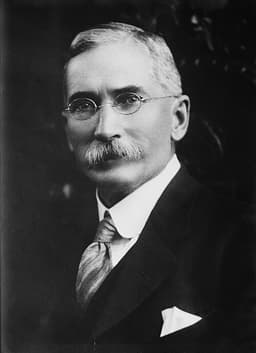
J. B. M. Hertzog
General · Modern
56.1Total
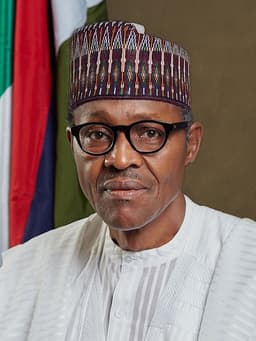
Muhammadu Buhari
General · Modern
51.5Total
Basic Information
Born
1866
1942
Died
1942
—
Era
Modern
Modern
Nationality
South Africa
Nigeria
Occupation
General
General
Civilization
Other
Other
Score Comparison
Military (10%)
25.0
22.6
Political (20%)
60.0
68.0
Influence (20%)
56.7
53.3
Legacy (20%)
50.0
43.3
Leadership (15%)
79.8
72.0
Strategy (15%)
60.0
41.0
TOTAL
56.1
51.5
J. B. M. Hertzog — Complete Timeline
1899 AD
Boer War GeneralWar◆ Major
Hertzog served as a Boer general in the Second Boer War, commanding forces in the Orange Free State. He participated in several battles and became a prominent Afrikaner military leader.
Second Boer WarGeneralMilitary
Impact: regional
1914 AD
Founded the National PartyPolitical Action
Hertzog broke away from the South African Party and founded the National Party, which championed Afrikaner nationalism and opposed British imperial influence. The party would later implement apartheid.
National PartyAfrikaner NationalismFounding
Impact: nationalconstructive
1924 AD
Prime Minister of South AfricaPolitical Action◆ Major
Hertzog became Prime Minister after his National Party won the general election in coalition with the Labour Party. His government implemented policies to protect white workers and promote Afrikaner interests, including the 'civilized labour' policy.
Prime MinisterAfrikaner RightsLabour Policy
Impact: national
1934 AD
Merged with Smuts to Form United PartyPolitical Action◆ Major
Hertzog merged his National Party with Jan Smuts' South African Party to form the United Party. The coalition aimed to address the economic crisis of the Great Depression and promote national unity, but it alienated hardline Afrikaner nationalists.
United PartyCoalitionNational Unity
Impact: nationalconstructive
1936 AD
Passed the Representation of Natives ActReform◆ Major
Hertzog's government passed the Representation of Natives Act, which removed Black voters from the common voters' roll in the Cape Province and allowed them to elect white representatives instead. This further entrenched racial segregation.
SegregationDisenfranchisementLegislation
Impact: nationaldestructive
1939 AD
Resigned Over Neutrality in WWIIPolitical Action◆ Major
Hertzog advocated for South African neutrality in World War II, but his cabinet voted to enter the war on the Allied side. He resigned as Prime Minister and was succeeded by Jan Smuts, splitting the United Party.
World War IINeutralityResignation
Impact: national
Muhammadu Buhari — Complete Timeline
1983 AD
1983 Nigerian coup d'étatPolitical Action
Major General Muhammadu Buhari led a military coup that overthrew the civilian government of President Shehu Shagari. Buhari cited corruption and economic mismanagement as justifications, and he became the head of state.
CoupMilitary RuleCorruption
Impact: nationaldestructive
1984 AD
War Against Indiscipline (WAI)Reform◆ Major
Buhari launched the War Against Indiscipline, a campaign to enforce discipline and order in Nigerian society. It included harsh penalties for minor offenses, such as queue-jumping, and was criticized for human rights abuses.
DisciplineSocial PolicyHuman Rights
Impact: nationaldestructive
1985 AD
Overthrow by Ibrahim BabangidaPolitical Action◆ Major
Buhari was overthrown in a palace coup led by his Chief of Army Staff, Ibrahim Babangida. Babangida cited Buhari's authoritarian style and failure to address the economy as reasons for the coup.
CoupOverthrowBabangida
Impact: national
2015 AD
Anti-corruption campaignReform◆ Major
Buhari launched a high-profile anti-corruption campaign, targeting government officials and recovering stolen assets. The campaign was praised internationally but criticized for being selective and politically motivated.
Anti-CorruptionReformGovernance
Impact: nationalconstructive
Election as President of NigeriaPolitical Action
Buhari won the 2015 Nigerian presidential election, defeating incumbent Goodluck Jonathan. This was the first time an opposition candidate had defeated a sitting president in Nigeria's history, marking a democratic milestone.
ElectionDemocracyOpposition Victory
Impact: nationalprogressive
Expert Analysis
Muhammadu Buhari vs J. B. M. Hertzog
### The General and the Nation-Builder
On a damp December morning in 1983, Major General Muhammadu Buhari sat in a Lagos radio studio, his voice flat and unforgiving as he announced the end of Nigeria’s Second Republic. Half a century earlier and six thousand miles to the south, General J. B. M. Hertzog had ridden into Bloemfontein at the head of a Boer commando, a man forged in the crucible of war who would one day shape a nation’s laws from a prime minister’s chair. Both were soldiers who became political leaders. Both promised order and fought for a vision of their country. Yet one left a legacy of fragile democratic progress, the other a foundation of racial division that still haunts South Africa. Why did these two generals, so alike in ambition and so different in outcome, walk such divergent paths?
### Origins
Buhari was born in 1942 in Daura, a dusty town in northern Nigeria, into a Fulani family with deep ties to the region’s Islamic traditions. His father was a chief, his mother a farmer’s daughter. The British Empire was still a living presence, but the winds of independence were already stirring. He joined the Nigerian Army in 1963, a young man in a young nation, where discipline and hierarchy were the only certainties. His formative years were shaped by the Biafran War, a brutal civil conflict that seared into him a belief in unity and order above all else.
Hertzog, born in 1866 in the Cape Colony, was the son of a Boer farmer and a German mother. His world was one of veld and frontier, of Dutch Reformed piety and simmering resentment against British rule. He studied law in Amsterdam, but the warrior’s life called him. By 1899, he was a general in the Second Boer War, commanding guerrilla bands that harried British columns across the Orange Free State. His identity was forged not in a nation-state but in a volk—a people fighting for survival against an empire.
The difference in their origins is stark: Buhari grew up in a Nigeria struggling to find itself, Hertzog in a Boer republic fighting to stay alive. One sought to build a nation, the other to defend a tribe.
### Rise to Power
Buhari’s path to power was swift and bloodless. On December 31, 1983, he led a coup that overthrew President Shehu Shagari, citing corruption and economic mismanagement. It was a classic military intervention: a handful of officers, a radio broadcast, and the civilian government dissolved. His legitimacy rested on the barrel of a gun, and he governed by decree. The turning point was not a battlefield but a studio microphone.
Hertzog’s rise was slower, more political. After the Boer War, he entered the Union of South Africa’s parliament, a voice for Afrikaner grievances against British dominance. In 1914, he broke away from the South African Party to found the National Party, a vehicle for Afrikaner nationalism. It took a decade of coalition-building and electoral struggle before he became prime minister in 1924. His power came from the ballot box, not the barracks. He had to persuade, not command.
One rose through the coup, the other through the caucus. The difference between a general’s uniform and a politician’s suit.
### Leadership & Governance
As Nigeria’s military ruler, Buhari launched the War Against Indiscipline in 1984—a campaign of public floggings, long prison sentences, and mandatory queuing at bus stops. It was order imposed from above, a soldier’s solution to a society’s chaos. He jailed journalists, banned strikes, and arrested political opponents. His anti-corruption efforts were real—he recovered millions in stolen assets—but his methods were authoritarian. “I am not a democrat,” he once said, and he meant it. His government lasted just twenty months before he was overthrown by his own chief of army staff.
Hertzog governed for fifteen years, a master of coalition and compromise. He passed the 1936 Representation of Natives Act, which removed Black South Africans from the common voters’ roll—a legal foundation for apartheid. Yet he also built roads, schools, and a welfare state for white Afrikaners, lifting them from poverty. He merged his National Party with Jan Smuts’ South African Party in 1934 to form the United Party, a grand coalition that aimed to heal the wounds of the Boer War. But that unity came at a price: the entrenchment of racial segregation.
Buhari ruled by fear, Hertzog by law. One was a dictator, the other a parliamentarian. Both were authoritarians in their own way, but Hertzog understood the art of the possible, while Buhari believed in the power of the absolute.
### Triumph & Tragedy
Buhari’s greatest moment came in 2015, when he returned from political exile to win the Nigerian presidency in a free and fair election—the first time an opposition candidate had defeated an incumbent in Nigerian history. It was a triumph for democracy, a vindication of his long struggle. But his second presidency was plagued by ill health, economic stagnation, and a Boko Haram insurgency that he could not crush. His anti-corruption campaign, once his pride, faltered amid accusations of selective justice. His tragedy was not that he failed, but that he succeeded too late, and with too little.
Hertzog’s triumph was the 1924 election, which ended British-Boer political dominance and gave Afrikaners their voice. His tragedy was 1939, when he resigned as prime minister after his cabinet voted to enter World War II against his wishes. He wanted neutrality; his party chose the Allies. He died in 1942, a broken man, his vision of a neutral, Afrikaner-led South Africa shattered by the tides of history.
One general tasted victory in defeat, the other defeat in victory.
### Character & Destiny
Buhari was austere, stoic, and suspicious of the world. His nickname, “Baba Go Slow,” reflected not just his cautious driving but his methodical, sometimes stubborn approach to governance. He trusted few, delegated little, and believed that discipline could cure any ill. His character was his fate: a man who could not bend, even when the world demanded it.
Hertzog was more pragmatic, more political. He could compromise with Smuts, then break with him; he could champion Afrikaner rights while ignoring Black ones. He was a lawyer and a soldier, a man of principle and calculation. His character allowed him to hold power for a decade and a half, but it also blinded him to the moral catastrophe of apartheid.
One was rigid, the other flexible. One broke, the other bent until he broke others.
### Legacy
Buhari is remembered as a flawed democrat, a man who tried to clean a stable with a broom made of thorns. His legacy is mixed: he restored civilian rule, but his economic policies failed. He is praised for his integrity, criticized for his inaction. In Nigeria, he is a figure of debate, not reverence.
Hertzog is remembered as the father of Afrikaner nationalism, the man who built the political machine that would become the apartheid state. His statue stands in Bloemfontein, but his name is a curse to many Black South Africans. He is a hero to some, a villain to others—a reminder that nation-building can also mean nation-destroying.
### Conclusion
Both generals sought to impose order on a chaotic world. Buhari tried to do it with a soldier’s hand, Hertzog with a politician’s smile. One failed quickly, the other succeeded tragically. Their stories remind us that leadership is not just about power, but about purpose. A general can win a war and lose a nation. A politician can win an election and lose a soul. In the end, the difference between them is not in their uniforms, but in their vision of who belongs to the nation—and who does not.
Rankings
🥇
J. B. M. HertzogLeader
Mil: 25.0Pol: 60.0Inf: 56.7
56.1
🥈
Muhammadu Buhari
Mil: 22.6Pol: 68.0Inf: 53.3
51.5
+4.6 behind
How This Comparison Works
Algorithm
Each figure is scored on 6 dimensions (0—100 scale) based on structured historical data: Military (10%), Political (20%), Influence (20%), Legacy (20%), Leadership (15%), Strategy (15%). The weighted total produces the final ranking.
Data Sources
Scores are computed from structured sub-indicators in the database. Scale factors adjust for era (Ancient ×0.85, Modern ×1.0) and civilization size (Eastern ×1.05, Other ×0.80) to account for differences in population and military scale.
Maximum 3 Figures
Comparisons are limited to 2—3 figures to ensure readability and statistical meaningfulness.
Error Margins
±5 points per dimension — Sub-scores are derived from historical records with inherent uncertainty. Two figures within 5 points on a dimension should be considered roughly equivalent in that area.
Total Score Accuracy
±3 points overall — The weighted combination of 6 dimensions produces a total score with approximately ±3 points of uncertainty. Differences of less than 3 points are not statistically significant— the figures are effectively tied.
Known Limitations
- Historical records are incomplete and uneven across civilizations
- Figures from oral-tradition societies may be underrepresented
- Occupation labels can misclassify multi-role figures
- Scores measure capability and impact, not moral character
- Quantitative scoring is a comparison tool, not absolute truth
Capability Radar
Military (10%) — Battles & Warfare
Battles
45
10
Win Rate
40
10
Expansion
20
5
Political (20%) — Governance & Reform
Reform
60
30
Diplomacy
55
25
Economy
50
20
Influence (20%) — Cultural & Global Reach
Cultural
50
25
Global
45
25
Legacy (20%) — Historical Impact
Historical
55
30
Longevity
40
20
Leadership (15%) — Power & Stability
Tenure
65
45
Stability
45
15
Strategy (15%) — Tactics & Innovation
Strategy
50
15
Tactics
45
15
Reform
30
20
Similar Comparisons
Comments & Discussion
General's Gavel6/16/2026
Comparing Buhari's 1983 coup to Hertzog's Boer commando days misses the crucial difference: Buhari inherited a functioning post-colonial state and broke it, while Hertzog built an Afrikaner nationalist power structure from scratch. Buhari governed Nigeria for only 20 months before being overthrown himself. That's not "nation-building"—that's a failed experiment in military authoritarianism that set Nigeria back decades. Hertzog at least left a constitutional legacy, however morally bankrupt.
数据铁面6/16/2026
把布哈里和赫佐格放在一起比较简直是侮辱历史方法论。赫佐格执政13年,布哈里只干了20个月就被赶下台。一个用法律系统性种族隔离,一个因为石油价格暴跌就经济崩溃——他们唯一真正的共同点是都穿着军装夺取过权力。别用"将军治国"这种伪概念把两个完全不同的历史语境强行绑在一起。
Jager of the Words6/16/2026
What strikes me as a classics scholar is the moral vocabulary both men used. Hertzog invoked "volk" and "civilization" to justify segregation; Buhari spoke of "discipline" and "war against indiscipline." Same rhetorical playbook: frame authoritarian control as cultural preservation. The tragedy is that Buhari's 2015 democratic return showed he learned nothing—he governed exactly as he had in 1983, but now with a ballot box veneer. Hertzog at least evolved from general to prime minister through c
边疆观察员6/16/2026
作为南部非洲历史研究者,我必须指出一个被忽略的事实:赫佐格1914年镇压了Afrikaner rebellion,打死自己人眼睛都不眨一下。布哈里呢?1984年处决了Obasanjo政权的腐败官员,有争议但至少目标明确。两者在"清洗内部"这件事上手段相似,但动机天差地别——一个是巩固白人至上主义,一个是试图根治腐败。把他们都叫做"将军治国"太偷懒了。
Aura of Discipline6/16/2026
Let's get one thing straight: Buhari's famous "War Against Indiscipline" was performative theater for a broken system, while Hertzog's 1936 Representation of Natives Act was surgical legislation that permanently disenfranchised the black majority. Two different arenas, two different tools. Buhari couldn't even build a functioning railway; Hertzog built an entire architecture of exclusion. If we're measuring effectiveness by impact on national trajectory, Hertzog wins—for better or worse.