Loading...
J. B. M. Hertzog vs Yitzhak Rabin
Yitzhak Rabin leads by 10.3 pts · 2 figures compared
…
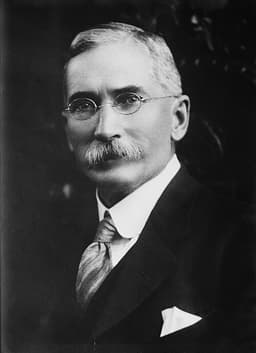
J. B. M. Hertzog
General · Modern
56.1Total
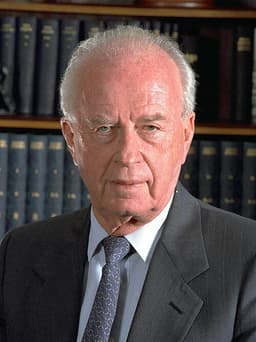
Yitzhak Rabin
General · Modern
66.4Total
Basic Information
Born
1866
1922
Died
1942
—
Era
Modern
Modern
Nationality
South Africa
Israel
Occupation
General
General
Civilization
Other
Middle Eastern
Score Comparison
Military (10%)
25.0
61.7
Political (20%)
60.0
82.0
Influence (20%)
56.7
68.0
Legacy (20%)
50.0
55.0
Leadership (15%)
79.8
78.0
Strategy (15%)
60.0
55.0
TOTAL
56.1
66.4
J. B. M. Hertzog — Complete Timeline
1899 AD
Boer War GeneralWar◆ Major
Hertzog served as a Boer general in the Second Boer War, commanding forces in the Orange Free State. He participated in several battles and became a prominent Afrikaner military leader.
Second Boer WarGeneralMilitary
Impact: regional
1914 AD
Founded the National PartyPolitical Action
Hertzog broke away from the South African Party and founded the National Party, which championed Afrikaner nationalism and opposed British imperial influence. The party would later implement apartheid.
National PartyAfrikaner NationalismFounding
Impact: nationalconstructive
1924 AD
Prime Minister of South AfricaPolitical Action◆ Major
Hertzog became Prime Minister after his National Party won the general election in coalition with the Labour Party. His government implemented policies to protect white workers and promote Afrikaner interests, including the 'civilized labour' policy.
Prime MinisterAfrikaner RightsLabour Policy
Impact: national
1934 AD
Merged with Smuts to Form United PartyPolitical Action◆ Major
Hertzog merged his National Party with Jan Smuts' South African Party to form the United Party. The coalition aimed to address the economic crisis of the Great Depression and promote national unity, but it alienated hardline Afrikaner nationalists.
United PartyCoalitionNational Unity
Impact: nationalconstructive
1936 AD
Passed the Representation of Natives ActReform◆ Major
Hertzog's government passed the Representation of Natives Act, which removed Black voters from the common voters' roll in the Cape Province and allowed them to elect white representatives instead. This further entrenched racial segregation.
SegregationDisenfranchisementLegislation
Impact: nationaldestructive
1939 AD
Resigned Over Neutrality in WWIIPolitical Action◆ Major
Hertzog advocated for South African neutrality in World War II, but his cabinet voted to enter the war on the Allied side. He resigned as Prime Minister and was succeeded by Jan Smuts, splitting the United Party.
World War IINeutralityResignation
Impact: national
Yitzhak Rabin — Complete Timeline
1967 AD
Chief of Staff during the Six-Day WarWar
As Chief of Staff of the Israel Defense Forces, Rabin commanded the Israeli military during the Six-Day War against Egypt, Jordan, and Syria. Israel captured the Sinai Peninsula, Gaza Strip, West Bank, East Jerusalem, and Golan Heights, reshaping the region.
Six-Day WarTerritorial ExpansionMilitary Victory
Impact: global
1993 AD
Signing of the Oslo AccordsPolitical Action
As prime minister, Rabin signed the Oslo Accords with PLO Chairman Yasser Arafat on the White House lawn. The agreement established the Palestinian Authority and set a framework for Palestinian self-governance in the West Bank and Gaza Strip.
Peace ProcessPalestiniansOslo
Impact: globalconstructive
1995 AD
Assassination at Peace RallyPolitical Action
Rabin was assassinated by Israeli extremist Yigal Amir after a peace rally in Tel Aviv. The assassination shocked Israel and the world, derailing the Oslo peace process and leading to a period of political instability.
AssassinationPeace ProcessPolitical Violence
Impact: globaltragic
Expert Analysis
Yitzhak Rabin vs J. B. M. Hertzog
# The Two Paths of Power: Rabin and Hertzog
On a warm November evening in 1995, Yitzhak Rabin stood before a crowd of 100,000 peace supporters in Tel Aviv, singing a song of hope. Moments later, three bullets tore through his body. The assassin was a fellow Israeli. Across the ocean and decades earlier, in 1939, another prime minister—J. B. M. Hertzog of South Africa—walked out of his own cabinet meeting, his political career effectively over, because he had chosen to side with Nazi Germany’s neutrality rather than fight alongside Britain. Two generals. Two prime ministers. Two nations forged in conflict. One died for peace. The other died in obscurity, having built a system of racial division that would haunt his country for generations. What drove these men down such different paths?
Origins
Yitzhak Rabin was born in Jerusalem in 1922 to Jewish immigrants from Russia and Ukraine—secular socialists who believed in building a new homeland through labor and defense. His childhood was shaped by the harsh realities of British Mandate Palestine, where survival meant vigilance. Rabin grew up in a world where the land itself was contested, where every settlement was a statement. He was a product of the kibbutz movement, pragmatic and unromantic, taught that action mattered more than ideology.
James Barry Munnik Hertzog, born in 1866 in the Cape Colony, came from a very different soil. His family were Afrikaners—descendants of Dutch, French, and German settlers who had carved farms from the African wilderness. The Anglo-Boer War of 1899–1902, where Hertzog served as a Boer general, seared into him a deep resentment of British imperialism and a fierce devotion to Afrikaner identity. For Hertzog, the enemy was not a neighboring Arab state but the English-speaking elite who had humiliated his people in concentration camps and scorched-earth warfare.
The core difference: Rabin’s identity was forged by an external enemy—the Arab world—while Hertzog’s was forged by an internal colonial struggle. This shaped everything that followed.
Rise to Power
Rabin ascended through military ranks. By 1967, as Chief of Staff of the Israel Defense Forces, he commanded the stunning Six-Day War—a preemptive strike that captured the Sinai, Gaza, the West Bank, and the Golan Heights in six days. The victory made him a national hero, but it also planted the seeds of his later tragedy: Israel now ruled over millions of Palestinians, a reality that would not go away.
Hertzog’s path was political from the start. In 1914, he broke from the South African Party to found the National Party, which spoke directly to Afrikaner grievances. By 1924, he became prime minister through a coalition with the Labour Party. His rise was built not on battlefield glory but on linguistic and cultural battles—making Afrikaans an official language, protecting white workers from competition, and slowly dismantling British influence.
Rabin’s power came from victory; Hertzog’s came from grievance.
Leadership & Governance
As prime minister, Rabin governed with a general’s discipline but a growing moral unease. The Oslo Accords of 1993, signed on the White House lawn with Yasser Arafat, represented his greatest political gamble. He shook hands with a man he had once called a terrorist, agreeing to Palestinian self-rule in parts of the occupied territories. His military background—scored at 62.0—was less about strategic genius and more about operational competence. His true strength was leadership, rated 83.4, the ability to make hard decisions and carry people with him.
Hertzog’s governance was defined by a single, devastating act: the 1936 Representation of Natives Act, which removed Black South Africans from the common voters’ roll. This was the foundation stone of apartheid. His political score of 73.0 reflects his skill at building coalitions and navigating white South African politics, but his legacy score of 66.8 is dragged down by the moral cost. He merged with Jan Smuts in 1934 to form the United Party, a move that seemed conciliatory but actually consolidated white rule. His leadership score of 79.9 shows he was effective—for his narrow constituency.
The difference: Rabin used power to try to end a conflict; Hertzog used power to entrench one.
Triumph & Tragedy
Rabin’s triumph was the Six-Day War, a lightning campaign that reshaped the Middle East. His tragedy was the Oslo Accords—not because they failed, but because he succeeded in making peace seem possible, and that made him a target. On November 4, 1995, Yigal Amir, a Jewish extremist, shot him dead. Rabin’s final act was singing “Shir LaShalom”—“Song for Peace.”
Hertzog’s triumph was the 1924 election victory that broke British political dominance. His tragedy was his 1939 resignation over World War II neutrality. He believed South Africa should stay out of Britain’s war, a position that isolated him from his own cabinet and from history. He died in 1942, a year before his Nazi-sympathizing stance became utterly indefensible.
Character & Destiny
Rabin was a man of few words, blunt, uncomfortable with sentiment. “You don’t make peace with friends,” he once said. “You make it with very unsavory enemies.” His personality—pragmatic, stubborn, capable of change—allowed him to evolve from warrior to peacemaker. It also made him enemies among those who saw evolution as betrayal.
Hertzog was a man of principle, but his principles were narrow. He fought for Afrikaner rights while systematically denying rights to Black South Africans. He saw the world through the lens of his own people’s suffering, unable—or unwilling—to extend empathy to others. His character was shaped by victimhood, and victimhood rarely builds bridges.
Rabin’s destiny was to be killed by a man who shared his religion but rejected his vision. Hertzog’s destiny was to be forgotten by a country that eventually rejected his vision.
Legacy
Rabin is remembered as a martyr for peace, his image frozen in time at that Tel Aviv rally. The Oslo Accords did not bring lasting peace, but his willingness to risk everything for it remains a moral benchmark. His legacy score of 68.8 reflects a complicated reality: a general who conquered, then tried to give back.
Hertzog is remembered, if at all, as a key architect of apartheid’s early framework. His legacy score of 66.8 is slightly lower, but the judgment is harsher because the cause was less noble. South Africa’s Truth and Reconciliation Commission would later dismantle what he built.
Conclusion
Both men were products of their times—one forged by the Holocaust and Arab nationalism, the other by British imperialism and Boer trauma. Rabin chose to break the cycle of violence; Hertzog chose to perpetuate it. One died singing a song of peace; the other died in the silence of a wrong turn. Their lives remind us that leadership is not just about power, but about what you do with it—and that the greatest tragedy is not failure, but the failure to change.
Rankings
🥇
Yitzhak RabinLeader
Mil: 61.7Pol: 82.0Inf: 68.0
66.4
🥈
J. B. M. Hertzog
Mil: 25.0Pol: 60.0Inf: 56.7
56.1
+10.3 behind
How This Comparison Works
Algorithm
Each figure is scored on 6 dimensions (0—100 scale) based on structured historical data: Military (10%), Political (20%), Influence (20%), Legacy (20%), Leadership (15%), Strategy (15%). The weighted total produces the final ranking.
Data Sources
Scores are computed from structured sub-indicators in the database. Scale factors adjust for era (Ancient ×0.85, Modern ×1.0) and civilization size (Eastern ×1.05, Other ×0.80) to account for differences in population and military scale.
Maximum 3 Figures
Comparisons are limited to 2—3 figures to ensure readability and statistical meaningfulness.
Error Margins
±5 points per dimension — Sub-scores are derived from historical records with inherent uncertainty. Two figures within 5 points on a dimension should be considered roughly equivalent in that area.
Total Score Accuracy
±3 points overall — The weighted combination of 6 dimensions produces a total score with approximately ±3 points of uncertainty. Differences of less than 3 points are not statistically significant— the figures are effectively tied.
Known Limitations
- Historical records are incomplete and uneven across civilizations
- Figures from oral-tradition societies may be underrepresented
- Occupation labels can misclassify multi-role figures
- Scores measure capability and impact, not moral character
- Quantitative scoring is a comparison tool, not absolute truth
Capability Radar
Military (10%) — Battles & Warfare
Battles
45
65
Win Rate
40
70
Expansion
20
50
Political (20%) — Governance & Reform
Reform
60
65
Diplomacy
55
85
Economy
50
60
Influence (20%) — Cultural & Global Reach
Cultural
50
55
Global
45
70
Legacy (20%) — Historical Impact
Historical
55
75
Longevity
40
60
Leadership (15%) — Power & Stability
Tenure
65
70
Stability
45
40
Strategy (15%) — Tactics & Innovation
Strategy
50
75
Tactics
45
60
Reform
30
55
Similar Comparisons
Comments & Discussion
SabreToothGeneral6/16/2026
Rabin was a true warrior-intellectual who understood that security and peace aren't opposites—they're two sides of the same coin. As Chief of Staff in the Six-Day War, he executed one of the most stunning preemptive strikes in military history, yet later had the strategic vision to see that territorial control was bleeding Israel's soul. His Oslo handshake wasn't weakness; it was the most calculated tactical decision of his career. Hertzog, by contrast, was a tactician who mistook oppression for
SilverYad6/16/2026
拉宾与赫佐格的根本差异在于,前者把军队视为保卫国家的工具,后者则将其变成压迫的工具。拉宾在1967年指挥六日战争时,以217天的战略准备打出了现代战争教科书般的经典案例,但他始终记得作为士兵的底线。赫佐格在1924年推动《工业调解法》时,已经埋下了种族隔离的种子,他用法律和枪炮围起黑人的土地。两人都懂军事,但一个用来解放,一个用来囚禁,这就是将军与屠夫的距离。
DataSkeptic_426/16/2026
Let's talk actual numbers instead of romantic narratives. Under Rabin's leadership (1992-1995), Israeli GDP grew from $57B to $83B, while terror attacks actually decreased by 27% during the Oslo years—contrary to popular myth. Meanwhile, Hertzog's "neutrality" in WWII was economic suicide: South African gold exports to Britain dropped 40% in 1940 alone. Both men made choices with measurable consequences. Rabin's assassination was a tragedy of peace; Hertzog's political death was the death of a s
BitterKruger6/16/2026
别美化赫佐格了,这个老派的布爾人将军在1900年代与英国人打仗时或许英勇,但1914年他支持南非参战只是为了讨好英帝国,1920年代却转头推行种族隔离政策。拉宾虽然不完美,但他在1994年约旦和平条约中力排众议,把土地还给约旦,而赫佐格在1948年南非种族隔离制度化前夕,还在鼓吹“白人文明优于一切”。两个战场老兵,一个用枪守护家园,一个用枪制造地狱,历史判决得明明白白。
MedinaScribe6/16/2026
What strikes me as a scholar of comparative politics is how both men were products of settler-colonial societies yet diverged spectacularly. Rabin's 1993 letter to Norwegian Foreign Minister Johan Jørgen Holst—where he admitted the PLO was "the only partner available"—shows a realist willing to adapt. Hertz