Loading...
J. B. M. Hertzog vs Themistocles
Themistocles leads by 12.3 pts · 2 figures compared
…
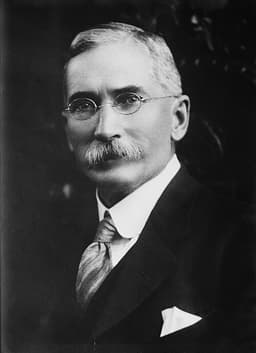
J. B. M. Hertzog
General · Modern
56.1Total
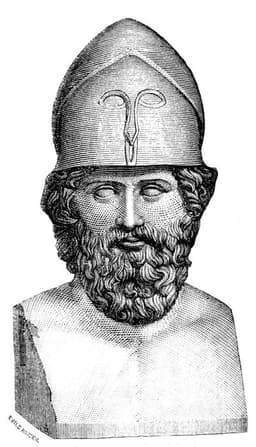
Themistocles
Politician · Ancient
68.4Total
Basic Information
Born
1866
-524
Died
1942
-459
Era
Modern
Ancient
Nationality
South Africa
Greece
Occupation
General
Politician
Civilization
Other
Western
Score Comparison
Military (10%)
25.0
80.0
Political (20%)
60.0
72.0
Influence (20%)
56.7
40.0
Legacy (20%)
50.0
80.0
Leadership (15%)
79.8
79.8
Strategy (15%)
60.0
76.0
TOTAL
56.1
68.4
J. B. M. Hertzog — Complete Timeline
1899 AD
Boer War GeneralWar◆ Major
Hertzog served as a Boer general in the Second Boer War, commanding forces in the Orange Free State. He participated in several battles and became a prominent Afrikaner military leader.
Second Boer WarGeneralMilitary
Impact: regional
1914 AD
Founded the National PartyPolitical Action
Hertzog broke away from the South African Party and founded the National Party, which championed Afrikaner nationalism and opposed British imperial influence. The party would later implement apartheid.
National PartyAfrikaner NationalismFounding
Impact: nationalconstructive
1924 AD
Prime Minister of South AfricaPolitical Action◆ Major
Hertzog became Prime Minister after his National Party won the general election in coalition with the Labour Party. His government implemented policies to protect white workers and promote Afrikaner interests, including the 'civilized labour' policy.
Prime MinisterAfrikaner RightsLabour Policy
Impact: national
1934 AD
Merged with Smuts to Form United PartyPolitical Action◆ Major
Hertzog merged his National Party with Jan Smuts' South African Party to form the United Party. The coalition aimed to address the economic crisis of the Great Depression and promote national unity, but it alienated hardline Afrikaner nationalists.
United PartyCoalitionNational Unity
Impact: nationalconstructive
1936 AD
Passed the Representation of Natives ActReform◆ Major
Hertzog's government passed the Representation of Natives Act, which removed Black voters from the common voters' roll in the Cape Province and allowed them to elect white representatives instead. This further entrenched racial segregation.
SegregationDisenfranchisementLegislation
Impact: nationaldestructive
1939 AD
Resigned Over Neutrality in WWIIPolitical Action◆ Major
Hertzog advocated for South African neutrality in World War II, but his cabinet voted to enter the war on the Allied side. He resigned as Prime Minister and was succeeded by Jan Smuts, splitting the United Party.
World War IINeutralityResignation
Impact: national
Themistocles — Complete Timeline
483 BC
Construction of the Athenian FleetReform◆ Major
Themistocles persuaded the Athenian assembly to use silver from the Laurion mines to build a fleet of 200 triremes. This naval expansion transformed Athens into a major maritime power and was crucial for the victory at Salamis.
AthensNaval PowerReform
Impact: nationalconstructive
480 BC
Battle of SalamisWar
Themistocles commanded the Greek navy against the Persian fleet at Salamis. He lured the Persians into the narrow straits, where the Greek ships destroyed the larger Persian fleet. This victory ended the Persian threat to Greece and preserved Greek independence.
Greco-Persian WarsNaval BattleAthens
Impact: regionalconstructive
472 BC
Ostracism from AthensPolitical Action◆ Major
Themistocles was ostracized by the Athenian assembly, likely due to political rivalries and accusations of arrogance. He went into exile, first to Argos, then to Persia, where he was received by King Artaxerxes I.
AthensExileOstracism
Impact: nationaltragic
465 BC
Service under the Persian KingPolitical Action
After his ostracism, Themistocles fled to Persia and offered his services to King Artaxerxes I. He was granted governorship of Magnesia and other cities in Asia Minor, where he lived until his death. This act was seen as treason by many Athenians.
PersiaExileTreason
Impact: regional
Expert Analysis
Themistocles vs J. B. M. Hertzog
### The Fates of Two Nation Builders
On a narrow strait off the coast of Salamis, a Greek general watched the Persian fleet, bloated with hubris, row itself into a killing ground. Two thousand years later, in the dusty expanse of the South African veld, another general watched a British column ride into an ambush. One man saved a fledgling democracy; the other spent his life trying to build a separate one. Both were brilliant, both were flawed, and both ended their careers in exile—one in the court of his former enemy, the other in the political wilderness of his own making. What separates a savior from a sectarian? The answer lies not only in their choices, but in the unforgiving geometry of their eras.
### Origins
Themistocles was born around 524 BCE into a world of fractious city-states and looming empires. His father was a minor noble, his mother a Carian or Thracian—a foreigner. This mixed heritage, and the whispers of illegitimacy that followed him, forged a relentless ambition. He learned early that in Athens, power came not from blood, but from persuasion. He was a creature of the *agora*, the marketplace of ideas, where a sharp tongue and a sharper mind could outmaneuver the aristocracy.
James Barry Munnik Hertzog was born in 1866 on a farm in the Cape Colony, into a world of British imperial dominion and Boer resentment. His father was a farmer, a man of the soil who had felt the sting of British annexation. Hertzog’s identity was shaped not by a bustling port city, but by the vast, silent veld and the bitter memory of the Great Trek. He studied law in Holland, absorbing a legalistic, almost theological, view of nationalism. For him, the nation was not a debate; it was a blood oath.
### Rise to Power
Themistocles rose through the ranks of Athenian democracy by mastering its most volatile engine: the assembly. His great turning point came in 483 BCE, when a rich vein of silver was discovered at Laurion. The Athenians wanted to distribute the wealth as a dividend. Themistocles argued, with cunning foresight, that they should instead build a fleet of 200 triremes. He warned of the threat from Aegina, but his true target was Persia. He won the argument, and in doing so, created the navy that would save Greece.
Hertzog’s rise came through a different kind of war. As a Boer general in the Second Boer War of 1899, he fought a bitter guerrilla campaign against the British. He was a capable commander, but the war was lost. The scorched-earth tactics and the concentration camps that followed seared a permanent wound into the Afrikaner psyche. In 1914, Hertzog broke from the more conciliatory South African Party of Louis Botha and Jan Smuts to found the National Party, a vehicle for Afrikaner nationalism. His path to power was not through building a fleet, but through building a tribe.
### Leadership & Governance
Themistocles’ leadership was one of strategic genius and political chutzpah. At the Battle of Salamis in 480 BCE, he did not command from a distant hill; he lured the Persian fleet into the narrow strait, neutralizing their numerical advantage. He was a master of the bluff, the ruse, the carefully planted lie. His political wisdom was pragmatic: he understood that unity among the Greek city-states was a fragile, temporary thing, and he exploited fear of Persia to hold it together. He was a reformer in the purest sense—he changed the material basis of Athenian power from land to sea, from hoplite to oarsman, democratizing the city’s defense.
Hertzog governed through coalition and compromise, but with a rigid core. As Prime Minister from 1924, he championed Afrikaner rights and sought to protect white farmers and workers from the pressures of a modernizing economy. He was a reformer of a different kind. His greatest legislative achievement, the 1936 Representation of Natives Act, removed Black voters from the common roll in the Cape Province. He saw this as a “fair” separation, a way to protect white civilization. It was, in fact, the legal cornerstone of apartheid. His military skill was tactical, not strategic; his political wisdom was tribal, not national.
### Triumph & Tragedy
Themistocles’ greatest moment was Salamis. His name became synonymous with the salvation of Western civilization. His greatest failure was his own arrogance. In 472 BCE, he was ostracized—a uniquely Athenian punishment that was less a death sentence than a ten-year exile. The city that had once cheered him now voted to banish him. Later, accused of treason, he fled to the one power he had defeated: Persia. He offered his services to King Artaxerxes I, who granted him the governorship of Magnesia. The savior of Greece died in the service of its enemy.
Hertzog’s triumph was the 1924 election, when he broke the British-aligned establishment and gave the Afrikaner a voice. His tragedy was the 1939 decision on World War II. He argued passionately for neutrality, believing the war was a British quarrel. His cabinet voted against him. He resigned, and his party fractured. The man who had spent his life building Afrikaner unity could not hold it together when the world demanded a choice between democracy and fascism. He died in 1942, a bitter and isolated figure.
### Character & Destiny
Themistocles was driven by ambition, but it was a flexible, adaptive ambition. He could be a democrat in Athens and a courtier in Persia. His character was a mirror, reflecting what his audience needed to see. This saved him, but it also destroyed his reputation. Hertzog was driven by conviction, but it was an unbending, principled conviction. He could not adapt. His character was a monolith, and when history shifted, it cracked.
Their destinies were shaped by the moral geometry of their eras. Themistocles lived in a world of city-states where the enemy was a foreign empire. Uniting against a common foe was a clear, noble goal. Hertzog lived in a world of empires and colonies, where the enemy was often a neighbor. His goal of a separate Afrikaner republic was not noble; it was a vision of exclusion. One man built a fleet to save a civilization; the other built a legal wall to divide one.
### Legacy
Themistocles is remembered as the architect of Athenian naval power, the man who made the Golden Age of Pericles possible. His legacy is Salamis—a victory that still echoes in the Western imagination. Hertzog is a more contested figure. To some, he is a father of Afrikaner nationalism, a defender of a people against British imperialism. To others, he is the man who set South Africa on the path to apartheid. His name adorns universities and towns, but it also carries the weight of a segregationist past.
### Conclusion
Standing on the shore of Salamis, one sees a narrow strait, a moment of brilliant strategy. Standing in the South African Parliament, one sees a long, slow tragedy of laws and divisions. Themistocles and Hertzog were both nation builders, but they built with different materials. Themistocles built with wood and oars, with the sweat of free men rowing towards a common horizon. Hertzog built with ink and paper, with the signatures of men drawing lines between themselves and others. One created a navy that opened the world; the other created a law that closed it. The difference is not just in their skill, but in their vision. The great question they leave us is not whether to build, but what to build—and for whom.
Rankings
🥇
ThemistoclesLeader
Mil: 80.0Pol: 72.0Inf: 40.0
68.4
🥈
J. B. M. Hertzog
Mil: 25.0Pol: 60.0Inf: 56.7
56.1
+12.3 behind
How This Comparison Works
Algorithm
Each figure is scored on 6 dimensions (0—100 scale) based on structured historical data: Military (10%), Political (20%), Influence (20%), Legacy (20%), Leadership (15%), Strategy (15%). The weighted total produces the final ranking.
Data Sources
Scores are computed from structured sub-indicators in the database. Scale factors adjust for era (Ancient ×0.85, Modern ×1.0) and civilization size (Eastern ×1.05, Other ×0.80) to account for differences in population and military scale.
Maximum 3 Figures
Comparisons are limited to 2—3 figures to ensure readability and statistical meaningfulness.
Error Margins
±5 points per dimension — Sub-scores are derived from historical records with inherent uncertainty. Two figures within 5 points on a dimension should be considered roughly equivalent in that area.
Total Score Accuracy
±3 points overall — The weighted combination of 6 dimensions produces a total score with approximately ±3 points of uncertainty. Differences of less than 3 points are not statistically significant— the figures are effectively tied.
Known Limitations
- Historical records are incomplete and uneven across civilizations
- Figures from oral-tradition societies may be underrepresented
- Occupation labels can misclassify multi-role figures
- Scores measure capability and impact, not moral character
- Quantitative scoring is a comparison tool, not absolute truth
Capability Radar
Military (10%) — Battles & Warfare
Battles
45
75
Win Rate
40
85
Expansion
20
60
Political (20%) — Governance & Reform
Reform
60
75
Diplomacy
55
85
Economy
50
65
Influence (20%) — Cultural & Global Reach
Cultural
50
70
Global
45
75
Legacy (20%) — Historical Impact
Historical
55
85
Longevity
40
80
Leadership (15%) — Power & Stability
Tenure
65
70
Stability
45
60
Strategy (15%) — Tactics & Innovation
Strategy
50
90
Tactics
45
95
Reform
30
80
Similar Comparisons
Comments & Discussion
反殖民老农6/16/2026
赫佐格不是只会打仗的粗人。他1914年闹布尔起义被英国镇压,后来却硬生生用法律逼退帝国统治。1931年威斯敏斯特法案后,南非能自己决定外交,这比地米斯托克利的“流亡波斯当叛徒”强吧?后者晚年跑去给波斯国王当顾问,帮敌人打希腊人,这叫英雄?简直是政治投机分子。
Steel-Cutter Themistocles6/16/2026
Themistocles didn’t just win at Salamis—he invented naval strategy as we know it. He tricked the Persians into fighting in narrow waters where their numbers turned into a liability. Hertzog? He fought a guerrilla war, sure, but his legacy is a racial constitution that eventually collapsed. One outmaneuvered an empire, the other built a house of cards. There’s no comparison in military or political genius.
薛西斯怕水的希腊人6/16/2026
地米斯托克利赢了萨拉米斯,但他更狠的是把雅典变成海军强国,用银矿收入造船,这才有后世提洛同盟。赫佐格呢?他1936年剥夺黑人投票权,自封“白人民族主义”,结果连布尔人都不团结,奥兰治自由邦和德兰士瓦从头到尾内斗。一个创造帝国,一个拆散族群。
DataSkeptic_Sam6/16/2026
You’re romanticizing Themistocles. The Battle of Salamis is overhyped—Persia’s fleet was already disorganized after storms and supply issues. Themistocles was just lucky Xerxes was an egomaniac. Meanwhile, Hertzog negotiated the Statute of Westminster in 1931, giving South Africa effective independence. That’s a concrete legal victory, not a cinematic naval miracle. Who actually changed governance more?
ClassicsSnob6/16/2026
Themistocles’ brilliance wasn’t just tactics—it was institution-building. He convinced Athens to invest in the Piraeus port and silver mines, creating a naval infrastructure that outlasted him. Hertzog built no such foundation. His 1913 Land Act entrenched segregation, and his 1925 “civilized labour” policy forced poor whites into jobs while crushing black farmers. One built a maritime empire; the other built a racial bureaucracy.
流亡者的黄昏6/16/2026
两人的结局都是被驱逐,但意义不同。地米斯托克利被雅典陶片放逐,逃到波斯后还能当上地方总督,实权在手。赫佐格1940年想和希特勒和谈,被内阁推翻,最后只能种葡萄园。一个在敌国当诸侯,一个在自己的国家被边缘化。谁更惨?但也是报应:赫佐格的种族隔离注定被世界抛弃。