Loading...
Afonso de Albuquerque vs J. B. M. Hertzog
Afonso de Albuquerque leads by 23.5 pts · 2 figures compared
…
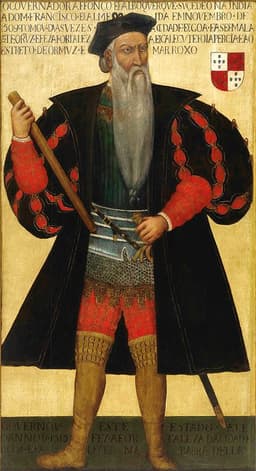
Afonso de Albuquerque
General · Medieval
79.6Total
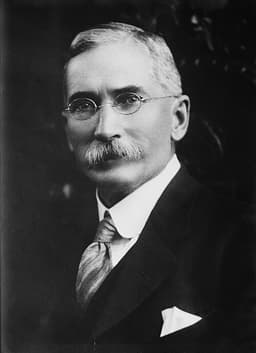
J. B. M. Hertzog
General · Modern
56.1Total
Basic Information
Born
1453
1866
Died
1515
1942
Era
Medieval
Modern
Nationality
Portugal
South Africa
Occupation
General
General
Civilization
Western
Other
Score Comparison
Military (10%)
77.5
25.0
Political (20%)
88.0
60.0
Influence (20%)
80.0
56.7
Legacy (20%)
75.0
50.0
Leadership (15%)
78.0
79.8
Strategy (15%)
82.0
60.0
TOTAL
79.6
56.1
Afonso de Albuquerque — Complete Timeline
1503 AD
First voyage to IndiaWar◆ Major
Afonso de Albuquerque led a fleet to India, establishing the first Portuguese fort at Cochin. This voyage laid the foundation for Portuguese control of the Indian Ocean trade.
ExplorationColonialismIndia
Impact: global
1510 AD
Conquest of GoaWar◆ Major
Albuquerque captured Goa from the Sultan of Bijapur. He made Goa the capital of Portuguese India, a position it held for over 400 years.
ConquestColonialismIndia
Impact: regional
1511 AD
Conquest of MalaccaWar◆ Major
Albuquerque led a Portuguese fleet to capture the strategic port of Malacca. This gave Portugal control of the spice trade route between the Indian Ocean and the Pacific.
ConquestSpice TradeSoutheast Asia
Impact: global
1513 AD
Siege of AdenWar
Albuquerque attempted to capture Aden in Yemen but failed. This failure prevented Portugal from controlling the entrance to the Red Sea and limited their influence in the region.
SiegeFailureRed Sea
Impact: regional
1515 AD
Death at seaOther◆ Major
Afonso de Albuquerque died at sea off the coast of Goa, possibly from illness or poison. His death left the Portuguese Empire in the Indian Ocean without its most capable leader.
DeathLeadershipEmpire
Impact: regionaltragic
J. B. M. Hertzog — Complete Timeline
1899 AD
Boer War GeneralWar◆ Major
Hertzog served as a Boer general in the Second Boer War, commanding forces in the Orange Free State. He participated in several battles and became a prominent Afrikaner military leader.
Second Boer WarGeneralMilitary
Impact: regional
1914 AD
Founded the National PartyPolitical Action
Hertzog broke away from the South African Party and founded the National Party, which championed Afrikaner nationalism and opposed British imperial influence. The party would later implement apartheid.
National PartyAfrikaner NationalismFounding
Impact: nationalconstructive
1924 AD
Prime Minister of South AfricaPolitical Action◆ Major
Hertzog became Prime Minister after his National Party won the general election in coalition with the Labour Party. His government implemented policies to protect white workers and promote Afrikaner interests, including the 'civilized labour' policy.
Prime MinisterAfrikaner RightsLabour Policy
Impact: national
1934 AD
Merged with Smuts to Form United PartyPolitical Action◆ Major
Hertzog merged his National Party with Jan Smuts' South African Party to form the United Party. The coalition aimed to address the economic crisis of the Great Depression and promote national unity, but it alienated hardline Afrikaner nationalists.
United PartyCoalitionNational Unity
Impact: nationalconstructive
1936 AD
Passed the Representation of Natives ActReform◆ Major
Hertzog's government passed the Representation of Natives Act, which removed Black voters from the common voters' roll in the Cape Province and allowed them to elect white representatives instead. This further entrenched racial segregation.
SegregationDisenfranchisementLegislation
Impact: nationaldestructive
1939 AD
Resigned Over Neutrality in WWIIPolitical Action◆ Major
Hertzog advocated for South African neutrality in World War II, but his cabinet voted to enter the war on the Allied side. He resigned as Prime Minister and was succeeded by Jan Smuts, splitting the United Party.
World War IINeutralityResignation
Impact: national
Expert Analysis
Afonso de Albuquerque vs J. B. M. Hertzog
# The Conqueror and the Conciliator: Two Paths to Power
On a sweltering December morning in 1510, Afonso de Albuquerque stood on the deck of his flagship, watching flames consume the city of Goa. The Portuguese fleet had breached the harbor defenses, and now his soldiers were sweeping through the streets, slaughtering Muslim defenders and looting the warehouses. Three thousand miles away, on the dusty plains of South Africa, another scene unfolded four centuries later: James Barry Munnik Hertzog, a Boer general with a weathered face and a lawyer’s precision, addressed a crowd of Afrikaner farmers, his voice rising above the wind. He spoke not of conquest but of rights—the right to speak their language, to govern themselves, to preserve their way of life against the encroaching British Empire. Two men, two eras, two worlds. Yet both sought to carve lasting empires from the chaos of their times. Why did one build an overseas empire that crumbled within a century, while the other built a domestic political empire that endured for decades?
Origins
Albuquerque was born into the Portuguese nobility in 1453, the year Constantinople fell to the Ottoman Turks. His world was one of crusading fervor and maritime ambition. Portugal, a small kingdom on the edge of Europe, had spent generations pushing south along the African coast, seeking a sea route to the spices of the East. Albuquerque grew up hearing tales of Prince Henry the Navigator and the epic voyages that had rounded the Cape of Good Hope. His education was that of a military aristocrat: horsemanship, swordsmanship, the classics of war. He learned to command men in battle but also to calculate the political calculus of distant courts.
Hertzog’s origins could not have been more different. Born in 1866 in the Cape Colony, he was the son of a Boer farmer who had participated in the Great Trek—the mass migration of Dutch-speaking settlers into the interior of South Africa to escape British rule. His childhood was spent on a farm in the Orange Free State, a republic forged by Boer pioneers. He studied law at the University of Amsterdam, absorbing the republican ideals of the Dutch Golden Age. Where Albuquerque saw the world as a battlefield for Christendom and commerce, Hertzog saw it as a struggle for national self-determination. The Boers, he believed, were a chosen people, and their language and culture were under siege.
Rise to Power
Albuquerque’s path to power was forged in the crucible of the Indian Ocean. In 1503, at age fifty—ancient by the standards of the time—he led his first fleet to India. The voyage was a brutal test of endurance: scurvy, storms, and the constant threat of ambush by Arab and Indian forces. But Albuquerque succeeded where others had failed, establishing the first Portuguese fort at Cochin. This was not merely a military feat; it was a political masterstroke. He understood that the key to controlling the spice trade was not raw force but strategic ports. He returned to Portugal a hero, and King Manuel I appointed him Governor of Portuguese India in 1509.
Hertzog’s rise was slower and more political. He fought in the Second Boer War from 1899 to 1902, commanding Boer forces in the Orange Free State. The war was a catastrophe for the Afrikaners: their farms were burned, their families herded into concentration camps, and their republics annexed by Britain. But Hertzog emerged from the ashes with a bitter resolve. In 1914, he broke away from the South African Party to found the National Party, a vehicle for Afrikaner nationalism. His timing was perfect. The outbreak of World War I had inflamed tensions between English-speaking South Africans, who wanted to fight for the Empire, and Afrikaners, who remembered British atrocities. Hertzog rode this wave of resentment to power, becoming Prime Minister in 1924.
Leadership & Governance
Albuquerque governed through a combination of terror and pragmatism. When he conquered Goa in 1510, he ordered the massacre of the city’s Muslim defenders and the execution of the Sultan of Bijapur’s deputies. But he also encouraged intermarriage between Portuguese soldiers and local women, granted land to converted Christians, and established a municipal council that included Indian merchants. He understood that an empire could not be maintained by force alone. His conquest of Malacca in 1511 gave Portugal control of the spice trade routes to China and the East Indies. He fortified the city, built a fleet of local ships, and appointed Malay nobles to administrative posts. Yet his style was autocratic. He brooked no dissent, executing rivals and ignoring orders from Lisbon when they conflicted with his vision.
Hertzog’s governance was that of a parliamentarian, not a conqueror. He championed Afrikaner rights through legislation: the 1925 Official Languages Act made Afrikaans equal to English, and his government promoted Afrikaner business interests. But his political genius lay in coalition-building. In 1934, he merged his National Party with Jan Smuts’ South African Party to form the United Party, creating a broad coalition that could govern a deeply divided country. This was the opposite of Albuquerque’s autocracy: Hertzog believed in compromise and consensus, even as he pursued policies that entrenched racial segregation. In 1936, he passed the Representation of Natives Act, which removed Black South Africans from the common voters’ roll—a step toward the apartheid system that would define South Africa for decades.
Triumph & Tragedy
Albuquerque’s greatest triumph was the conquest of Malacca in 1511. It was a masterpiece of amphibious warfare: he landed his troops under cover of darkness, breached the walls with cannon fire, and captured the city in a single day. The victory gave Portugal control of the world’s most valuable trade route. But his greatest failure was the 1513 siege of Aden. He attempted to capture the port city at the entrance to the Red Sea, which would have allowed Portugal to block the Ottoman spice route through Egypt. The siege failed after a month of fierce resistance, and Albuquerque was forced to retreat. It was a strategic disaster that left the door open for Ottoman counterattacks.
Hertzog’s triumph was his 1924 election victory. He had united the Afrikaner people behind a vision of cultural and political autonomy, and he governed for fifteen years. But his tragedy came in 1939. When World War II broke out, Hertzog argued passionately for South African neutrality. He believed that the war was a British imperial conflict that would only divide his country further. But his cabinet voted to enter the war on the Allied side. Hertzog resigned, broken and bitter. He died in 1942, a year later, watching his life’s work unravel.
Character & Destiny
Albuquerque was a man of iron will and strategic vision. He saw the Indian Ocean as a chessboard and moved pieces accordingly. But his arrogance was his undoing. He alienated his subordinates, ignored royal directives, and died at sea in 1515, possibly poisoned, leaving his empire leaderless. His death was a tragedy of hubris: the empire he built could not survive his absence.
Hertzog was more cautious, a lawyer who believed in the power of institutions. He built a political machine that outlasted him, even as its moral foundations crumbled. His tragedy was that he could not transcend the racial divisions of his time. He fought for Afrikaner rights but at the expense of Black South Africans, sowing the seeds of a bitter harvest.
Legacy
Albuquerque is remembered as the founder of the Portuguese Empire in the East. His name adorns streets and statues in Goa and Lisbon. But his empire collapsed within a century, undone by corruption, overextension, and the rise of Dutch and English rivals. His legacy is a cautionary tale of imperial ambition.
Hertzog is remembered as the father of Afrikaner nationalism. His policies laid the groundwork for apartheid, but also for the modern South African state. His legacy is contested: some see him as a defender of a minority culture, others as an architect of racial oppression. Both views are true.
Conclusion
Two men, two empires, one lesson. Albuquerque built an empire of trade and conquest that crumbled under its own weight. Hertzog built an empire of identity and legislation that endured—but at a terrible cost. Their stories remind us that power is never neutral. It reflects the character of those who wield it, and the choices they make echo through history long after they are gone.
Rankings
🥇
Afonso de AlbuquerqueLeader
Mil: 77.5Pol: 88.0Inf: 80.0
79.6
🥈
J. B. M. Hertzog
Mil: 25.0Pol: 60.0Inf: 56.7
56.1
+23.5 behind
How This Comparison Works
Algorithm
Each figure is scored on 6 dimensions (0—100 scale) based on structured historical data: Military (10%), Political (20%), Influence (20%), Legacy (20%), Leadership (15%), Strategy (15%). The weighted total produces the final ranking.
Data Sources
Scores are computed from structured sub-indicators in the database. Scale factors adjust for era (Ancient ×0.85, Modern ×1.0) and civilization size (Eastern ×1.05, Other ×0.80) to account for differences in population and military scale.
Maximum 3 Figures
Comparisons are limited to 2—3 figures to ensure readability and statistical meaningfulness.
Error Margins
±5 points per dimension — Sub-scores are derived from historical records with inherent uncertainty. Two figures within 5 points on a dimension should be considered roughly equivalent in that area.
Total Score Accuracy
±3 points overall — The weighted combination of 6 dimensions produces a total score with approximately ±3 points of uncertainty. Differences of less than 3 points are not statistically significant— the figures are effectively tied.
Known Limitations
- Historical records are incomplete and uneven across civilizations
- Figures from oral-tradition societies may be underrepresented
- Occupation labels can misclassify multi-role figures
- Scores measure capability and impact, not moral character
- Quantitative scoring is a comparison tool, not absolute truth
Capability Radar
Military (10%) — Battles & Warfare
Battles
85
45
Win Rate
80
40
Expansion
95
20
Political (20%) — Governance & Reform
Reform
80
60
Diplomacy
85
55
Economy
80
50
Influence (20%) — Cultural & Global Reach
Cultural
70
50
Global
85
45
Legacy (20%) — Historical Impact
Historical
85
55
Longevity
80
40
Leadership (15%) — Power & Stability
Tenure
70
65
Stability
65
45
Strategy (15%) — Tactics & Innovation
Strategy
95
50
Tactics
90
45
Reform
75
30
Similar Comparisons
Comments & Discussion
No comments yet. Be the first to share your thoughts!