Loading...
Huang Xing vs J. B. M. Hertzog
Huang Xing leads by 1.4 pts · 2 figures compared
…
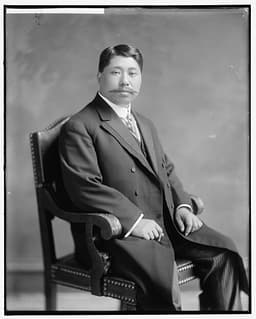
Huang Xing
General · Modern
57.5Total
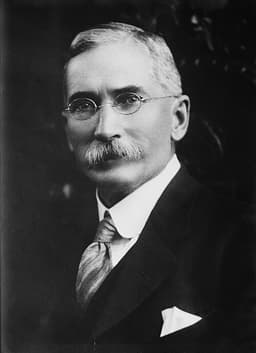
J. B. M. Hertzog
General · Modern
56.1Total
Basic Information
Born
1874
1866
Died
1916
1942
Era
Modern
Modern
Nationality
China
South Africa
Occupation
General
General
Civilization
Eastern
Other
Score Comparison
Military (10%)
46.7
25.0
Political (20%)
53.8
60.0
Influence (20%)
62.0
56.7
Legacy (20%)
56.0
50.0
Leadership (15%)
62.0
79.8
Strategy (15%)
60.0
60.0
TOTAL
57.5
56.1
Huang Xing — Complete Timeline
1905 AD
Co-founded the TongmenghuiPolitical Action◆ Major
Huang Xing co-founded the Tongmenghui (Revolutionary Alliance) in Tokyo with Sun Yat-sen. He became its military leader, organizing armed uprisings against the Qing dynasty.
TongmenghuiRevolutionMilitary
Impact: nationalconstructive
1911 AD
Led the Wuchang UprisingWar
Huang Xing led the Wuchang Uprising, which sparked the Xinhai Revolution. He commanded revolutionary forces against Qing troops, securing initial victories that led to the dynasty's collapse.
Xinhai RevolutionUprisingMilitary
Impact: nationalconstructive
1912 AD
Served as Minister of War in the RepublicPolitical Action◆ Major
Huang Xing served as Minister of War in the provisional government of the Republic of China. He worked to organize a national army and defend the republic against counter-revolutionary forces.
GovernmentMilitaryRepublic
Impact: nationalconstructive
1913 AD
Led the Second Revolution Against Yuan ShikaiWar◆ Major
Huang Xing led the Second Revolution, an armed uprising against President Yuan Shikai's authoritarian rule. The rebellion failed due to lack of coordination and military inferiority, forcing Huang into exile.
Second RevolutionYuan ShikaiExile
Impact: nationaltragic
1916 AD
Died in Exile in ShanghaiPolitical Action
Huang Xing died in Shanghai after returning from exile in Japan and the United States. His death marked the loss of a key military leader of the Chinese revolution, though his legacy endured.
DeathExileRevolution
Impact: nationaltragic
J. B. M. Hertzog — Complete Timeline
1899 AD
Boer War GeneralWar◆ Major
Hertzog served as a Boer general in the Second Boer War, commanding forces in the Orange Free State. He participated in several battles and became a prominent Afrikaner military leader.
Second Boer WarGeneralMilitary
Impact: regional
1914 AD
Founded the National PartyPolitical Action
Hertzog broke away from the South African Party and founded the National Party, which championed Afrikaner nationalism and opposed British imperial influence. The party would later implement apartheid.
National PartyAfrikaner NationalismFounding
Impact: nationalconstructive
1924 AD
Prime Minister of South AfricaPolitical Action◆ Major
Hertzog became Prime Minister after his National Party won the general election in coalition with the Labour Party. His government implemented policies to protect white workers and promote Afrikaner interests, including the 'civilized labour' policy.
Prime MinisterAfrikaner RightsLabour Policy
Impact: national
1934 AD
Merged with Smuts to Form United PartyPolitical Action◆ Major
Hertzog merged his National Party with Jan Smuts' South African Party to form the United Party. The coalition aimed to address the economic crisis of the Great Depression and promote national unity, but it alienated hardline Afrikaner nationalists.
United PartyCoalitionNational Unity
Impact: nationalconstructive
1936 AD
Passed the Representation of Natives ActReform◆ Major
Hertzog's government passed the Representation of Natives Act, which removed Black voters from the common voters' roll in the Cape Province and allowed them to elect white representatives instead. This further entrenched racial segregation.
SegregationDisenfranchisementLegislation
Impact: nationaldestructive
1939 AD
Resigned Over Neutrality in WWIIPolitical Action◆ Major
Hertzog advocated for South African neutrality in World War II, but his cabinet voted to enter the war on the Allied side. He resigned as Prime Minister and was succeeded by Jan Smuts, splitting the United Party.
World War IINeutralityResignation
Impact: national
Expert Analysis
J. B. M. Hertzog vs Huang Xing
# The General Who Would Be Kingmaker
In 1912, two republics were born—one in South Africa, one in China—and in both, generals who had fought for revolution now faced the harder task of building a nation. J. B. M. Hertzog and Huang Xing never met, never corresponded, and belonged to worlds separated by oceans and civilizations. Yet their lives trace a shared arc: the warrior who becomes a statesman, the revolutionary who must decide what comes after victory. One would die in power, his legacy tangled in the very injustices he helped institutionalize. The other would die in exile, his dream of a Chinese republic slipping through his fingers. Why did one succeed where the other failed? The answer lies not in their talents—both were formidable—but in the currents of history that lifted one and drowned the other.
Origins
James Barry Munnik Hertzog was born in 1866 on a farm in the Cape Colony, the son of a Boer farmer who had trekked away from British rule. He grew up speaking Afrikaans, reading the Bible, and nursing the grievances of a people who had lost their independence. He studied law in the Netherlands, returned to practice in the Orange Free State, and by 1899, when the Second Boer War erupted, he was a general commanding commandos against the British Empire. His war was a fight for a homeland—a white, Afrikaner homeland—and its loss seared him.
Huang Xing was born in 1874 in Hunan province, China, into a gentry family that had seen better days. He studied for the civil service exams but abandoned them for a military academy in Japan, where he encountered revolutionary ideas. By 1905, he had co-founded the Tongmenghui in Tokyo with Sun Yat-sen, becoming the organization's military arm. His war was not against a foreign empire but against the Qing dynasty, a decaying monarchy that had ruled China for nearly three centuries. Where Hertzog fought to preserve a nation, Huang Xing fought to create one.
Rise to Power
Hertzog's path to power ran through politics, not battle. After the Boer War, he entered the new Union of South Africa's parliament in 1910 as a minister in the government of Louis Botha. But he quickly clashed with Botha and his deputy, Jan Smuts, over language rights and Afrikaner identity. In 1914, he broke away to found the National Party, a vehicle for Afrikaner nationalism that promised to protect white farmers and workers from British domination and Black competition. His rise was slow, patient, and legal—a decade of building coalitions, courting rural voters, and waiting for the moment when war would split his rivals.
Huang Xing's rise was explosive. In October 1911, he led the Wuchang Uprising, a rebellion that ignited the Xinhai Revolution. For weeks, he commanded revolutionary forces against Qing loyalists, his name becoming synonymous with the fight for a republic. When the dynasty fell in 1912, he became Minister of War in the provisional government, tasked with building a national army from scratch. But his power was borrowed. The real authority lay with Yuan Shikai, the former Qing general who had negotiated the emperor's abdication and now held the presidency. Huang Xing was the revolution's sword, but Yuan held the hilt.
Leadership & Governance
As prime minister from 1924, Hertzog governed with a clear vision: South Africa for the Afrikaners. His National Party, in coalition with the Labour Party, passed laws to protect white workers, subsidize farmers, and elevate Afrikaans to equality with English. He was a shrewd politician, a master of compromise who knew when to fight and when to fold. In 1934, he merged his party with Smuts's South African Party to form the United Party, a grand coalition that promised unity in the face of the Great Depression. But unity had a price. In 1936, his government passed the Representation of Natives Act, removing Black voters from the common roll in the Cape Province. It was a betrayal of the liberal tradition that had survived since the colony's founding—and a blueprint for the apartheid that would follow.
Huang Xing never held supreme power. As Minister of War, he tried to discipline the provincial armies that had fought for the revolution, but they answered to local warlords, not to him. When Yuan Shikai turned authoritarian, dissolving parliament and plotting to restore the monarchy, Huang Xing led the Second Revolution in 1913—a desperate uprising that failed within months. He fled to Japan, then the United States, returning to Shanghai only in 1916, ill and broken. His governance was not of laws and budgets but of lost causes and last stands.
Triumph & Tragedy
Hertzog's greatest moment came in 1934, when he stood beside Smuts and announced the merger that would govern South Africa for the next decade. It was the pinnacle of a career built on reconciliation—between Boer and Briton, between farmer and industrialist. But the triumph was hollow. The same coalition that stabilized the country also codified its racial divisions. Five years later, when World War II broke out, Hertzog argued for neutrality, fearing that war would split Afrikaners again. His cabinet voted to join Britain. He resigned, and his party shattered. The man who had united his people lost them over the very empire he had once fought.
Huang Xing's tragedy was simpler: he was a revolutionary who outlived his revolution. The Wuchang Uprising made him a hero, but the republic it created was stillborn. Yuan Shikai's betrayal, the failure of the Second Revolution, the years of exile—each step stripped away hope. He died in Shanghai in 1916 at age 41, his body worn out by tuberculosis and defeat. On his deathbed, he reportedly told his comrades: "Do not be sad. The revolution is not finished."
Character & Destiny
Hertzog was stubborn, principled, and pragmatic—a combination that served him well in politics but blinded him to the moral costs of his success. He genuinely believed that Afrikaner rights required Black subjugation, and he never questioned that belief. His legacy is a monument to a man who could build a nation but could not see beyond his own people.
Huang Xing was passionate, impulsive, and loyal—a soldier who believed in the cause more than in himself. He deferred to Sun Yat-sen, never claiming the top spot, and his willingness to fight doomed him when diplomacy might have saved him. His destiny was to be the fire that burned bright and fast, not the ember that glowed for decades.
Legacy
Hertzog is remembered today as a founder of modern South Africa—and a father of its racial order. His statues have been toppled, his name erased from buildings, but his policies shaped the country for generations. The National Party he founded would, after his death, implement the full apartheid system he had helped design.
Huang Xing is remembered as a founding father of the Chinese Republic, but his name is overshadowed by Sun Yat-sen's. In mainland China, he is a footnote; in Taiwan, a statue in a park. The revolution he fought for was eventually won—by the Communists, not the republicans he imagined. His legacy is the example of a man who gave everything for a cause that outgrew him.
Conclusion
History judges Hertzog and Huang Xing by different standards because they served different masters. Hertzog built a nation for a minority, and it crumbled under the weight of its own injustice. Huang Xing tried to build a nation for all, and it was stolen by stronger hands. One succeeded in the short term and failed in the long; the other failed in the short term and became a symbol of what might have been. Their stories remind us that leadership is not just about winning—it is about what you win for, and who you leave behind.
Rankings
🥇
Huang XingLeader
Mil: 46.7Pol: 53.8Inf: 62.0
57.5
🥈
J. B. M. Hertzog
Mil: 25.0Pol: 60.0Inf: 56.7
56.1
+1.4 behind
How This Comparison Works
Algorithm
Each figure is scored on 6 dimensions (0—100 scale) based on structured historical data: Military (10%), Political (20%), Influence (20%), Legacy (20%), Leadership (15%), Strategy (15%). The weighted total produces the final ranking.
Data Sources
Scores are computed from structured sub-indicators in the database. Scale factors adjust for era (Ancient ×0.85, Modern ×1.0) and civilization size (Eastern ×1.05, Other ×0.80) to account for differences in population and military scale.
Maximum 3 Figures
Comparisons are limited to 2—3 figures to ensure readability and statistical meaningfulness.
Error Margins
±5 points per dimension — Sub-scores are derived from historical records with inherent uncertainty. Two figures within 5 points on a dimension should be considered roughly equivalent in that area.
Total Score Accuracy
±3 points overall — The weighted combination of 6 dimensions produces a total score with approximately ±3 points of uncertainty. Differences of less than 3 points are not statistically significant— the figures are effectively tied.
Known Limitations
- Historical records are incomplete and uneven across civilizations
- Figures from oral-tradition societies may be underrepresented
- Occupation labels can misclassify multi-role figures
- Scores measure capability and impact, not moral character
- Quantitative scoring is a comparison tool, not absolute truth
Capability Radar
Military (10%) — Battles & Warfare
Battles
35
45
Win Rate
30
40
Expansion
20
20
Political (20%) — Governance & Reform
Reform
60
60
Diplomacy
55
55
Economy
30
50
Influence (20%) — Cultural & Global Reach
Cultural
40
50
Global
40
45
Legacy (20%) — Historical Impact
Historical
55
55
Longevity
45
40
Leadership (15%) — Power & Stability
Tenure
40
65
Stability
25
45
Strategy (15%) — Tactics & Innovation
Strategy
45
50
Tactics
40
45
Reform
50
30
Similar Comparisons
Comments & Discussion
BOER BRAIN TRUST6/16/2026
Hertzog gets too much credit for "statesmanship." He was a brilliant military commander in the Boer War, sure, but his political "success" was just institutionalizing white supremacy. Comparing him to Huang Xing is an insult to revolutionaries who actually fought for inclusive nation-building. Hertzog's 1936 Representation of Natives Act basically murdered Cape liberalism. That's not success—that's betraying the revolution's potential.
辣酱革命者6/16/2026
黄兴才是真汉子!孙中山搞二次革命时他带着两千学生兵硬刚袁世凯,虽然最后败走日本,但那股“不计成败,但求革命”的狠劲比赫佐格的种族主义“成功”强一百倍。赫佐格顶多是个殖民地的代理人,黄兴却是用命在赌中国的未来。武昌起义时他亲手在前线指挥,差点被清军打死——这种血性,赫佐格一辈子都学不会。